Kirjojen hintavertailu – 12 903 725 kirjaa ja 27 kauppaa
Kirjailija
Patricia Keith-Spiegel
Kirjat ja teokset yhdessä paikassa: 9 kirjaa, julkaisuja vuosilta 2000–2019, suosituimpiin kuuluu Ethics in Psychology and the Mental Health Professions. Vertaile teosten hintoja ja tarkista saatavuus suomalaisista kirjakaupoista.
Only 8% of girls grow to be 5 feet 8 inches or taller. Knowing the advantages that tall girls will eventually gain often remains buried during the teenage years when the focus is on surviving adolescence. Awesome Advantages of Being a Tall Girl brings the many blessings of height front-and-center and explores how to manage the disadvantages. Girls who are taller than their peers will find inspiration, insights, and encouragement based on interviews with tall girls and women and exciting scientific findings about the great gift of height.
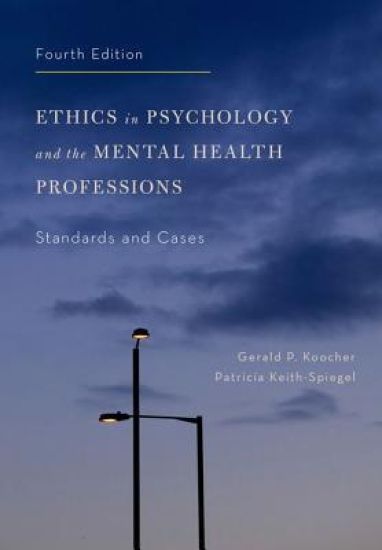
Most mental health professionals and behavioral scientists enter the field with a strong desire to help others, but clinical practice and research endeavors often involve decision-making in the context of ethical ambiguity. Good intentions are important, but unfortunately, they do not always protect the practitioner and client from breaches in ethical conduct. Academics, researchers, and students also face a range of ethical challenges from the classroom to the laboratory. The completely updated fourth edition of Ethics in Psychology and the Mental Health Professions considers many of the ethical questions and dilemmas that mental health professionals encounter in their everyday practice, research, and teaching. This classic text takes a practical approach to ethics, offering constructive means for preventing problems and recognizing, approaching, and resolving ethical predicaments. Written in a highly readable and accessible style, this new edition retains the key features which have contributed to its popularity, now with over 700 case studies that provide illustrative guidance on a wide variety of topics. New material has been added relating to evolving ethical challenges posed by new case law, electronic records, social media, changes in psychological assessment practice, mental health practitioners' interface with national security, complex work settings, and ethical issues in addressing human differences and diversity. This edition has been re-framed to include substantial content that extends beyond psychology, including counseling, marriage and family therapy, and social work. The case studies now address professionals in each of these fields, supporting interprofessional education and making the material even more applicable and accessible to a wide range of mental health providers and students-in-training.
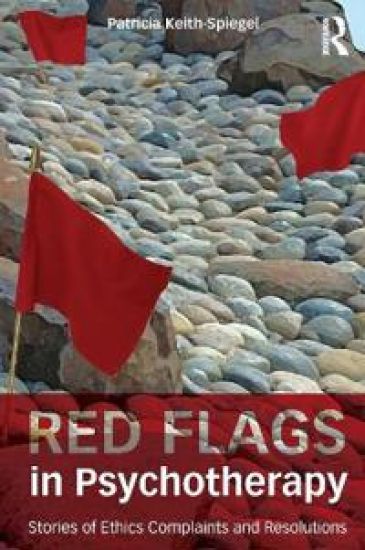
This book delves into risks that can easily bedevil any psychotherapist and what can happen if they are ignored. Dramatic storytelling, based on actual incidents from the author’s experiences as a member of ethics committees and as an ethics teacher and consultant, explores actions prompting clients to issue formal complaints. Set in the context of an ethics committee meeting over the course of a weekend, twelve psychologists face their peers who will stand in judgment. Issues include the fallout from losing one’s temper with a difficult client, a personal disclosure gone terribly wrong, a bartering arrangement that literally falls apart, a private life revealed in a most public way, a vengeful act that sullies the reputation of an entire department, breaking confidentiality when a client threatened harm, and the slippery slope to sexual exploitation. The stories are absorbing, enlightening, sometimes shocking, and often stranger than fiction. Narrative nonfiction puts human faces and emotions on what would otherwise be cursory statistics. What led to the formal complaint from both the vantage point of the complainant and the psychologist offers insights not otherwise available unless the dynamics of their private lives leading up to the conflict are revealed. An author’s commentary and discussion questions follow every story. Both new and seasoned practitioners, as well as those still in training, will find this to be an invaluable resource.
This book delves into risks that can easily bedevil any psychotherapist and what can happen if they are ignored. Dramatic storytelling, based on actual incidents from the author’s experiences as a member of ethics committees and as an ethics teacher and consultant, explores actions prompting clients to issue formal complaints. Set in the context of an ethics committee meeting over the course of a weekend, twelve psychologists face their peers who will stand in judgment. Issues include the fallout from losing one’s temper with a difficult client, a personal disclosure gone terribly wrong, a bartering arrangement that literally falls apart, a private life revealed in a most public way, a vengeful act that sullies the reputation of an entire department, breaking confidentiality when a client threatened harm, and the slippery slope to sexual exploitation. The stories are absorbing, enlightening, sometimes shocking, and often stranger than fiction. Narrative nonfiction puts human faces and emotions on what would otherwise be cursory statistics. What led to the formal complaint from both the vantage point of the complainant and the psychologist offers insights not otherwise available unless the dynamics of their private lives leading up to the conflict are revealed. An author’s commentary and discussion questions follow every story. Both new and seasoned practitioners, as well as those still in training, will find this to be an invaluable resource.
The Ethics of Teaching provides a frank discussion of the most frequently encountered ethical dilemmas that can arise in educational settings, as well as tips on how to avoid these predicaments and how to deal with them when they do occur. The goal is to stimulate discussion and raise faculties' consciousness about ethical issues. Ethical dilemmas are presented as short, engaging case scenarios, most of which are based on actual situations, so as to furnish more realistic and interesting stimuli for individual reflection and group discussion. These scenarios offer the opportunity to consider the subtle complexities inherent in the social and psychological contexts in which educator-student interactions occur and the effects of those complexities on ethical decision making. Each case is followed by a detailed analysis and advice. The book's 195 cases are grouped into 22 chapters representing topics, such as the controversial classroom presentations and assignments, debatable testing and grading practices, problematic student-faculty interactions, dual-role relationships with students, collegial conflicts, managing very difficult students, and confidentiality dilemmas. The Ethics of Teaching: A Casebook, Second Edition: *focuses on commonly encountered ethical "gray areas" that have no clear solution; *includes questions to stimulate discussion of related ethical issues; *concludes with a chapter on prevention, peer mentoring, and intervention; and *serves as excellent "assigned reading" to stimulate group discussion in teaching workshops and faculty development programs. The first edition of this book evolved by collecting a variety of teaching situations that commonly occur in college and university settings. The authors then created responses to the situations and circulated both the cases and the responses to reviewers from a number of departments across the country. As a result, the vast majority of the cases are "discipline free." The second edition features many new cases to reflect recent trends and events related to academic ethics. Questions were added to stimulate discussion and to further elaborate the issues. The Ethics of Teaching: A Casebook is ideal for college and university faculty, graduate assistants, and administrators involved in workshops, graduate teaching assistant courses, and faculty development and new faculty orientation programs. As a result of the book's cross-disciplinary development, it will be beneficial to faculty from a broad spectrum of disciplines.
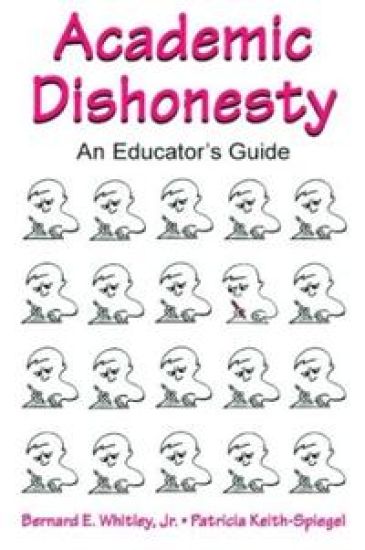
This book, written by two nationally renowned scholars in the area of ethics in higher education, is intended to help teachers and administrators understand and handle problems of academic dishonesty. Chock-full of practical advice, the book is divided into three parts. Part I reviews the existing published literature about academic dishonesty among college and university students and how faculty members respond to the problem. Part II presents practical advice designed to help college and university instructors and administrators deal proactively and effectively with academic dishonesty. Part III considers the broader question of academic integrity as a system-wide issue within institutions of higher education.
This book, written by two nationally renowned scholars in the area of ethics in higher education, is intended to help teachers and administrators understand and handle problems of academic dishonesty. Chock-full of practical advice, the book is divided into three parts. Part I reviews the existing published literature about academic dishonesty among college and university students and how faculty members respond to the problem. Part II presents practical advice designed to help college and university instructors and administrators deal proactively and effectively with academic dishonesty. Part III considers the broader question of academic integrity as a system-wide issue within institutions of higher education.
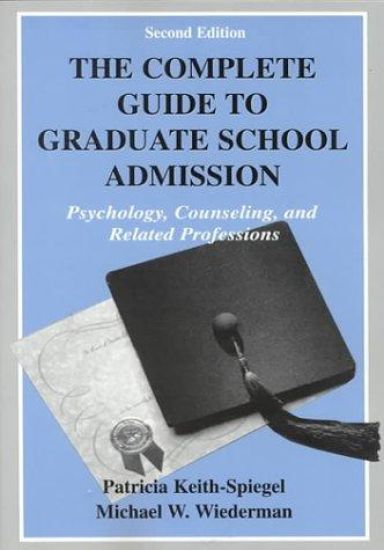
Should I go to graduate school? How do I choose where to apply? Are my grades and accomplishments good enough to get in? Who should I ask to write recommendation letters for me, and how should I approach these people? How do I write my "personal statement?" When will I hear my fate, and how should I make my final decision? These are just a few of the many questions to which this well-researched, thorough, and extremely user-friendly book offers answers. Students who are contemplating graduate training in psychology, counseling, and related fields are often apprehensive and confused about applying to graduate school, but this book takes the guesswork and anxiety out of the process. The tone and features (such as the Q&A format, timeline for application-related tasks and activities, and special advice for special populations) that made the first edition so successful, eliciting hundreds of thank-you notes and e-mail messages to the author, are just as evident in this new edition. The book has been thoroughly updated to include coverage of new topics such as use of the internet and e-mail, as well as changing trends in the professions. The most obvious difference is that the book is now significantly shorter as a result of meticulous rewriting, making it even easier to use. There have been attempts since the publication of the first edition to copy the format of this book, but none of the others have successfully duplicated the depth of research-based advice and the supportive style that make this book the guide of choice for thousands of graduate-school bound students and their advisors.
Should I go to graduate school? How do I choose where to apply? Are my grades and accomplishments good enough to get in? Who should I ask to write recommendation letters for me, and how should I approach these people? How do I write my "personal statement?" When will I hear my fate, and how should I make my final decision? These are just a few of the many questions to which this well-researched, thorough, and extremely user-friendly book offers answers. Students who are contemplating graduate training in psychology, counseling, and related fields are often apprehensive and confused about applying to graduate school, but this book takes the guesswork and anxiety out of the process. The tone and features (such as the Q&A format, timeline for application-related tasks and activities, and special advice for special populations) that made the first edition so successful, eliciting hundreds of thank-you notes and e-mail messages to the author, are just as evident in this new edition. The book has been thoroughly updated to include coverage of new topics such as use of the internet and e-mail, as well as changing trends in the professions. The most obvious difference is that the book is now significantly shorter as a result of meticulous rewriting, making it even easier to use. There have been attempts since the publication of the first edition to copy the format of this book, but none of the others have successfully duplicated the depth of research-based advice and the supportive style that make this book the guide of choice for thousands of graduate-school bound students and their advisors.