Kirjojen hintavertailu – 12 903 725 kirjaa ja 27 kauppaa

Kirjailija

Patricia Melin

Kirjat ja teokset yhdessä paikassa: 31 kirjaa, julkaisuja vuosilta 2001–2025, suosituimpiin kuuluu Chemical Optimization Algorithm for Fuzzy Controller Design. Vertaile teosten hintoja ja tarkista saatavuus suomalaisista kirjakaupoista.

31 kirjaa

Kirjojen julkaisuvuodet: 2001–2025.

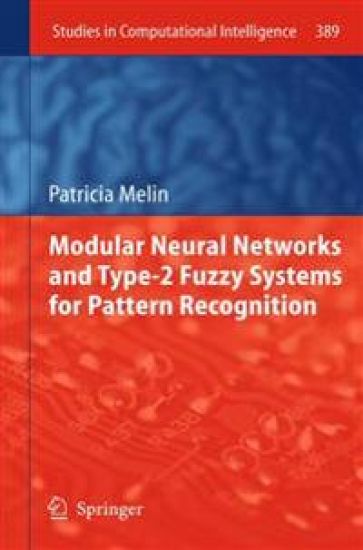
Modular Neural Networks and Type-2 Fuzzy Systems for Pattern Recognition

Modular Neural Networks and Type-2 Fuzzy Systems for Pattern Recognition

Patricia Melin

Springer-Verlag Berlin and Heidelberg GmbH Co. K
2013
nidottu
This book describes hybrid intelligent systems using type-2 fuzzy logic and modular neural networks for pattern recognition applications. Hybrid intelligent systems combine several intelligent computing paradigms, including fuzzy logic, neural networks, and bio-inspired optimization algorithms, which can be used to produce powerful pattern recognition systems. Type-2 fuzzy logic is an extension of traditional type-1 fuzzy logic that enables managing higher levels of uncertainty in complex real world problems, which are of particular importance in the area of pattern recognition. The book is organized in three main parts, each containing a group of chapters built around a similar subject. The first part consists of chapters with the main theme of theory and design algorithms, which are basically chapters that propose new models and concepts, which are the basis for achieving intelligent pattern recognition. The second part contains chapters with the main theme of using type-2 fuzzy models and modular neural networks with the aim of designing intelligent systems for complex pattern recognition problems, including iris, ear, face and voice recognition. The third part contains chapters with the theme of evolutionary optimization of type-2 fuzzy systems and modular neural networks in the area of intelligent pattern recognition, which includes the application of genetic algorithms for obtaining optimal type-2 fuzzy integration systems and ideal neural network architectures for solving problems in this area.
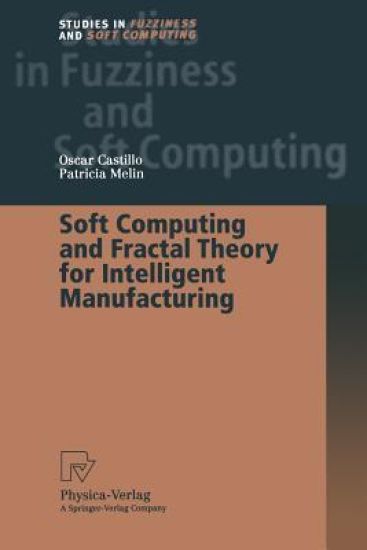
Soft Computing and Fractal Theory for Intelligent Manufacturing

Soft Computing and Fractal Theory for Intelligent Manufacturing

Oscar Castillo; Patricia Melin

Physica Verlag,Wien
2012
nidottu
We describe in this book, new methods for intelligent manufacturing using soft computing techniques and fractal theory. Soft Computing (SC) consists of several computing paradigms, including fuzzy logic, neural networks, and genetic algorithms, which can be used to produce powerful hybrid intelligent systems. Fractal theory provides us with the mathematical tools to understand the geometrical complexity of natural objects and can be used for identification and modeling purposes. Combining SC techniques with fractal theory, we can take advantage of the "intelligence" provided by the computer methods and also take advantage of the descriptive power of the fractal mathematical tools. Industrial manufacturing systems can be considered as non-linear dynamical systems, and as a consequence can have highly complex dynamic behaviors. For this reason, the need for computational intelligence in these manufacturing systems has now been well recognized. We consider in this book the concept of "intelligent manufacturing" as the application of soft computing techniques and fractal theory for achieving the goals of manufacturing, which are production planning and control, monitoring and diagnosis of faults, and automated quality control. As a prelude, we provide a brief overview of the existing methodologies in Soft Computing. We then describe our own approach in dealing with the problems in achieving intelligent manufacturing. Our particular point of view is that to really achieve intelligent manufacturing in real-world applications we need to use SC techniques and fractal theory.
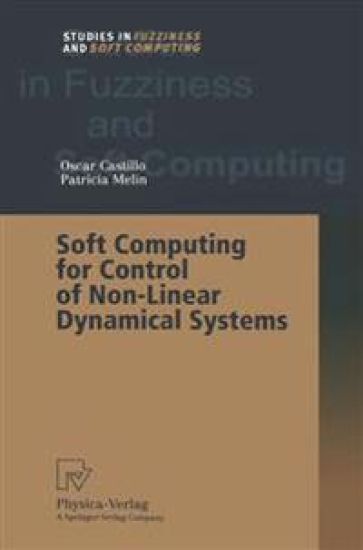
Soft Computing for Control of Non-Linear Dynamical Systems

Soft Computing for Control of Non-Linear Dynamical Systems

Oscar Castillo; Patricia Melin

Physica Verlag,Wien
2012
nidottu
This book presents a unified view of modelling, simulation, and control of non- linear dynamical systems using soft computing techniques and fractal theory. Our particular point of view is that modelling, simulation, and control are problems that cannot be considered apart, because they are intrinsically related in real world applications. Control of non-linear dynamical systems cannot be achieved if we don't have the appropriate model for the system. On the other hand, we know that complex non-linear dynamical systems can exhibit a wide range of dynamic behaviors ( ranging from simple periodic orbits to chaotic strange attractors), so the problem of simulation and behavior identification is a very important one. Also, we want to automate each of these tasks because in this way it is more easy to solve a particular problem. A real world problem may require that we use modelling, simulation, and control, to achieve the desired level of performance needed for the particular application.
Recent Advances in Interval Type-2 Fuzzy Systems

Recent Advances in Interval Type-2 Fuzzy Systems

Oscar Castillo; Patricia Melin

Springer-Verlag Berlin and Heidelberg GmbH Co. K
2012
nidottu
This book reviews current state of the art methods for building intelligent systems using type-2 fuzzy logic and bio-inspired optimization techniques. Combining type-2 fuzzy logic with optimization algorithms, powerful hybrid intelligent systems have been built using the advantages that each technique offers. This book is intended to be a reference for scientists and engineers interested in applying type-2 fuzzy logic for solving problems in pattern recognition, intelligent control, intelligent manufacturing, robotics and automation. This book can also be used as a reference for graduate courses like the following: soft computing, intelligent pattern recognition, computer vision, applied artificial intelligence, and similar ones. We consider that this book can also be used to get novel ideas for new lines of re-search, or to continue the lines of research proposed by the authors.
Modular Neural Networks and Type-2 Fuzzy Systems for Pattern Recognition

Modular Neural Networks and Type-2 Fuzzy Systems for Pattern Recognition

Patricia Melin

Springer-Verlag Berlin and Heidelberg GmbH Co. K
2011
sidottu
This book describes hybrid intelligent systems using type-2 fuzzy logic and modular neural networks for pattern recognition applications. Hybrid intelligent systems combine several intelligent computing paradigms, including fuzzy logic, neural networks, and bio-inspired optimization algorithms, which can be used to produce powerful pattern recognition systems. Type-2 fuzzy logic is an extension of traditional type-1 fuzzy logic that enables managing higher levels of uncertainty in complex real world problems, which are of particular importance in the area of pattern recognition. The book is organized in three main parts, each containing a group of chapters built around a similar subject. The first part consists of chapters with the main theme of theory and design algorithms, which are basically chapters that propose new models and concepts, which are the basis for achieving intelligent pattern recognition. The second part contains chapters with the main theme of using type-2 fuzzy models and modular neural networks with the aim of designing intelligent systems for complex pattern recognition problems, including iris, ear, face and voice recognition. The third part contains chapters with the theme of evolutionary optimization of type-2 fuzzy systems and modular neural networks in the area of intelligent pattern recognition, which includes the application of genetic algorithms for obtaining optimal type-2 fuzzy integration systems and ideal neural network architectures for solving problems in this area.
Hybrid Intelligent Systems for Pattern Recognition Using Soft Computing

Hybrid Intelligent Systems for Pattern Recognition Using Soft Computing

Patricia Melin; Oscar Castillo

Springer-Verlag Berlin and Heidelberg GmbH Co. K
2010
nidottu
This monograph describes new methods for intelligent pattern recognition using soft computing techniques including neural networks, fuzzy logic, and genetic algorithms. Hybrid intelligent systems that combine several soft computing techniques are needed due to the complexity of pattern recognition problems. Hybrid intelligent systems can have different architectures, which have an impact on the efficiency and accuracy of pattern recognition systems, to achieve the ultimate goal of pattern recognition. This book also shows results of the application of hybrid intelligent systems to real-world problems of face, fingerprint, and voice recognition. This monograph is intended to be a major reference for scientists and engineers applying new computational and mathematical tools to intelligent pattern recognition and can be also used as a textbook for graduate courses in soft computing, intelligent pattern recognition, computer vision, or applied artificial intelligence.
Type-2 Fuzzy Logic: Theory and Applications

Type-2 Fuzzy Logic: Theory and Applications

Oscar Castillo; Patricia Melin

Springer-Verlag Berlin and Heidelberg GmbH Co. K
2010
nidottu
We describe in this book, new methods for building intelligent systems using type-2 fuzzy logic and soft computing techniques. Soft Computing (SC) consists of several computing paradigms, including type-1 fuzzy logic, neural networks, and genetic algorithms, which can be used to create powerful hybrid intelligent systems. In this book, we are extending the use of fuzzy logic to a higher order, which is called type-2 fuzzy logic. Combining type-2 fuzzy logic with traditional SC techniques, we can build powerful hybrid intelligent systems that can use the advantages that each te- nique offers. We consider in this book the use of type-2 fuzzy logic and traditional SC techniques to solve pattern recognition problems in real-world applications. We c- sider in particular the problems of face, fingerprint and voice recognition. We also consider the problem of recognizing a person by integrating the information given by the face, fingerprint and voice of the person. Other types of applications solved with type-2 fuzzy logic and SC techniques, include intelligent control, intelligent manuf- turing, and adaptive noise cancellation. This book is intended to be a major reference for scientists and engineers interested in applying type-2 fuzzy logic for solving problems in pattern recognition, intelligent control, intelligent manufacturing, robotics and automation.
Type-2 Fuzzy Logic: Theory and Applications

Type-2 Fuzzy Logic: Theory and Applications

Oscar Castillo; Patricia Melin

Springer-Verlag Berlin and Heidelberg GmbH Co. K
2008
sidottu
We describe in this book, new methods for building intelligent systems using type-2 fuzzy logic and soft computing techniques. Soft Computing (SC) consists of several computing paradigms, including type-1 fuzzy logic, neural networks, and genetic algorithms, which can be used to create powerful hybrid intelligent systems. In this book, we are extending the use of fuzzy logic to a higher order, which is called type-2 fuzzy logic. Combining type-2 fuzzy logic with traditional SC techniques, we can build powerful hybrid intelligent systems that can use the advantages that each te- nique offers. We consider in this book the use of type-2 fuzzy logic and traditional SC techniques to solve pattern recognition problems in real-world applications. We c- sider in particular the problems of face, fingerprint and voice recognition. We also consider the problem of recognizing a person by integrating the information given by the face, fingerprint and voice of the person. Other types of applications solved with type-2 fuzzy logic and SC techniques, include intelligent control, intelligent manuf- turing, and adaptive noise cancellation. This book is intended to be a major reference for scientists and engineers interested in applying type-2 fuzzy logic for solving problems in pattern recognition, intelligent control, intelligent manufacturing, robotics and automation.
Hybrid Intelligent Systems for Pattern Recognition Using Soft Computing

Hybrid Intelligent Systems for Pattern Recognition Using Soft Computing

Patricia Melin; Oscar Castillo

Springer-Verlag Berlin and Heidelberg GmbH Co. K
2005
sidottu
This monograph describes new methods for intelligent pattern recognition using soft computing techniques including neural networks, fuzzy logic, and genetic algorithms. Hybrid intelligent systems that combine several soft computing techniques are needed due to the complexity of pattern recognition problems. Hybrid intelligent systems can have different architectures, which have an impact on the efficiency and accuracy of pattern recognition systems, to achieve the ultimate goal of pattern recognition. This book also shows results of the application of hybrid intelligent systems to real-world problems of face, fingerprint, and voice recognition. This monograph is intended to be a major reference for scientists and engineers applying new computational and mathematical tools to intelligent pattern recognition and can be also used as a textbook for graduate courses in soft computing, intelligent pattern recognition, computer vision, or applied artificial intelligence.
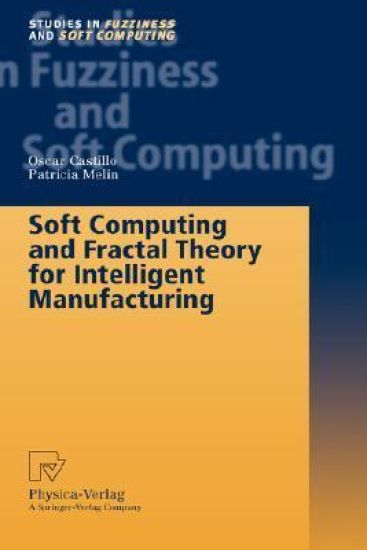
Soft Computing and Fractal Theory for Intelligent Manufacturing

Soft Computing and Fractal Theory for Intelligent Manufacturing

Oscar Castillo; Patricia Melin

Physica-Verlag GmbH Co
2003
sidottu
We describe in this book, new methods for intelligent manufacturing using soft computing techniques and fractal theory. Soft Computing (SC) consists of several computing paradigms, including fuzzy logic, neural networks, and genetic algorithms, which can be used to produce powerful hybrid intelligent systems. Fractal theory provides us with the mathematical tools to understand the geometrical complexity of natural objects and can be used for identification and modeling purposes. Combining SC techniques with fractal theory, we can take advantage of the "intelligence" provided by the computer methods and also take advantage of the descriptive power of the fractal mathematical tools. Industrial manufacturing systems can be considered as non-linear dynamical systems, and as a consequence can have highly complex dynamic behaviors. For this reason, the need for computational intelligence in these manufacturing systems has now been well recognized. We consider in this book the concept of "intelligent manufacturing" as the application of soft computing techniques and fractal theory for achieving the goals of manufacturing, which are production planning and control, monitoring and diagnosis of faults, and automated quality control. As a prelude, we provide a brief overview of the existing methodologies in Soft Computing. We then describe our own approach in dealing with the problems in achieving intelligent manufacturing. Our particular point of view is that to really achieve intelligent manufacturing in real-world applications we need to use SC techniques and fractal theory.
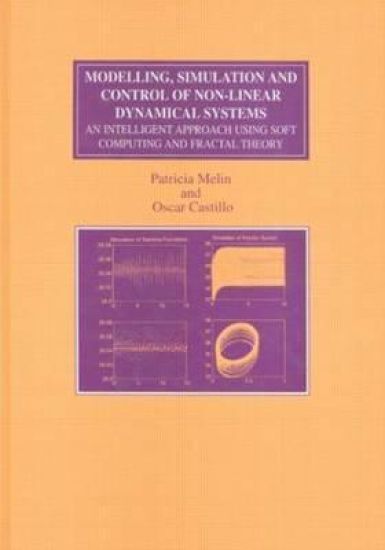
Modelling, Simulation and Control of Non-linear Dynamical Systems
These authors use soft computing techniques and fractal theory in this new approach to mathematical modeling, simulation and control of complexion-linear dynamical systems. First, a new fuzzy-fractal approach to automated mathematical modeling of non-linear dynamical systems is presented. It is illustrated with examples on the PROLOG programming language. Second, a new fuzzy-genetic approach to automated simulation of dynamical systems is presented. It is illustrated with examples in the MATLAB programming language. Third, a new method for model-based adaptive control using a neuro-fussy fractal approach is combined with the methods mentioned above. This method is illustrated with MATLAB. Finally, applications of these new methods are presented, in the areas such as biochemical processes, robotic systems, manufacturing, food industry and chemical processes.