Kirjojen hintavertailu – 12 903 725 kirjaa ja 27 kauppaa

Kirjailija

Patricia S. Churchland

Kirjat ja teokset yhdessä paikassa: 6 kirjaa, julkaisuja vuosilta 2002–2018, suosituimpiin kuuluu The Computational Brain. Vertaile teosten hintoja ja tarkista saatavuus suomalaisista kirjakaupoista.

6 kirjaa

Kirjojen julkaisuvuodet: 2002–2018.

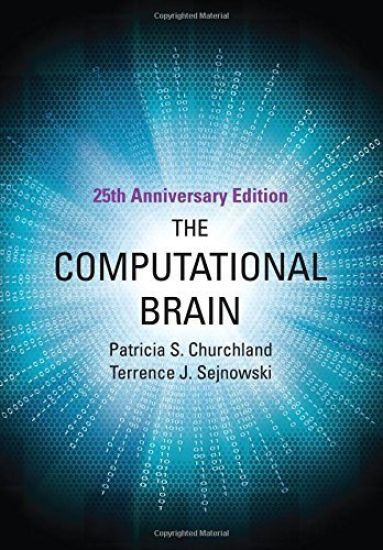
The Computational Brain

The Computational Brain

Patricia S. Churchland; Terrence J. Sejnowski

Bradford Books
2016
pokkari
An anniversary edition of the classic work that influenced a generation of neuroscientists and cognitive neuroscientists. Before The Computational Brain was published in 1992, conceptual frameworks for brain function were based on the behavior of single neurons, applied globally. In The Computational Brain, Patricia Churchland and Terrence Sejnowski developed a different conceptual framework, based on large populations of neurons. They did this by showing that patterns of activities among the units in trained artificial neural network models had properties that resembled those recorded from populations of neurons recorded one at a time. It is one of the first books to bring together computational concepts and behavioral data within a neurobiological framework. Aimed at a broad audience of neuroscientists, computer scientists, cognitive scientists, and philosophers, The Computational Brain is written for both expert and novice. This anniversary edition offers a new preface by the authors that puts the book in the context of current research. This approach influenced a generation of researchers. Even today, when neuroscientists can routinely record from hundreds of neurons using optics rather than electricity, and the 2013 White House BRAIN initiative heralded a new era in innovative neurotechnologies, the main message of The Computational Brain is still relevant.
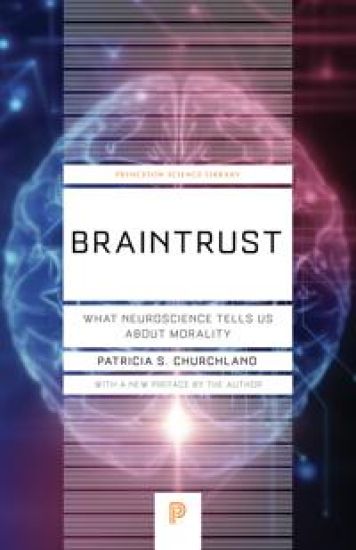
Braintrust

Braintrust

Patricia S. Churchland

Princeton University Press
2018
pokkari
A provocative new account of how morality evolvedWhat is morality? Where does it come from? And why do most of us heed its call most of the time? In Braintrust, neurophilosophy pioneer Patricia Churchland argues that morality originates in the biology of the brain. She describes the "neurobiological platform of bonding" that, modified by evolutionary pressures and cultural values, has led to human styles of moral behavior. The result is a provocative genealogy of morals that asks us to reevaluate the priority given to religion, absolute rules, and pure reason in accounting for the basis of morality. Moral values, Churchland argues, are rooted in a behavior common to all mammals—the caring for offspring. The evolved structure, processes, and chemistry of the brain incline humans to strive not only for self-preservation but for the well-being of allied selves—first offspring, then mates, kin, and so on, in wider and wider "caring" circles. Separation and exclusion cause pain, and the company of loved ones causes pleasure; responding to feelings of social pain and pleasure, brains adjust their circuitry to local customs. In this way, caring is apportioned, conscience molded, and moral intuitions instilled. A key part of the story is oxytocin, an ancient body-and-brain molecule that, by decreasing the stress response, allows humans to develop the trust in one another necessary for the development of close-knit ties, social institutions, and morality. A major new account of what really makes us moral, Braintrust challenges us to reconsider the origins of some of our most cherished values.
Word and Object

Word and Object

Willard Van Orman Quine; Patricia S. Churchland

MIT Press
2013
pokkari

Halvin toimitettuna 65,10 €

A new edition of Quine's most important work. Willard Van Orman Quine begins this influential work by declaring, "Language is a social art. In acquiring it we have to depend entirely on intersubjectively available cues as to what to say and when." As Patricia Smith Churchland notes in her foreword to this new edition, with Word and Object Quine challenged the tradition of conceptual analysis as a way of advancing knowledge. The book signaled twentieth-century philosophy's turn away from metaphysics and what Churchland calls the "phony precision" of conceptual analysis. In the course of his discussion of meaning and the linguistic mechanisms of objective reference, Quine considers the indeterminacy of translation, brings to light the anomalies and conflicts implicit in our language's referential apparatus, clarifies semantic problems connected with the imputation of existence, and marshals reasons for admitting or repudiating each of various categories of supposed objects. In addition to Churchland's foreword, this edition offers a new preface by Quine's student and colleague Dagfinn Follesdal that describes the never-realized plans for a second edition of Word and Object, in which Quine would offer a more unified treatment of the public nature of meaning, modalities, and propositional attitudes.
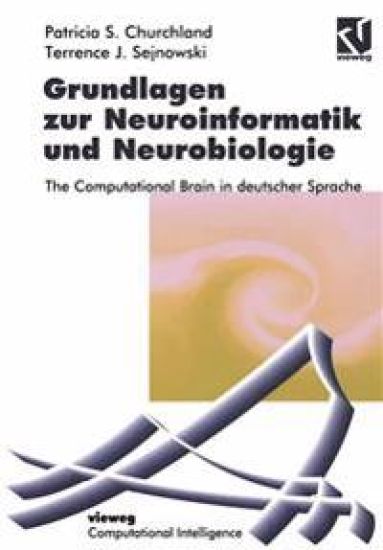
Grundlagen zur Neuroinformatik und Neurobiologie

Grundlagen zur Neuroinformatik und Neurobiologie

Patricia S. Churchland; Terrence J. Sejnowski

Springer Vieweg
2012
nidottu
The Computational Brain, das aussergewohnliche Buch uber vergleichende Forschung in den Bereichen von menschlichem Gehirn und neuesten Moglichkeiten der Computertechnologie, liegt hiermit erstmals in deutscher Sprache vor. Geschrieben von einem fuhrenden Forscherteam in den USA, ist es eine Fundgrube fur alle, die wissen wollen, was der Stand der Wissenschaft auf diesem Gebiet ist. Die Autoren fuhren die Bereiche der Neuroinformatik und Neurobiologie mit gut ausgesuchten Beispielen und der gebotenen Hintergrundinformation gekonnt zusammen. Das Buch wird somit nicht nur dem Fachwissenschaftler sondern auch dem interdisziplinaren Interesse des Informatikers und des Biologen auf eine hervorragende Weise gerecht. Ubersetzt wurde das Buch von Prof. Dr. Steffen Holldobler und Dipl.-Biol. Claudia Holldobler, einem Informatiker und einer Biologin. Rezension in Spektrum der Wissenschaft nr. 10, S. 122 f. im Oktober 1997 (...) Die 1992 erschienene amerikanische Originalausgabe des vorliegenden Werkes ist so erfolgreich, dass man bereits von einem Klassiker reden kann. (...) (...) ...ist das Buch sehr zu empfehlen. In Verbindung von Neurobiologie und Neuroinformatik konkurrenzlos, vermittelt es einiges von der Faszination theoretischer Hirnforschung, die auch in Deutschland zunehmend mehr Wissenschaftler in ihren Bann schlagt. Rezension erschienen in: Computer Spektrum 3/1997, S. 2 (...)Das Buch wird somit nicht nur dem Fachwissenschaftler, sondern auch den interdisziplinaren Interesse des Informatikers und des Biologen auf eine hervorragende Weise gerecht(...)
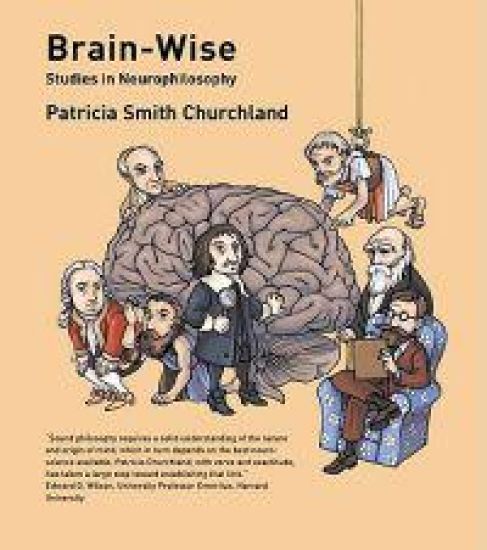
Brain-Wise

Brain-Wise

Patricia S. Churchland

Bradford Books
2002
pokkari
Progress in the neurosciences is profoundly changing our conception of ourselves. Contrary to time-honored intuition, the mind turns out to be a complex of brain functions. And contrary to the wishful thinking of some philosophers, there is no stemming the revolutionary impact that brain research will have on our understanding of how the mind works. Brain-Wise is the sequel to Patricia Smith Churchland's Neurophilosophy, the book that launched a subfield. In a clear, conversational manner, this book examines old questions about the nature of the mind within the new framework of the brain sciences. What, it asks, is the neurobiological basis of consciousness, the self, and free choice? How does the brain learn about the external world and about its own introspective world? What can neurophilosophy tell us about the basis and significance of religious and moral experiences? Drawing on results from research at the neuronal, neurochemical, system, and whole-brain levels, the book gives an up-to-date perspective on the state of neurophilosophy-what we know, what we do not know, and where things may go from here.