Kirjojen hintavertailu – 12 903 725 kirjaa ja 27 kauppaa

Kirjailija

Patricia Shehan Campbell

Kirjat ja teokset yhdessä paikassa: 10 kirjaa, julkaisuja vuosilta 2007–2020, suosituimpiin kuuluu Music for Elementary Classroom Teachers. Vertaile teosten hintoja ja tarkista saatavuus suomalaisista kirjakaupoista.

10 kirjaa

Kirjojen julkaisuvuodet: 2007–2020.

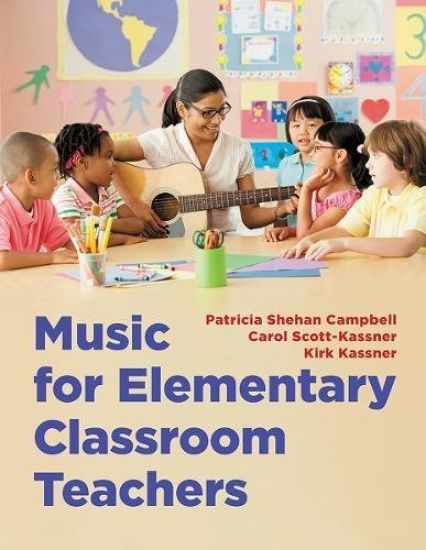
Music for Elementary Classroom Teachers

Music for Elementary Classroom Teachers

Patricia Shehan Campbell; Carol Scott-Kassner; Kirk Kassner

WW Norton Co
2017
muu
Learn how to use the power of music to enhance other subjects. Written for both elementary education majors and K-6 classroom teachers, the text is rooted in cognitive research on children’s development. The book offers myriad instructional plans that weave songs, dances, and carefully constructed listening experiences into subjects ranging from language arts and social studies to mathematics, science, and the arts. It also provides opportunities for engaging children in expressive-creative practices.
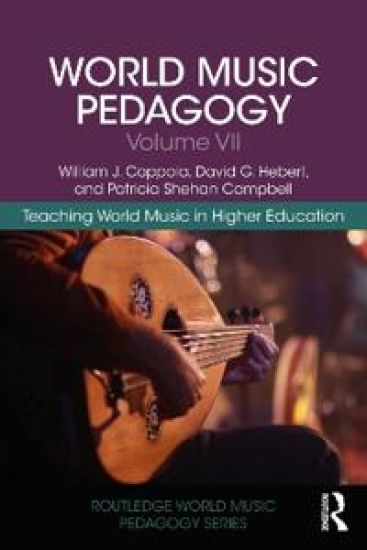
World Music Pedagogy, Volume VII: Teaching World Music in Higher Education

World Music Pedagogy, Volume VII: Teaching World Music in Higher Education

William J. Coppola; David G. Hebert; Patricia Shehan Campbell

Routledge
2020
nidottu
World Music Pedagogy, Volume VII: Teaching World Music in Higher Education addresses a pedagogical pathway of varied strategies for teaching world music in higher education, offering concrete means for diversifying undergraduate studies through world music culture courses. While the first six volumes in this series have detailed theoretical and applied principles of World Music Pedagogy within K-12 public schools and broader communities, this seventh volume is chiefly concerned with infusing culture-rich musical experiences through world music courses at the tertiary level, presenting a compelling argument for the growing need for such perspectives and approaches. These chapters include discussions of the logical trajectories of the framework into world music courses, through which the authors seek to challenge the status quo of lecture-only academic courses in some college and university music programs. Unique to this series, each of these chapters illustrates practical procedures for incorporating the WMP framework into sample classes. However, this volume (like the rest of the series) is not a prescriptive "recipe book" of lesson plans. Rather, it seeks to enrich the conversation surrounding cultural diversity in music through philosophically-rooted, social justice-conscious, and practice-oriented perspectives.
World Music Pedagogy, Volume VII: Teaching World Music in Higher Education

World Music Pedagogy, Volume VII: Teaching World Music in Higher Education

William J. Coppola; David G. Hebert; Patricia Shehan Campbell

Routledge
2020
sidottu
World Music Pedagogy, Volume VII: Teaching World Music in Higher Education addresses a pedagogical pathway of varied strategies for teaching world music in higher education, offering concrete means for diversifying undergraduate studies through world music culture courses. While the first six volumes in this series have detailed theoretical and applied principles of World Music Pedagogy within K-12 public schools and broader communities, this seventh volume is chiefly concerned with infusing culture-rich musical experiences through world music courses at the tertiary level, presenting a compelling argument for the growing need for such perspectives and approaches. These chapters include discussions of the logical trajectories of the framework into world music courses, through which the authors seek to challenge the status quo of lecture-only academic courses in some college and university music programs. Unique to this series, each of these chapters illustrates practical procedures for incorporating the WMP framework into sample classes. However, this volume (like the rest of the series) is not a prescriptive "recipe book" of lesson plans. Rather, it seeks to enrich the conversation surrounding cultural diversity in music through philosophically-rooted, social justice-conscious, and practice-oriented perspectives.
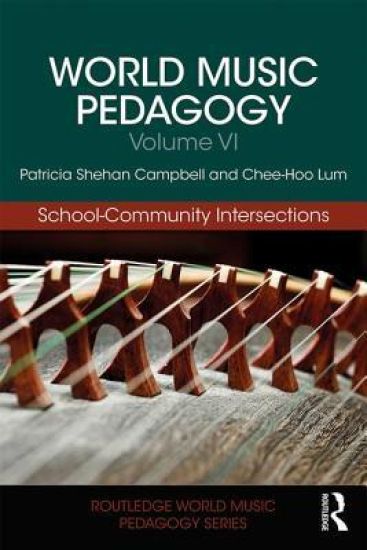
World Music Pedagogy, Volume VI: School-Community Intersections

World Music Pedagogy, Volume VI: School-Community Intersections

Patricia Shehan Campbell; Chee Hoo Lum

Routledge
2019
nidottu
World Music Pedagogy, Volume VI: School-Community Intersections provides students with a resource for delving into the meaning of "world music" across a broad array of community contexts and develops the multiple meanings of community relative to teaching and learning music of global and local cultures. It clarifies the critical need for teachers to work in tandem with community musicians and artists in order to bridge the unnecessary gulf that often separates school music from the music of the world beyond school and to consider the potential for genuine collaborations across this gulf. The five-layered features of World Music Pedagogy are specifically addressed in various school-community intersections, with attention to the collaboration of teachers with local community artist-musicians and with community musicians-at-a-distance who are available virtually. The authors acknowledge the multiple routes teachers are taking to enable and encourage music learning in community contexts, such as their work in after-school academies, museums and libraries, eldercare centers, places of worship, parks and recreation centers, and other venues in which adults and children gather to learn music, make music, and become convivial through musicThis volume suggests that the world’s musical cultures may be found locally, can be tapped virtually, and are important in considerations of music teaching and learning in schools and community contexts. Authors describe working artists and teachers, scenarios, vignettes, and teaching and learning experiences that happen in communities and that embrace the role of community musicians in schools, all of which will be presented with supporting theoretical frameworks.
World Music Pedagogy, Volume VI: School-Community Intersections

World Music Pedagogy, Volume VI: School-Community Intersections

Patricia Shehan Campbell; Chee Hoo Lum

Routledge
2019
sidottu
World Music Pedagogy, Volume VI: School-Community Intersections provides students with a resource for delving into the meaning of "world music" across a broad array of community contexts and develops the multiple meanings of community relative to teaching and learning music of global and local cultures. It clarifies the critical need for teachers to work in tandem with community musicians and artists in order to bridge the unnecessary gulf that often separates school music from the music of the world beyond school and to consider the potential for genuine collaborations across this gulf. The five-layered features of World Music Pedagogy are specifically addressed in various school-community intersections, with attention to the collaboration of teachers with local community artist-musicians and with community musicians-at-a-distance who are available virtually. The authors acknowledge the multiple routes teachers are taking to enable and encourage music learning in community contexts, such as their work in after-school academies, museums and libraries, eldercare centers, places of worship, parks and recreation centers, and other venues in which adults and children gather to learn music, make music, and become convivial through musicThis volume suggests that the world’s musical cultures may be found locally, can be tapped virtually, and are important in considerations of music teaching and learning in schools and community contexts. Authors describe working artists and teachers, scenarios, vignettes, and teaching and learning experiences that happen in communities and that embrace the role of community musicians in schools, all of which will be presented with supporting theoretical frameworks.
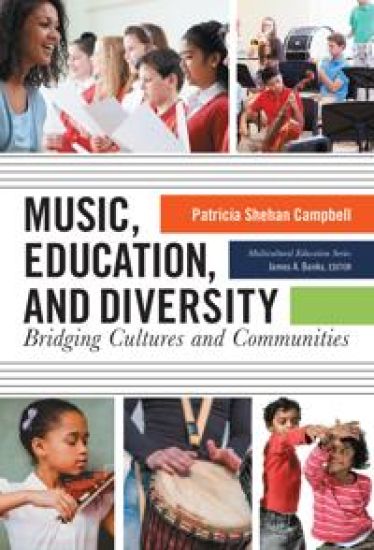
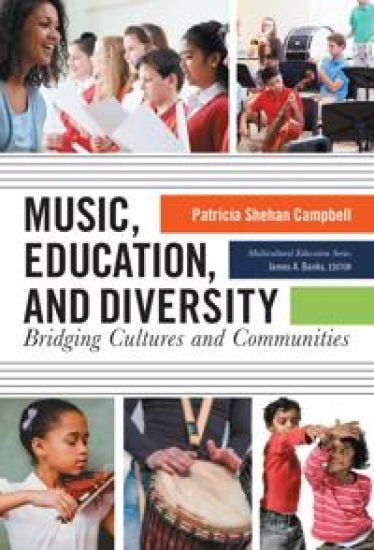
Music, Education, and Diversity

Music, Education, and Diversity

Patricia Shehan Campbell

Teachers' College Press
2018
nidottu
Music is a powerful means for educating citizens in a multicultural society and meeting many challenges shared by teachers across all subjects and grade levels. By celebrating heritage and promoting intercultural understandings, music can break down barriers between various ethnic, racial, cultural, and language groups within elementary and secondary schools. This book provides important insights for educators in music, the arts, and other subjects on the role that music can play in the curriculum as a powerful bridge to cultural understanding. The author documents key ideas and practices that have influenced current music education, particularly through efforts of ethnomusicologists in collaboration with educators, and examines some of the promises and pitfalls in shaping multicultural education through music. The text highlights World Music Pedagogy as a gateway to studying other cultures as well as the importance of including local music and musicians in the classroom.
Music, Education, and Diversity

Music, Education, and Diversity

Patricia Shehan Campbell

Teachers' College Press
2018
sidottu
Music is a powerful means for educating citizens in a multicultural society and meeting many challenges shared by teachers across all subjects and grade levels. By celebrating heritage and promoting intercultural understandings, music can break down barriers between various ethnic, racial, cultural, and language groups within elementary and secondary schools. This book provides important insights for educators in music, the arts, and other subjects on the role that music can play in the curriculum as a powerful bridge to cultural understanding. The author documents key ideas and practices that have influenced current music education, particularly through efforts of ethnomusicologists in collaboration with educators, and examines some of the promises and pitfalls in shaping multicultural education through music. The text highlights World Music Pedagogy as a gateway to studying other cultures as well as the importance of including local music and musicians in the classroom.
Free to Be Musical

Free to Be Musical

Lee Higgins; Patricia Shehan Campbell; Gary McPherson

Rowman Littlefield Education
2010
nidottu
Free to Be Musical: Group Improvisation in Music is for those who lead musical experiences in the lives of children, youth, and adults. Offering a set of experiences to inspire creative musical expression, this book will prove useful for music education majors, practicing music teachers, community musicians, and music therapists alike. The experiences (or 'events') are designed to reduce the musical barriers that Western societies pass on to children by the time they reach the 'age of reason,' when the natural childhood penchant to sing, dance, and play musically gives way to perfect performances of standard repertoire preserved in Western staff notation. The authors present ways to encourage music that is expressive and inventive, spontaneous yet thoughtful, communal and collaborative, and unlimited in its potential to bring fulfillment to those who make it. You'll find opportunities to release the musical imagination in ways that are free and expansive, playful and instructive, personal and interpersonal. Higgins and Campbell have created a context that validates the experiments and explorations of all people who are potential makers of all styles of music. Their musical events embrace the belief that music-making is 'a trail of no mistakes,' a celebration of the many and varied musical pathways that both teacher and student can take.
Free to Be Musical

Free to Be Musical

Lee Higgins; Patricia Shehan Campbell; Gary McPherson

Rowman Littlefield Education
2010
sidottu
Free to Be Musical: Group Improvisation in Music is for those who lead musical experiences in the lives of children, youth, and adults. Offering a set of experiences to inspire creative musical expression, this book will prove useful for music education majors, practicing music teachers, community musicians, and music therapists alike. The experiences (or "events") are designed to reduce the musical barriers that Western societies pass on to children by the time they reach the "age of reason," when the natural childhood penchant to sing, dance, and play musically gives way to perfect performances of standard repertoire preserved in Western staff notation. The authors present ways to encourage music that is expressive and inventive, spontaneous yet thoughtful, communal and collaborative, and unlimited in its potential to bring fulfillment to those who make it. You'll find opportunities to release the musical imagination in ways that are free and expansive, playful and instructive, personal and interpersonal. Higgins and Campbell have created a context that validates the experiments and explorations of all people who are potential makers of all styles of music. Their musical events embrace the belief that music-making is "a trail of no mistakes," a celebration of the many and varied musical pathways that both teacher and student can take.
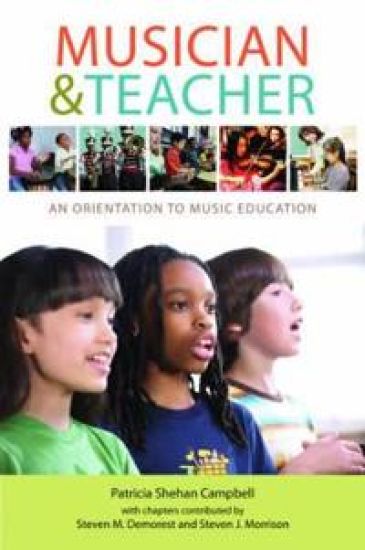
Musician & Teacher

Musician & Teacher

Patricia Shehan Campbell

WW Norton Co
2007
nidottu
Designed for the first course in music education, Musician & Teacher surveys the theoretical, philosophical, historical, social, and psychological foundations of teaching music and pays tribute to the local and global realms of music teaching and learning. At the same time, the book examines the developmental issues inherent in teaching music to children and adolescents along with the practicalities of motivating students and managing a classroom, providing the concrete application beginning educators need to successfully teach music to children in grades K–12.