Kirjojen hintavertailu – 12 903 737 kirjaa ja 27 kauppaa
Kirjailija
Patrick Blackburn
Kirjat ja teokset yhdessä paikassa: 6 kirjaa, julkaisuja vuosilta 2002–2014, suosituimpiin kuuluu Cupid Missed. Vertaile teosten hintoja ja tarkista saatavuus suomalaisista kirjakaupoista.
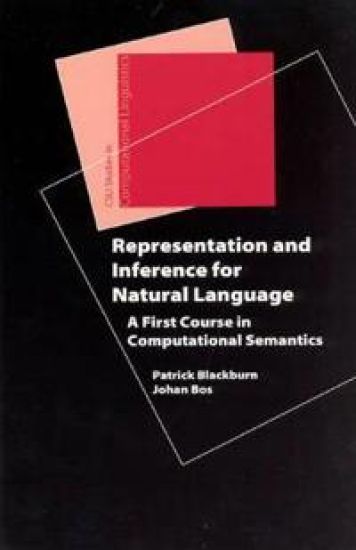
How can computers distinguish the coherent from the unintelligible, recognize new information in a sentence, or draw inferences from a natural language passage? Computational semantics is an exciting new field that seeks answers to these questions, and this volume is the first textbook wholly devoted to this growing sub discipline. The book explains the underlying theoretical issues and fundamental techniques for computing semantic representations for fragments of natural language. This volume will be an essential text for computer scientists, linguists, and anyone interested in the development of computational semantics.
How can computers distinguish the coherent from the unintelligible, recognize new information in a sentence, or draw inferences from a natural language passage? Computational semantics is an exciting new field that seeks answers to these questions, and this volume is the first textbook wholly devoted to this growing sub discipline. The book explains the underlying theoretical issues and fundamental techniques for computing semantic representations for fragments of natural language. This volume will be an essential text for computer scientists, linguists, and anyone interested in the development of computational semantics.
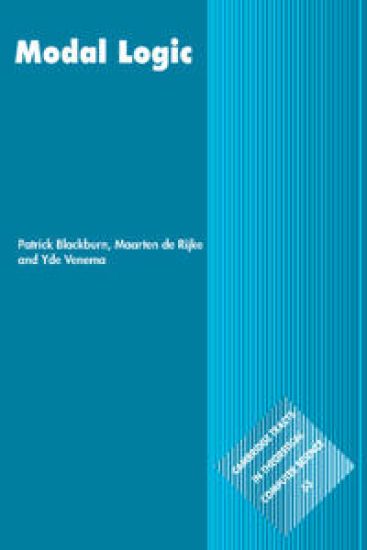
This is an advanced 2001 textbook on modal logic, a field which caught the attention of computer scientists in the late 1970s. Researchers in areas ranging from economics to computational linguistics have since realised its worth. The book is for novices and for more experienced readers, with two distinct tracks clearly signposted at the start of each chapter. The development is mathematical; prior acquaintance with first-order logic and its semantics is assumed, and familiarity with the basic mathematical notions of set theory is required. The authors focus on the use of modal languages as tools to analyze the properties of relational structures, including their algorithmic and algebraic aspects, and applications to issues in logic and computer science such as completeness, computability and complexity are considered. Three appendices supply basic background information and numerous exercises are provided. Ideal for anyone wanting to learn modern modal logic.