Kirjojen hintavertailu – 12 859 819 kirjaa ja 27 kauppaa

Kirjailija

Patrick Bond

Kirjat ja teokset yhdessä paikassa: 13 kirjaa, julkaisuja vuosilta 2006–2025, suosituimpiin kuuluu New South African Review 2. Vertaile teosten hintoja ja tarkista saatavuus suomalaisista kirjakaupoista.

13 kirjaa

Kirjojen julkaisuvuodet: 2006–2025.

New South African Review 2

New South African Review 2

William Attwell; Leslie Bank; Naidoo Prishani; Patrick Bond; Imraan Buccus; John Daniel; Jane Duncan; Fig David; Hamill James; Janine Hicks; John Hoffman; Paul Hoffman; Malose Langa; Lindsay Don; Clifford Mabhena; Rajohane Matshedisho; Pillay Devan; Saloojee Haroon; Satgar Vishwas; Christopher Saunders; Sharife Khadija; Skinner Kate; Southall Roger; Neil Southern; Karl von Holdt; Edward Webster; Williams Michelle

Wits University Press
2011
nidottu
The second volume of the New South African Review (NSAR) continues a tradition of debate and critical, analytical scholarship about contemporary South Africa. Drawing on authors from academia and beyond, it aims to be informative, discursive and provocative. In this volume, the New Growth Path (NGP) adopted by the South African government in 2010 provides the basis for a debate about whether 'decent work' is the best possible solution to South Africa's problems of low economic growth and high unemployment. Rising inequality is explored against the backdrop of the failings of Black Economic Empowerment (BEE) and Broad-Based Black Economic Empowerment (BBBEE). The NGP's proposals for 'greening the economy' are discussed, with emphasis on the creation of 'green jobs' and biofuels. The volume also includes investigations into the crisis of acid mine drainage on the Witwatersrand, and other persistent environmental challenges. Possibilities for participatory forms of government are surveyed, and civil society activism is explored in relation to the South African Broadcasting Corporation (SABC) and environmental campaigns. The crisis in child care in public hospitals, the difficulties that characterise attempts at building relationships between the police and a township community, and the problems related to the absence of legislation to govern the powers of traditional authorities over land allocation (through the experience of the Eastern Cape) are also featured. Asking whether the NGP reflects a set of new policies or an attempt to re-dress old (com)promises in new clothes, this volume brings together different voices in debate about possibilities for alternatives to neo-liberal and capitalist development in South Africa.

Extreme Uneven Development

Extreme Uneven Development

Patrick Bond

Springer International Publishing AG
2025
sidottu
This book reassesses classic Marxist theories of finance capital and uneven development in the context of the present intensified process of financialization and the accentuation of combined and accelerating uneven development. In particular, the work of Hilferding and Luxemburg is discussed and re-framed in light of both the contributions of Marx and more recent engagements by David Harvey and Neil Smith. The book explores the case of South Africa in particular in light of the combination of a rapidly financializing yet crisis-ridden South African political economy on the one hand and intensifying social inequality and political conflict on the other. It explores a series of strategies and possibilities that might open up trajectories for change and transformation with particular attention paid to the promises and constraints of the de-growth movement and intersectional class struggle, which will appeal to political economists, researchers, and students alongside those studying South Africa specifically.
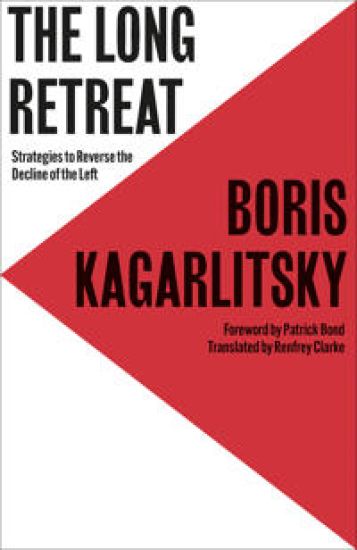
The Long Retreat

The Long Retreat

Boris Kagarlitsky; Patrick Bond

PLUTO PRESS
2024
pokkari

Halvin toimitettuna 34,60 €

'A man of enormous intellect, knowledge and bravery' - Jeremy Corbyn MP 'Perhaps the most prominent Marxist thinker in the post-Soviet space' – Open Democracy Authoritarianism is rampant across the globe. Right-wing governments from Russia to America oversee wars from Ukraine to Palestine, while capitalism lurches from crisis to crisis, its citizens mired in poverty. Imprisoned Putin critic Boris Kagarlitsky confronts this stark reality, demanding a clear strategy from the left to dismantle this ever-darkening nightmare. As well as bringing Russian and Western thinkers into dialogue, Kagarlitsky draws upon his experiences as a Russian dissident since the latter days of the Soviet Union in this detailed analysis of leftist strategy. As a Marxist, he engages in radical ideas including Universal Basic Income and decentralised collective ownership, as well as looking at historical and contemporary examples of revolution and dissent, covering the left's response to the war in Ukraine. Written just before Kagarlitsky’s imprisonment, The Long Retreat stands as a testament to subversive Russian literature. It asks if the left can put aside its paralysing sectarianism and conceits of ideological purity in order to transform society for the benefit of the global working class. Kagarlitsky believes it can, as long as it is unafraid to look critically at its own ideas and actions.
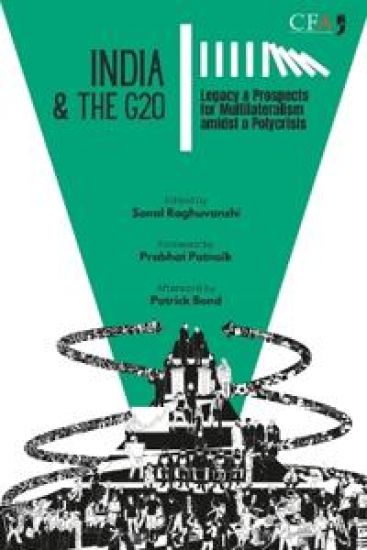
India & the G20

India & the G20

Prabhat Patnaik; Patrick Bond; Sonal Raghuvanshi

YODA PRESS
2023
pokkari
India's G20 Presidency is occurring at a crucial moment in the history of the world economy; as such it is important to ask what India's role would be sitting on this high table. This compendium brings together diverse voices that are not afraid of asking difficult questions, or presenting analyses that diverge from the mainstream narratives and attempt to provide a much needed grounded analysis of the G20 framework.
BRICS and the New American Imperialism

BRICS and the New American Imperialism

Vishwas Satgar; Ferrial Adam; Samir Amin; Patrick Bond; William K Carroll; Christopher Chase-Dunn; Alexander Gallas; Ana Garcia; Karina Kato; Nivedita Majumdar; Keamogetswe Seipato

Wits University Press
2020
pokkari
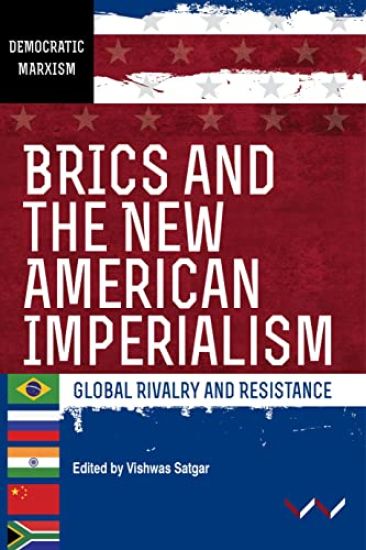
Challenges the mainstream understanding of BRICS and US dominance to situate the new global rivalries engulfing capitalism BRICS is a grouping of the five major emerging economies of Brazil, Russia, India, China and South Africa. Volume five in the Democratic Marxism series, BRICS and the New American Imperialism challenges the mainstream understanding of BRICS and US dominance to situate the new global rivalries engulfing capitalism. It offers novel analyses of BRICS in the context of increasing US induced imperial chaos, deepening environmental crisis tendencies (such as climate change and water scarcity), contradictory dynamics inside BRICS countries and growing subaltern resistance. The authors revisit contemporary thinking on imperialism and anti-imperialism, drawing on the work of Rosa Luxemburg, one of the leading theorists after Marx, who attempted to understand the expansionary nature of capitalism from the heartlands to the peripheries. The richness of Luxemburg's pioneering work inspires most of the volume's contributors in their analyses of the dangerous contradictions of the contemporary world as well as forms of democratic agency advancing resistance. While various forms of resistance are highlighted, among them water protests, mass worker strikes, anti-corporate campaigning and forms of cultural critique, this volume grapples with the challenge of renewing anti-imperialism beyond the NGO-driven World Social Forum and considers the prospects of a new horizontal political vessel to build global convergence. It also explores the prospects of a Fifth International of Peoples and Workers.
Brics and the New American Imperialism

Brics and the New American Imperialism

Vishwas Satgar; Ferrial Adam; Samir Amin; Patrick Bond; William K Carroll; Christopher Chase-Dunn; Alexander Gallas; Ana Garcia; Karina Kato; Nivedita Majumdar; Keamogetswe Seipato

WITS UNIVERSITY PRESS
2020
sidottu
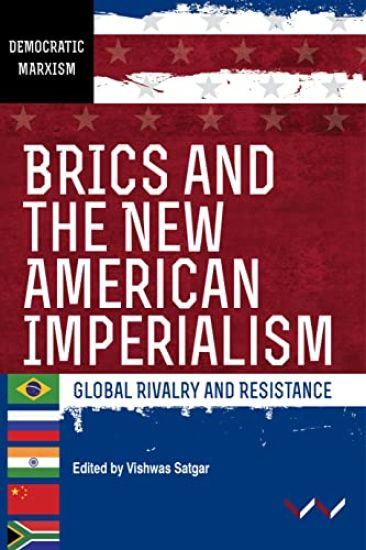
Challenges the mainstream understanding of BRICS and US dominance to situate the new global rivalries engulfing capitalism BRICS is a grouping of the five major emerging economies of Brazil, Russia, India, China and South Africa. Volume five in the Democratic Marxism series, BRICS and the New American Imperialism challenges the mainstream understanding of BRICS and US dominance to situate the new global rivalries engulfing capitalism. It offers novel analyses of BRICS in the context of increasing US induced imperial chaos, deepening environmental crisis tendencies (such as climate change and water scarcity), contradictory dynamics inside BRICS countries and growing subaltern resistance. The authors revisit contemporary thinking on imperialism and anti-imperialism, drawing on the work of Rosa Luxemburg, one of the leading theorists after Marx, who attempted to understand the expansionary nature of capitalism from the heartlands to the peripheries. The richness of Luxemburg's pioneering work inspires most of the volume's contributors in their analyses of the dangerous contradictions of the contemporary world as well as forms of democratic agency advancing resistance. While various forms of resistance are highlighted, among them water protests, mass worker strikes, anti-corporate campaigning and forms of cultural critique, this volume grapples with the challenge of renewing anti-imperialism beyond the NGO-driven World Social Forum and considers the prospects of a new horizontal political vessel to build global convergence. It also explores the prospects of a Fifth International of Peoples and Workers.
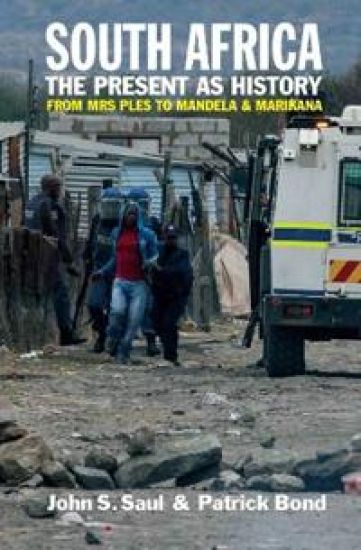
South Africa - The Present as History

South Africa - The Present as History

John S. Saul; Patrick Bond

James Currey
2016
pokkari
Analyses on-going movements against inequality and injustice in South Africa to show how these are rooted in its early history, anti-apartheid resistance and struggles for independence. In 1994, the first non-racial elections in South Africa brought Nelson Mandela and his African National Congress to office; elections since have confirmed the ANC's hold, both popular and legitimate, on power. Yet, at the same time, South Africa has one of the highest rates of protest and dissent in the world - underscored by the police shooting of 34 striking miners at Marikana in 2012 - regions of deep poverty and environmental degradation, rising inequality and high unemployment rates. This book looks at this paradox by examining the precise character of the post-apartheid state, and the roots of the hope that something better than the semi-liberation that the ANC has presided over must not be long delayed - both within the ANC itself and within the broader society of South Africa. The authors present a history of South Africa from earliest times, with today's post-apartheid society interpreted andunderstood in the context of and through the lens of its earlier history. Following the introduction, which offers an analytical background to the narrative that follows, they track the course of South African history: from its origins to apartheid in the 1970; through the crisis and transition of the 1970s and 1980s to the historic deal-making of 1994 that ended apartheid; to its recent history from Mandela to Marikana, with increasing signs of social unrest and class conflict. Finally, the authors reflect on the present situation in South Africa with reference to the historical patterns that have shaped contemporary realities and the possibility of a 'next liberation struggle'. Shortlisted for the 2014 Tamara and Isaac Deutscher Prize John S. Saul is Professor Emeritus at York University (Canada). Patrick Bond is Senior Professor of Development Studies and Director of the Centre forCivil Society at the University of KwaZulu-Natal (Durban). Southern Africa (South Africa, Namibia, Lesotho, Swaziland & Botswana): Jacana
Elite Transition

Elite Transition

Patrick Bond

Pluto Press
2014
sidottu
Released to coincide with the 20th anniversary of the end of apartheid, this is an updated edition of a best-selling work of political analysis. Patrick Bond, a former adviser to the ANC, investigates how groups such as the ANC went from being a force of liberation to a vehicle now perceived as serving the economic interests of an elite few. This edition includes new analysis looking at the 2008 internal coup against Thabo Mbeki, the subsequent economic crisis and the massacre of miners at Marikana in 2012. Bond also assesses the historiography of the transition written since 2000 from nationalist, liberal and radical perspectives, and replies to critics of his work, both from liberal and nationalist perspectives. This is an essential text on post-Apartheid South Africa, which will be vital reading for all who study or have an interest in this part of the continent, and in social change and neoliberal public policy more generally.
Elite Transition

Elite Transition

Patrick Bond

Pluto Press
2014
pokkari
Released to coincide with the 20th anniversary of the end of apartheid, this is an updated edition of a best-selling work of political analysis. Patrick Bond, a former adviser to the ANC, investigates how groups such as the ANC went from being a force of liberation to a vehicle now perceived as serving the economic interests of an elite few. This edition includes new analysis looking at the 2008 internal coup against Thabo Mbeki, the subsequent economic crisis and the massacre of miners at Marikana in 2012. Bond also assesses the historiography of the transition written since 2000 from nationalist, liberal and radical perspectives, and replies to critics of his work, both from liberal and nationalist perspectives. This is an essential text on post-Apartheid South Africa, which will be vital reading for all who study or have an interest in this part of the continent, and in social change and neoliberal public policy more generally.
Politics of Climate Justice

Politics of Climate Justice

Patrick Bond

University of KwaZulu-Natal Press
2011
nidottu
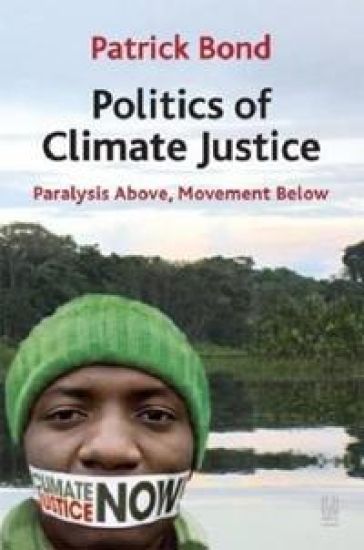
This is an indispensable book for anyone who seeks to understand world leaders' responses to climate change through the United Nations' Conference of the Parties (COP). Politics of Climate Justice provides the vital background and theoretical context to what happened at the COPS in Kyoto, Copenhagen, Cancun, and Durban. It explores the favoured strategies of key elite's from the crisis ridden global and national power blocs, including South Africa, and finds them incapable of reconciling the threat to the planet with their economies' addiction to fossil fuels. Finally, the book reveals sites of climate justice and interrogates the new movement's approach.
Aid to Africa

Aid to Africa

Samir Amin; Demba Moussa Dembele; Patrick Bond

Pambazuka Press
2009
pokkari
While Africa is the biggest recipient of aid globally, the terms, conditions and principles upon which aid is delivered are rarely defined by the people of Africa - although it is for them that this aid, at least rhetorically, is meant to create positive change. With the current global economic crisis and high-level meetings on aid effectiveness, the debate on aid to Africa is resurgent. Coming from the diverse perspectives of African social commentators, academics and activists including Demba Moussa Dembele, Patrick Bond, Samir Amin and Charles Mutasa, this comprehensive volume explores the premise, history and foundation upon which the concept of aid is based. It considers aid's relationship to the broader development discourse in Africa, the politics and power dynamics of aid mechanisms and how the emergence of powers such as China and India are redefining the global aid architecture. Aid to Africa considers how to create a more just aid system that contributes to Africa's development while also elaborating alternative approaches that understand the inherent inequity of aid. Critically, this book provides a framework not merely to render aid more effective, something which the current mainstream discourse is grappling to define, but to create an alternative African development paradigm from Pan-Africanist, feminist and other perspectives.
Looting Africa

Looting Africa

Patrick Bond

Zed Books Ltd
2006
nidottu
Despite the rhetoric, the people of Sub-Saharan Africa are become poorer. From Tony Blair's Africa Commission and the Make Poverty History campaign to the Hong Kong WTO meeting, Africa's gains have been mainly limited to public relations. The central problems remain exploitative debt and financial relationships with the North, phantom aid, unfair trade, distorted investment and the continent's brain/skills drain. Moreover, capitalism in most African countries has witnessed the emergence of excessively powerful ruling elites with incomes derived from financial-parasitical accumulation. Without overstressing the 'mistakes' of such elites, this book contextualises Africa's wealth outflow within a stagnant but volatile world economy.
Rating Valuation Principles Into Practice

Rating Valuation Principles Into Practice

Peter Brown; Patrick Bond

ESTATES GAZETTE
2006
nidottu
Suitable for both students studying for their examinations and practitioners needing a comprehensive textbook covering rating law, valuation and practice. This book is illustrated with example valuations showing both methods of valuation and also the variety of property surveyors come across in practice.