Kirjojen hintavertailu – 12 859 827 kirjaa ja 27 kauppaa

Kirjailija

Patrick Brown

Kirjat ja teokset yhdessä paikassa: 32 kirjaa, julkaisuja vuosilta 2009–2026, suosituimpiin kuuluu Own Your Dreams: How to Take Possession of the Life You Deserve. Vertaile teosten hintoja ja tarkista saatavuus suomalaisista kirjakaupoista.

32 kirjaa

Kirjojen julkaisuvuodet: 2009–2026.

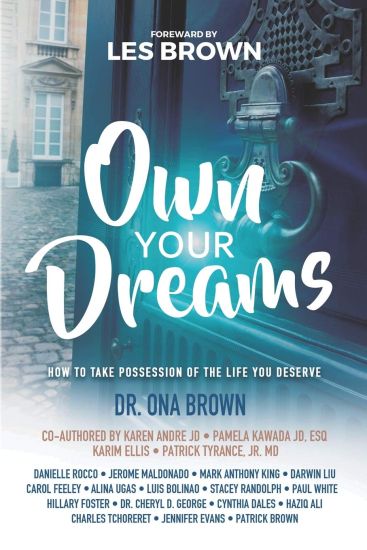
Own Your Dreams: How to Take Possession of the Life You Deserve

Own Your Dreams: How to Take Possession of the Life You Deserve

Patrick Brown; Karen André Jd; Pamela Kawada Jd Esq

Brown Family Publishing LLC
2020
nidottu
What does it mean to Own your dreams? That is the question Dr. Ona Brown and twenty co-authors answer in this collaborative book, designed to be the ultimate self-development tool in your arsenal to make your dreams reality. Achieving those deep desires are never easy; that is why so few do. Those who don't quit, reap the reward. Each author in this book has struggled with massive obstacles placed in their way. Every chapter not only gives you valuable action steps that you can apply to your life, but shows you what is possible. As you read their heart-warming stories, you learn how they conquered insurmountable difficulties to live the life of their dreams.
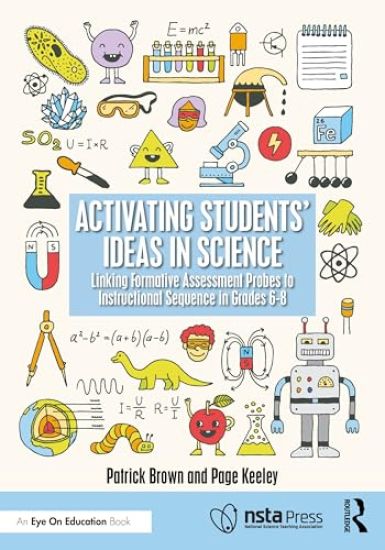
Activating Students' Ideas in Science

Activating Students' Ideas in Science

Patrick Brown; Page Keeley

TAYLOR FRANCIS LTD
2026
sidottu
This resource helps bring both student thinking and instructional sequencing to the forefront of your science teaching. Grounded in cognitive science and best practices in formative assessment, this book provides a practical “explore-before-explain” approach to engage middle school students in doing science, not merely memorizing it, fostering their creativity, scientific reasoning, and long-lasting understanding. Each chapter is a classroom vignette that demonstrates how effective instructional sequencing can enhance students’ understanding of science content, from physical science concepts such as heat and temperature to chemical reactions and forces in motion. Chapters also include strategies for fostering classroom discourse, promoting metacognition, and scaffolding for diverse learners. Ideal for science educators of grades 6-8, this guide supports your instructional design journey, both in alignment with Next Generation Science Standards (NGSS) and in ensuring student-centered content delivery for improved scientific literacy.
Activating Students' Ideas in Science

Activating Students' Ideas in Science

Patrick Brown; Page Keeley

TAYLOR FRANCIS LTD
2026
nidottu
This resource helps bring both student thinking and instructional sequencing to the forefront of your science teaching. Grounded in cognitive science and best practices in formative assessment, this book provides a practical “explore-before-explain” approach to engage middle school students in doing science, not merely memorizing it, fostering their creativity, scientific reasoning, and long-lasting understanding. Each chapter is a classroom vignette that demonstrates how effective instructional sequencing can enhance students’ understanding of science content, from physical science concepts such as heat and temperature to chemical reactions and forces in motion. Chapters also include strategies for fostering classroom discourse, promoting metacognition, and scaffolding for diverse learners. Ideal for science educators of grades 6-8, this guide supports your instructional design journey, both in alignment with Next Generation Science Standards (NGSS) and in ensuring student-centered content delivery for improved scientific literacy.
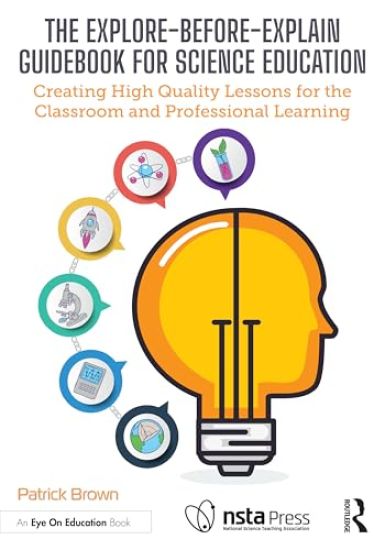
The Explore-Before-Explain Guidebook for Science Education
This guidebook uses an Explore-before-Explain instructional sequence to help you facilitate the design of active meaning-making lessons in science. Author Pat Brown models and breaks down how an Explore-before-Explain approach ensures students' conceptual understandings are constructed primarily on evidence-based experiences in the classroom. From prompting students to ponder patterns, helping them identify cause-and-effect relationships, to focusing on development of their thinking rather than validating ideas, you can use Explore-before-Explain instruction to help your students feel confident in their thinking and become more self-directed learners. Chapters focus on developing your students' conceptual science understanding through the investigation of natural occurrences. Content and module examples are provided, as well as attention to contemporary standards and safety in science. Rather than acting as a prescriptive program, however, this book adds another element to your curriculum design, showing how lessons can and should include critical elements of active sensemaking when designing an Explore-before-Explain sequence. In addition, the author shows the benefits of bringing Explore-before-Explain outside the classroom to create high-quality professional and curriculum-based learning. This resource is ideal for K-12 science teachers, as well as building administrators who are looking for a practice-oriented and research-based approach for their science curriculum. As a classroom educator, you can use these strategies for leveraging research into hands-on, minds-on activities to promote more robust and equitable learning environments. For leaders, this resource can be used to develop professional learning experiences for sustained departmental improvement.
The Explore-before-Explain Guidebook for Science Education
This guidebook uses an Explore-before-Explain instructional sequence to help you facilitate the design of active meaning-making lessons in science. Author Pat Brown models and breaks down how an Explore-before-Explain approach ensures students' conceptual understandings are constructed primarily on evidence-based experiences in the classroom. From prompting students to ponder patterns, helping them identify cause-and-effect relationships, to focusing on development of their thinking rather than validating ideas, you can use Explore-before-Explain instruction to help your students feel confident in their thinking and become more self-directed learners. Chapters focus on developing your students' conceptual science understanding through the investigation of natural occurrences. Content and module examples are provided, as well as attention to contemporary standards and safety in science. Rather than acting as a prescriptive program, however, this book adds another element to your curriculum design, showing how lessons can and should include critical elements of active sensemaking when designing an Explore-before-Explain sequence. In addition, the author shows the benefits of bringing Explore-before-Explain outside the classroom to create high-quality professional and curriculum-based learning. This resource is ideal for K-12 science teachers, as well as building administrators who are looking for a practice-oriented and research-based approach for their science curriculum. As a classroom educator, you can use these strategies for leveraging research into hands-on, minds-on activities to promote more robust and equitable learning environments. For leaders, this resource can be used to develop professional learning experiences for sustained departmental improvement.
Geostatistical modelling with R

Geostatistical modelling with R

Patrick Brown

Apple Academic Press Inc.
2023
sidottu
This book provides a comprehensive reference for solving scientific problems with the generalized linear geostatistical model (GLGM), with an emphasis on demonstrating the accompanying software through examples. The key features of the GLGM are observed data points being independent of each other conditional on an unobserved spatial surface, values of the underlying spatial surface follow a multivariate normal distribution, and the surface is the sum of explanatory variables (fixed effects) and a random term.
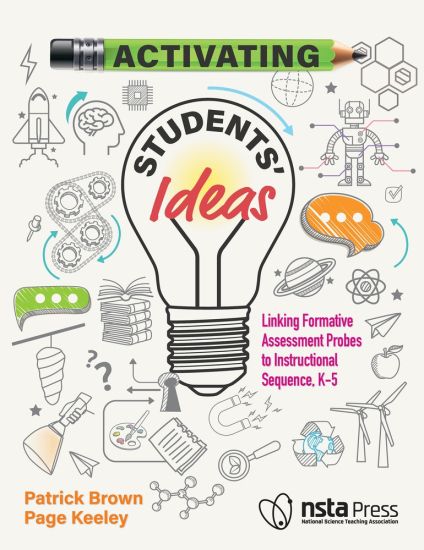
Activating Students' Ideas

Activating Students' Ideas

Patrick Brown; Page Keeley

National Science Teaching Association
2023
pokkari
Science teachers face an incredible challenging task of combining research on how students learn best, the three-dimensions of the Science Education Frameworks that in themselves are complicated to understand, and instructional sequences that lead to deeper learning. Activating Students' Ideas Matter: Linking Formative Assessment Probes to Instructional Sequence is the type of book that stimulates teacher thinking and cultivates teachers' skills and abilities necessary to take students to higher levels of learning. The beginning chapter of the book, provides teacher candidates, experienced teachers, teacher educators, and professional developers with a framework for developing lessons that promote higher levels of science literacy. The framework that is used throughout the book is an explore-before-explain sequence of instruction using the 5E instructional model. Once teachers have a solid understanding of an explore-before-explain framework, we guide them through planning activities so they can use emerging bodies of research and the Science Education Frameworks to plan their own explore-before-explain lessons. Educators will have many opportunities to think about explore-before-explain teaching and can explore examples of K-5 science lessons. Each chapter addresses the three dimensions of the Frameworks.
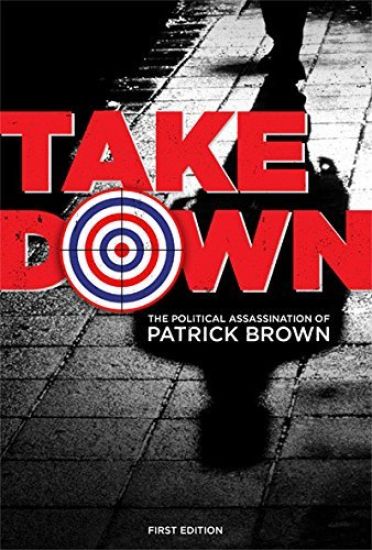
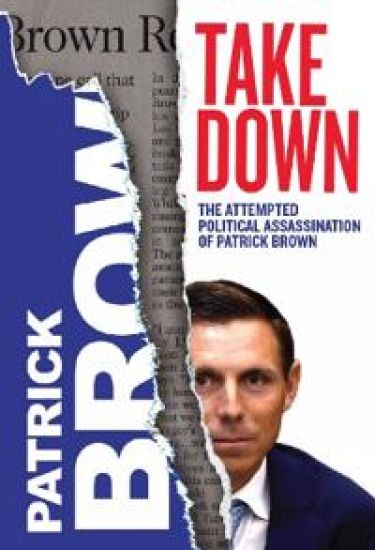
Takedown

Takedown

Patrick Brown

Optimum Publishing International
2022
nidottu
"We were making great strides towards a more inclusive, modern, business savvy Ontario. Six months out from the election we already had 90 of 124 candidates in place and actively campaigning. We had just unveiled a home-run platform that put us on the front page of every newspaper. With 170 days to go before the election even the media was touting that I would be the next Premier of Ontario. Instead, on January 24th, 2018, I was all but assassinated in public. Who did it, how, and more importantly why? This is a story of betrayal, blackmail, and backroom politicking involving some of Canada's biggest political names. This was my dream, this was my nightmare. I'm Patrick Brown, and this is my story." Now in this updated version of the book we take readers from the day the book was published in November 2018 up to his announcement to run for the Leadership of the Conservative Party of Canada and to become the next Prime Minister of Canada. On March 6, 2022, CTV announced they had reached a settlement with Patrick Brown. An apology for their shoddy journalism that had not even been properly vetted before they aired their story leading to Patrick Browns resignation as leader of the Progressive Conservative Party of Ontario. CTV's anchor Lisa LaFlamme along with senior journalist Glen Macgregor were so anxious to have the biggest Me-To moment they forget how to conduct a proper interview with the key source that they relied on their false reporting on the women’s age. LaFlamme reported the woman was a high school student and underaged in a Bar where she supposedly met Brown. Optimum has listened to the interview between Laflamme and AE (the accuser) as she asks LaFlamme, "why am I here'? The veteran anchor goes on to try to lead the source down her desired. Path. Optimum reviewed audio tape recordings as part of our publishing house's due diligence process on Brown and his story as presented in the book which was launched with national media attention. All of this should lead to the questions addressed in the book. Who wanted Patrick Brown removed as leader of the PC Party of Ontario?. CTV now reports that the accuser of Patrick Brown recounts key piece: she was not underage in bar and not in high school but she "stands by her core story" and CTV stands by their original story. In a court of law this would shred a case. CTV credibility is on very, very thin ice. - John Wright, Author, Pollster, and Spokesperson Angus Reid Group and Ipsos Both of the two women's stories about @brownbarrie are falling apart simultaneously. Never seen anything like this in Canadian journalism. Even in the US, only comparable example I can think of is Dan Rather's "memogate" in 2004 (also before an election). - Jonathan Kay, former editor-in-chief of The Walrus Brown was certainly known as a lady's man but this story had no basis in fact as CTV tried to portray Brown to their audience as some sort of sexual predator of teenage women. He was later forced to resign in the middle of the night by his caucus and some of his closest handlers. It seems some of them had coveted his job and were anxious to have him removed that very night rather than allowing Brown to clear his name. From CTV News "Key details provided to CTV for the story were factually incorrect and required correction. CTV National News regrets including those details in the story and any harm this may have caused to Mr. Brown," reads the update agreed upon by both parties. The story had been updated to reflect the first woman’s revised recollection of her age at the time of the alleged events. In response to the 2018 report, Brown filed a defamation lawsuit against CTV News, seeking $8 million in damages. However, no money was exchanged as part of the settlement. Politics is described as a bloodsport ... this book [has] taken it to a new level. I would call it a Game of Thrones kind of assassination. - Cynthia Mulligan, CityNews, Toronto Brampton Mayor-elect Patrick Brown's new memoir breaks the mould of stodgy, predictable political biographies that employ pedestrian language to bore readers into submission. It's a tell-all thriller and political takedown of Ontario Progressive Cons.... - San Grewal, Publisher of The Pointer To be honest, I couldn't put it down. - Libby Znaimer, Zoomer Radio AM740 / FM 96.7 Downtown

On Vulnerability

On Vulnerability

Patrick Brown

Routledge
2021
sidottu
On Vulnerability maps out an array of perspectives for critically examining the nature of vulnerability, its unequal patterning across different social groups, alongside the everyday social processes that render us vulnerable – interactions, identity and group dynamics. Each chapter equips the reader with a particular sensitising framework for navigating and questioning what it means to be vulnerable or how people cope amid vulnerability. From deviance, stigma and the spoiling or fracturing of identity, to perspectives such as intersectionality, risk, emotions and the vulnerable body, the book traces the theoretical roots of these different analytical lenses, before applying these through illuminating examples and case studies. Drawing on scholarship across more interpretative, analytic and critical traditions, the chapters combine into a multi-dimensional toolkit which will enable the study of the cultural meanings of vulnerability, the political-economic factors that shape its patterning, with a critical sensibility for ‘unlearning’ many assumptions, therefore challenging our sense of who is, or who can be, vulnerable. This book is designed to equip undergraduate and post-graduate students and researchers across the social, health and human sciences, aiding them as they study and question the experiences and structures of vulnerability in our social world.
On Vulnerability

On Vulnerability

Patrick Brown

Routledge
2021
nidottu
On Vulnerability maps out an array of perspectives for critically examining the nature of vulnerability, its unequal patterning across different social groups, alongside the everyday social processes that render us vulnerable – interactions, identity and group dynamics. Each chapter equips the reader with a particular sensitising framework for navigating and questioning what it means to be vulnerable or how people cope amid vulnerability. From deviance, stigma and the spoiling or fracturing of identity, to perspectives such as intersectionality, risk, emotions and the vulnerable body, the book traces the theoretical roots of these different analytical lenses, before applying these through illuminating examples and case studies. Drawing on scholarship across more interpretative, analytic and critical traditions, the chapters combine into a multi-dimensional toolkit which will enable the study of the cultural meanings of vulnerability, the political-economic factors that shape its patterning, with a critical sensibility for ‘unlearning’ many assumptions, therefore challenging our sense of who is, or who can be, vulnerable. This book is designed to equip undergraduate and post-graduate students and researchers across the social, health and human sciences, aiding them as they study and question the experiences and structures of vulnerability in our social world.
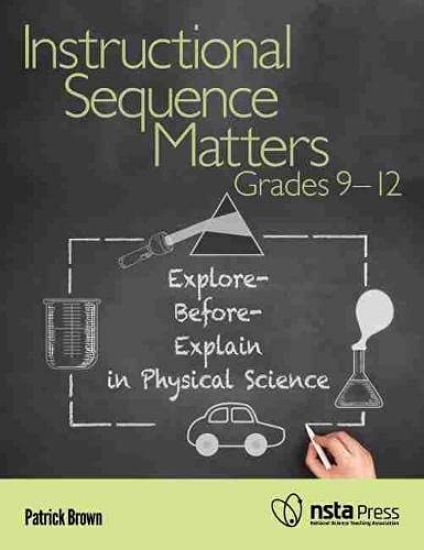
Instructional Sequence Matters, Grades 9–12

Instructional Sequence Matters, Grades 9–12

Patrick Brown

National Science Teachers Association
2021
nidottu
Instructional Sequence Matters, Grades 9–12 is the one-stop resource that will inspire you to reimagine your approach to high school physical science. The book discusses the 5E (Engage, Explore, Explain, Elaborate, and Evaluate) as a specific pathway for teaching and learning. It also shows how simple shifts in the way you arrange and combine activities will help your students construct firsthand knowledge as you put the three dimensions of contemporary standards into practice. Like its popular counterparts for grades 3–5 and 6–8, the book is designed as a complete self-guided tour. It helps both novice teachers and classroom veterans understand the following: Why sequence matters. A concise review of cognitive science and science education research explains why the order in which you structure your lessons is so critical. What you need to do. An overview of important planning considerations covers becoming an "explore-before-explain" teacher and designing 5E instructional models. How to do it. Planning templates include reflection questions to spark your thinking and develop your knowledge. Model lessons encourage you to teach in ways that allow for active meaning making—precisely what is called for in three-dimensional instruction. You'll learn to engage students as they tackle engineering design problems, use algebraic and mathematical reasoning, read technical texts, develop their own inquiries, and write argumentative essays. Instructional Sequence Matters, Grades 9–12 will help you stimulate teacher thinking and cultivate the skills necessary to take your students to higher levels of learning.
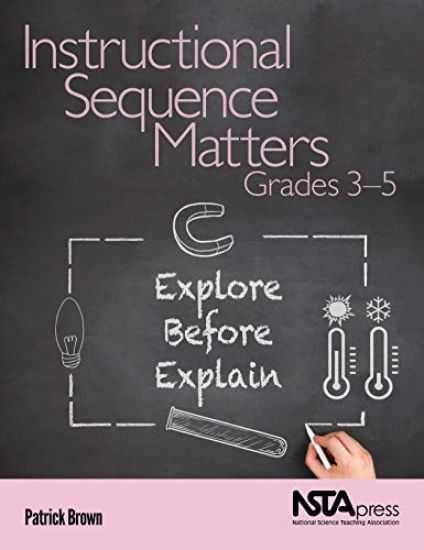
Instructional Sequence Matters, Grades 3–5

Instructional Sequence Matters, Grades 3–5

Patrick Brown

National Science Teachers Association
2019
nidottu
Instructional Sequence Matters, Grades 3–5 is a one-stop resource that will inspire you to reimagine how you teach science in elementary school. The book discusses two popular approaches for structuring your lessons: POE (Predict, Observe, and Explain) and 5E (Engage, Explore, Explain, Elaborate, and Evaluate). It also shows how simple shifts in the way you arrange and combine activities will help young students construct firsthand knowledge, while allowing you to put the Next Generation Science Standards (NGSS) into practice. Like its popular counterpart for grades 6–8, the book is designed as a complete self-guided tour. It helps both novice teachers and classroom veterans to understand. Why sequence matters. A concise review of developmental psychology, neurosciences, cognitive science, and science education research explains why the order in which you structure your lessons is so critical. What you need to do. An overview of important planning considerations covers becoming an “explore-before-explain” teacher and designing 5E and POE instructional models. How to do it. Ready-to-teach lessons use either a POE or 5E sequence to cover heat and temperature, magnetism, electric circuits, chemical changes, ecosystems, and earth processes. Detailed examples show how specific aspects of all three dimensions of the NGSS can translate into your classroom. What to do next. Reflection questions will spark thinking throughout the sequencing process and help you develop the knowledge to adapt these concepts to your students’ needs. Instructional Sequence Matters will give you both the rationale and the real-life examples to restructure the hands-on approaches you are now using. The result will be a sequence for science instruction that promotes long-lasting understanding for your third- fourth-, or fifth-grade students.
Evidence-Based Science Activities in Grades 3–5

Evidence-Based Science Activities in Grades 3–5

Patrick Brown; James Concannon

CRC Press Inc
2019
sidottu
This new book shows elementary teachers how evidence-based science activities help students achieve deeper conceptual understanding. Drawing on a wealth of research, authors Patrick Brown and James Concannon demonstrate how direct, hands-on experience in the science classroom can enable your students to become more self-reliant learners. They also provide a plethora of model lessons aligned with the Next Generation Science Standards (NGSS) and offer advice on how to create your lesson plans and activities to satisfy the demands of your curriculum. With the resources in this book, you and your students will be able to ditch the textbook and embark upon an exciting and rewarding journey to scientific discovery.
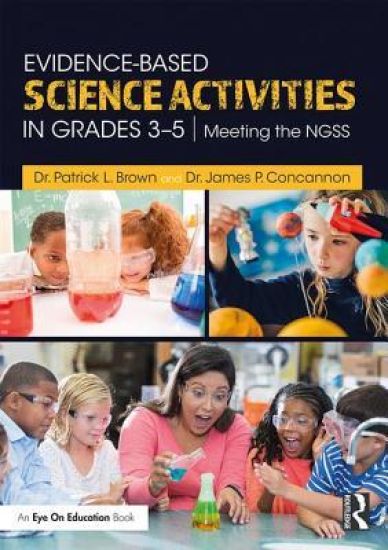
Evidence-Based Science Activities in Grades 3–5

Evidence-Based Science Activities in Grades 3–5

Patrick Brown; James Concannon

CRC Press Inc
2019
nidottu
This new book shows elementary teachers how evidence-based science activities help students achieve deeper conceptual understanding. Drawing on a wealth of research, authors Patrick Brown and James Concannon demonstrate how direct, hands-on experience in the science classroom can enable your students to become more self-reliant learners. They also provide a plethora of model lessons aligned with the Next Generation Science Standards (NGSS) and offer advice on how to create your lesson plans and activities to satisfy the demands of your curriculum. With the resources in this book, you and your students will be able to ditch the textbook and embark upon an exciting and rewarding journey to scientific discovery.
Takedown

Takedown

Patrick Brown

Optimum Publishing International
2018
sidottu
"We were making great strides towards a more inclusive, modern, business savvy Ontario. Six months out from the election we already had 90 of 124 candidates in place and actively campaigning. We had just unveiled a home-run platform that put us on the front page of every newspaper. With 170 days to go before the election even the media was touting that I would be the next Premier of Ontario. Instead, on January 24th, 2018, I was all but assassinated in public. Who did it, how, and more importantly why? This is a story of betrayal, blackmail, and backroom politicking involving some of Canada's biggest political names. This was my dream, this was my nightmare. I'm Patrick Brown, and this is my story." Patrick Brown's fate is an outrage because there was no process, due or otherwise, merely two unsubstantiated and anonymous denunciations; and there was no sympathy for the accused, no concern for any sort of justice, only cowardly, hip-shooting congratulations from Justin Trudeau in Davos and from Premier Kathleen Wynne and provincial NDP Leader Andrea Horwath, lauding Brown's accusers for their bravery. - Conrad Black, National Post Both of the two women's stories about @brownbarrie are falling apart simultaneously. Never seen anything like this in Canadian journalism. Even in the US, only comparable example I can think of is Dan Rather's "memogate" in 2004 (also before an election). - Jonathan Kay, former editor-in-chief of The Walrus CTV now reports that accuser of Patrick Brown recounts key piece: she was not underage in bar and not in high school but she "stands by her core story" and CTV stands by their original story. In a court of law this would shred a case. CTV credibility is on very, very thin ice. - John Wright, Author, Pollster, and Spokesperson Angus Reid Group and Ipsos Patrick Brown is better off away from the Ontario PC Party's nest of vipers. These folks are the Keystone Kops of politics, who couldn't organize a secret stab-in-the-back conference call any better than they could a one-car funeral. - Christie Blatchford, National Post Politics is described as a bloodsport ... this book [has] taken it to a new level. I would call it a Game of Thrones kind of assassination. - Cynthia Mulligan, CityNews, Toronto Brown lets the reader in on the inner workings of politics in a way that's never been done before... Laid out bluntly and honestly, there is a lot of retrospection. - Diana Davison, The Post Millennial Brampton Mayor-elect Patrick Brown's new memoir breaks the mould of stodgy, predictable political biographies that employ pedestrian language to bore readers into submission. It's a tell-all thriller and political takedown of Ontario Progressive Cons.... - San Grewal, Publisher of The Pointer To be honest, I couldn't put it down. - Libby Znaimer, Zoomer Radio AM740 / FM 96.7 Downtown
A Kid from Western Kentucky

A Kid from Western Kentucky

Patrick Brown

Createspace Independent Publishing Platform
2018
nidottu
Recount of 25 stories that took place from 1958 to 1979. This time-period covers the year I was born through my 21st summer. Life lessons learned. I felt that writing this book was a God idea. And if it wasn't a God idea at least it was a God approved idea.
Fantastic ways to Improve your Table Tennis

Fantastic ways to Improve your Table Tennis

Patrick Brown

Independently Published
2018
pokkari
This book is a collection of some Unique ways through which you can improve your game. Attain mastery at Table Tennis insix months or less with the help of this book. Follow the instructions given in "How to use this book section" and get ready for phenomenal improvements in your game. Whether you are a beginner, intermediate or an advanced player, this book will be useful to you. Most of the methods described in this book are unique and rare to find anywhere else. The methods given are original, simple and effective. You will start to Win at Table Tennis in no time.
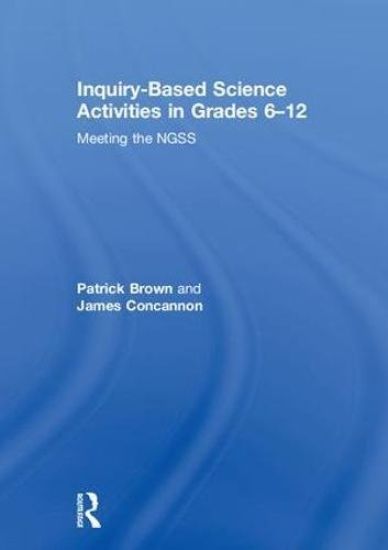
Inquiry-Based Science Activities in Grades 6-12

Inquiry-Based Science Activities in Grades 6-12

Patrick Brown; James Concannon

CRC Press Inc
2018
sidottu
This new book shows middle and high school science teachers how to use evidence-based inquiry to help students achieve deeper conceptual understanding. Drawing on a wealth of research, authors Pat Brown and Jim Concannon demonstrate how direct, hands-on experience in the science classroom can enable your students to become more self-reliant learners. They also provide a plethora of model lessons aligned with the Next Generation Science Standards (NGSS) and offer advice on how to create your own lesson plans and activities to satisfy the demands of your curriculum. With the resources in this book, you and your students will be able to ditch the textbook and embark upon an exciting and rewarding journey to scientific discovery.