Kirjojen hintavertailu – 12 859 824 kirjaa ja 27 kauppaa

Kirjailija

Patrick Condon

Kirjat ja teokset yhdessä paikassa: 4 kirjaa, julkaisuja vuosilta 2009–2022, suosituimpiin kuuluu Regional Scale Urban Design. Vertaile teosten hintoja ja tarkista saatavuus suomalaisista kirjakaupoista.

4 kirjaa

Kirjojen julkaisuvuodet: 2009–2022.

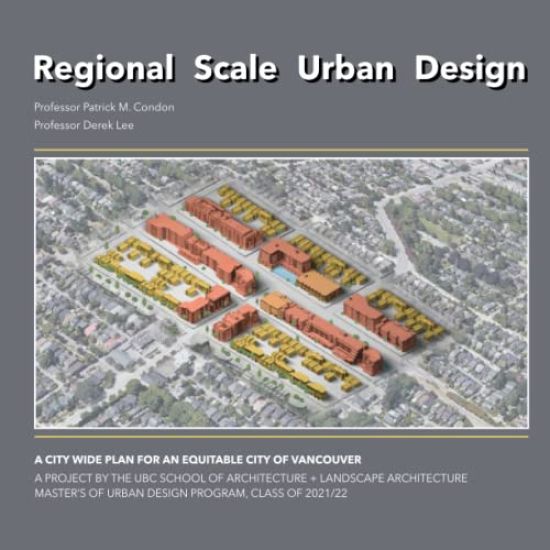
Regional Scale Urban Design

Regional Scale Urban Design

Patrick Condon

Lulu.com
2022
pokkari
The challenge for the fall 2021 UBC SALA Masters of Urban Design cohort was to envision a City of Vancouver with two of its biggest problems solved. The first: absorbing the increase in population projected by the year 2070. The second: ensuring that people who worked in Vancouver and wanted to live in Vancouver could afford to do so...
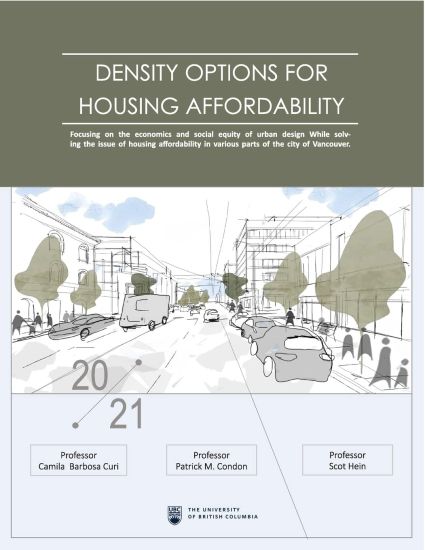
Density Options for Housing Affordability
In the summer of 2021, in the midst of the pandemic, twenty five students hailing from all parts of the globe participated, some remotely, some in person, in a unique learning experience. Their assignment: solve the housing affordability problem in one of the world's most expensive cities - Vancouver BC. Vancouver has among the world's most expensive housing and the lowest average wages of any major North American metropolitan area. This outrageous gap is putting immense financial pressure on city wage earners and impeding the city's economic vitality. And adding thousand of market housing units in the city has not lowered prices. In fact, during the 40 years when tens of thousands of new housing units were added to the city, housing prices increased by 300 percent (in the inflation adjusted terms). Both homeowners and renters are affected by this inflationary spiral, as when home prices rise so too do rents. In this studio students were asked to explore a new and promising approach: using zoning tools as a means for affordability. The concept was simple. Instead of upzoning in the hopes of new housing supply producing a drop in prices, a strategy that seemed only to raise land prices, what if land was only up zoned in return for affordability. This would potentially keep land prices stable while allowing affordable housing projects to "pencil out" without government subsidy. This model has been adopted in Cambridge Mass (https: //www.jchs.harvard.edu/blog/what-can-we-expect-cambridges-new-affordable-housing-overlay) and Berkeley California ( https: //beyondchron.org/berkeleys-next-big-step-a-100-affordable-housing-overlay/) and shows great promise. For the study area, we chose various test sites along the West Broadway Corridor. This corridor is now being replanned in response to the ongoing construction of the Broadway extension of the Millenium Line Skytrain line. It is anticipated that much new development will be approved along this new line - to capitalize on this massive infrastructure expenditure. But anxiety still exists: how can we be sure that wage earners, those most in need of housing close to new jobs and sustainable transit, will be able to afford housing?

Sick City

Sick City

Patrick Condon

James Taylor Chair in Landscape and Liveable Environments
2021
pokkari
Sick City is a call to action prompted by the crisis that crippled our cities, the pandemic. But the pandemic has brought the issues of race, inequality and unaffordability to the forefront as well, illustrating how all of these ills can be traced to unequal access to urban land. Patrick Condon walks the reader through that history, proving that most of these problems are rooted in the inflation of urban land value - land that is no longer priced for its value for housing but as an asset class in a global market hungry for assets of all kinds. The American wage earner who is most affected by COVID is also the worst hit by the surging price of urban land which has made the essential commodity of housing increasingly inaccessible. Not only does Condon dive deep into myriad and credible references to prove these points, but he also wraps up the conversation with some eminently practical and widely precedented policy actions that municipalities can enact - policy tools to establish housing justice at the same time slow the flow of land value increases into the pockets of land speculators.
Urban Planning Tools for Climate Change Mitigation

Urban Planning Tools for Climate Change Mitigation

Patrick Condon; Duncan Cavens; Nicole Miller

Lincoln Institute of Land Policy
2009
nidottu
Land use patterns and urban form can strongly impact an urban community's contribution to global climate change through the production of greenhouse gas emissions (GHG). Key contributors to a city's climate footprint include the physical arrangement of streets and public transportation infrastructure, building types, and land uses that influence both vehicle use and energy consumption in buildings. City and regional officials now facing new greenhouse gas emissions reduction requirements are increasingly turning to urban design as a key component of climate change mitigation. But implementing an urban planning strategy that includes effective climate change mitigation techniques requires decision support tools that illustrate the GHG implications of land use and transportation options. While a wide spectrum of environmental urban planning tools currently exists, few have the capacity to work simultaneously at both the regional and local scale, or to capture both building performance and transportation demand analysis. This report reviews existing tools that help urban planners address climate change mitigation, analyzing the tools' scope, scale, methodology, and policy support, and presents four case studies illustrating how existing tools at various stages of development have been used.