Kirjojen hintavertailu – 12 903 725 kirjaa ja 27 kauppaa

Kirjailija

Patrick Dearen

Kirjat ja teokset yhdessä paikassa: 32 kirjaa, julkaisuja vuosilta 1988–2026, suosituimpiin kuuluu The Hidden Treasure of the Chisos. Vertaile teosten hintoja ja tarkista saatavuus suomalaisista kirjakaupoista.

32 kirjaa

Kirjojen julkaisuvuodet: 1988–2026.

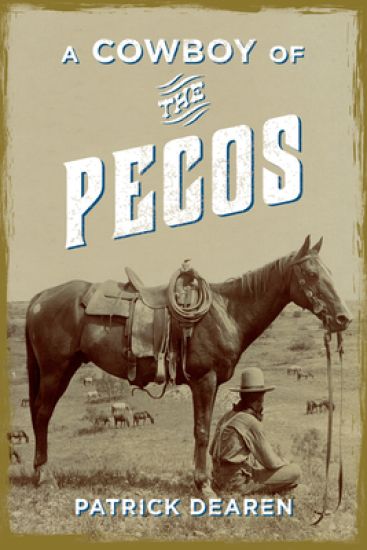
A Cowboy of the Pecos

A Cowboy of the Pecos

Patrick Dearen

Lone Star Books
2016
pokkari
In the late 1880s, the Pecos River region of Texas and southern New Mexico was known as "the cowboy's paradise." And the cowboys who worked in and around the river were known as "the most expert cowboys in the world." A Cowboy of the Pecos vividly reveals tells the story of the Pecos cowboy from the first Goodnight-Loving cattle drive to the 1920s. These meticulously researched and entertaining stories offer a glimpse into a forgotten and yet mythologized era. Includes archival photographs.
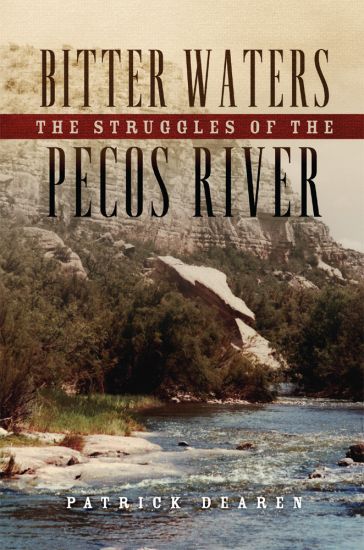
Bitter Waters

Bitter Waters

Patrick Dearen

University of Oklahoma Press
2016
sidottu
Rising at 11,750 feet in the Sangre de Cristo range and snaking 926 miles through New Mexico and Texas to the Rio Grande, the Pecos River is one of the most storied waterways in the American West. It is also one of the most troubled. In 1942, the National Resources Planning Board observed that the Pecos River basin ""probably presents a greater aggregation of problems associated with land and water use than any other irrigated basin in the Western U. S."" In the twenty-first century, the river's problems have only multiplied. Bitter Waters, the first book-length study of the entire Pecos, traces the river's environmental history from the arrival of the first Europeans in the sixteenth century to today. Running clear at its source and turning salty in its middle reach, the Pecos River has served as both a magnet of veneration and an object of scorn. Patrick Dearen, who has written about the Pecos since the 1980s, draws on more than 150 interviews and a wealth of primary sources to trace the river's natural evolution and man's interaction with it. Irrigation projects, dams, invasive saltcedar, forest proliferation, fires, floods, flow decline, usage conflicts, water quality deterioration - Dearen offers a thorough and clearly written account of what each factor has meant to the river and its prospects. As fine-grained in detail as it is sweeping in breadth, the picture Bitter Waters presents is sobering but not without hope, as it also extends to potential solutions to the Pecos River's problems and the current efforts to undo decades of damage. Combining the research skills of an accomplished historian, the investigative techniques of a veteran journalist, and the engaging style of an award-winning novelist, this powerful and accessible work of environmental history may well mark a turning point in the Pecos's fortunes.

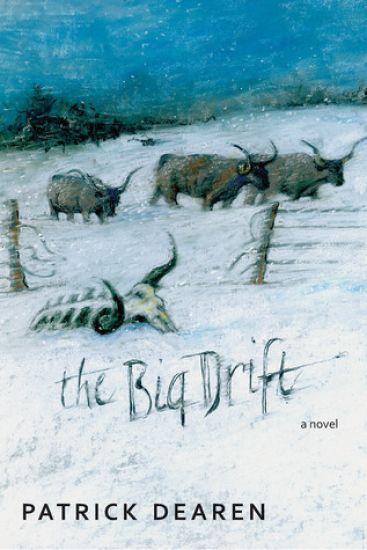
The Big Drift

The Big Drift

Patrick Dearen

Texas Christian University Press,U.S.
2014
nidottu
Will Brite is a Slash Five cowboy working in the Middle Concho region of Texas in the winter of 1884 when a blizzard descends upon him—the likes of which he has never seen. Trapped under his horse and entangled in a barbed wire fence, Will finds an unexpected (and unwelcome) savior in the form of Zeke Boles, a former slave on the run from a bloody, guilt-filled past. In Zeke’s dark features Will sees a reflection of the haunting memories he has been trying to escape for so long, but he reluctantly offers him shelter for the night at the Slash Five camp. Little does he know that their lives will be inexorably linked in the spring of ’85 through what will be one of the most brutal roundups of the nineteenth century. Follow Will, Zeke, and the rest of the Slash Fives as they ride through West Texas in search of stray cattle in an unforgettable tale of love, redemption, and true grit.
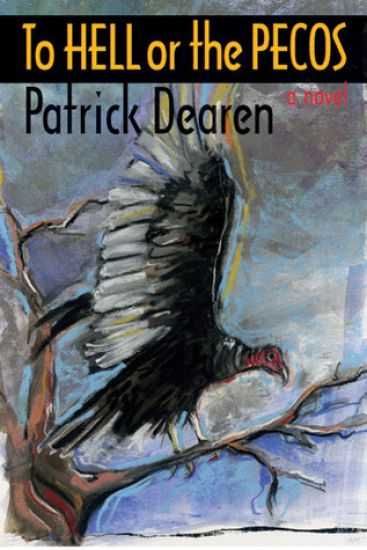
To Hell or the Pecos

To Hell or the Pecos

Patrick Dearen

Texas Christian University Press,U.S.
2012
nidottu
Tom Rowden has been riding away from the Pecos River for twenty years, plagued by the haunting image of his wife, Sarah, the second before he killed her. Now, he is dead-set on returning to her unmarked grave above the river to make one final atonement. His journey is interrupted when a group of Mexican bandits burn down the 7L’s ranch house, kill the ranch boss, and rape and abduct his daughter, Liz Anne. The 7L’s greenhorn wagon boss, Jess Graham, desperately begs for Tom’s help in rescuing Liz Anne, the girl Jess loves. Tom obliges and sets out with Jess and his posse of ranch hands through a hellish desert landscape toward the Pecos River. For Jess, it is his first journey through the desert; Tom hopes it is his last. The journey slowly wears down the group of cowboys, who must face deadly foes, choking dust clouds, and rabid wolf attacks. To stay alive, they also must fight against personal desires and a growing sense of hopelessness, but the most deadly enemy remains the scorching desert, threatening to erase life at any second. Liz Anne, meanwhile, must also fight on through the desert, holding on to what dignity she has left, trying to slow down her captors long enough for her rescue party to catch up. Her captors reach the pools hidden in a canyon just a few miles away from the Pecos River and set an ambush for the rescuers. Will the posse be killed by the ambush? Will Jess ever get back his precious Liz Anne? Will Tom be able to make it the last few miles to the Pecos River and find absolution? Discover all the answers in Patrick Dearen’s exciting new tale, To Hell or the Pecos.
Devils River

Devils River

Patrick Dearen

Texas Christian University Press,U.S.
2011
nidottu
In his newest book, Devils River, Patrick Dearen traces the 400-year history of the notorious river from the time of the first Spanish explorers to the modernization of southwestern Texas and the coming of the railroad. He vividly retells stories of Indian encounters, train robberies, and other horrific events that prove just how the name "Devils River" was coined. With his inimitable style, the author weaves together a variety of themes--military events, including the Civil War and stories about the Texas Rangers; the development of the first mail lines; and the introduction of cattle and sheep raising--into a comprehensive account of the violence and bloodshed surrounding the Devils River. The nature of the river's history is such that very few anecdotes have happy endings, but Devils River contains stories of triumphs as well as disasters. Although this is an excellent account for historians studying the west, it is also very accessible to others with little or no background in early western history.
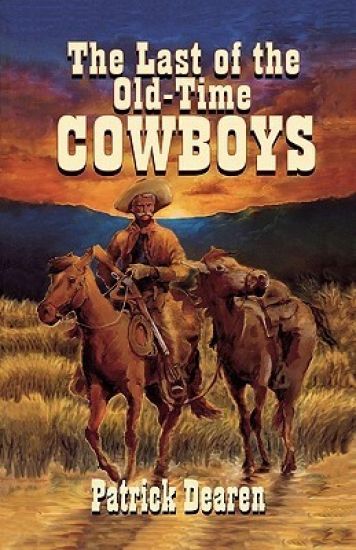
Last of The Old-Time Cowboys

Last of The Old-Time Cowboys

Patrick Dearen

Taylor Trade Publishing
1998
pokkari
Working cowboys live on as genuine legends who rode through a golden moment in American history. In the 1980s historian/ author Patrick Dearen went looking for the last of these fading icons. The trail took him to dozens of one-time cowhands in their 80s, 90s, and even 100s whose aged eyes lit up and voices seemed young again as they spoke of their experiences on the trail. From these honest-to-goodness cowhands he collected priceless, spellbinding true stories of the incredible hardships of braving the elements, dealing with stampedes and runaways, and good-natured hoorawing with their companions. These stories bear the unmistakable brand of an Old West that is now but a dusty grave on a long-lost trail. Dearen chronicles the tales and introduces the cowboys who tell them, with tender respect and love.
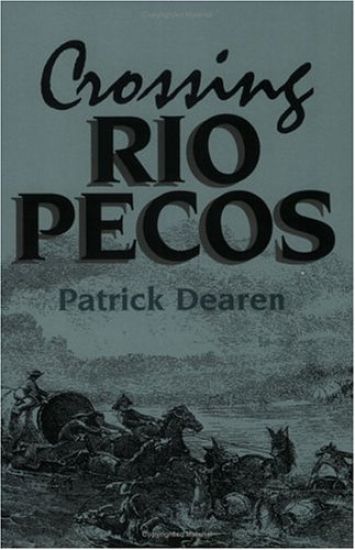
Crossing Rio Pecos

Crossing Rio Pecos

Patrick Dearen

Texas Christian University Press,U.S.
1996
nidottu
The Pecos River flows snake-like out of New Mexico and across West Texas before striking the Rio Grande. In frontier Texas, the Pecos was more moat than river—a deadly barrier of quicksand, treacherous currents, and impossibly steep banks. Only at its crossings, with legendary names such as Horsehead and Pontoon, could travelers hope to gain passage. Even if the river proved obliging, Indian raiders and outlaws often did not. Long after irrigation and dams rendered the river a polluted trickle, Patrick Dearen went seeking out the crossings and the stories behind them. In Crossing Rio Pecos—a follow-up to his Castle Gap and the Pecos Frontier—he draws upon years of research to relate the history and folklore of all the crossings—Horsehead, Pontoon, Pope’s, Emigrant, Salt, Spanish Dam, Adobe, “S,” and Lancaster. Meticulously documented, Crossing Rio Pecos emerges as the definitive study of these gateways which were so vital to the opening of the western frontier.
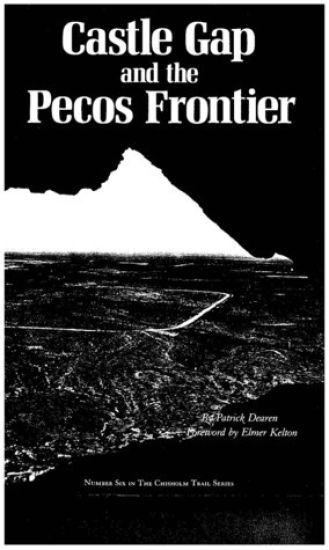
Castle Gap And The Pecos Frontier

Castle Gap And The Pecos Frontier

Patrick Dearen; Elmer Kelton

Texas Christian University Press,U.S.
1988
nidottu
True tales and tall ones come alive in "Castle Gap and the Pecos Frontier." Patrick Dearen of San Angelo is the author of this definitive, thoroughly documented study of six West Texas folk stories. Included are the stories of: - Castle Gap, a break in a mesa some 12 miles east of the Pecos River, used by Comanches on the warpath, emigrants seeking California gold and cattlemen driving Longhorns up the Goodnight-Loving Trail; - Horsehead Crossing, the most infamous ford of the Old West, considered the graveyard of hopes by drovers and emigrants alike; - Juan Cordona Lake, the cast salt lake where sandstorms and skull-baking sun defied early efforts to mine the salt needed for everyday survival on the frontier; - The "bulto" or ghost who wanders the Fort Stockton night in search of peace; - Lost Wagon Train, a 40-wagon caravan entombed in the sand of West Texas; - Will Sublett, who found a fortune in gold hidden in the Pecos Country and kept the secret of its location even unto death. In the foreword, Texas novelist Elmer Kelton, a lifelong resident of the Pecos River country, recalls the stories and legends he heard as a youngster and comments on the rich mixture of history and folklore they represent. Dearen's years of research into these now-aged mysteries and legends included personal visits with many resident and old-timers of the Pecos Frontier. A complete index lists everybody interviewed and quoted. In addition, he read yellowing newspapers and dusty court records and walked the country himself, finding the landmarks. From his search emerges a fascinating picture of an inhospitable land, its heritage and its people. "Castle Gap and the Pecos Frontier," is illustrated with maps and both old and new photographs.