Kirjojen hintavertailu – 12 903 724 kirjaa ja 27 kauppaa
Kirjailija
Patrick Diamond
Kirjat ja teokset yhdessä paikassa: 14 kirjaa, julkaisuja vuosilta 2013–2026, suosituimpiin kuuluu Reshaping the State in the Age of Fiasco. Vertaile teosten hintoja ja tarkista saatavuus suomalaisista kirjakaupoista.
The biblical adage that 'if a house be divided against itself, that house cannot stand' remains sound theological advice. It is also essential counsel for any political party in Britain that aspires to win elections. Though both major parties have been subject to internal conflict over the years, the Labour Party has been more given to damaging splits. The divide exposed by the Corbyn insurgency is only the most recent example in a century of destructive infighting. Indeed, it has often seemed as if Labour is more adept at fighting itself than defeating the Tory party. This book examines the history of Labour's civil wars and the underlying causes of the party's schisms, from the first split of 1931, engineered by Ramsay MacDonald, to the ongoing battle for the future between the incumbent Labour leader, Keir Starmer, and those who fundamentally altered the party's course under his predecessor, Jeremy Corbyn.
Exploring British Politics is a concise, comprehensive, and accessible guide to the subject. Fully updated and revised, the new edition covers developments since 2016 in the role of the executive, parliament, the civil service, political parties, general elections, party ideology, and membership, as well as examining turmoil and leadership battles within the Labour and Conservative parties, the politics of growing inequality, public action and reaction, demographic trends and their political consequences, and the future of the UK itself. Stimulating critical analysis and lively debate, it provides new perspectives on two key themes – the health of British democracy and the transition from traditional models of government to more flexible forms of ‘governance’. Key features include:Comprehensive analysis of the 2019 general election, Brexit developments since the 2016 Referendum to today’s ongoing impacts, and the shadow cast by the COVID-19 global pandemic and its implications;Topical coverage of the fall of the Truss leadership, the new Johnson and Sunak era, the rise and fall of the ‘Change UK’ party, the economic crisis, the role of special advisers, new social movements such as Extinction Rebellion and Black Lives Matter, and much more;Extensive guides to further reading at the end of each chapter;Richly illustrated through examples and data, often visually represented. Whilst the book provides an essential historical background, contemporary issues are to the fore throughout and readers are encouraged to assess critically received wisdoms and develop their own thoughts and ideas. Whether studying the subject for the first time or revisiting it, Exploring British Politics is the ideal undergraduate text.
Exploring British Politics is a concise, comprehensive, and accessible guide to the subject. Fully updated and revised, the new edition covers developments since 2016 in the role of the executive, parliament, the civil service, political parties, general elections, party ideology, and membership, as well as examining turmoil and leadership battles within the Labour and Conservative parties, the politics of growing inequality, public action and reaction, demographic trends and their political consequences, and the future of the UK itself. Stimulating critical analysis and lively debate, it provides new perspectives on two key themes – the health of British democracy and the transition from traditional models of government to more flexible forms of ‘governance’. Key features include:Comprehensive analysis of the 2019 general election, Brexit developments since the 2016 Referendum to today’s ongoing impacts, and the shadow cast by the COVID-19 global pandemic and its implications;Topical coverage of the fall of the Truss leadership, the new Johnson and Sunak era, the rise and fall of the ‘Change UK’ party, the economic crisis, the role of special advisers, new social movements such as Extinction Rebellion and Black Lives Matter, and much more;Extensive guides to further reading at the end of each chapter;Richly illustrated through examples and data, often visually represented. Whilst the book provides an essential historical background, contemporary issues are to the fore throughout and readers are encouraged to assess critically received wisdoms and develop their own thoughts and ideas. Whether studying the subject for the first time or revisiting it, Exploring British Politics is the ideal undergraduate text.
The biblical adage that 'if a house be divided against itself, that house cannot stand' remains sound theological advice. It also essential counsel for any political party that aspires to win elections. Though both major parties have been subject to internal conflict over the years, it is the Labour Party which has been more given to damaging splits. The divide exposed by the Corbyn insurgency is only the most recent example in a century of destructive infighting. Indeed, it has often seemed as though Labour has been more adept at fighting itself than in defeating the Tory party. This book examines the history of Labour's civil wars and the underlying causes of the party's schisms, from the first split of 1931, engineered by Ramsay MacDonald, to the ongoing battle for the future between the incumbent, Keir Starmer, and those who fundamentally altered the party's course under his predecessor, Jeremy Corbyn.
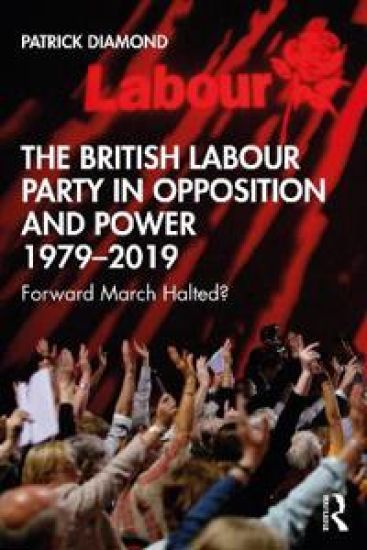
This book provides a novel account of the Labour Party’s years in opposition and power since 1979, examining how New Labour fought to reinvent post-war social democracy, reshaping its core political ideas. It charts Labour’s sporadic recovery from political disaster in the 1980s, successfully making the arduous journey from opposition to power with the rise (and ultimately fall) of the governments of Tony Blair and Gordon Brown. Forty years on from the 1979 debacle, Labour has found itself on the edge of oblivion once again. Defeated in 2010, it entered a further cycle of degeneration and decline. Like social democratic parties across Europe, Labour failed to identify a fresh ideological rationale in the aftermath of the great financial crisis. Drawing on a wealth of sources including interviews and unpublished papers, the book focuses on decisive points of transformational change in the party’s development raising a perennial concern of present-day debate – namely whether Labour is a party capable of transforming the ideological weather, shaping a new paradigm in British politics, or whether it is a party that should be content to govern within parameters established by its Conservative opponents. This text will be of interest to the general reader as well as scholars and students of British politics, British political party history, and the history of the British Labour Party since 1918.
This book provides a novel account of the Labour Party’s years in opposition and power since 1979, examining how New Labour fought to reinvent post-war social democracy, reshaping its core political ideas. It charts Labour’s sporadic recovery from political disaster in the 1980s, successfully making the arduous journey from opposition to power with the rise (and ultimately fall) of the governments of Tony Blair and Gordon Brown. Forty years on from the 1979 debacle, Labour has found itself on the edge of oblivion once again. Defeated in 2010, it entered a further cycle of degeneration and decline. Like social democratic parties across Europe, Labour failed to identify a fresh ideological rationale in the aftermath of the great financial crisis. Drawing on a wealth of sources including interviews and unpublished papers, the book focuses on decisive points of transformational change in the party’s development raising a perennial concern of present-day debate – namely whether Labour is a party capable of transforming the ideological weather, shaping a new paradigm in British politics, or whether it is a party that should be content to govern within parameters established by its Conservative opponents. This text will be of interest to the general reader as well as scholars and students of British politics, British political party history, and the history of the British Labour Party since 1918.
This Palgrave Policy Essential maps and assesses key changes in the Whitehall model over the last two decades. It argues that the traditional Whitehall model is being replaced by a system of ‘New Political Governance’ (NPG) centred on politicised campaigning; the growth of political advisory staff relative to the permanent civil service; the personalisation of bureaucratic appointments; and the creation of a government machine that is ‘promiscuously partisan’. It provides a snapshot of the institutional changes that are unfolding at a critical moment, as Whitehall prepares to support Ministers in carrying out the Brexit process while addressing a series of long-term structural challenges from the demographic pressures of the ageing society to the impact of climate change. Austerity since 2010 has had a further transformative effect on Whitehall, with drastic reductions in the civil service workforce, the restructuring of government agencies, and a reconfiguration of the traditional roles and responsibilities of the permanent civil service.
After a period of electoral dominance, centre-left parties in western Europe have suffered a dramatic erosion of support; the vote share enjoyed by social democrats is at its lowest ever level. Social democracy stands at a point of great promise, but also peril. This book explores these themes and argues that to write off centre-left politics now would be a great mistake. It counters the idea that social democratic values have been rejected by voters. The ideal of solidarity and the need to forge bonds of connection in a volatile, interdependent world is as compelling as it always was. At the same time, the centre left clearly faces difficulties: ‘the forward march of labour’ has been abruptly halted while declining trust in politics adds to the problem of constructing viable electoral coalitions. The UK’s decision to vote to leave the European Union is symptomatic of societies throughout Europe that are irreparably divided between voters who embrace economic change and openness, and those who are opposed to it. Social democracy has to find new ways to build bridges between ‘open’ and ‘closed’ communities by updating public institutions and policies, just as socialist parties did in the immediate aftermath of the second world war.
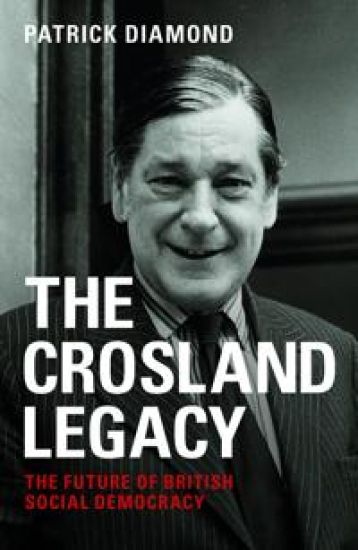
Anthony Crosland bequeathed a significant intellectual legacy to the Labour Party. In this timely book, Patrick Diamond considers a wide range of Crosland’s writings on the economy and politics, relating his ideas on egalitarian social democracy, electoral strategy, the European question, and the importance of progressive liberalism on the British centre-left. Written in a clear and persuasive way, it will appeal to academics, students, activists, Labour Party members and associated think tanks,
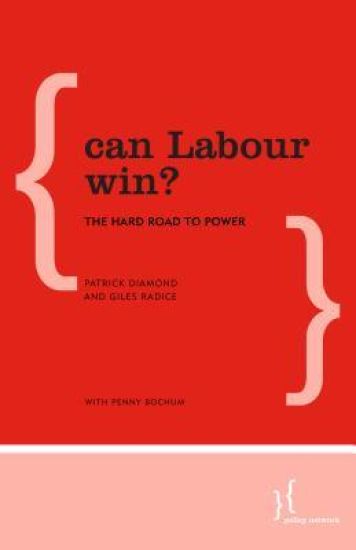
After its disastrous defeat in 2015, Labour is at grave risk of throwing away the 2020 general election. The party has to understand why it suffered such a devastating defeat and learn crucial lessons if it is to recover. The reasons appear obvious enough: the British public did not believe that Ed Miliband was a credible prime minister; people feared that a Labour government would plunge the British economy back into chaos; and they perceived that the party was out of touch on issues like immigration and welfare. Labour was not just narrowly defeated in 2015, it was overwhelmingly rejected by an electorate who no longer trust the party. Underlying all of this is a sense that Labour is a party that does not understand the modern world, wedded to an outdated ‘cloth cap’ image of heavy industry and the monolithic public sector. The risk for the Labour party, like social democratic parties across Europe, is further electoral defeat and then inevitably, permanent irrelevance. As of today, there are few signs that the party grasps why it lost and, in particular, why swing voters in marginal seats were not prepared to vote Labour. A party that does not understand why it was defeated scarcely deserves to be taken seriously by the electorate. This book examines why Labour so overwhelmingly lost the trust of voters, and crucially how the party under a new leader can win them back by 2020 – charting Labour’s path to power.
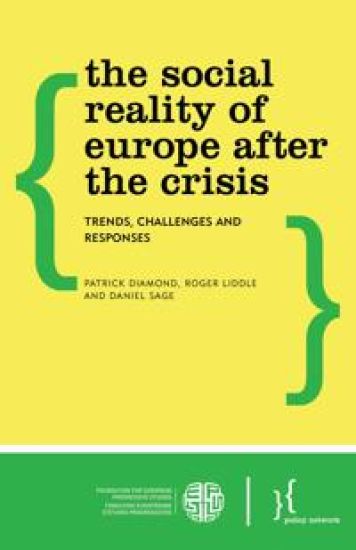
The economic crisis of recent years continues to have a profound effect on the lives of European citizens. Economically, politically and socially, it has led to fundamental change in many people's lives. In addition to creating new concerns, the crisis has simultaneously exacerbated existing ones, raising profound challenges to the sustainability and success of the European model. This book seeks to examine this new 'social reality' of post-crisis Europe. The authors conclude by exploring what both the EU and national governments can do to restore Europe's strength, sustainability, cohesion and competitiveness in a climate of rising populism.
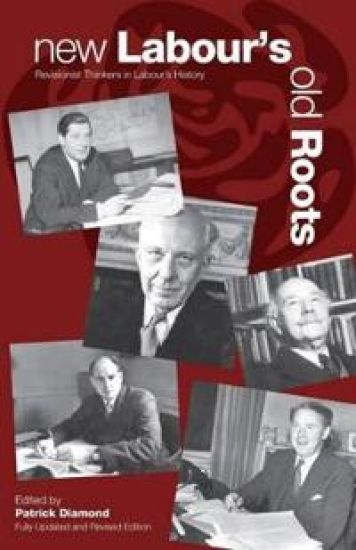
The New Labour project was not conjured up out of thin air - it only looks that way because of the party's amnesia about the intellectual roots and political traditions which have guided it. This book provides extracts from fifteen thinkers and politicians located within the revisionist tradition as an antidote to that amnesia. It is an 'all star cast' from R. H. Tawney, Hugh Gaitskell and Anthony Crosland to Roy Hattersley, Gordon Brown and Tony Blair. The collection demonstrates that Labour's revisionism is not a rigid body of doctrine but a 'cast of mind' that distinguishes between core values (ends) and policy instruments (means) - revisionist thinkers are engaged in the continuous pursuit of policy innovation, never shrinking from abandoning policies that fail to achieve the desired ends. All successful Labour governments have been determined to avoid the confusion of means and ends. These essays show a determination throughout the party's history to debate and discuss political ideas in the cause of a fairer, more equal society. Fully updated and revised edition.
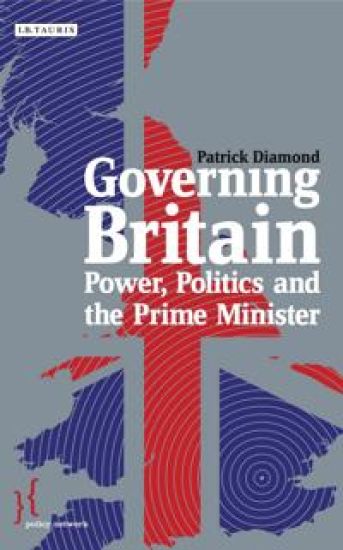
Number Ten Downing Street and the Cabinet Office are at the apex of power in British government, but relatively little is known about the day to day functioning of these great institutions of state. With an unprecedented level of access, and wide-ranging interviews from former ministers, senior civil servants and political advisers, Patrick Diamond examines the administrative and political machinery serving the Prime Minister, and considers how it evolved from the early years of New Labour to the election of the Coalition Government in 2010. Drawing on previously unpublished material, Diamond provides a unique analysis which considers the continuing power of the civil service, the tensions between permanent officials and political aides, and the hard grind of achieving policy change from the centre in Whitehall. By exploring the ideological beliefs underpinning the policy-making process and in illuminating the importance of the British Political Tradition in shaping the institutions and practice of statecraft, this book reveals the contemporary realities of government and democracy in practice.