Kirjojen hintavertailu – 12 859 828 kirjaa ja 27 kauppaa

Kirjailija

Patrick Malone

Kirjat ja teokset yhdessä paikassa: 9 kirjaa, julkaisuja vuosilta 1996–2025, suosituimpiin kuuluu Pharmacotherapy Principles and Practice, Fourth Edition: Book and Study Guide. Vertaile teosten hintoja ja tarkista saatavuus suomalaisista kirjakaupoista.

9 kirjaa

Kirjojen julkaisuvuodet: 1996–2025.

Pharmacotherapy Principles and Practice, Fourth Edition: Book and Study Guide

Pharmacotherapy Principles and Practice, Fourth Edition: Book and Study Guide

Marie Chisholm-Burns; Terry Schwinghammer; Barbara Wells; Patrick Malone; Jill Kolesar; Joseph DiPiro; Michael Katz; Kathryn Matthias

McGraw-Hill Education
2017
nidottu
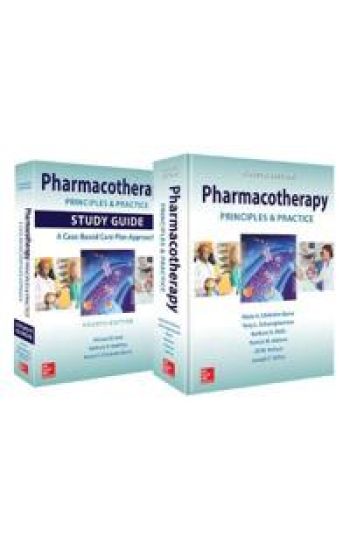
A Dollar-Saving Pharmacotherapy Package That Provides Students With a Solid Foundation, Along With Actual Cases That Demonstrate How to Apply Concepts! This great package includes two essential books:Pharmacotherapy Principles & Practice, Fourth EditionPharmacotherapy Principles & Practice, Fourth Edition uses a solid evidence-based approach to teach you how to design, implement, monitor, and evaluate medication therapy. This trusted text provides everything you need to gain an in-depth understanding of the underlying principles of the pharmacotherapy of disease—and their practical application. In order to be as clinically relevant as possible, the disease states and treatments discussed focus on disorders most often seen in clinical practice, and laboratory values are expressed as both conventional units and SI units. Importantly, all chapters were written or reviewed by pharmacists, nurse practitioners, physician assistants, and physicians widely recognized as authorities in their fields. Pharmacotherapy Principles and Practice Study Guide, Fourth EditionPharmacotherapy Principles and Practice Study Guide, Fourth Edition delivers more than 100 patient cases that correspond to chapters in the Fourth Edition of Pharmacotherapy Principles and Practice. These case are presented in a consistent manner, similar to what you would see in a clinical setting and focus on a specific topic or disorder. For each case, you are asked to develop a Patient Database, Drug Therapy Problem Worksheet, and Pharmacotherapy Care Plan, using the forms provided. With Pharmacotherapy Principles and Practice Study Guide you will learn how to navigate through the process of applying your knowledge of pharmacotherapy to specific patient cases by organizing patient data to logically assess a patient’s medication issues and formulate a sound pharmacotherapy care plan.
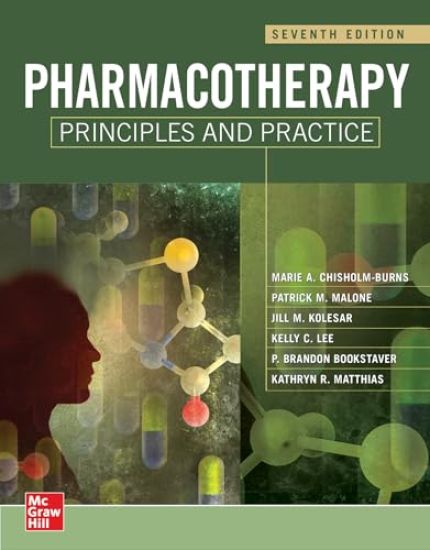
Pharmacotherapy Principles and Practice, Seventh Edition

Pharmacotherapy Principles and Practice, Seventh Edition

Marie Chisholm-Burns; Jill Kolesar; Patrick Malone; Kelly C Lee; P. Brandon Bookstaver; Kathryn Matthias

McGraw-Hill Education
2025
sidottu
An indispensable guide to the essential principles of pharmacotherapy and their application in real-world clinical practice To deliver the best possible patient-centered care, healthcare professionals must understand how to maximize the effectiveness of medications, minimize adverse reactions, and promote favorable health outcomes. Pharmacotherapy Principles and Practice, Seventh Edition provides a strong foundation of evidence-based strategies to educate learners on the process of developing, executing, monitoring, and assessing medication therapy. This comprehensive guide will help you develop a sound understanding of the fundamental principles behind pharmacotherapy for various diseases. This seventh edition reflects the latest findings in the field and includes a new chapter on health equity. The new chapter is followed by five chapters focused on special populations: pediatrics, geriatrics, palliative care, critical care, and global health and travel medicine. An additional 97 predominately disease-based chapters review epidemiology, etiology, pathophysiology, clinical presentation and diagnosis, nonpharmacologic therapy, and pharmacologic therapy, with emphasis on clear recommendations for medication selection, desired outcomes, dosing, and patient monitoring. Pharmacotherapy Principles and Practice, Seventh Edition features:• NEW Chapter: Improving Patient Care by Understanding Health Equity and the Social Determinants of Health• Structured learning objectives presented at the beginning of each chapter• Key concepts, identified by icons, highlight the disease state, patient assessment, and treatment• Patient encounters, significantly revised from the previous edition, which facilitatedevelopment of critical thinking skills • Patient Care Process section modeling the Joint Commission of Pharmacy Practitioners (JCPP) Pharmacists’ Patient Care Process• Up-to-date literature citations for each chapter• Tables, figures, algorithms, and defined medical abbreviations• Self-assessment questions and answers in the Online Learning Center• Valuable table of common laboratory tests and reference ranges
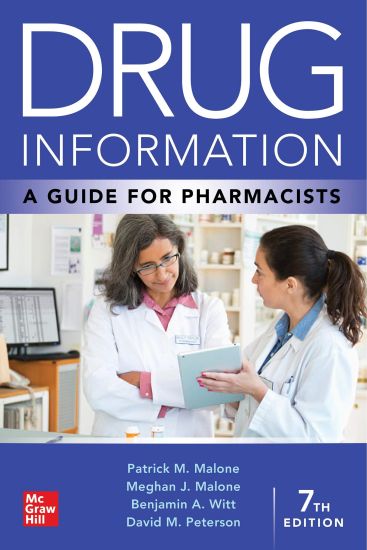
Drug Information: A Guide for Pharmacists

Drug Information: A Guide for Pharmacists

Patrick Malone; Meghan Malone; Benjamin A. Witt; David Peterson

McGraw-Hill Education
2022
nidottu
Everything pharmacists and pharmacy students need to know about drug information managementA Doody's Core Title for 2024 & 2023! Drug Information: A Guide for Pharmacists provides you with the tools you need to to research, interpret, evaluate, collate, and disseminate drug information in the most effective and efficient manner possible. This trusted resource addresses essential topics such as formulating an effective response and recommendations for information, evaluation of drug literature, the application of statistical analysis in the biomedical sciences, medications and patient safety, investigational drugs, and more. This updated seventh edition also addresses other important issues such as the legal and ethical considerations of providing information, how to respond to requests for information, and how to determine what information should be made available.
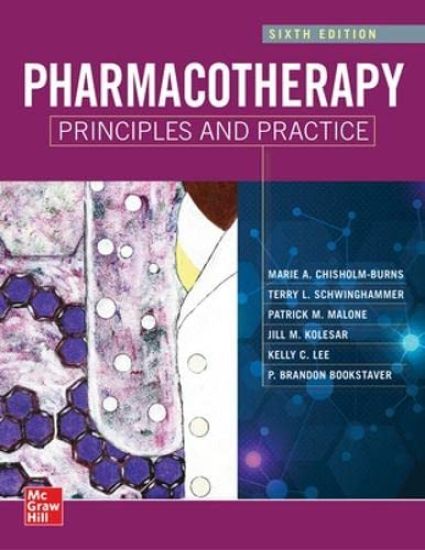
Pharmacotherapy Principles and Practice, Sixth Edition

Pharmacotherapy Principles and Practice, Sixth Edition

Marie Chisholm-Burns; Terry Schwinghammer; Patrick Malone; Jill Kolesar; Kelly C Lee; P. Brandon Bookstaver

McGraw-Hill Education
2022
sidottu
All the main concepts from the landmark Pharmacotherapy: A Pathophysiologic Approach-distilled down to a concise, clinically focused, full-color resourcePharmacotherapy Principles & Practice uses a solid evidence-based approach to teach you how to design, implement, monitor, and evaluate medication therapy. Updated with additional content and reflecting the latest findings, this sixth edition provides everything you need to gain an in-depth understanding of the underlying principles of the pharmacotherapy of disease-and their practical application. All chapters were written or reviewed by pharmacists, nurse practitioners, physician assists, and physicians recognized by authorities in their fields. The book opens with an insightful introductory chapter and is followed by five chapters focused on specific populations: pediatrics, geriatrics, palliative care, critical care, and global health and travel medicine. The subsequent 97 disease-based chapters cover epidemiology, etiology, pathophysiology, clinical presentation and diagnosis, and nonpharmacologic therapy, followed by clear recommendations for medication selection, desired outcomes, dosing, and patient monitoring. Features of the Sixth Edition:Updated patient encounter cases sharpen critical-thinking skills and lend clinical relevant to scientific principlesNew chapters cover: oCritical care pharmacotherapyoGlobal health and travel medicineoSystematic lupus erythematousoNose, mouth, and throat disordersNew content on circulatory shock syndromes, trauma-related anxiety disorder, otic disorders, and antimicrobial stewardshipStructured learning objectives at the beginning of each chapterKey concepts, identified by icons, highlight the disease, patient assessment, and treatmentPatient care process section modeling the Joint Commission of Pharmacy Practitioners (JCCP) Pharmacists' Patient Care ProcessUp-to-date literature citations for each chapterTable, figures, algorithms, and defined medical abbreviationsSelf-assessment questions and answers in the Online Learning CenterValuable table of common laboratory tests and reference ranges
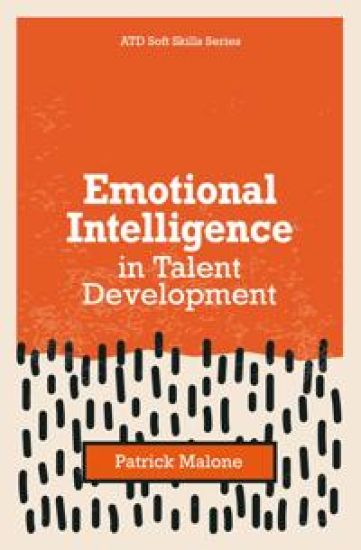
Emotional Intelligence in Talent Development

Emotional Intelligence in Talent Development

Patrick Malone

American Society for Training Development
2021
pokkari
Enhance Your Emotional IntelligenceEmotional intelligence is about people. And so is talent development (TD). For TD professionals to succeed, they must be comfortable with all aspects of working with people. The best tool for their success is emotional intelligence. Part of the ATD Soft Skills Series, Emotional Intelligence in Talent Development is your resource for developing your emotional intelligence skills. Expert Patrick Malone explains emotional intelligence and explores its five dimensions: self-awareness, self-regulation, motivation, empathy, and social skills. He examines why emotional intelligence matters to the self, to organizations, and to your business, along with the barriers you face when building these competencies. While improving your emotional intelligence can seem daunting, Malone demonstrates that developing strong emotional intelligence is attainable by examining real-world challenges that TD professionals face. Learn how to manage the stress of constantly doing more with less; focus on one task at a time and do it well; effectively communicate your message; and identify and address conflict. Included are reflection questions and exercises to practice and test your development. Other books in the series:Adaptability in Talent DevelopmentCreativity in Talent DevelopmentTeamwork in Talent DevelopmentInfluence in Talent Development
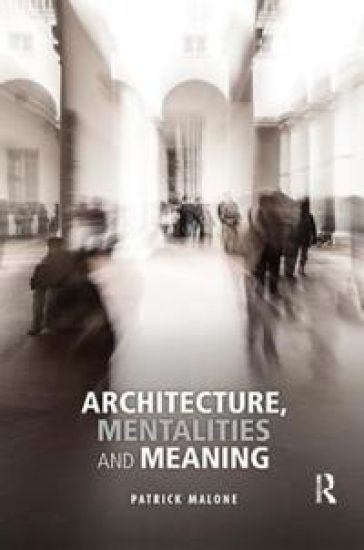
Architecture, Mentalities and Meaning
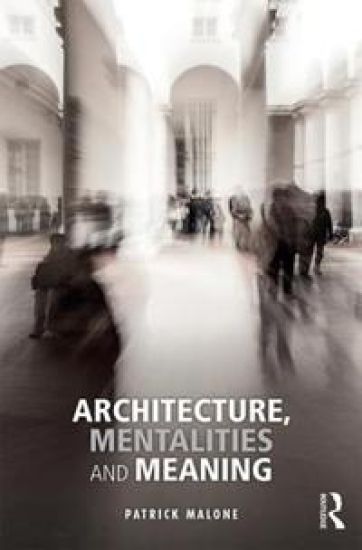
In order to function, architectural theory and practice must be shaped to suit current cultural, economic, and political forces. Thus, architecture embodies reductive logic that conditions the treatment of human and social processes – which raises the question of how to define objectivity for architectural mentalities that must conform to a set of immediate conditions. This book focuses on meaning, and on the physical and mental processes that define life in built environments. The potential to draw knowledge from aesthetics, psychology, political economy, philosophy, geography, and sociology is offset by the fact that architectural logic is inevitably reductive, cultural, socio-economic, and political. However, despite the duty to conform, it is argued that the treatment of human processes, and the understanding of architectural mentalities, can benefit from interdisciplinary linkages, small freedoms, and cracks in a system of imperatives that can yield the means of greater objectivity. This is valuable reading for students and researchers interested in architectural theory as a working reality, and in the relationships between architecture and other fields.
City, Capital and Water

City, Capital and Water

Patrick Malone

Routledge
2014
nidottu
The urban waterfront is widely regarded as a frontier of contemporary urban development, attracting both investment and publicity. City, Capital and Water provides a detailed account of the redevelopment of urban waterfronts in nine cities around the world: London, Tokyo, Kobe, Osaka, Hong Kong, Sydney, Toronto, Dublin and Amsterdam. The case studies cover different frameworks for development in terms of the role of planning, approaches to financing, partnership agreements, state sponsorship and development profits. The analysis also demonstrates the effects of economic globalization, deregulation, the marginalization of planning and the manipulation of development processes by property and political interests.
City, Capital and Water

City, Capital and Water

Patrick Malone

Routledge
1996
sidottu
The urban waterfront is widely regarded as a frontier of contemporary urban development, attracting both investment and publicity. City, Capital and Water provides a detailed account of the redevelopment of urban waterfronts in nine cities around the world: London, Tokyo, Kobe, Osaka, Hong Kong, Sydney, Toronto, Dublin and Amsterdam. The case studies cover different frameworks for development in terms of the role of planning, approaches to financing, partnership agreements, state sponsorship and development profits. The analysis also demonstrates the effects of economic globalization, deregulation, the marginalization of planning and the manipulation of development processes by property and political interests.