Kirjojen hintavertailu – 12 859 819 kirjaa ja 27 kauppaa

Kirjailija

Patrick Porter

Kirjat ja teokset yhdessä paikassa: 13 kirjaa, julkaisuja vuosilta 2009–2025, suosituimpiin kuuluu Beyond Hostile Islands. Vertaile teosten hintoja ja tarkista saatavuus suomalaisista kirjakaupoista.

13 kirjaa

Kirjojen julkaisuvuodet: 2009–2025.

Beyond Hostile Islands

Beyond Hostile Islands

Daniel McKay; Patrick Porter

FORDHAM UNIVERSITY PRESS
2024
sidottu
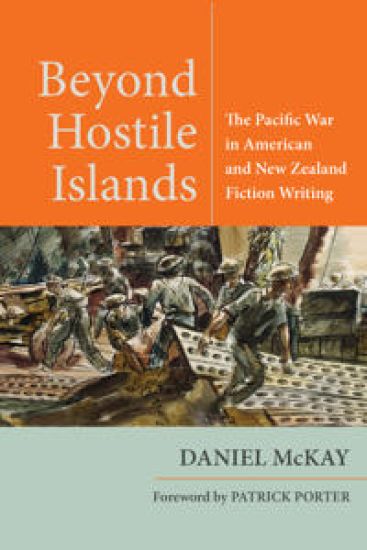
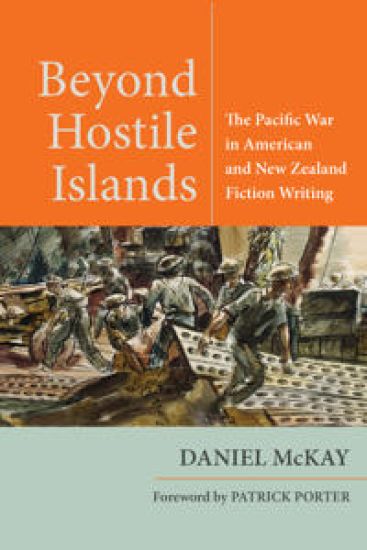
WINNER, JAVIER COY BIENNIAL RESEARCH AWARD, BEST MONOGRAPH Offers a fascinating window into how the fraught politics of apology in the East Asian region have been figured in anglophone literary fiction. The Pacific War, 1941-1945, was fought across the world's largest ocean and left a lasting imprint on anglophone literary history. However, studies of that imprint or of individual authors have focused on American literature without drawing connections to parallel traditions elsewhere. Beyond Hostile Islands contributes to ongoing efforts by Australasian scholars to place their national cultures in conversation with those of the United States, particularly regarding studies of the ideologies that legitimize warfare. Consecutively, the book examines five of the most significant historical and thematic areas associated with the war: island combat, economic competition, internment, imprisonment, and the atomic bombing of Hiroshima and Nagasaki. Throughout, the central issue pivots around the question of how or whether at all New Zealand fiction writing differs from that of the United States. Can a sense of islandness, the 'tyranny of distance,' Maori cultural heritage, or the political legacies of the nuclear-free movement provide grounds for distinctive authorial insights? As an opening gambit, Beyond Hostile Islands puts forward the term 'ideological coproduction' to describe how a territorially and demographically more minor national culture may accede to the essentials of a given ideology while differing in aspects that reflect historical and provincial dimensions that are important to it. Appropriately, the literary texts under examination are set in various locales, including Japan, the Solomon Islands, New Zealand, New Mexico, Ontario, and the Marshall Islands. The book concludes in a deliberately open-ended pose, with the full expectation that literary writing on the Pacific War will grow in range and richness, aided by the growth of Pacific Studies as a research area.
Beyond Hostile Islands

Beyond Hostile Islands

Daniel McKay; Patrick Porter

FORDHAM UNIVERSITY PRESS
2024
pokkari
WINNER, JAVIER COY BIENNIAL RESEARCH AWARD, BEST MONOGRAPH Offers a fascinating window into how the fraught politics of apology in the East Asian region have been figured in anglophone literary fiction. The Pacific War, 1941-1945, was fought across the world's largest ocean and left a lasting imprint on anglophone literary history. However, studies of that imprint or of individual authors have focused on American literature without drawing connections to parallel traditions elsewhere. Beyond Hostile Islands contributes to ongoing efforts by Australasian scholars to place their national cultures in conversation with those of the United States, particularly regarding studies of the ideologies that legitimize warfare. Consecutively, the book examines five of the most significant historical and thematic areas associated with the war: island combat, economic competition, internment, imprisonment, and the atomic bombing of Hiroshima and Nagasaki. Throughout, the central issue pivots around the question of how or whether at all New Zealand fiction writing differs from that of the United States. Can a sense of islandness, the 'tyranny of distance,' Maori cultural heritage, or the political legacies of the nuclear-free movement provide grounds for distinctive authorial insights? As an opening gambit, Beyond Hostile Islands puts forward the term 'ideological coproduction' to describe how a territorially and demographically more minor national culture may accede to the essentials of a given ideology while differing in aspects that reflect historical and provincial dimensions that are important to it. Appropriately, the literary texts under examination are set in various locales, including Japan, the Solomon Islands, New Zealand, New Mexico, Ontario, and the Marshall Islands. The book concludes in a deliberately open-ended pose, with the full expectation that literary writing on the Pacific War will grow in range and richness, aided by the growth of Pacific Studies as a research area.
The Brain Fitness Blueprint

The Brain Fitness Blueprint

Patrick Porter; Ruchika Sikri

Ebury Publishing
2025
pokkari

Halvin toimitettuna 29,90 €

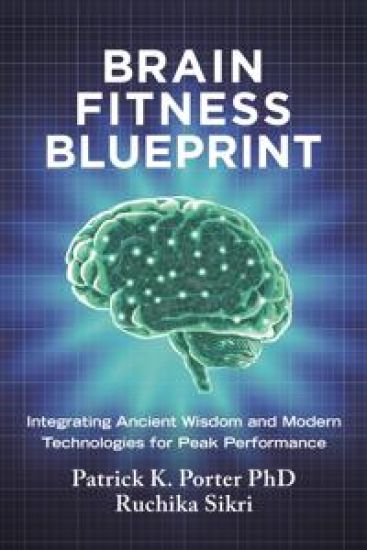
The Brain Fitness Blueprint takes you on a transformative journey into brain fitness, revealing the secrets to optimising cognitive performance and physical vitalityIn today’s unpredictable and often overwhelming world, a fit brain is no longer just about IQ. 'Brain fitness' encompasses emotional awareness and regulation, adequate cognitive rest, and resilience to meet the ongoing challenges we face every day. The Brain Fitness Blueprint is a holistic blueprint, providing practical techniques to achieve optimal brain health. Integrating ancient wisdom, such as meditation and mindfulness techniques, with new cognitive strategies, such as Unlimited Reality: a transformative practice that involves observing excellence in another person, then using imagery techniques to see through their eyes, hear through their ears, and feel every sensation in their body, as if you are living their experiences first-hand. In this digital era, constant connectivity and information overload can lead to mental fatigue and cognitive strain. The Brain Fitness Blueprint gives you the tools to not only survive, but truly thrive, in the modern world.
How to Survive a Hostile World

How to Survive a Hostile World

Patrick Porter

STANFORD UNIVERSITY PRESS
2025
pokkari

Halvin toimitettuna 31,30 €

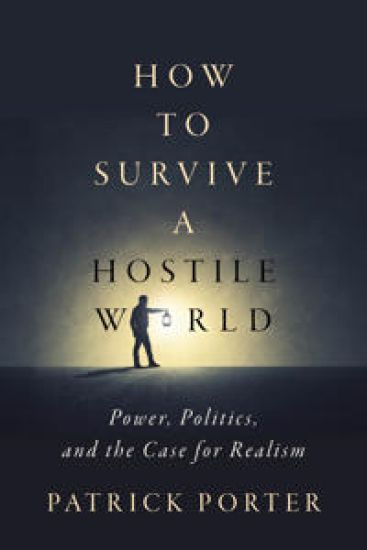
The oldest ideas are the best. This book is a defense of an ancient way of thinking about international politics: realism. Patrick Porter, a scholar of international relations, defends the realist approach to understanding the world by addressing head-on the most robust critiques of the tradition. Drawing from a wide literature, Porter restages three prominent criticisms of realism: that it is immoral, unrealistic, and provincial. In erudite, clear, and at times morbidly funny prose, Porter makes the case that realism is, in fact, everything its critics believe it is not: moral in its commitment to securing the polity and its interests in a world where there is no higher government; realistic and the best starting point for explaining how human groups tend to behave; and practical for use by everyone, everywhere, including beyond the Euro-Atlantic. From Thucydides to Kautilya to Machiavelli, realists claim that the world is an inherently dangerous place defined by the shadow of conflict, whether we like it or not. As the 21st century grapples with multiple interlocking crises concerning economic dislocation, climate crisis, and war, we need realism now more than ever. This book is for readers who are looking for sensible guidance on how to work within that reality and survive in an increasingly hostile world.
How to Survive a Hostile World

How to Survive a Hostile World

Patrick Porter

STANFORD UNIVERSITY PRESS
2025
sidottu
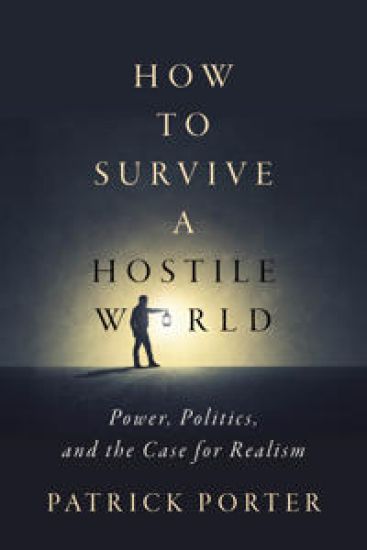
The oldest ideas are the best. This book is a defense of an ancient way of thinking about international politics: realism. Patrick Porter, a scholar of international relations, defends the realist approach to understanding the world by addressing head-on the most robust critiques of the tradition. Drawing from a wide literature, Porter restages three prominent criticisms of realism: that it is immoral, unrealistic, and provincial. In erudite, clear, and at times morbidly funny prose, Porter makes the case that realism is, in fact, everything its critics believe it is not: moral in its commitment to securing the polity and its interests in a world where there is no higher government; realistic and the best starting point for explaining how human groups tend to behave; and practical for use by everyone, everywhere, including beyond the Euro-Atlantic. From Thucydides to Kautilya to Machiavelli, realists claim that the world is an inherently dangerous place defined by the shadow of conflict, whether we like it or not. As the 21st century grapples with multiple interlocking crises concerning economic dislocation, climate crisis, and war, we need realism now more than ever. This book is for readers who are looking for sensible guidance on how to work within that reality and survive in an increasingly hostile world.
The False Promise of Liberal Order

The False Promise of Liberal Order

Patrick Porter

Polity Press
2020
nidottu
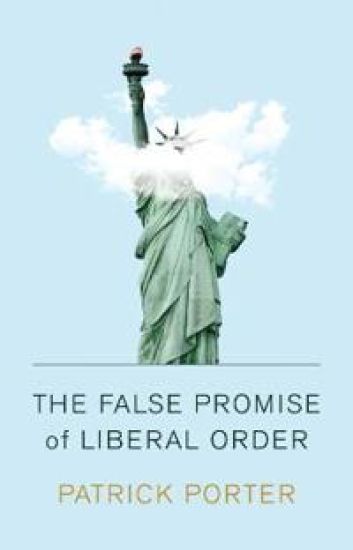
In an age of demagogues, hostile great powers and trade wars, foreign policy traditionalists dream of restoring liberal international order. This order, they claim, ushered in seventy years of peace and prosperity and saw post-war America domesticate the world to its values. The False Promise of Liberal Order exposes the flaws in this nostalgic vision. The world shaped by America came about as a result of coercion and, sometimes brutal, compromise. Liberal projects – to spread capitalist democracy – led inadvertently to illiberal results. To make peace, America made bargains with authoritarian forces. Even in the Pax Americana, the gentlest order yet, ordering was rough work. As its power grew, Washington came to believe that its order was exceptional and even permanent – a mentality that has led to spiralling deficits, permanent war and Trump. Romanticizing the liberal order makes it harder to adjust to today’s global disorder. Only by confronting the false promise of liberal order and adapting to current realities can the United States survive as a constitutional republic in a plural world.
The False Promise of Liberal Order

The False Promise of Liberal Order

Patrick Porter

Polity Press
2020
sidottu
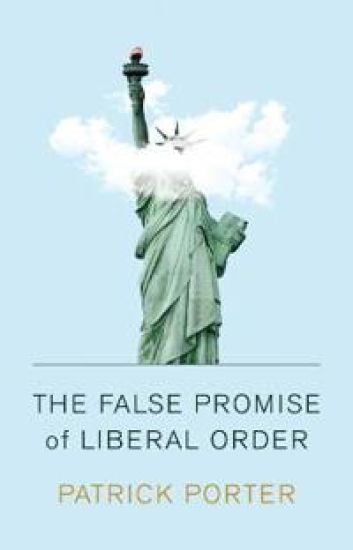
In an age of demagogues, hostile great powers and trade wars, foreign policy traditionalists dream of restoring liberal international order. This order, they claim, ushered in seventy years of peace and prosperity and saw post-war America domesticate the world to its values. The False Promise of Liberal Order exposes the flaws in this nostalgic vision. The world shaped by America came about as a result of coercion and, sometimes brutal, compromise. Liberal projects – to spread capitalist democracy – led inadvertently to illiberal results. To make peace, America made bargains with authoritarian forces. Even in the Pax Americana, the gentlest order yet, ordering was rough work. As its power grew, Washington came to believe that its order was exceptional and even permanent – a mentality that has led to spiralling deficits, permanent war and Trump. Romanticizing the liberal order makes it harder to adjust to today’s global disorder. Only by confronting the false promise of liberal order and adapting to current realities can the United States survive as a constitutional republic in a plural world.
Blunder

Blunder

Patrick Porter

Oxford University Press
2018
sidottu
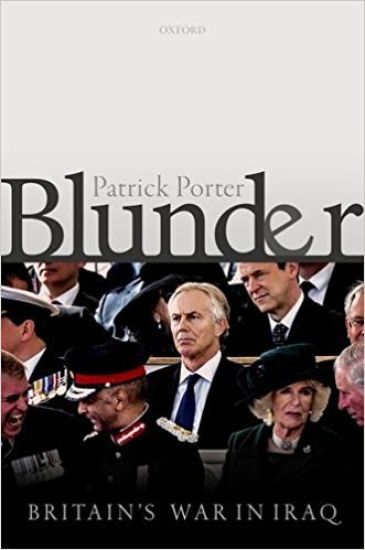
Why did Britain go to war in Iraq in 2003? Existing accounts stress dodgy dossiers, intelligence failures, and the flaws of individual leaders. Deploying the large number of primary documents now available, this book puts ideas at the centre of the story. As the book argues, Britain's war in Iraq was caused by bad ideas that were dogmatically held and widely accepted. Three ideas in particular formed the war's intellectual foundations: the notion of the undeterrable, fanatical rogue state; the vision that the West's path to security is to break and remake states; and the conceit that by paying the 'blood price', Britain could secure influence in Washington DC. These issues matter, because although the Iraq War happened fifteen years ago, it is still with us. As well as its severe consequences for regional and international security, the ideas that powered the war persist in Western security debate. If all wars are fought twice, first on the battlefield and the second time in memory, this book enters the battle over what Iraq means now, and what we should learn.
The Global Village Myth

The Global Village Myth

Patrick Porter

C Hurst Co Publishers Ltd
2015
nidottu
Does technology kill distance? Does the 'globalisation' of the world make the US and its allies vulnerable to violence, terrorism or cyber-assault? 'Globalism'-- the belief that changes in information, transport and communications are dangerously shrinking the world -- is a reigning assumption amongst security elites. It makes the United States and its allies feel perpetually insecure, haunted by rumours of chain reactions and the domino effect. At the same time, the vision of instant and borderless warfare can be seductive, making Westerners believe they must strike first, with new powers to tame a chaotic world. Under the shadow of Globalism, disastrous wars are fought, civil liberties are threatened and hysteria replaces sober debate about foreign policy. In 'The Global Village Myth', Patrick Porter demonstrates through studies of Al-Qaeda's global terror network, military tensions in the Taiwan Strait, drones and cyberwar, that Globalism is wildly overstated. Technology may accelerate movement and compress physical space. But it does not necessarily shrink strategic space, the ability to project power affordably across the earth. If distance is created by humans exploiting technology and terrain, the world in important ways is getting larger, not smaller. This makes us less powerful, but more secure, than we think. Porter offers an alternative outlook to lead policymakers toward more sensible responses and a wiser, more sustainable, grand strategy.
The Global Village Myth

The Global Village Myth

Patrick Porter

Georgetown University Press
2015
pokkari
According to security elites, revolutions in information, transport, and weapons technologies have shrunk the world, leaving the United States and its allies more vulnerable than ever to violent threats like terrorism or cyberwar. As a result, they practice responses driven by fear: theories of falling dominoes, hysteria in place of sober debate, and an embrace of preemptive war to tame a chaotic world. Patrick Porter challenges these ideas. In The Global Village Myth, he disputes globalism's claims and the outcomes that so often waste blood and treasure in the pursuit of an unattainable "total" security. Porter reexamines the notion of the endangered global village by examining Al-Qaeda's global guerilla movement, military tensions in the Taiwan Strait, and drones and cyberwar, two technologies often used by globalists to support their views. His critique exposes the folly of disastrous wars and the loss of civil liberties resulting from the globalist enterprise. Showing that technology expands rather than shrinks strategic space, Porter offers an alternative outlook to lead policymakers toward more sensible responses - and a wiser, more sustainable grand strategy.
Military Orientalism

Military Orientalism

Patrick Porter

C Hurst Co Publishers Ltd
2009
sidottu
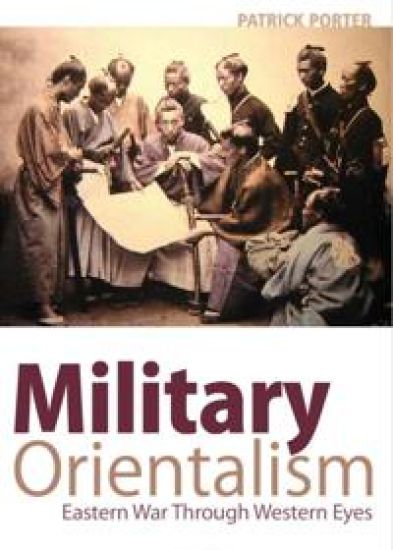
From the Ancient Greeks' obsession with the armies of the Persians, Westerners have been irresistibly drawn to the exotic nature of 'Oriental' warfare and have sought either to emulate their enemies' imagined ways of fighting or to incorporate Eastern warriors and 'martial races', such as the Sikhs and Gurkhas, in their own forces. The alluring yet terrifying prospect of Samurai warriors, obedient to an ancient code of chivalry, or of the Mongol cavalry thundering across the steppes, continue to grip our imagination, while the courage and fighting prowess of today's 'Eastern' warriors, the Taliban and Hezbollah, have been grudgingly acknowledged by the hightech armies of NATO in Afghanistan and the IDF in Lebanon. Such romantic notions are based on a highly questionable premise, namely that race, culture and tradition are separate and primordial, and that they determine how societies fight. But how far does culture shape war? Do non-Westerners approach strategy, combat, or death in ways intrinsically different from their Eastern neighbours? This debate can be tracked through time, from Herodotus onwards, and features in innumerable histories and literary works as well as in poetry, art and oral epics. Yet there are few histories of the idea itself. "Military Orientalism" argues that viewing culture as a script that dictates warfare is wrong, and that our obsession with the exotic can make it harder, not easier, to know the enemy. Culture is powerful, but it is an ambiguous repertoire of ideas rather than a clear code for action. To divide the world into western, Asiatic or Islamic ways of war is a delusion, one whose profound impact affects contemporary war and above all the War on Terror. Porter's fascinating book explains why the 'Oriental' warrior inspires fear, envy and wonder and how this has shaped the way Western armies fight.
Military Orientalism

Military Orientalism

Patrick Porter

C Hurst Co Publishers Ltd
2009
nidottu
From the Ancient Greeks' obsession with the armies of the Persians, Westerners have been irresistibly drawn to the exotic nature of 'Oriental' warfare and have sought either to emulate their enemies' imagined ways of fighting or to incorporate Eastern warriors and 'martial races', such as the Sikhs and Gurkhas, in their own forces. The alluring yet terrifying prospect of Samurai warriors, obedient to an ancient code of chivalry, or of the Mongol cavalry thundering across the steppes, continue to grip our imagination, while the courage and fighting prowess of today's 'Eastern' warriors, the Taliban and Hezbollah, have been grudgingly acknowledged by the hightech armies of NATO in Afghanistan and the IDF in Lebanon. Such romantic notions are based on a highly questionable premise, namely that race, culture and tradition are separate and primordial, and that they determine how societies fight. But how far does culture shape war? Do non-Westerners approach strategy, combat, or death in ways intrinsically different from their Eastern neighbours? This debate can be tracked through time, from Herodotus onwards, and features in innumerable histories and literary works as well as in poetry, art and oral epics. Yet there are few histories of the idea itself. "Military Orientalism" argues that viewing culture as a script that dictates warfare is wrong, and that our obsession with the exotic can make it harder, not easier, to know the enemy. Culture is powerful, but it is an ambiguous repertoire of ideas rather than a clear code for action. To divide the world into western, Asiatic or Islamic ways of war is a delusion, one whose profound impact affects contemporary war and above all the War on Terror. Porter's fascinating book explains why the 'Oriental' warrior inspires fear, envy and wonder and how this has shaped the way Western armies fight.