Kirjojen hintavertailu – 12 859 829 kirjaa ja 27 kauppaa
Kirjailija
Patrick Quinn
Kirjat ja teokset yhdessä paikassa: 8 kirjaa, julkaisuja vuosilta 2005–2022, suosituimpiin kuuluu Worldstore One. Vertaile teosten hintoja ja tarkista saatavuus suomalaisista kirjakaupoista.
Bar Keeps: A Collection of California's Best Cocktail Napkins highlights the colorful and fun cocktail napkins from California's famous restaurants, hidden dives, and most beloved bars. Bar Keeps: A Collection of California's Best Cocktail Napkins is a fun and fabulous tour through the cocktail napkins of the golden state. Hundreds of images of vintage cocktail napkins will surprise and delight anyone who is a fan of cocktail culture, roadside diners, hidden dives, tiki bars, and more. Collector Patrick Quinn highlights some of the most unique and interesting napkins he's brought together over years of enthusiastic searching. Bar Keeps: A Collection of California's Best Cocktail Napkins is the perfect book for any coffee table or bar top in town
Wittgenstein is not generally thought of as a philosopher of education, yet his views on how we think, learn and teach have the potential to contribute significantly to our contemporary understanding of pedagogy. Wittgenstein himself was a lifelong learner whose method consisted of thinking intensely about a wide range of topics, including not only the philosophy of language, logic and mathematics but also architecture, music, ethics, religion, culture and psychoanalysis. He then shared his observations and conclusions with his students as a way of teaching them how to think and learn for themselves, and his personification of the learner-teacher deeply impressed those who witnessed his pedagogical performances during his ‘lectures’. This study presents a detailed exploration of Wittgenstein’s legacy as an educationalist, now accessible to us through the extensive published collections of his thoughts on the subject.
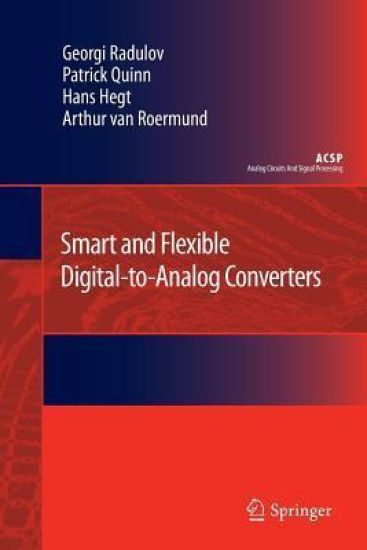
Smart and Flexible Digital-to-Analog Converters proposes new concepts and implementations for flexibility and self-correction of current-steering digital-to-analog converters (DACs) which allow the attainment of a wide range of functional and performance specifications, with a much reduced dependence on the fabrication process. DAC linearity is analysed with respect to the accuracy of the DAC unit elements. A classification is proposed of the many different current-steering DAC correction methods. The classification reveals methods that do not yet exist in the open literature. Further, this book systematically analyses self-calibration correction methods for the various DAC mismatch errors. For instance, efficient calibration of DAC binary currents is identified as an important missing method. This book goes on to propose a new methodology for correcting mismatch errors of both nominally identical unary as well as scaled binary DAC currents. A new concept for DAC flexibility is presented. The associated architecture is based on a modular design approach that uses parallel sub-DAC units to realize flexible design, functionality and performance. Two main concepts, self-calibration and flexibility, are demonstrated in practice using three DAC testchips in 250nm, 180nm and 40nm standard CMOS. Smart and Flexible Digital-to-Analog Converters will be useful to both advanced professionals and newcomers in the field. Advanced professionals will find new methods that are fully elaborated from analysis at conceptual level to measurement results at test-chip level. New comers in the field will find structured knowledge of fully referenced state-of-the art methods with many fully explained novelties. DAC linearity is analysed with respect to the accuracy of the DAC unit elements. A classification is proposed of the many different current-steering DAC correction methods. The classification reveals methods that do not yet exist in the open literature. Further, this book systematically analyses self-calibration correction methods for the various DAC mismatch errors. For instance, efficient calibration of DAC binary currents is identified as an important missing method. This book goes on to propose a new methodology for correcting mismatch errors of both nominally identical unary as well as scaled binary DAC currents. A new concept for DAC flexibility is presented. The associated architecture is based on a modular design approach that uses parallel sub-DAC units to realize flexible design, functionality and performance. Two main concepts, self-calibration and flexibility, are demonstrated in practice using three DAC testchips in 250nm, 180nm and 40nm standard CMOS. Smart and Flexible Digital-to-Analog Converters will be useful to both advanced professionals and newcomers in the field. Advanced professionals will find new methods that are fully elaborated from analysis at conceptual level to measurement results at test-chip level. New comers in the field will find structured knowledge of fully referenced state-of-the art methods with many fully explained novelties. This book goes on to propose a new methodology for correcting mismatch errors of both nominally identical unary as well as scaled binary DAC currents. A new concept for DAC flexibility is presented. The associated architecture is based on a modular design approach that uses parallel sub-DAC units to realize flexible design, functionality and performance. Two main concepts, self-calibration and flexibility, are demonstrated in practice using three DAC testchips in 250nm, 180nm and 40nm standard CMOS. Smart and Flexible Digital-to-Analog Converters will be useful to both advanced professionals and newcomers in the field. Advanced professionals will find new methods that are fully elaborated from analysis at conceptual level to measurement results at test-chip level. New comers in the field will find structured knowledge of fully referenced state-of-the art methods with many fully explained novelties. Two main concepts, self-calibration and flexibility, are demonstrated in practice using three DAC testchips in 250nm, 180nm and 40nm standard CMOS. Smart and Flexible Digital-to-Analog Converters will be useful to both advanced professionals and newcomers in the field. Advanced professionals will find new methods that are fully elaborated from analysis at conceptual level to measurement results at test-chip level. New comers in the field will find structured knowledge of fully referenced state-of-the art methods with many fully explained novelties.
Smart and Flexible Digital-to-Analog Converters proposes new concepts and implementations for flexibility and self-correction of current-steering digital-to-analog converters (DACs) which allow the attainment of a wide range of functional and performance specifications, with a much reduced dependence on the fabrication process. DAC linearity is analysed with respect to the accuracy of the DAC unit elements. A classification is proposed of the many different current-steering DAC correction methods. The classification reveals methods that do not yet exist in the open literature. Further, this book systematically analyses self-calibration correction methods for the various DAC mismatch errors. For instance, efficient calibration of DAC binary currents is identified as an important missing method. This book goes on to propose a new methodology for correcting mismatch errors of both nominally identical unary as well as scaled binary DAC currents. A new concept for DAC flexibility is presented. The associated architecture is based on a modular design approach that uses parallel sub-DAC units to realize flexible design, functionality and performance. Two main concepts, self-calibration and flexibility, are demonstrated in practice using three DAC testchips in 250nm, 180nm and 40nm standard CMOS. Smart and Flexible Digital-to-Analog Converters will be useful to both advanced professionals and newcomers in the field. Advanced professionals will find new methods that are fully elaborated from analysis at conceptual level to measurement results at test-chip level. New comers in the field will find structured knowledge of fully referenced state-of-the art methods with many fully explained novelties. DAC linearity is analysed with respect to the accuracy of the DAC unit elements. A classification is proposed of the many different current-steering DAC correction methods. The classification reveals methods that do not yet exist in the open literature. Further, this book systematically analyses self-calibration correction methods for the various DAC mismatch errors. For instance, efficient calibration of DAC binary currents is identified as an important missing method. This book goes on to propose a new methodology for correcting mismatch errors of both nominally identical unary as well as scaled binary DAC currents. A new concept for DAC flexibility is presented. The associated architecture is based on a modular design approach that uses parallel sub-DAC units to realize flexible design, functionality and performance. Two main concepts, self-calibration and flexibility, are demonstrated in practice using three DAC testchips in 250nm, 180nm and 40nm standard CMOS. Smart and Flexible Digital-to-Analog Converters will be useful to both advanced professionals and newcomers in the field. Advanced professionals will find new methods that are fully elaborated from analysis at conceptual level to measurement results at test-chip level. New comers in the field will find structured knowledge of fully referenced state-of-the art methods with many fully explained novelties. This book goes on to propose a new methodology for correcting mismatch errors of both nominally identical unary as well as scaled binary DAC currents. A new concept for DAC flexibility is presented. The associated architecture is based on a modular design approach that uses parallel sub-DAC units to realize flexible design, functionality and performance. Two main concepts, self-calibration and flexibility, are demonstrated in practice using three DAC testchips in 250nm, 180nm and 40nm standard CMOS. Smart and Flexible Digital-to-Analog Converters will be useful to both advanced professionals and newcomers in the field. Advanced professionals will find new methods that are fully elaborated from analysis at conceptual level to measurement results at test-chip level. New comers in the field will find structured knowledge of fully referenced state-of-the art methods with many fully explained novelties. Two main concepts, self-calibration and flexibility, are demonstrated in practice using three DAC testchips in 250nm, 180nm and 40nm standard CMOS. Smart and Flexible Digital-to-Analog Converters will be useful to both advanced professionals and newcomers in the field. Advanced professionals will find new methods that are fully elaborated from analysis at conceptual level to measurement results at test-chip level. New comers in the field will find structured knowledge of fully referenced state-of-the art methods with many fully explained novelties.
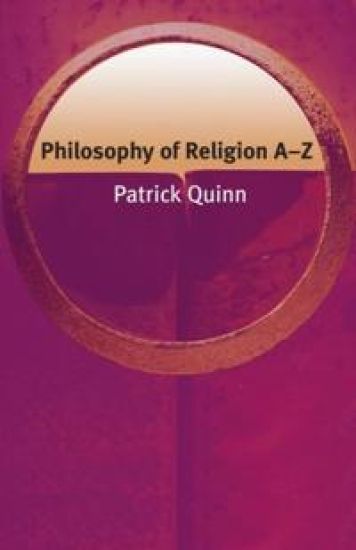
A concise alphabetical guide to the philosophical investigation of religion and the meaning of religious beliefs. Philosophy of Religion A-Z provides an overview of the main themes, key figures and issues in the subject. Both topical and historical, it examines key concepts from the Absolute and the Afterlife to World Religions and Yoga as well as thinkers from Abraham to Wittgenstein. The relationship between philosophy and theology is examined as is that between religion, faith and belief. Extensive cross-references demonstrate clear connections between entries. This reference guide will be useful for anyone interested in the philosophy of religion, in philosophy and theology as well as in anthropology, cultural and religious studies, mythology and the psychology and sociology of religion. Features * The alphabetical presentation of the issues and thinkers involved makes for ease of reading. * Philosophers' views on religion are objectively and sympathetically presented as are the various religious creeds discussed.
A concise alphabetical guide to the philosophical investigation of religion and the meaning of religious beliefs. Philosophy of Religion A-Z provides an overview of the main themes, key figures and issues in the subject. Both topical and historical, it examines key concepts from the Absolute and the Afterlife to World Religions and Yoga as well as thinkers from Abraham to Wittgenstein. The relationship between philosophy and theology is examined as is that between religion, faith and belief. Extensive cross-references demonstrate clear connections between entries. This reference guide will be useful for anyone interested in the philosophy of religion, in philosophy and theology as well as in anthropology, cultural and religious studies, mythology and the psychology and sociology of religion. Features * The alphabetical presentation of the issues and thinkers involved makes for ease of reading. * Philosophers' views on religion are objectively and sympathetically presented as are the various religious creeds discussed.