Kirjojen hintavertailu – 12 903 725 kirjaa ja 27 kauppaa

Kirjailija

Patrick Rössler

Kirjat ja teokset yhdessä paikassa: 13 kirjaa, julkaisuja vuosilta 1997–2025, suosituimpiin kuuluu Revolutionäre der Typographie. Vertaile teosten hintoja ja tarkista saatavuus suomalaisista kirjakaupoista.

Nimi esiintyy myös muodoissa: Patrick Rossler

13 kirjaa

Kirjojen julkaisuvuodet: 1997–2025.

Herbert Bayer, Graphic Designer

Herbert Bayer, Graphic Designer

Patrick Rössler

BLOOMSBURY PUBLISHING PLC
2025
nidottu
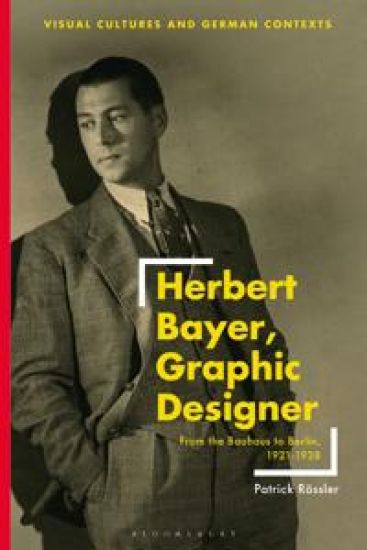
Herbert Bayer was one of the most extraordinary artists associated with the Bauhaus school. A true multimedia artist, he united graphic design, art, and architecture in a unique style that came to represent the bold aesthetic approach of the movement. A teacher with the school until 1928, Bayer went on to become a highly successful graphic designer in Germany, and later one of the most prominent figures in the 20th-century art scene of the United States. This broad biographical account, which presents previously unseen archival photographs and episodes from the life of Bayer and other influential Bauhaus artists such as Walter Gropius, Marcel Breuer and László Moholy-Nagy, follows Bayer through the Weimar Republic, Nazi Germany and finally to his exile in the United States. Shining a light on Bayer’s time in Berlin during the Weimar Republic, and his route out of the Nazi state, Rössler provides rich new insights into how Bauhaus artists navigated a protracted period of social upheaval and dictatorship, where commercial success was fraught with a deep hostility towards the regime and the temptations of emigration. Revealing the tensions of an avant-garde artist struggling to practice during a period of repression, Herbert Bayer, Graphic Designer speaks to both the memory of those who left Nazi Germany, but also the perseverance of artists and intellectuals throughout history who have worked under authoritarian regimes. Drawing on never before interpreted documents, letters and archival material, Rössler tells Bayer’s compelling story – documenting the life of a unique artist and offering a valuable contribution to research in émigré experiences.
Herbert Bayer, Graphic Designer

Herbert Bayer, Graphic Designer

Patrick Rössler

BLOOMSBURY PUBLISHING PLC
2023
sidottu
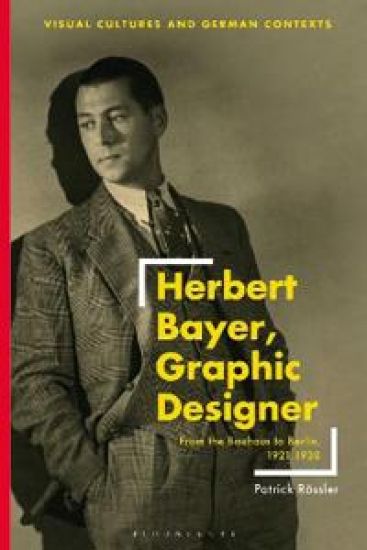
Herbert Bayer was one of the most extraordinary artists associated with the Bauhaus school. A true multimedia artist, he united graphic design, art, and architecture in a unique style that came to represent the bold aesthetic approach of the movement. A teacher with the school until 1928, Bayer went on to become a highly successful graphic designer in Germany, and later one of the most prominent figures in the 20th-century art scene of the United States. This broad biographical account, which presents previously unseen archival photographs and episodes from the life of Bayer and other influential Bauhaus artists such as Walter Gropius, Marcel Breuer and László Moholy-Nagy, follows Bayer through the Weimar Republic, Nazi Germany and finally to his exile in the United States. Specifically, Patrick Rössler reveals for the first time Bayer’s unique experience of 1930s Germany, where, with his commercial and artistic life shattered by terror and censorship, he distracted himself with leading a hedonistic life. Shining a light on Bayer’s time in Berlin during the Weimar Republic, and his route out of the Nazi state, Rössler provides rich new insights into how Bauhaus artists navigated a protracted period of social upheaval and dictatorship, where commercial success was fraught with a deep hostility towards the regime and the temptations of emigration. Revealing the tensions of an avant-garde artist struggling to practice during a period of repression, Herbert Bayer, Graphic Designer speaks to both the memory of those who left Nazi Germany, but also the perseverance of artists and intellectuals throughout history who have worked under authoritarian regimes. Drawing on never before interpreted documents, letters and archival material, Rössler tells Bayer’s compelling story – documenting the life of a unique artist and offering a valuable contribution to research in émigré experiences.
The Bauhaus and Public Relations

The Bauhaus and Public Relations

Patrick Rössler

Routledge
2017
nidottu
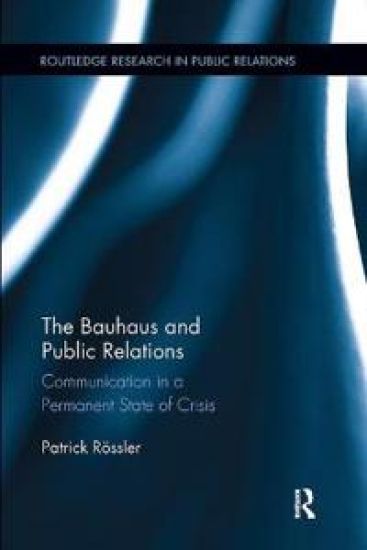
This innovative study considers one of the most important art and design movements of the 20th century, the Bauhaus, in conjunction with current research in public relations and organizational communication, elaborating on the mechanisms of internal and external communication available to influence the stakeholders in politics, society, industry, and the art world. In a movement where a substantial share of productivity ran in measures to highlight the public value of the institution funded by the taxpayer, the directors, and other persons in charge, the Bauhaus developed comprehensive strategies to communicate their messages to a variety of target groups such as politicians and economic leaders, intellectuals and other artists, current and prospective students, and the general public. To achieve this goal, the Bauhaus anticipated many instruments of modern public relations and corporate communications, including press releases, staging of events, media publications, community building, lobbying, and the creation of nationwide public presence. Rössler argues that as an organization, the Bauhaus cultivated corporate behavior and, most prominently, a corporate design which unfolded revolutionary power. The basic achievements of new typography (a label coined at the Bauhaus) determine visual communication to this day, while the Bauhaus moved from an institutional organization to a community. Beginning with an overview of the Bauhaus’ corporate identity and a close examination of the respective directors’ roles for internal and external communication, this book visits exhibitions, events, and the media attention they evoked in newspapers and contemporary periodicals, along with media products designed at the Bauhaus such as magazines, books, and bank notes.
Big Plans: Modern Figures, Visionaries and Inventors

Big Plans: Modern Figures, Visionaries and Inventors

Beat Wyss; Patrick Rossler; Joachim Krausse; Torsten Blume

Kerber Verlag
2016
sidottu
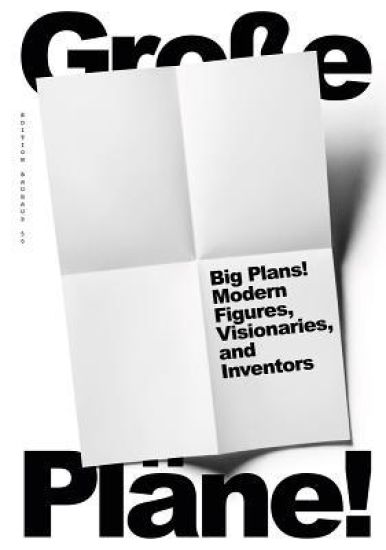
Ninety years after the Bauhaus first opened its doors in Dessau, Big Plans Modern Figures, Visionaries, and Inventors examines for the first time the role of the Bauhaus in the early modernist vision of utopia. Not just an experimental forum for the avant-garde, the Bauhaus, once it moved to Dessau, became part of an industrial region that had been a hotbed of idealized planning for the future of humanity since the end of the First World War. This visionary futurist age of Saxony-Anhalt, reflected in its local architecture, industrial production, education and advertising, continued until the rise of the Nazi party in the 1930s. Big Plans includes correspondence sent from the Bauhaus throughout this local, central German network, tracing connections between Dessau and Magdeburg, Halle (Saale), Leuna, Merseburg, Wolfen and Elbingerorde. The work of Walter Gropius, Xanti Schawinsky, Bruno Taut and Wilhelm Deffke is given particular emphasis, alongside artists, architects, politicians and engineers such as Paul Scheerbart, Josef Albers, L szlo Moholy-Nagy, Edith Dinkelmann, Leberecht Migge, Sigfried Ebeling, Friedrich Zollinger, Walter Dexel, Marinne Brandt, Ise Gropius, Hermann Eidenbenz, Hans Heinz Stuckenschmidt, Jenny Gertz, Hugo Junkers, Joost Schmidt and Herbert Bayer.
The Bauhaus and Public Relations

The Bauhaus and Public Relations

Patrick Rössler

Routledge
2014
sidottu
This innovative study considers one of the most important art and design movements of the 20th century, the Bauhaus, in conjunction with current research in public relations and organizational communication, elaborating on the mechanisms of internal and external communication available to influence the stakeholders in politics, society, industry, and the art world. In a movement where a substantial share of productivity ran in measures to highlight the public value of the institution funded by the taxpayer, the directors, and other persons in charge, the Bauhaus developed comprehensive strategies to communicate their messages to a variety of target groups such as politicians and economic leaders, intellectuals and other artists, current and prospective students, and the general public. To achieve this goal, the Bauhaus anticipated many instruments of modern public relations and corporate communications, including press releases, staging of events, media publications, community building, lobbying, and the creation of nationwide public presence. Rössler argues that as an organization, the Bauhaus cultivated corporate behavior and, most prominently, a corporate design which unfolded revolutionary power. The basic achievements of new typography (a label coined at the Bauhaus) determine visual communication to this day, while the Bauhaus moved from an institutional organization to a community. Beginning with an overview of the Bauhaus’ corporate identity and a close examination of the respective directors’ roles for internal and external communication, this book visits exhibitions, events, and the media attention they evoked in newspapers and contemporary periodicals, along with media products designed at the Bauhaus such as magazines, books, and bank notes.
Skalenhandbuch Kommunikationswissenschaft

Skalenhandbuch Kommunikationswissenschaft

Patrick Rössler

Vs Verlag Fur Sozialwissenschaften
2011
sidottu
Empirische Forschung auf Basis standardisierter Verfahren greift häufig auf einen Satz von Konstrukten zurück, die immer wieder benötigt werden. Für deren Operationalisierung werden Skalen entwickelt, die regelmäßig eingesetzt und validiert werden. Dieses erste Skalenhandbuch für die deutschsprachige Kommunikations- und Medienforschung enthält Angaben zu 76 Skalen unterschiedlichster Forschungsfelder. Zu jeder Skala sind - neben ihrem exakten Wortlaut - ausführliche Angaben zur theoretischen Einbettung des jeweiligen Instruments, seinen Einsatzmöglichkeiten in der Forschung und seiner Validierung enthalten.
Children’s Film in Europe

Children’s Film in Europe

Kathleen Arendt; Patrick Rössler; Anja Kalch; Franziska Spitzner

Peter Lang AG
2010
sidottu
This book provides a comprehensive overview of the scientific literature on children’s film in Europe since the year 2000. An intensive research using online sources, library catalogues, websites complemented by expert interviews was conducted as basis for this literature review. The analysis covers 42 European countries investigating three dimensions: children’s film funding, children’s film production and distribution and children’s film culture, and systematizes the sources on a European, transnational and national level. The distribution of available sources varies strongly depending on the region, country, and dimension analyzed. In addition, recommendations for future research and collaborative efforts are provided.
Medien-Mythos?

Medien-Mythos?

Miriam Meckel; Klaus Kamps; Patrick Rössler; Werner Gephart

Vs Verlag Fur Sozialwissenschaften
1999
nidottu
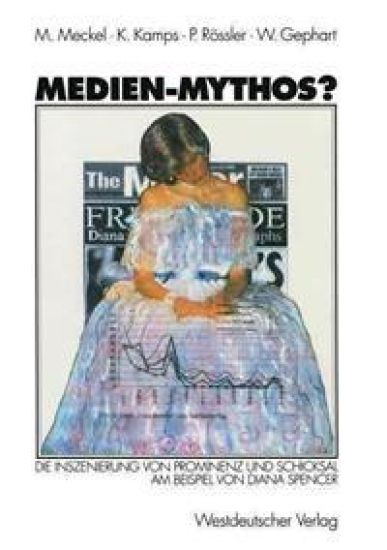
Prozesse der Modernisierung, Pluralisierung und Differenzierung machen es immer schwieriger, gesellschaftliche Integrationsmomente zu etablieren. In einer derart komplexen Welt werden Ereignisse, denen weitreichende Integrationsfähigkeit zukommt z. T. weltweit über Medien konstruiert und kommuniziert. Dabei bringen die Medien - ähnlich der Mythen- und Ikonenbildung früherer Zeiten - "Heiligenbilder" hervor. Diese Neuerfindung von modernen Mythen in den Medien geht einher mit einer Entgrenzung professioneller journalistischer Handlungsspielräume, mit gewandelten Berichterstattungsmustern. Am primären globalen "Medienereignis" des Jahres 1997, dem Tod der Lady Diana Spencer, lassen sich diese Entwicklungen eindrucksvoll belegen und nachvollziehen.
Agenda-Setting

Agenda-Setting

Patrick Rössler

VS Verlag fur Sozialwissenschaften
1997
nidottu
Die Medien bestimmen die Themen der öffentlichen Tagesordnung - in der Kommunikationsforschung wird die Agenda-Setting-Hypothese oft als bewiesene Tatsache gehandelt. Eine kritische Durchsicht der über zweihundert empirischen Studien zeigt jedoch, daß die Aussagekraft vieler Arbeiten durch methodische Restriktionen eingeschränkt ist und die Gefahr des "ökologischen Fehlschlusses" birgt. Ein umfangreiches Forschungsprojekt vor dem Hintergrund der deutschen Wiedervereinigung weist unterschiedliche Thematisierungsmechanismen auf individueller und gesellschaftlicher Ebene nach.