Kirjojen hintavertailu – 12 903 724 kirjaa ja 27 kauppaa

Kirjailija

Patrick Stevenson

Kirjat ja teokset yhdessä paikassa: 11 kirjaa, julkaisuja vuosilta 1990–2026, suosituimpiin kuuluu Language and Social Change in Central Europe. Vertaile teosten hintoja ja tarkista saatavuus suomalaisista kirjakaupoista.

11 kirjaa

Kirjojen julkaisuvuodet: 1990–2026.

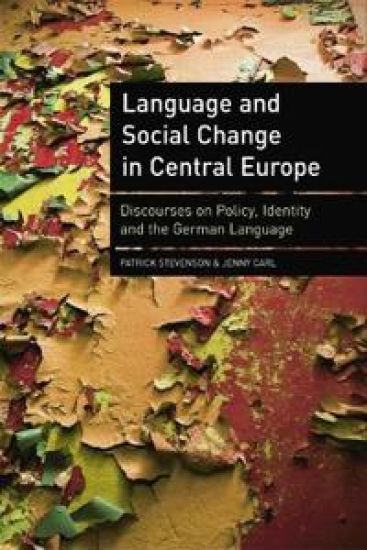
Language and Social Change in Central Europe

Language and Social Change in Central Europe

Patrick Stevenson; Jenny Carl

EDINBURGH UNIVERSITY PRESS
2026
nidottu
This book explores the dynamics of language and social change in central Europe in the context of the end of the Cold War and eastern expansion of the European Union. One outcome of the profound social transformations in central Europe since the Second World War has been the reshaping of the relationship between particular languages and linguistic varieties, especially between 'national' languages and regional or ethnic minority languages. Previous studies have investigated these transformed relationships from the macro perspective of language policies, while others have taken more fine-grained approaches to individual experiences with language. Combining these two perspectives for the first time - and focusing on the German language, which has a uniquely complex and problematic history in the region - the authors offer an understanding of the complex constellation of language politics in central Europe. Stevenson and Carl's analysis draws on a range of theoretical, conceptual and analytical approaches - language ideologies, language policy, positioning theory, discourse analysis, narrative analysis and life histories - and a wide range of data sources, from European and national language policies to individual language biographies. The authors demonstrate how the relationship between German and other languages has played a crucial role in the politics of language and processes of identity formation in the recent history of central Europe.
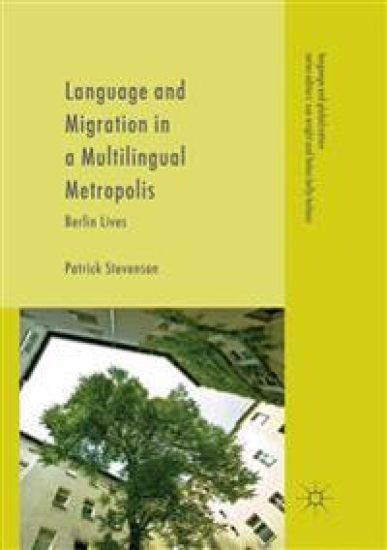
Language and Migration in a Multilingual Metropolis

Language and Migration in a Multilingual Metropolis

Patrick Stevenson

Springer International Publishing AG
2018
nidottu
This lively and engaging book, set in the historical context of centuries of migration and multilingualism in Berlin, explores the relationship between language and migration. Berlin is a multicultural city in the heart of Europe, but what do we know about the number of languages spoken by its inhabitants and how they are used in everyday life? How do encounters with different languages impact on the experience of migration? And how do people use their experiences with language to shape their life stories? To investigate these questions, the author invites the reader to accompany him on a research expedition that leads to an apartment building in the highly diverse district of Neukölln. Its inhabitants come from different parts of the world and relate their experiences – their Berlin lives – in ways that reveal the complex and intricate relationships between language and migration.
The German-Speaking World

The German-Speaking World

Patrick Stevenson; Kristine Horner; Nils Langer; Gertrud Reershemius

Routledge
2017
sidottu
The German-Speaking World is an accessible textbook that offers students the opportunity to explore for themselves a wide range of sociolinguistic issues relating to the German language and its role in the world. This new, second edition has been fully revised to reflect the many political and social changes of the last 20 years including the impact of technology on language change. It continues to combine text with practical exercises and discussion questions to stimulate readers to think for themselves and to tackle specific problems. Key features of this book: Informative and comprehensive: covers a wide range of current issues Practical: contains a variety of graded exercises and tasks plus an index of terms Topical and contemporary: deals with current situations and provides up-to-date illustrative material Thought-provoking: encourages students to reflect and research for themselvesThe German-Speaking World is the ideal textbook for undergraduate students who have a sound practical knowledge of German but who have little or no knowledge of linguistics or sociolinguistics.
The German-Speaking World

The German-Speaking World

Patrick Stevenson; Kristine Horner; Nils Langer; Gertrud Reershemius

Routledge
2017
nidottu
The German-Speaking World is an accessible textbook that offers students the opportunity to explore for themselves a wide range of sociolinguistic issues relating to the German language and its role in the world. This new, second edition has been fully revised to reflect the many political and social changes of the last 20 years including the impact of technology on language change. It continues to combine text with practical exercises and discussion questions to stimulate readers to think for themselves and to tackle specific problems. Key features of this book: Informative and comprehensive: covers a wide range of current issues Practical: contains a variety of graded exercises and tasks plus an index of terms Topical and contemporary: deals with current situations and provides up-to-date illustrative material Thought-provoking: encourages students to reflect and research for themselvesThe German-Speaking World is the ideal textbook for undergraduate students who have a sound practical knowledge of German but who have little or no knowledge of linguistics or sociolinguistics.
Language and Migration in a Multilingual Metropolis

Language and Migration in a Multilingual Metropolis

Patrick Stevenson

Springer International Publishing AG
2017
sidottu
This lively and engaging book, set in the historical context of centuries of migration and multilingualism in Berlin, explores the relationship between language and migration. Berlin is a multicultural city in the heart of Europe, but what do we know about the number of languages spoken by its inhabitants and how they are used in everyday life? How do encounters with different languages impact on the experience of migration? And how do people use their experiences with language to shape their life stories? To investigate these questions, the author invites the reader to accompany him on a research expedition that leads to an apartment building in the highly diverse district of Neukölln. Its inhabitants come from different parts of the world and relate their experiences – their Berlin lives – in ways that reveal the complex and intricate relationships between language and migration.
Language and Social Change in Central Europe

Language and Social Change in Central Europe

Patrick Stevenson; Jenny Carl

Edinburgh University Press
2010
sidottu
This book explores the dynamics of language and social change in central Europe in the context of the end of the Cold War and eastern expansion of the European Union. One outcome of the profound social transformations in central Europe since the Second World War has been the reshaping of the relationship between particular languages and linguistic varieties, especially between 'national' languages and regional or ethnic minority languages. Previous studies have investigated these transformed relationships from the macro perspective of language policies, while others have taken more fine-grained approaches to individual experiences with language. Combining these two perspectives for the first time - and focusing on the German language, which has a uniquely complex and problematic history in the region - the authors offer an understanding of the complex constellation of language politics in central Europe. Stevenson and Carl's analysis draws on a range of theoretical, conceptual and analytical approaches - language ideologies, language policy, positioning theory, discourse analysis, narrative analysis and life histories - and a wide range of data sources, from European and national language policies to individual language biographies. The authors demonstrate how the relationship between German and other languages has played a crucial role in the politics of language and processes of identity formation in the recent history of central Europe.
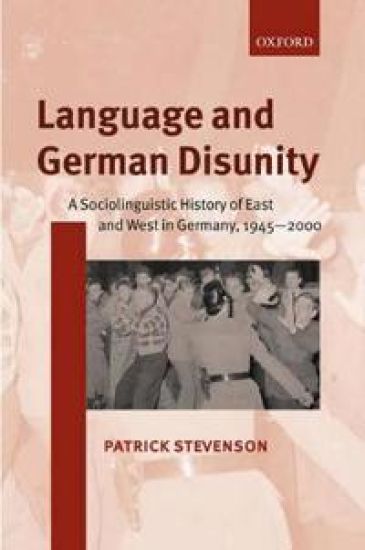
Language and German Disunity

Language and German Disunity

Patrick Stevenson

Oxford University Press
2002
nidottu
This book investigates the history of national disunity in Germany since the end of the Second World War from a linguistic perspective: what was the role of language in the ideological conflicts of the Cold War and in the difficult process of rebuilding the German nation after 1990? In the first part of the book, Patrick Stevenson explores the ways in which the idea of 'the national language' contributed to the political tensions between the two German states and to the different social experiences of their citizens. He begins by showing how the modern linguistic conflict between east and west in Germany has its roots in a long tradition of debates on the relationship between language and national identity. He then describes the use of linguistic strategies to reinforce the development of a socialist state in the GDR and argues that they ultimately contributed to its demise. The second part considers the social and linguistic consequences of unification. The author discusses the challenges imposed on east Germans by the sudden formation of a single 'speech community' and examines how conflicting representations of easterners and westerners - for example, in personal interactions, the media, and advertising - have hindered progress towards national unity. German division and re-unification were crucial to the development of Europe in the second half of the twentieth century. This fascinating account of the relationship between language and social conflict in Germany throws new light on these events and raises important questions for the study of divided speech communities elsewhere. The book will interest sociolinguists, historians, sociologists, and political scientists.
Language and German Disunity

Language and German Disunity

Patrick Stevenson

Oxford University Press
2002
sidottu
This title investigates the history of national disunity in Germany since the end of World War II from a linguistic perspective. It asks: what was the role of language in the ideological conflicts of the Cold War and in the difficult process of rebuilding the German nation after 1990? In the first part of the book, Patrick Stevenson explores the ways in which the idea of "the national language" contributed to the political tensions between the two German states and to the different social experiences of their citizens. He begins by showing how the modern linguistic conflict between east and west in Germany has its roots in a long tradition of debates on the relationship between language and national identity. He then describes the use of linguistic strategies to reinforce the development of a socialist state in the GDR and argues that they ultimately contributed to its demise. The second part considers the social and linguistic consequences of unification.
Variation im Deutschen

Variation im Deutschen

Stephen Barbour; Patrick Stevenson

De Gruyter
1998
sidottu
This book, which examines the interrelations of language and society in German-speaking countries, is the most detailed account of German sociolinguistics to appear in English. Topics covered include the history and development of the German language, German as a minority language, traditional dialects, the influence of English on German, and German in the East and West.
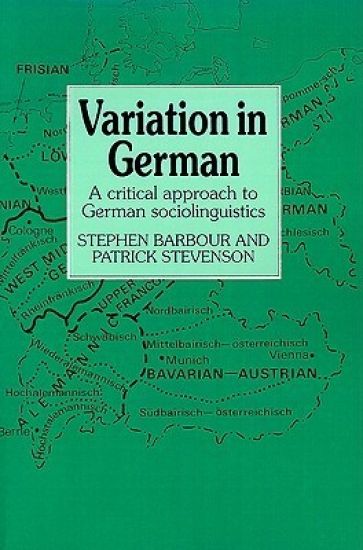
Variation in German

Variation in German

Stephen Barbour; Patrick Stevenson

Cambridge University Press
1990
pokkari
This book examines the interrelations between language and society in the German-speaking countries. The questions ‘what is German and who speaks it?’ and ‘how does the language vary dependent on social, political and geographical factors?’ are addressed and placed in their historical context. This is a comprehensive account of major topics in the contemporary study of German sociolinguistics, and topics covered include the history and development of the German language, German as a minority language, minority languages in German-speaking countries, traditional dialects, variation in contemporary colloquial speech, the influence of English on German, and German in East and West. It draws together much otherwise inaccessible material from a great range of sources. The authors also assess critically research work carried out in German-speaking countries.
Variation in German

Variation in German

Stephen Barbour; Patrick Stevenson

Cambridge University Press
1990
sidottu
This book examines the interrelations between language and society in the German-speaking countries. The questions 'what is German and who speaks it?' and 'how does the language vary dependent on social, political and geographical factors?' are addressed and placed in their historical context. This is a comprehensive account of major topics in the contemporary study of German sociolinguistics, and topics covered include the history and development of the German language, German as a minority language, minority languages in German-speaking countries, traditional dialects, variation in contemporary colloquial speech, the influence of English on German, and German in East and West. It draws together much otherwise inaccessible material from a great range of sources. The authors also assess critically research work carried out in German-speaking countries.