
Kirjojen hintavertailu – 12 859 818 kirjaa ja 27 kauppaa
Kirjailija
Patrick Tomassi
Kirjat ja teokset yhdessä paikassa: 2 kirjaa, julkaisuja vuosilta 2021–2024, suosituimpiin kuuluu Plough Quarterly No. 42 – Educating Humans. Vertaile teosten hintoja ja tarkista saatavuus suomalaisista kirjakaupoista.
Meir Soloveichik; Grace Hamman; Peter Gray; Claude Wilkinson; Alex Sosler; Brit Frazier; Phil Christman; Stephanie Ebert; Patrick Tomassi; Benjamin Crosby; Marianne Wright; Frederick K. S. Leung; Paul Coleman
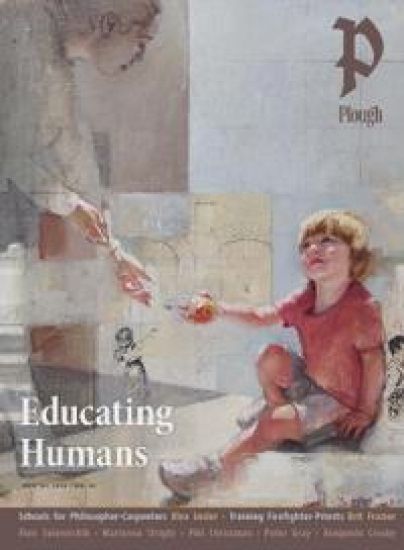
Education has become too narrowly focused on academic success and future earning potential. But creative schools and individual teachers are finding ways, new and old, to reverse this trend. From kindergarten to university, writers in this issue of Plough step back to look at education as the holistic task of forming healthy, responsible, passionate humans, and share success stories from the front lines. On this theme: Alex Sosler on innovative schools where students learn a trade and study the humanities. Brit Frazier on becoming a local volunteer firefighter. Peter Gray on why free play is essential. Anthony Garces-Foley on why he chose to teach in a public school. Stephanie Ebert on reading children scary fairy tales. Patrick Tomassi on Lernvergnugenstag, when teachers get to teach what inspires them. Tim Maendel on a public high school that raises deer and fish. Phil Christmas on why everyone still needs literature. Benjamin Crosby on how Christian teaching gets passed on. Frederick K. S. Leung on why math is not merely instrumental. Also in this issue: Rabbi Meir Soloveichik on hearing God in the subway. Grace Hamman on Sister Penelope, mentor to C. S. Lewis. Paul Coleman on religious persecution in Nicaragua and Finland. Reviews of Edwidge Danticat’s We’re Alone, John Inazu’s Learning to Disagree, and H. G. Parry’s The Magician’s Daughter. New poems by Claude Wilkinson. Plough Quarterly features stories, ideas, and culture for people eager to apply their faith to the challenges we face. Each issue includes in-depth articles, interviews, poetry, book reviews, and art.
Anthony M. Barr; Gracy Olmstead; Stanley Hauerwas; Zito Madu; Rachel Pieh Jones; Springs Toledo; Patrick Tomassi; Scott Beauchamp; Andrea Grosso Ciponte; Eberhard Arnold; Catherine Tufariello
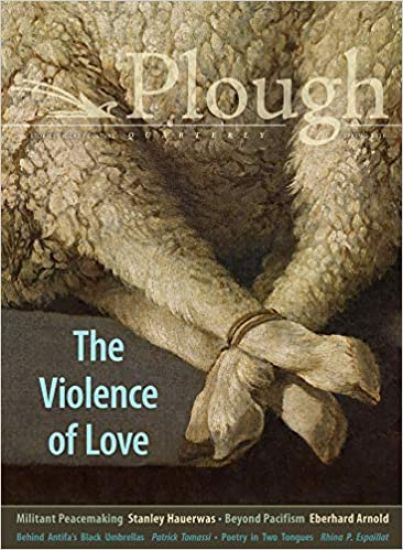
How did violence become OK? And is there any way back? At some point between George Floyd’s killing on May 25 and the invasion of the US Capitol on January 6, America’s consensus against political violence crumbled. Before 2020, almost everyone agreed that it should be out of bounds. Now, many are ready to justify such violence – at least when it is their side breaking windows or battling police officers. Something significant seems to have slipped. Is there any way back? As Christians, we need to consider what guilt we bear, with the rise of a decidedly unchristian “Christian nationalism” that historically has deep roots in American Christian culture. But shouldn’t we also be asking ourselves what a truly Christian stance might look like, one that reflects Jesus’ blessings on the peacemakers, the merciful, and the meek? Oscar Romero, when accused of preaching revolutionary violence, responded: “We have never preached violence, except the violence of love, which left Christ nailed to a cross.” If we take Jesus’ example and his call to nonviolence at face value, we’re left with all kinds of interesting questions: What about policing? What about the military? What about participating in government? This issue of Plough addresses some of these questions and explores what a life lived according to love rather than violence might look like. In this issue: - Anthony M. Barr revisits James Baldwin’s advice about undoing racism. - Gracy Olmstead describes welcoming the baby she did not expect during a pandemic. - Patrick Tomassi debates nonviolence with Portland’s anarchists and Proud Boys. - Scott Beauchamp advises on what not to ask war veterans. - Rachel Pieh Jones reveals what Muslims have taught her about prayer. - Eberhard Arnold argues that Christian nonviolence is more than pacifism. - Stanley Hauerwas presents a vision of church you’ve never seen in practice. - Andrea Grosso Ciponte graphically portrays the White Rose student resistance to Nazism. - Zito Madu illuminates rap’s role in escaping the violence of poverty. - Springs Toledo recounts his boxing match with an undefeated professional. You’ll also find: - An interview with poet Rhina P. Espaillat - New poems by Catherine Tufariello - Profiles of Anabaptist leader Felix Manz and community founder Lore Weber - Reviews of Marly Youmans’s Charis in the World of Wonders, Judith D. Schwartz’s The Reindeer Chronicles, Chris Lombardi’s I Ain’t Marching Anymore, and Martín Espada’s Floaters Plough Quarterly features stories, ideas, and culture for people eager to put their faith into action. Each issue brings you in-depth articles, interviews, poetry, book reviews, and art to help you put Jesus’ message into practice and find common cause with others.