Kirjojen hintavertailu – 12 903 725 kirjaa ja 27 kauppaa

Kirjailija

Patrick Vinton Kirch

Kirjat ja teokset yhdessä paikassa: 12 kirjaa, julkaisuja vuosilta 1994–2023, suosituimpiin kuuluu Kua‘aina Kahiko. Vertaile teosten hintoja ja tarkista saatavuus suomalaisista kirjakaupoista.

12 kirjaa

Kirjojen julkaisuvuodet: 1994–2023.

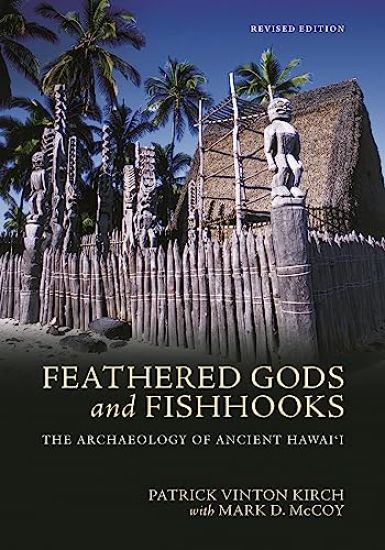
Feathered Gods and Fishhooks

Feathered Gods and Fishhooks

Patrick Vinton Kirch; Mark D. McCoy

UNIVERSITY OF HAWAI'I PRESS
2023
nidottu
The first edition of Feathered Gods and Fishhooks was the pioneering synthesis of ancient Hawaiian civilization from an archaeological perspective. This long-awaited revised edition now brings the field up-to-date, incorporating the results from literally hundreds of archaeological projects undertaken throughout the Hawaiian Islands over the past thirty-five years that have benefited from tremendous technological advancements, and presents an authoritative account of the origins and progression of Hawaiian culture prior to the arrival of Europeans. Generously illustrated, this revision includes dozens of new photographs and maps, along with a selection of color plates. This volume, like its predecessor, provides a synthesis of Hawaiian archaeology that avoids unnecessary jargon and is comprehensible to the interested layperson, yet is sufficiently detailed to be useful to the professional archaeologist. Feathered Gods and Fishhooks begins with an explanation of archaeological practice in Hawai‘i, from antiquarian pursuits in the late nineteenth century through the development of modern research techniques, taking into account the recent tensions surrounding the significant shift of archaeology from a largely academic endeavor to a professional consulting enterprise. Following a review of environmental constraints and opportunities, and of the main kinds of archaeological evidence, the book explores the latest information on the first Polynesian settlement of Hawai‘i. To achieve a holistic view, the wide range of topics discussed in this work include material culture, agricultural systems, population size, ritual architecture variations, diversity in landscapes, and archaeological evidence for historical transformations following European contact. The final chapters survey, island-by-island, major sites and patterns of ancient settlement. In total, this book tells a story of Hawaiian history, culture, and wisdom in an attempt to preserve ancestral archaeological records. As with the first edition, Feathered Gods and Fishhooks: The Archaeology of Ancient Hawai‘i is an indispensable resource on the history of ancient Hawai‘i. Of particular note is the extensive bibliography, a key guide to hundreds of often difficult to locate reports and publications on Hawaiian archaeology.
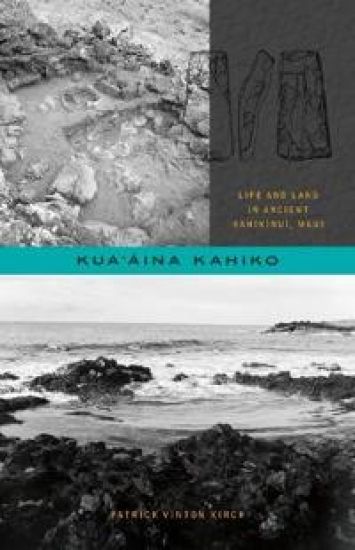
Kua‘aina Kahiko

Kua‘aina Kahiko

Patrick Vinton Kirch

UNIVERSITY OF HAWAI'I PRESS
2023
nidottu
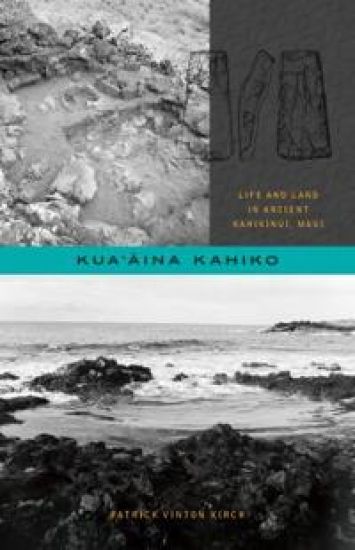
In early Hawai‘i, kua‘aina were the hinterlands inhabited by na kua‘aina, or country folk. Often these were dry, less desirable areas where much skill and hard work were required to wrest a living from the lava landscapes. The ancient district of Kahikinui in southeast Maui is such a kua‘aina and remains one of the largest tracts of undeveloped land in the islands. Named after Tahiti Nui in the Polynesian homeland, its thousands of pristine acres house a treasure trove of archaeological ruins—witnesses to the generations of Hawaiians who made this land their home before it was abandoned in the late nineteenth century. Kua‘aina Kahiko follows kama‘aina archaeologist Patrick Vinton Kirch on a seventeen-year-long research odyssey to rediscover the ancient patterns of life and land in Kahikinui. Through painstaking archaeological survey and detailed excavations, Kirch and his students uncovered thousands of previously undocumented ruins of houses, trails, agricultural fields, shrines, and temples. Kirch describes how, beginning in the early fifteenth century, Native Hawaiians began to permanently inhabit the rocky lands along the vast southern slope of Haleakala. Eventually these planters transformed Kahikinui into what has been called the greatest continuous zone of dryland planting in the Hawaiian Islands. He relates other fascinating aspects of life in ancient Kahikinui, such as the capture and use of winter rains to create small wet-farming zones, and decodes the complex system of heiau, showing how the orientations of different temple sites provide clues to the gods to whom they were dedicated. Kirch examines the sweeping changes that transformed Kahikinui after European contact, including how some maka'ainana families fell victim to unscrupulous land agents. But also woven throughout the book is the saga of Ka ‘Ohana o Kahikinui, a grass-roots group of Native Hawaiians who successfully struggled to regain access to these Hawaiian lands. Rich with anecdotes of Kirch’s personal experiences over years of field research, Kua'aina Kahiko takes the reader into the little-known world of the ancient kua‘aina.
Heiau, ‘Aina, Lani

Heiau, ‘Aina, Lani

Patrick Vinton Kirch; Clive Ruggles

University of Hawai'i Press
2019
sidottu
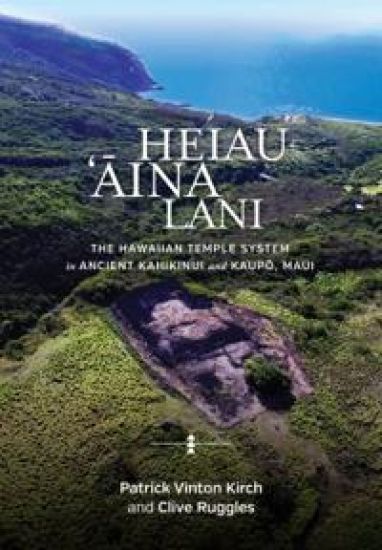
Heiau, ‘Aina, Lani is a collaborative study of 78 temple sites in the ancient moku of Kahikinui and Kaupo in southeastern Maui, undertaken using a novel approach that combines archaeology and archaeoastronomy. Although temple sites (heiau) were the primary focus of Hawaiian archaeologists in the earlier part of the twentieth century, they were later neglected as attention turned to the excavation of artifact-rich habitation sites and theoretical and methodological approaches focused more upon entire cultural landscapes. This book restores heiau to center stage. Its title, meaning “Temples, Land, and Sky,” reflects the integrated approach taken by Patrick Vinton Kirch and Clive Ruggles, based upon detailed mapping of the structures, precise determination of their orientations, and accurate dating. Heiau, ‘Aina, Lani is the outcome of a joint fieldwork project by the two authors, spanning more than fifteen years, in a remarkably well-preserved archaeological landscape containing precontact house sites, walls, and terraces for dryland cultivation, and including scores of heiau ranging from simple upright stones dedicated to Kane, to massive platforms where the priests performed rites of human sacrifice to the war god Ku. Many of these heiau are newly discovered and reported for the first time in the book. The authors offer a fresh narrative based upon some provocative interpretations of the complex relationships between the Hawaiian temple system, the landscape, and the heavens (the “skyscape”). They demonstrate that renewed attention to heiau in the context of contemporary methodological and theoretical perspectives offers important new insights into ancient Hawaiian cosmology, ritual practices, ethnogeography, political organization, and the habitus of everyday life. Clearly, Heiau, ‘Aina, Lani repositions the study of heiau at the forefront of Hawaiian archaeology.
How Chiefs Became Kings

How Chiefs Became Kings

Patrick Vinton Kirch

University of California Press
2019
pokkari
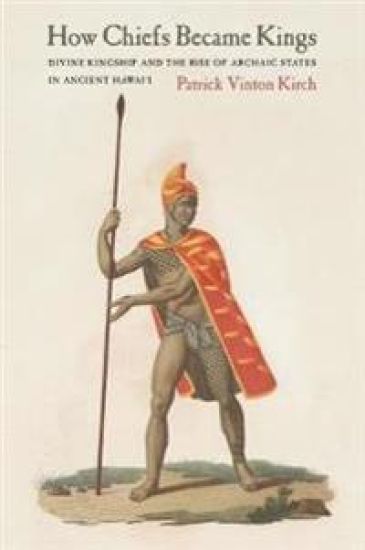
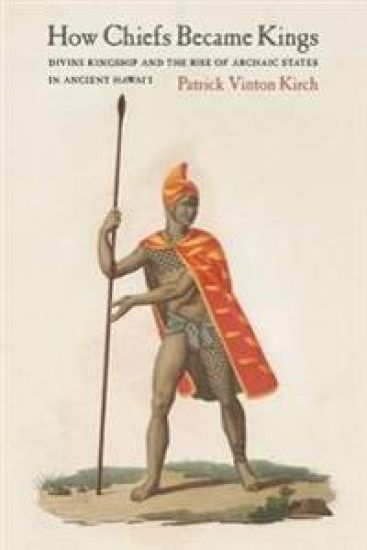
In How Chiefs Became Kings, Patrick Vinton Kirch addresses a central problem in anthropological archaeology: the emergence of “archaic states” whose distinctive feature was divine kingship. Kirch takes as his focus the Hawaiian archipelago, commonly regarded as the archetype of a complex chiefdom. Integrating anthropology, linguistics, archaeology, traditional history, and theory, and drawing on significant contributions from his own four decades of research, Kirch argues that Hawaiian polities had become states before the time of Captain Cook’s voyage (1778-1779). The status of most archaic states is inferred from the archaeological record. But Kirch shows that because Hawai`i’s kingdoms were established relatively recently, they could be observed and recorded by Cook and other European voyagers. Substantive and provocative, this book makes a major contribution to the literature of precontact Hawai`i and illuminates Hawai`i’s importance in the global theory and literature about divine kingship, archaic states, and sociopolitical evolution.
A Shark Going Inland Is My Chief

A Shark Going Inland Is My Chief

Patrick Vinton Kirch

University of California Press
2019
pokkari
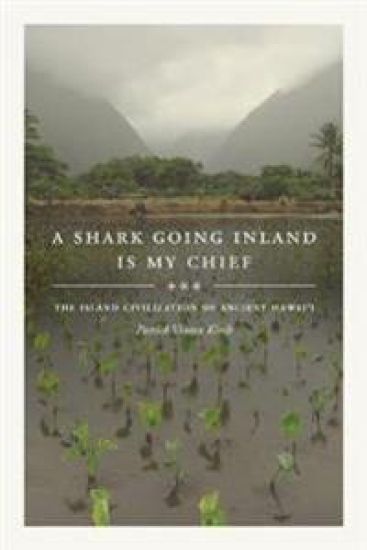
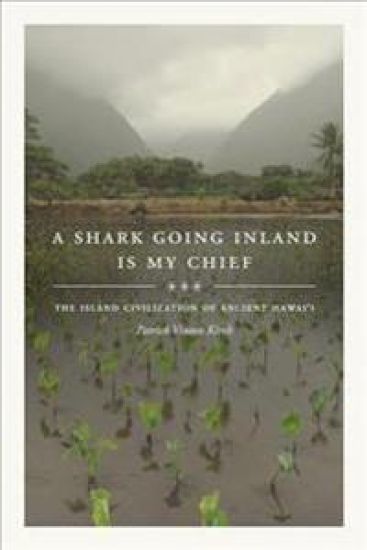
Tracing the origins of the Hawaiians and other Polynesians back to the shores of the South China Sea, archaeologist Patrick Vinton Kirch follows their voyages of discovery across the Pacific in this fascinating history of Hawaiian culture from about one thousand years ago. Combining more than four decades of his own research with Native Hawaiian oral traditions and the evidence of archaeology, Kirch puts a human face on the gradual rise to power of the Hawaiian god-kings, who by the late eighteenth century were locked in a series of wars for ultimate control of the entire archipelago. This lively, accessible chronicle works back from Captain James Cook’s encounter with the pristine kingdom in 1778, when the British explorers encountered an island civilization governed by rulers who could not be gazed upon by common people. Interweaving anecdotes from his own widespread travel and extensive archaeological investigations into the broader historical narrative, Kirch shows how the early Polynesian settlers of Hawai'i adapted to this new island landscape and created highly productive agricultural systems.
On the Road of the Winds

On the Road of the Winds

Patrick Vinton Kirch

University of California Press
2017
pokkari
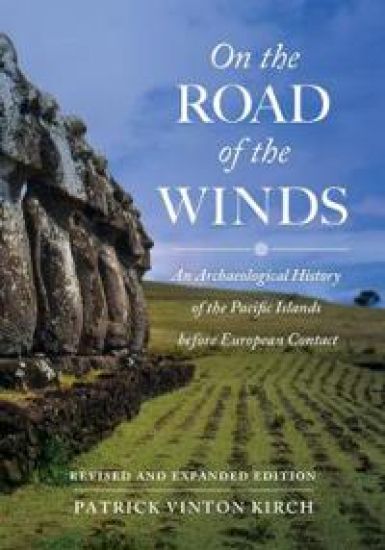
The Pacific Ocean covers one-third of the earth's surface and encompasses many thousands of islands, which are home to numerous human societies and cultures. Among these indigenous Oceanic cultures are the intrepid Polynesian double-hulled canoe navigators, the atoll dwellers of Micronesia, the statue carvers of remote Easter Island, and the famed traders of Melanesia. Decades of archaeological excavations, combined with allied research in historical linguistics, biological anthropology, and comparative ethnography, have revealed much new information about the long-term history of these Pacific Island societies and cultures. On the Road of the Winds synthesizes the grand sweep of human history in the Pacific Islands, beginning with the movement of early people out from Asia more than 40,000 years ago, and tracing the development of myriad indigenous cultures up to the time of European contact in the sixteenth to eighteenth centuries. This updated edition, enhanced with many new illustrations and an extensive bibliography, synthesizes the latest archaeological, linguistic, and biological discoveries that reveal the vastness of ancient history in the Pacific Islands.
Kuaaina Kahiko

Kuaaina Kahiko

Patrick Vinton Kirch

University of Hawai'i Press
2014
sidottu
In early Hawai‘i, kuaaina were the hinterlands inhabited by kuaaina, or country folk. Often these were dry, less desirable areas where much skill and hard work were required to wrest a living from the lava landscapes. The ancient district of Kahikinui in southeast Maui is such a kua‘?ina and remains one of the largest tracts of undeveloped land in the islands. Named after Tahiti Nui in the Polynesian homeland, its thousands of pristine acres house a treasure trove of archaeological ruins—witnesses to the generations of Hawaiians who made this land their home before it was abandoned in the late nineteenth century. Kua‘?ina Kahiko follows kama‘?ina archaeologist Patrick Vin- ton Kirch on a seventeen-year-long research odyssey to rediscover the ancient patterns of life and land in Kahikinui. Through painstaking archaeological survey and detailed excavations, Kirch and his students uncovered thousands of previously undocumented ruins of houses, trails, agricultural fields, shrines, and temples. Kirch describes how, beginning in the early fifteenth century, Native Hawaiians began to permanently inhabit the rocky lands along the vast southern slope of Haleakal?. Eventually these planters transformed Kahikinui into what has been called the greatest continuous zone of dryland planting in the Hawaiian Islands. He relates other fascinating aspects of life in ancient Kahikinui, such as the capture and use of winter rains to create small wet-farming zones, and decodes the complex system of heiau, showing how the orientations of different temple sites provide clues to the gods to whom they were dedicated. Kirch examines the sweeping changes that transformed Kahikinui after European contact, including how some maka’?inana families fell victim to unscrupulous land agents. But also told throughout the book is the saga of Ka ‘Ohana o Kahikinui, a grass-roots group of Native Hawaiians who struggled to regain access to these Hawaiian lands.
A Shark Going Inland Is My Chief

A Shark Going Inland Is My Chief

Patrick Vinton Kirch

University of California Press
2012
sidottu
Tracing the origins of the Hawaiians and other Polynesians back to the shores of the South China Sea, archaeologist Patrick Vinton Kirch follows their voyages of discovery across the Pacific in this fascinating history of Hawaiian culture from about one thousand years ago. Combining more than four decades of his own research with Native Hawaiian oral traditions and the evidence of archaeology, Kirch puts a human face on the gradual rise to power of the Hawaiian god-kings, who by the late eighteenth century were locked in a series of wars for ultimate control of the entire archipelago. This lively, accessible chronicle works back from Captain James Cook's encounter with the pristine kingdom in 1778, when the British explorers encountered an island civilization governed by rulers who could not be gazed upon by common people. Interweaving anecdotes from his own widespread travel and extensive archaeological investigations into the broader historical narrative, Kirch shows how the early Polynesian settlers of Hawai'i adapted to this new island landscape and created highly productive agricultural systems.
How Chiefs Became Kings

How Chiefs Became Kings

Patrick Vinton Kirch

University of California Press
2010
sidottu
In "How Chiefs Became Kings", Patrick Vinton Kirch addresses a central problem in anthropological archaeology: the emergence of "archaic states" whose distinctive feature was divine kingship. Kirch takes as his focus the Hawaiian archipelago, commonly regarded as the archetype of a complex chiefdom. Integrating anthropology, linguistics, archaeology, traditional history, and theory, and drawing on significant contributions from his own four decades of research, Kirch argues that Hawaiian polities had become states before the time of Captain Cook's voyage (1778-1779). The status of most archaic states is inferred from the archaeological record. But Kirch shows that because Hawaii's kingdoms were established relatively recently, they could be observed and recorded by Cook and other European voyagers. Substantive and provocative, this book makes a major contribution to the literature of precontact Hawaii and illuminates Hawaii's importance in the global theory and literature about divine kingship, archaic states, and sociopolitical evolution.
The Lapita Peoples

The Lapita Peoples

Patrick Vinton Kirch

Blackwell Publishers
1996
nidottu
This is the first account of the Lapita peoples, the common ancestor of the Polynesians, Micronesians, and Austronesian-speaking Melanesians who over the last 4000 years colonized the islands of the Pacific, including New Zealand and territories as far afield as Fiji and Hawaii. Its purpose is to provide answers to some of the most puzzling archaeological and anthropological questions: who were the Lapita peoples? what was their history? how were they able to travel such great distances? and why did they do so? Recent discoveries (several by the author of this book) have begun at last to yield a coherent picture of these elusive peoples. Professor Kirch takes the reader back many thousands of years to the earliest evidence of the Lapita peoples. He describes the research itself and conveys the excitement of the first discoveries of Lapita settlements, tools and pottery. He then traces the remarkable cultural development and spread of the Lapita peoples across the unoccupied islands of Eastern Melanesia, Micronesia and Western Polynesia. He shows how they became the progenitors of the Polynesian and Austronesian-speaking Melanesian peoples. The author describes Lapita sites, communities and landscapes, the development of their decorated ceramics, and their shell-tool industry. He reveals the means by which they accomplished such prodigious voyages and explains why they undertook them. He illustrates his account with specially drawn maps and with a wide range of photographs, many published for the first time. Drawing on the latest research in archaeology, anthropology, biology and linguistics, and written in clear, non-specialized language, this is an outstanding book of great importance to the history of South-East Asia and the Pacific.
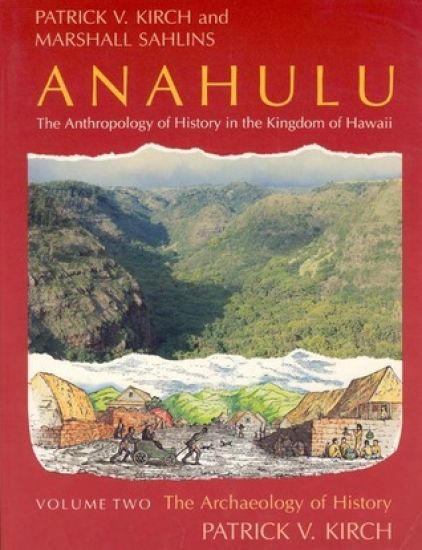
Anahulu: The Anthropology of History in the Kingdom of Hawaii, Volume 2

Anahulu: The Anthropology of History in the Kingdom of Hawaii, Volume 2

Patrick Vinton Kirch; Marshall Sahlins

University of Chicago Press
1994
nidottu
From the late 1700's, Hawaiian society began to change rapidly as it responded to the growing world system of capital whose trade routs and markets criss-crossed the islands. Reflecting many years of collaboration between Marshall Sahlins, a prominent social anthropologist, and Patrick V. Kirch, a leading archaeologist of Oceania, "Anahulu" seeks out the traces of this transformation in a typical local center of the kingdom founded by Kamehameha: the Anahulu river valley of Northwestern Oahu. Volume I shows the suprising effects of the encounter with the imperial forces of commerce and Christianity - the distinctive ways the Hawaiian people culturally organized the experience, from the structure of the kingdom to the daily life of ordinary people. Voulme II examines the material record of changes in local social organizations, economy and production, population, and domestic settlement arrangements.
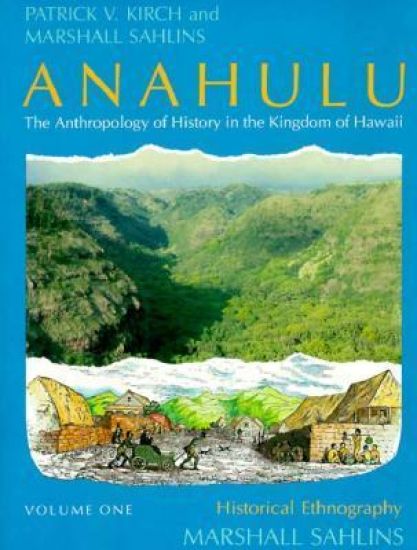
Anahulu: The Anthropology of History in the Kingdom of Hawaii, Volume 1

Anahulu: The Anthropology of History in the Kingdom of Hawaii, Volume 1

Patrick Vinton Kirch; Marshall Sahlins

University of Chicago Press
1994
nidottu
From the late 1700s, Hawaiian society began to change rapidly as it responded to the growing world system of capital whose trade routes and markets criss-crossed the islands. Reflecting many years of collaboration between Marshall Sahlins, a prominent social anthropologist, and Patrick V. Kirch, a leading archaeologist of Oceania, "Anahulu" seeks out the traces of this transformation in a typical local centre of the kingdom founded by Kamehameha: the Anahulu river valley of northwestern Oahu. Volume I shows the surprising effects of the encounter with the imperial forces of commerce and Christianity - the distinctive ways the Hawaiian people culturally organized the experience, from the structure of the kingdom to the daily life of ordinary people. Volume II examines the material record of changes in local social organization, economy and production, population, and domestic settlement arrangements.