Kirjojen hintavertailu – 12 903 725 kirjaa ja 27 kauppaa

Kirjailija

Patrick Walters

Kirjat ja teokset yhdessä paikassa: 4 kirjaa, julkaisuja vuosilta 1997–2018, suosituimpiin kuuluu Reinforcement Learning for Optimal Feedback Control. Vertaile teosten hintoja ja tarkista saatavuus suomalaisista kirjakaupoista.

4 kirjaa

Kirjojen julkaisuvuodet: 1997–2018.

Reinforcement Learning for Optimal Feedback Control

Reinforcement Learning for Optimal Feedback Control

Rushikesh Kamalapurkar; Patrick Walters; Joel Rosenfeld; Warren Dixon

Springer Nature Switzerland AG
2018
nidottu
Reinforcement Learning for Optimal Feedback Control develops model-based and data-driven reinforcement learning methods for solving optimal control problems in nonlinear deterministic dynamical systems. In order to achieve learning under uncertainty, data-driven methods for identifying system models in real-time are also developed. The book illustrates the advantages gained from the use of a model and the use of previous experience in the form of recorded data through simulations and experiments. The book’s focus on deterministic systems allows for an in-depth Lyapunov-based analysis of the performance of the methods described during the learning phase and during execution. To yield an approximate optimal controller, the authors focus on theories and methods that fall under the umbrella of actor–critic methods for machine learning. They concentrate on establishing stability during the learning phase and the execution phase, and adaptive model-based and data-driven reinforcement learning, to assist readers in the learning process, which typically relies on instantaneous input-output measurements. This monograph provides academic researchers with backgrounds in diverse disciplines from aerospace engineering to computer science, who are interested in optimal reinforcement learning functional analysis and functional approximation theory, with a good introduction to the use of model-based methods. The thorough treatment of an advanced treatment to control will also interest practitioners working in the chemical-process and power-supply industry.
Reinforcement Learning for Optimal Feedback Control

Reinforcement Learning for Optimal Feedback Control

Rushikesh Kamalapurkar; Patrick Walters; Joel Rosenfeld; Warren Dixon

Springer International Publishing AG
2018
sidottu
Reinforcement Learning for Optimal Feedback Control develops model-based and data-driven reinforcement learning methods for solving optimal control problems in nonlinear deterministic dynamical systems. In order to achieve learning under uncertainty, data-driven methods for identifying system models in real-time are also developed. The book illustrates the advantages gained from the use of a model and the use of previous experience in the form of recorded data through simulations and experiments. The book’s focus on deterministic systems allows for an in-depth Lyapunov-based analysis of the performance of the methods described during the learning phase and during execution. To yield an approximate optimal controller, the authors focus on theories and methods that fall under the umbrella of actor–critic methods for machine learning. They concentrate on establishing stability during the learning phase and the execution phase, and adaptive model-based and data-driven reinforcement learning, to assist readers in the learning process, which typically relies on instantaneous input-output measurements. This monograph provides academic researchers with backgrounds in diverse disciplines from aerospace engineering to computer science, who are interested in optimal reinforcement learning functional analysis and functional approximation theory, with a good introduction to the use of model-based methods. The thorough treatment of an advanced treatment to control will also interest practitioners working in the chemical-process and power-supply industry.
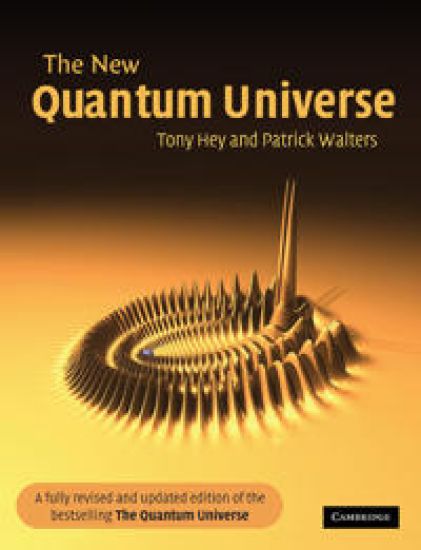
The New Quantum Universe

The New Quantum Universe

Tony Hey; Patrick Walters

Cambridge University Press
2003
pokkari
Following the success of The Quantum Universe, first published in 1987, a host of exciting new discoveries have been made in the field of quantum mechanics. The New Quantum Universe provides an up-to-date and accessible introduction to the essential ideas of quantum physics, and demonstrates how it affects our everyday life. Quantum mechanics gives an understanding of not only atoms and nuclei, but also all the elements and even the stars. The book explains quantum paradoxes and the eventful life of Schroedinger’s Cat, along with the Einstein–Podolsky–Rosen paradox and Bell’s Inequality. It then looks ahead to the nanotechnology revolution, describing quantum cryptography, quantum computing and quantum teleportation, and ends with an account of quantum mechanics and science fiction. Using simple non-mathematical language, this book is suitable for final-year school students, science undergraduates, and anyone wishing to appreciate how physics allows the new technologies that are changing our lives.
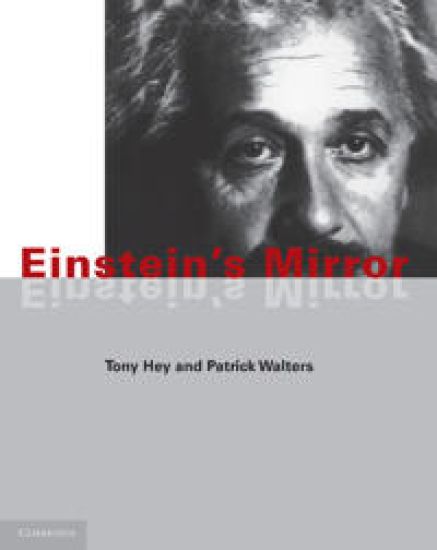
Einstein's Mirror

Einstein's Mirror

Hey Tony; Patrick Walters

Cambridge University Press
1997
pokkari
Einstein's Mirror is a book on relativity with a difference. Following the successful format of their earlier book, The Quantum Universe, the authors blend a simple, non-mathematical account of the underlying theory of special relativity and gravitation with a description of the way these theories have been triumphantly supported by experiment. Applications of relativity in atomic and nuclear physics are wide-ranging, from satellite navigation systems, particle accelerators and nuclear power to quantum chemistry, anti-matter and black holes. The text is enlivened by a superb collection of photographs and by amusing anecdotes about the early pioneers. The closing chapter examines the influence of Einstein's relativity on the development of science fiction. Final year students at school, general readers with an interest in science, and undergraduates in science subjects will all enjoy and benefit from this fascinating and accessible introduction to one of the most profound scientific discoveries of the twentieth century.