Kirjojen hintavertailu – 12 903 725 kirjaa ja 27 kauppaa

Kirjailija

Patrick Weiss

Kirjat ja teokset yhdessä paikassa: 5 kirjaa, julkaisuja vuosilta 2023–2025, suosituimpiin kuuluu Der offene Weg. Vertaile teosten hintoja ja tarkista saatavuus suomalaisista kirjakaupoista.

Nimi esiintyy myös muodoissa: Patrick Weiß

5 kirjaa

Kirjojen julkaisuvuodet: 2023–2025.

Der offene Weg

Der offene Weg

Patrick Weiß

BoD - Books on Demand
2025
pokkari
Die Welt steckt in einer Krise, die so schwer ist wie schon lange keine mehr. Es toben Kriege und Konflikte, der Klimawandel schreitet unaufh rlich voran und der innere Zusammenhalt unserer Gesellschaften br ckelt zusehends. Vor allem aber ist es eine gro e Last der Menschheit, welche sich durch diese Katastrophen noch versch rft hat: das Welthunger- und Armutsproblem. Noch immer m ssen hunderte Millionen Menschen hungern und schwere Not erleiden. Betroffen sind vor allem Subsahara-Afrika und der S den Asiens. Doch es gibt eine L sung f r dieses Problem. Es gibt einen Weg aus dieser Misere der Menschheit - und zwar den "Offenen Weg". Der offene Weg - Zur Beseitigung von Hunger und Armut pr sentiert einen nie da gewesenen politischen und wirtschaftlichen Plan, wie Hunger und schwerer Armut tats chlich ein Ende gesetzt werden k nnte. In gew hlter aber dennoch verst ndlicher Sprache zeigt das Buch auf unnachahmliche Weise, wie wir uns tats chlich eine bessere Welt errichten k nnten. Es w re eine Welt, in der kein Kind mehr abgemagert w re und sich jeden Abend in den Schlaf weinen m sste. Es w re dar ber hinaus eine Welt, in der f r eine bestimmte Zeit sogar ein umfassender Frieden herrschte: eine Welt, die tats chlich Wirklichkeit werden k nnte - wenn die Botschaft dieses Werkes nur gen gend Geh r findet.
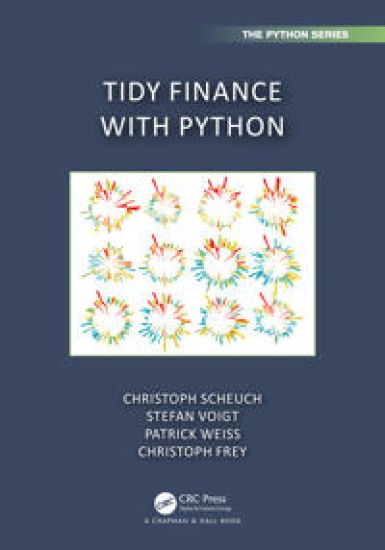
Tidy Finance with Python

Tidy Finance with Python

Christoph Scheuch; Stefan Voigt; Patrick Weiss; Christoph Frey

TAYLOR FRANCIS LTD
2024
sidottu
This textbook shows how to bring theoretical concepts from finance and econometrics to the data. Focusing on coding and data analysis with Python, we show how to conduct research in empirical finance from scratch. We start by introducing the concepts of tidy data and coding principles using pandas, numpy, and plotnine. Code is provided to prepare common open-source and proprietary financial data sources (CRSP, Compustat, Mergent FISD, TRACE) and organize them in a database. We reuse these data in all the subsequent chapters, which we keep as self-contained as possible. The empirical applications range from key concepts of empirical asset pricing (beta estimation, portfolio sorts, performance analysis, Fama-French factors) to modeling and machine learning applications (fixed effects estimation, clustering standard errors, difference-in-difference estimators, ridge regression, Lasso, Elastic net, random forests, neural networks) and portfolio optimization techniques. Key Features:Self-contained chapters on the most important applications and methodologies in finance, which can easily be used for the reader’s research or as a reference for courses on empirical finance. Each chapter is reproducible in the sense that the reader can replicate every single figure, table, or number by simply copying and pasting the code we provide. A full-fledged introduction to machine learning with scikit-learn based on tidy principles to show how factor selection and option pricing can benefit from Machine Learning methods. We show how to retrieve and prepare the most important datasets financial economics: CRSP and Compustat, including detailed explanations of the most relevant data characteristics. Each chapter provides exercises based on established lectures and classes which are designed to help students to dig deeper. The exercises can be used for self-studying or as a source of inspiration for teaching exercises.
Tidy Finance with Python

Tidy Finance with Python

Christoph Scheuch; Stefan Voigt; Patrick Weiss; Christoph Frey

TAYLOR FRANCIS LTD
2024
nidottu
This textbook shows how to bring theoretical concepts from finance and econometrics to the data. Focusing on coding and data analysis with Python, we show how to conduct research in empirical finance from scratch. We start by introducing the concepts of tidy data and coding principles using pandas, numpy, and plotnine. Code is provided to prepare common open-source and proprietary financial data sources (CRSP, Compustat, Mergent FISD, TRACE) and organize them in a database. We reuse these data in all the subsequent chapters, which we keep as self-contained as possible. The empirical applications range from key concepts of empirical asset pricing (beta estimation, portfolio sorts, performance analysis, Fama-French factors) to modeling and machine learning applications (fixed effects estimation, clustering standard errors, difference-in-difference estimators, ridge regression, Lasso, Elastic net, random forests, neural networks) and portfolio optimization techniques. Key Features:Self-contained chapters on the most important applications and methodologies in finance, which can easily be used for the reader’s research or as a reference for courses on empirical finance. Each chapter is reproducible in the sense that the reader can replicate every single figure, table, or number by simply copying and pasting the code we provide. A full-fledged introduction to machine learning with scikit-learn based on tidy principles to show how factor selection and option pricing can benefit from Machine Learning methods. We show how to retrieve and prepare the most important datasets financial economics: CRSP and Compustat, including detailed explanations of the most relevant data characteristics. Each chapter provides exercises based on established lectures and classes which are designed to help students to dig deeper. The exercises can be used for self-studying or as a source of inspiration for teaching exercises.
Tidy Finance with R

Tidy Finance with R

Christoph Scheuch; Stefan Voigt; Patrick Weiss

TAYLOR FRANCIS LTD
2023
sidottu
This textbook shows how to bring theoretical concepts from finance and econometrics to the data. Focusing on coding and data analysis with R, we show how to conduct research in empirical finance from scratch. We start by introducing the concepts of tidy data and coding principles using the tidyverse family of R packages. Code is provided to prepare common open-source and proprietary financial data sources (CRSP, Compustat, Mergent FISD, TRACE) and organize them in a database. We reuse these data in all the subsequent chapters, which we keep as self-contained as possible. The empirical applications range from key concepts of empirical asset pricing (beta estimation, portfolio sorts, performance analysis, Fama-French factors) to modeling and machine learning applications (fixed effects estimation, clustering standard errors, difference-in-difference estimators, ridge regression, Lasso, Elastic net, random forests, neural networks) and portfolio optimization techniques. HighlightsSelf-contained chapters on the most important applications and methodologies in finance, which can easily be used for the reader’s research or as a reference for courses on empirical financeEach chapter is reproducible in the sense that the reader can replicate every single figure, table, or number by simply copying and pasting the code we provideA full-fledged introduction to machine learning with tidymodels based on tidy principles to show how factor selection and option pricing can benefit from Machine Learning methodsChapter 2 on accessing and managing financial data shows how to retrieve and prepare the most important datasets financial economics: CRSP and Compustat. The chapter also contains detailed explanations of the most relevant data characteristicsEach chapter provides exercises based on established lectures and classes which are designed to help students to dig deeper. The exercises can be used for self-studying or as a source of inspiration for teaching exercises
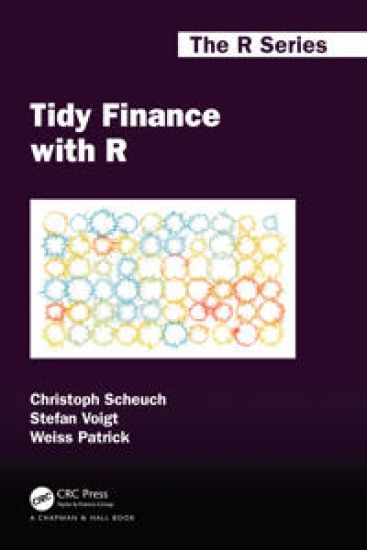
Tidy Finance with R

Tidy Finance with R

Christoph Scheuch; Stefan Voigt; Patrick Weiss

TAYLOR FRANCIS LTD
2023
nidottu
This textbook shows how to bring theoretical concepts from finance and econometrics to the data. Focusing on coding and data analysis with R, we show how to conduct research in empirical finance from scratch. We start by introducing the concepts of tidy data and coding principles using the tidyverse family of R packages. Code is provided to prepare common open-source and proprietary financial data sources (CRSP, Compustat, Mergent FISD, TRACE) and organize them in a database. We reuse these data in all the subsequent chapters, which we keep as self-contained as possible. The empirical applications range from key concepts of empirical asset pricing (beta estimation, portfolio sorts, performance analysis, Fama-French factors) to modeling and machine learning applications (fixed effects estimation, clustering standard errors, difference-in-difference estimators, ridge regression, Lasso, Elastic net, random forests, neural networks) and portfolio optimization techniques. HighlightsSelf-contained chapters on the most important applications and methodologies in finance, which can easily be used for the reader’s research or as a reference for courses on empirical financeEach chapter is reproducible in the sense that the reader can replicate every single figure, table, or number by simply copying and pasting the code we provideA full-fledged introduction to machine learning with tidymodels based on tidy principles to show how factor selection and option pricing can benefit from Machine Learning methodsChapter 2 on accessing and managing financial data shows how to retrieve and prepare the most important datasets financial economics: CRSP and Compustat. The chapter also contains detailed explanations of the most relevant data characteristicsEach chapter provides exercises based on established lectures and classes which are designed to help students to dig deeper. The exercises can be used for self-studying or as a source of inspiration for teaching exercises