Kirjojen hintavertailu – 12 903 733 kirjaa ja 27 kauppaa

Kirjailija

Paul A. Johnsgard

Kirjat ja teokset yhdessä paikassa: 25 kirjaa, julkaisuja vuosilta 1979–2020, suosituimpiin kuuluu Crane Music. Vertaile teosten hintoja ja tarkista saatavuus suomalaisista kirjakaupoista.

Nimi esiintyy myös muodoissa: Paul A Johnsgard

25 kirjaa

Kirjojen julkaisuvuodet: 1979–2020.

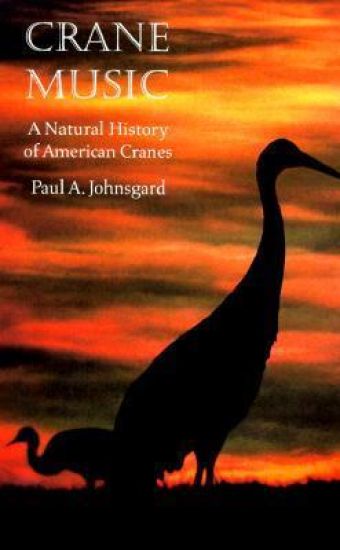
Crane Music

Crane Music

Paul A. Johnsgard

University of Nebraska Press
1998
pokkari
Graced with illustrations by the author, Crane Music introduces the two North American crane species. The sandhill, most often seen, is within easy reach of bird-watchers in the center of the continent. Less visible is the whooping crane, struggling back from near extinction. Paul Johnsgard follows these elegant birds through a year's cycle, describing their seasonal migrations, natural habitats, breeding biology, call patterns—angelic to the bird-lover's ear—and fascinating dancing. The largest and most spectacular migratory concentration of cranes happens each spring when the Platte River valley becomes the staging ground for an amazing gathering of four hundred thousand to five hundred thousand sandhills en route from the South to the Arctic tundra. Johnsgard describes this incredible event as well as memorable personal encounters with the cranes. His knowledge of them transcends natural history, covering their importance in religion and mythology.
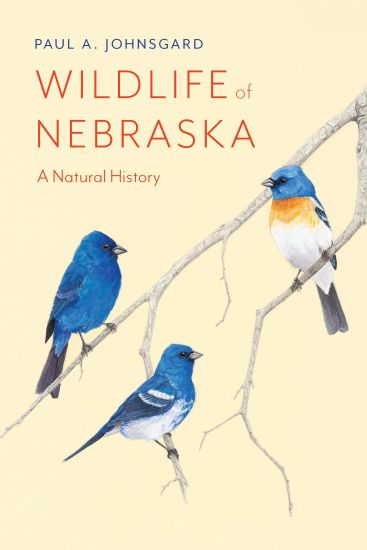
Wildlife of Nebraska

Wildlife of Nebraska

Paul A. Johnsgard

University of Nebraska Press
2020
pokkari
In Wildlife of Nebraska: A Natural History, Paul A. Johnsgard surveys the variety and biology of more than six hundred Nebraska species. Narrative accounts describe the ecology and biology of the state’s birds, its mammals, and its reptiles and amphibians, summarizing the abundance, distributions, and habitats of this wildlife. To provide an introduction to the state’s major ecosystems, climate, and topography, Johnsgard examines major public-access natural areas, including national monuments, wildlife refuges and grasslands, state parks and wildlife management areas, and nature preserves. Including more than thirty-five line drawings by the author along with physiographic, ecological, and historical maps, Wildlife of Nebraska is an essential guide to the wildlife of the Cornhusker State.
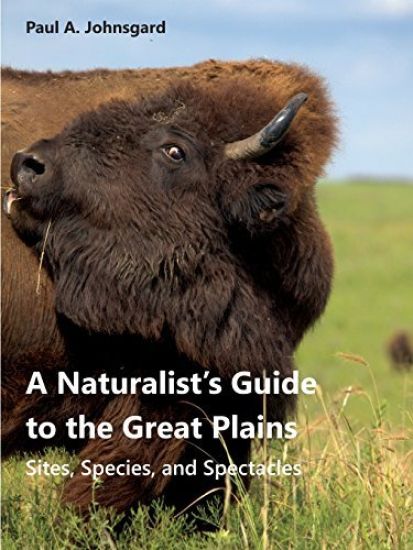
A Naturalist's Guide to the Great Plains
This book documents nearly 500 US and Canadian locations where wildlife refuges, nature preserves, and similar properties protect natural sites that lie within the North American Great Plains, from Canada's Prairie Provinces to the Texas-Mexico border. Information on site location, size, biological diversity, and the presence of especially rare or interesting flora and fauna are mentioned, as well as driving directions, mailing addresses, and phone numbers or internet addresses, as available. US federal sites include 11 national grasslands, 13 national parks, 16 national monuments, and more than 70 national wildlife refuges. State properties include nearly 100 state parks and wildlife management areas. Also included are about 60 national and provincial parks, national wildlife areas, and migratory bird sanctuaries in Canada's Prairie Provinces. Many public-access properties owned by counties, towns, and private organizations are also described.
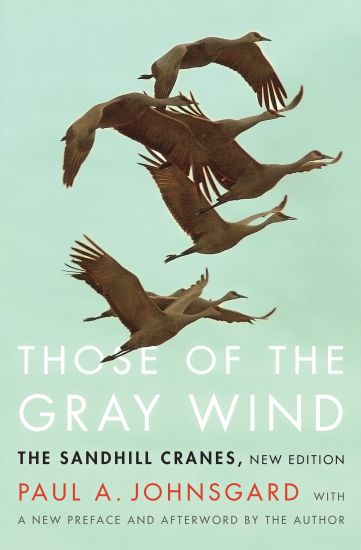
Those of the Gray Wind

Those of the Gray Wind

Paul A. Johnsgard

University of Nebraska Press
2017
pokkari
With Paul A. Johnsgard, we follow the migration of the sandhill cranes from the American Southwest to their Alaskan breeding grounds and back again, an annual pattern that has persisted over millions of years. By selecting four historic time frames of the migration between 1860 and 1980, Johnsgard illustrates how humans have influenced the flocks and how different American cultures have variously responded to the birds and perceived their value. Each section focuses on the interactions between children of four different American cultures and sandhill cranes, triggered by events occurring during the annual life cycle of the cranes. The story is enriched by the author’s exquisite illustrations, by Zuni prayers, and by Inuit and Pueblo legends. With a new preface and afterword and a new gallery of photographs by the author, Those of the Gray Wind is a classic story of a timeless ritual that can be enjoyed for generations to come.
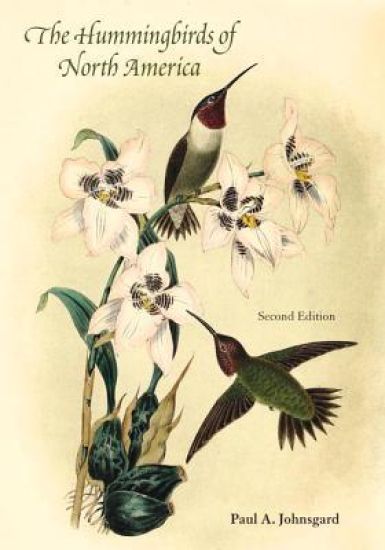
The Hummingbirds of North America, Second Edition

The Hummingbirds of North America, Second Edition

Paul A. Johnsgard

Smithsonian Books
2016
pokkari
Swift and iridescent, hummingbirds are found only in the New World, and encompass an amazing variety of specializations. No other family of birds can lay claim to so many superlatives, including smallest size, most rapid wingbeat, and most specialized plumages. While many species can be attracted to feeding stations and backyard flower gardens, others can be found only in the wild. Paul A. Johnsgard's Hummingbirds of North America is the only book devoted to the identification, distribution, and biology -- both individual and comparative -- of all hummingbirds that breed in North America. First published in 1983, this acclaimed volume now has been revised and expanded to include twenty-five Mexican species, such as the long-billed starthroat and the fork-tailed emeralds, thereby more than doubling the species coverage of the original edition. Full species-by-species accounts survey the evolutionary history, anatomical and physiological specializations, and comparative ecology, behavior, and reproductive biology of this largest family of nonpasserine birds. Individual accounts are complemented by 24 full-color paintings. Including updated range maps, identification keys, and a bibliography that has been broadened to include literature on the little-known Mexican species, the book is both accessible to amateur birders and an authoritative volume for ornithologists.
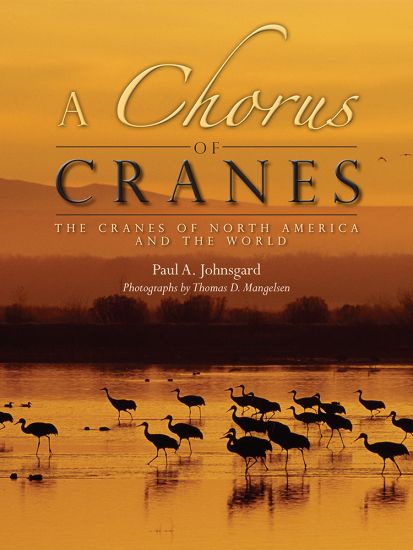
A Chorus of Cranes

A Chorus of Cranes

Paul A. Johnsgard

University Press of Colorado
2015
nidottu
“Since long before medieval times cranes have been considered messengers of the gods, calling annually from on high to remind humans below of the passing years and of their own mortality. Now it is up to humans to take responsibility for controlling our own fate—and also to cry out to protect not only cranes but all the other wonderful creatures that share our increasingly fragile and threatened planetary ecosystem with us." —Paul A. Johnsgard, from the acknowledgments Accompanied by the stunning photography of Thomas D. Mangelsen, A Chorus of Cranes details the natural history, biology, and conservation issues surrounding the abundant sandhill crane and the endangered whooping crane in North America. Author Paul A. Johnsgard, one of the leading authorities on cranes and crane biology, describes the fascinating social behaviors, beautiful natural habitats, and grueling seasonal migrations that have stirred the hearts of people as far back as medieval times and garnered the crane a place in folklore and mythology across continents. Johnsgard has substantially updated and significantly expanded his 1991 work Crane Music, incorporating new information on the biology and status of these two North American cranes and providing abbreviated summaries on the other thirteen crane species of the world. The stories of these birds and their contrasting fates provide an instructive and moving history of bird conservation in North America. A Chorus of Cranes is a gorgeous and invaluable resource for crane enthusiasts, birders, natural historians, and conservationists alike. The University Press of Colorado gratefully acknowledges the generous support of the Iain Nicholson Audubon Center at Rowe Sanctuary, Audubon Nebraska, Ron and Judy Parks, Wagon Tongue Creek Farm, and the Trull Foundation toward the publication of this book.
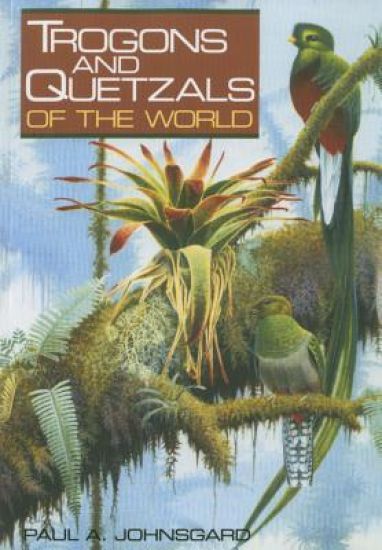
Trogons and Quetzals of the World

Trogons and Quetzals of the World

Paul A. Johnsgard

Smithsonian Institution Scholarly Press
2015
pokkari
Of all birdgroups, none is more closely associated with the world's tropical forests than trogons and quetzals. With shimmering golden-green feathers and long ornamental tail coverts, Central America's resplendent quetzal often has been called the world's most beautiful bird. Other New World as well as African trogonids also are iridescent and brightly pigmented, while red or reddish brown hues predominate in Asian species. Since deforestation and fires have ravaged many of the reclusive group's prime habitats, ornithologists and conservationists may soon be unable to study many of the world's trogonids in their native environments. Beautifully illustrated with color plates and line drawings, this comprehensive review of trogons and quetzals -- the first to be published in more than 150 years -- covers all thirty-nine extant species. The book includes detailed species accounts, range maps, and identification keys as well as a chapter that discusses comparative biology in terms of evolution, anatomy and morphology, behavior, ecology, breeding biology, and populations. Forty hand-colored plates -- most by the renowned nineteenth-century illustrator John Gould -- depict adults of both sexes; nineteen line drawings by author Paul Johnsgard illustrate behavior and anatomy. The book also includes more than three hundred bibliographic references. Despite their beauty and renown among birders, little has been previously published about the biology of many trogon and quetzal species. This up-to-date survey will serve as a valuable reference for ornithologists, conservationists, aviculturalists, and birdwatchers worldwide.
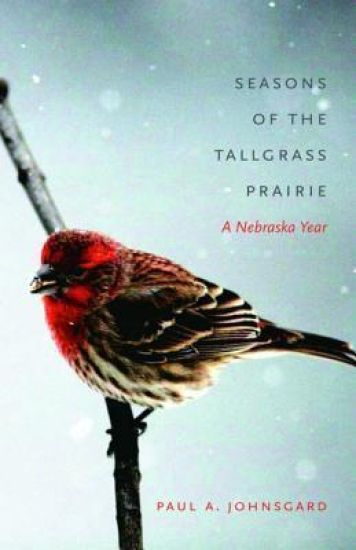
Seasons of the Tallgrass Prairie

Seasons of the Tallgrass Prairie

Paul A. Johnsgard

Bison Books
2014
pokkari
A respected author and scholar, Paul A. Johnsgard has spent a lifetime observing the natural delights of Nebraska's woodlands, grasslands, and wetlands. Seasons of the Tallgrass Prairie collects his musings on Nebraska's natural history and the issues of conservation facing our future. Johnsgard crafts essays featuring snow geese, owls, hummingbirds, and other creatures against the backdrop of Great Plains landscapes. He describes prairie chickens courting during predawn hours and the calls of sandhill cranes; he evokes the magic of lying upon the prairie, hearing only the sounds of insects and the wind through the grasses. From reflections following a visit to a Pawnee sacred site to meditations on the perils facing the state's finite natural resources, Seasons of the Tallgrass Prairie celebrates the gifts of a half century spent roaming Nebraska's back roads, trails, and sometimes-forgotten places.
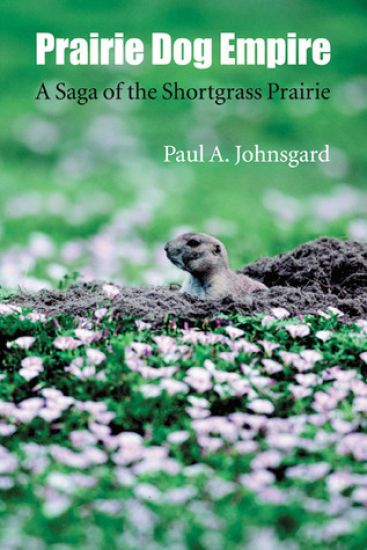
Prairie Dog Empire

Prairie Dog Empire

Paul A. Johnsgard

Bison Books
2014
pokkari
This book by the renowned naturalist and writer Paul A. Johnsgard tells the complex biological and environmental story of the western Great Plains under the black-tailed prairie dog's reign—and then under a brief but devastating century of human dominion. An introduction to the ecosystem of the shortgrass prairie, Prairie Dog Empire describes in clear and detailed terms the habitat and habits of black-tailed prairie dogs; their subsistence, seasonal behavior, and the makeup of their vast colonies; and the ways in which their "towns" transform the surrounding terrain—for better or for worse. Johnsgard recounts how this terrain has in turn been transformed over the past century by the destruction of prairie dogs and their grassland habitats. This book also offers a rare and invaluable close-up view of the rich history and threatened future of the creature once considered the "keystone" species of the western plains. Included are maps, drawings, and listings of more than two hundred natural grassland preserves where many of the region's native plants and animals may still be seen and studied.
Sandhill and Whooping Cranes

Sandhill and Whooping Cranes

Paul A. Johnsgard

Bison Books
2011
pokkari
Driving west from Lincoln to Grand Island, Nebraska, Paul A. Johnsgard remarks, is like driving backward in time. "I suspect," he says, "that the migrating cranes of a pre–ice age period some ten million years ago would fully understand every nuance of the crane conversation going on today along the Platte." Johnsgard has spent nearly a half century observing cranes, from a yearly foray to Nebraska's Platte River valley to see the spring migration, to pilgrimages to the birds' wintering grounds in Arizona and nesting territory in Alaska. In this book he draws from his own extensive experience as well as the latest science to offer a richly detailed and deeply felt account of the ecology of sandhill and whooping cranes and the wetlands in which they live. Incorporating current information on changing migration patterns, population trends, and breeding ranges, Johnsgard explains the life cycle of the crane, as well as the significance of these species to our natural world. He also writes frankly of the uncertain future of these majestic birds, as cranes and their habitats face the effects of climate change and increasing human population pressures. Illustrated with the author's own ink drawings and containing a detailed guide to crane-viewing sites in the United States and Canada, this book is at once an invaluable reference and an eloquent testimony to how much these birds truly mean.
Ruddy Ducks and Other Stifftails

Ruddy Ducks and Other Stifftails

Paul A. Johnsgard; Montserrat Carbonell

University of Oklahoma Press
2010
nidottu
An in-depth biological overview of a fascinating group of waterfowl'Paul A. Johnsgard's first glimpse of a North American ruddy duck - a chestnut-brown bird with a blue bill, black head, and white cheeks - led to decades of observing the eight extant species of stiff-tailed ducks. In Ruddy Ducks and Other Stifftails, he and Montserrat Carbonell introduce general readers and ornithologists to the ruddy's morphology, behavior, ecology, and diverse relatives. This richly illustrated volume highlights these unique species at a critical time, when their wetlands habitats are increasingly at risk.
The Platte

The Platte

Paul A. Johnsgard

Bison Books
2008
pokkari
Arising in two separate streams high in the Rockies and flowing east across the plains to meet the Missouri near Omaha, Nebraska, the Platte River is a microcosm of the geologic, plant, animal, and human worlds. Way station for the sandhill cranes, home of the Plains Indians, and artery for the great westward migrations of the nineteenth century, the Platte Valley offers a rich diversity of life and history. Focusing on the central role the Platte has played in shaping Nebraska and its heritage, both human and natural, Paul A. Johnsgard presents in this book a “brief and personal portrait of the river as it has existed in the past and still exists today.” “My special hope in doing so,” he writes, “is that the value of the river as a living, complex, and natural ecologic system can be more fully appreciated, and that whatever steps may be necessary might be taken to preserve the river’s integrity.” Johnsgard tells the story of the Platte from prehistoric times to the present and then assesses its future. A selection of photographs and checklists of birds, mammals, amphibians and reptiles, fishes, and common plants of the Platte River and its valley enhance the book’s interest and usefulness. This Bison Books edition includes a new preface and afterword by the author.
The Niobrara

The Niobrara

Paul A. Johnsgard

Bison Books
2007
pokkari
Although its history is etched on canyon walls reaching back twenty million years, the Niobrara is very much a river of today. Stretching 535 miles from its headwaters to the Missouri River, it is one of Nebraska's least altered waterways and is designated as a national scenic river. Its waterfalls and wildlife make it a haven for outdoor enthusiasts, but pressures from development still threaten its scenic and ecological wonders. This first book-length study of the Niobrara is a comprehensive look at an ecological treasure. Paul A. Johnsgard reviews the river's history from its geologic past through prehistoric settlement to the present and highlights its historical and biological features. Writing from this crossroads of eastern and western species, Johnsgard also describes the Niobrara's varied plants and animals, providing extensive information on bird populations. He offers portraits of sixteen species of special conservation concern, such as the black-tailed prairie dog and the olive-backed pocket mouse. Drawings by Johnsgard, information tables on various species, plus site lists make the book an invaluable reference. It conveys the Niobrara's value as a recreational and scientific resource to help visitors better appreciate this riparian paradise while offering specialists an unimpeachable guide to its scientific riches. The Niobrara includes chapters by Jon Farrar and Duane Gudgel.
Baby Bird Portraits by George Miksch Sutton

Baby Bird Portraits by George Miksch Sutton

Paul A. Johnsgard

University of Oklahoma Press
2006
nidottu
George Miksch Sutton is one of the best known and most beloved bird artists of the twentieth century. This marvelous book presents thirty-five paintigs of downy chicks, nestlings, and fledglings painted from life by Sutton. The exquisite watercolrs, housed in the Field Museum of Natural History, span three decades and depict nineteen species of North American birds. Many of the paintings are reproduced here for the first time. Sutton was fond of painting young birds from life and of recording their developmental changes. Marked by delicate bruskwork and subtle color variations, his paintings document characteristic features of the birds' species as well as capturing the poses and attributes that make each bird seem so unique. Some paintings show not only juvenal plumage but also head portraits of adult plumage. The nineteen species include familiar garden birds such as cardinals, Great Plains inhabitants such as the grassland sparrows, and upland and wetland birds, including bobwhites, moorhens, and sandpipers. In his introduction to the collection, ornithologist Paul Johnsgard discusses Sutton's contributions to bird art and to ornithology. And is essays accompanying the paintings, Johnsgard describes his and Sutton's personal encounters with the birds. A tribute to Sutton's genius as both an artist and an ornithologist, Baby Bird Portraits will be welcomed by ornithologists, bird enthusiasts, and Sutton's legion of admirers.
The Nature of Nebraska

The Nature of Nebraska

Paul A. Johnsgard

Bison Books
2005
pokkari
Where the eastern and western currents of American life merge as smoothly as one river flows into another is a place called Nebraska. There we find the Platte, a river that gave sustenance to the countless migrants who once trudged westward along the Mormon and Oregon trails. We find the Sandhills, a vast region of sandy grassland that represents the largest area of dunes and the grandest and least disturbed region of mixed-grass prairies in all the Western Hemisphere. And, below it all, we find the Ogallala aquifer, the largest potential source of unpolluted water anywhere. These ecological treasures are all part of the nature of Nebraska. With characteristic clarity, energy, and charm, Paul A. Johnsgard guides us through Nebraska's incredible biodiversity, introducing us to each ecosystem and the flora and fauna it sustains and inviting us to contemplate the purpose and secrets of the natural world as we consider our own roles and responsibilities in our connection with it.
Lewis and Clark on the Great Plains

Lewis and Clark on the Great Plains

Paul A. Johnsgard

Bison Books
2003
pokkari
Lewis and Clark on the Great Plains is an easy-to-use reference on the wildlife that Meriwether Lewis and William Clark encountered during their 1804–6 Corps of Discovery expedition. More than one hundred animals and plants that were first carefully described and in some cases discovered by Lewis and Clark are identified here. More than accounts of the regional flora and fauna, Lewis and Clark on the Great Plains examines the lasting importance of the expedition's discoveries, the significance of the Plains plants and animals to local Native Americans, and the current status of Plains wildlife. Lavishly illustrated with Paul A. Johnsgard's drawings of mammals, birds, fish, reptiles, and plants, the book also includes a guide to the Lewis and Clark sites of botanical and zoological interest and more than seventy sites where readers can follow in the footsteps of two of America's greatest pioneering naturalists.
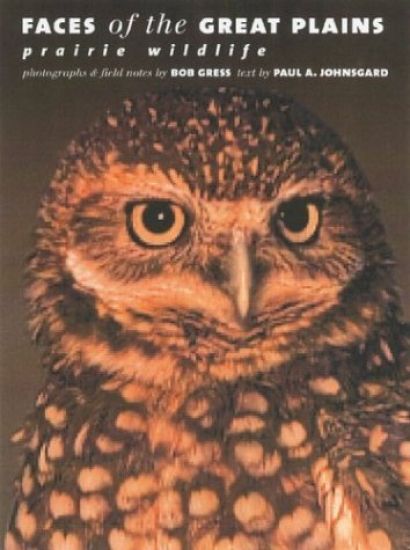
Faces of the Great Plains

Faces of the Great Plains

Paul A. Johnsgard; Bob Gress

University Press of Kansas
2003
sidottu
The Great Plains are America's biological melting pot, drawing creatures from surrounding regions to create a rich diversity of wildlife. This book illuminates the enormous variety and uniqueness of prairie wildlife - featuring 150 of the most interesting and important species.
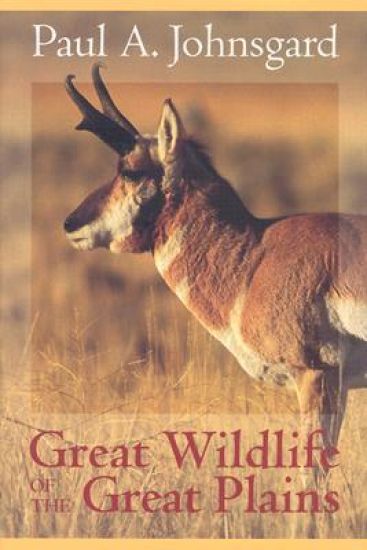
Great Wildlife of the Great Plains

Great Wildlife of the Great Plains

Paul A. Johnsgard

University Press of Kansas
2003
sidottu
Thundering herds of bison. Burrowing prairie dogs. Soaring golden eagles. These are among the wildlife who will always be linked with the Great Plains, and many can still be seen in their natural habitats. Now there is a single-volume resource that provides an instructive and entertaining commentary on their lives. Paul Johnsgard is a leading authority on the ecology of the Great Plains and author of more than forty books in natural history. With Great Wildlife of the Great Plains, he has written the first overview of the region's native fauna, a book geared to amateur naturalists and general readers who live in or visit America's vast central expanses. Choosing from the nearly 600 terrestrial vertebrates found on the Great Plains, Johnsgard focuses on the ecology, behavior, and life histories of 121 notable species that people are most likely to encounter when traveling in the region. He has selected characteristic breeding birds, typical mammals, and conspicuous amphibians and reptiles - as well as additional species of conservation importance, animals of charismatic interest, and selected transients. The book is organized around ten district biotic communities, from the different varieties of native prairies to woodlands and wetlands, so that human visitors to those habitats can be on the watch for wildlife most often encountered there. Here are box turtles in the Sandhills grasslands and roadrunners in the shrubsteppes - and coyotes nearly everywhere - and here is Paul Johnsgard to tell us how they go about their lives. Johnsgard's pictorial prose calls to the reader's attention all of the subtleties of geography and life forms associated with these varied ecosystems. More than seventy maps and illustrations enhance his text. Whether commenting on the feeding and nesting habits of the cuckoo, philosophizing on the aromatic qualities of skunks from a closer range than most of us would dare, or simply celebrating the zigzag hop of the jumping mouse, Johnsgard brings to the page the sharp eye of one who has studied these animals for years and is familiar with their every action. Great Wildlife of the Great Plains is a book with which to travel and from which to learn - a book that speaks to the inner naturalist in every citizen of the Plains.