Kirjojen hintavertailu – 12 859 819 kirjaa ja 27 kauppaa
Kirjailija
Paul Bahn
Kirjat ja teokset yhdessä paikassa: 21 kirjaa, julkaisuja vuosilta 1994–2026, suosituimpiin kuuluu Hacer Arte en la Edad de Hielo. Vertaile teosten hintoja ja tarkista saatavuus suomalaisista kirjakaupoista.
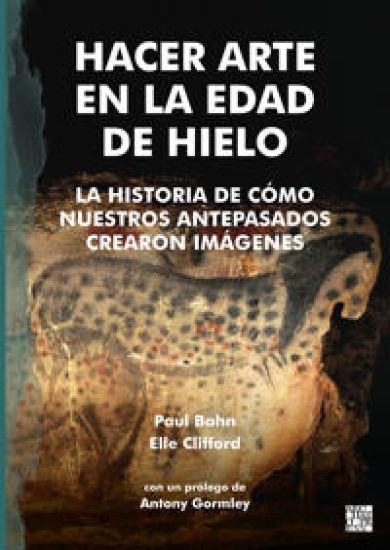
This colourful and informative book, aimed at younger readers, explores Ice Age art, its discovery, creation, and authenticity. More than decoration, it offers deep insight into early humans, their lives, and beliefs. Though meanings remain mysterious, the art connects us to our ancestors, preserving their stories across millennia. Spanish edition.
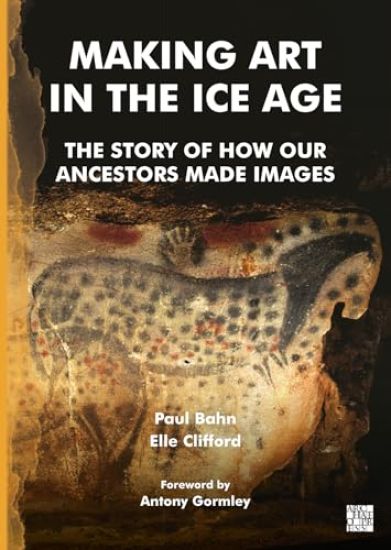
The extraordinary phenomenon of Ice Age art endured for over 30,000 years of our prehistory. This book will show you how the art was discovered, how it was made, how we know its age and if it’s genuine. But this art is much more than pictures and paint – it tells us more about our early ancestors than bones and tools ever will. Life during the Ice Age was a huge part of our human journey, and the people who lived then, by painting on cave walls and engraving their myths on animal bones, have reached out to us down the millennia with their stories and memories. It is unlikely we will ever know the meanings of the simple handprints or the animal silhouette paintings, or the ideas that were shared in great cave wall murals, but they are likely to be profound. And despite our inability to understand the messages, we can still marvel at the valuable gifts these Ice Age artists have bestowed on us.
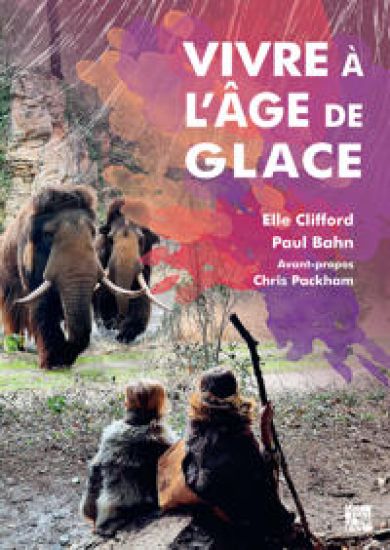
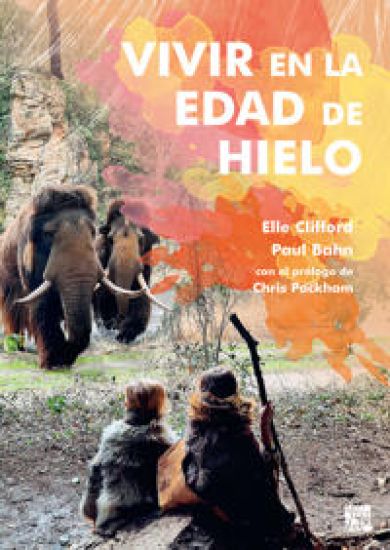
“It’s tempting to think that we can learn little from people who ate and drank, laughed and cried, between 40 and 12,000 years ago, but I think we should – because these remarkable people not only lived but survived through a period of unimaginable change on our planet.” – from the foreword by Chris Packham Living in the Ice Age takes you on a journey through life in Ice Age Europe, and the things you’d need to know to survive! This book looks at the daily life of biologically modern humans from about 40,000 to 12,000 years ago, a time when the climate and environment were changing rapidly. Explore the types of houses, food, clothes and toys people created in the Ice Age to see whether you would have liked to live back then.
“It’s tempting to think that we can learn little from people who ate and drank, laughed and cried, between 40 and 12,000 years ago, but I think we should – because these remarkable people not only lived but survived through a period of unimaginable change on our planet.” – from the foreword by Chris Packham Living in the Ice Age takes you on a journey through life in Ice Age Europe, and the things you’d need to know to survive! This book looks at the daily life of biologically modern humans from about 40,000 to 12,000 years ago, a time when the climate and environment were changing rapidly. Explore the types of houses, food, clothes and toys people created in the Ice Age to see whether you would have liked to live back then.
'As indispensable to an archaeology student as a trowel ... every student, or indeed any interested amateur, should really find a space on their shelf for this useful book’ Minerva Known for being an accessible and authoritative introduction, Archaeology: Theories, Methods and Practice has been updated in the Ninth Edition to include new discoveries in archaeology, innovations in field and laboratory methods, as well as covering the latest developments in archaeological theory, from ontologies to Indigenous archaeology. Collaborating with Colin Renfrew and Paul Bahn, new co-author, Elizabeth DeMarrais, updates earlier editions’ clear presentation of archaeology’s history, theory and ethics. The contributions made by women, people of colour, and Indigenous communities to the study of the human past are highlighted. New theoretical sections address Indigenous archaeology, ontology, post-colonial theory and historical archaeology. Sections on the safeguarding of intangible cultural heritage and the changing role of museums are included. The Ninth Edition includes broader coverage of approaches to identity, ethnicity, and the archaeology of the modern world.
The decorated Ice Age caves are some of mankind’s greatest artistic achievements, and there is no substitute for seeing the caves themselves. There you can see the art – paintings, engravings, bas-reliefs, or drawings – in its original, natural setting, and stand where the artists did 30,000–10,000 years ago. For speleologists and holidaymakers alike – indeed anyone who wants to add a visit to a cave to their itinerary – here is an essential handbook. The first guide to all the decorated Ice Age caves in Europe that are open to the public, Cave Art covers more than 50 caves in the United Kingdom, France, Spain, Portugal, and Italy, as well as relevant museums and centres. The guide has been fully revised and updated for this new, third edition.
“It’s tempting to think that we can learn little from people who ate and drank, laughed and cried, between 40 and 12,000 years ago, but I think we should – because these remarkable people not only lived but survived through a period of unimaginable change on our planet.” – from the foreword by Chris Packham Living in the Ice Age takes you on a journey through life in Ice Age Europe, and the things you’d need to know to survive! This book looks at the daily life of biologically modern humans from about 40,000 to 12,000 years ago, a time when the climate and environment were changing rapidly. Explore the types of houses, food, clothes and toys people created in the Ice Age to see whether you would have liked to live back then.
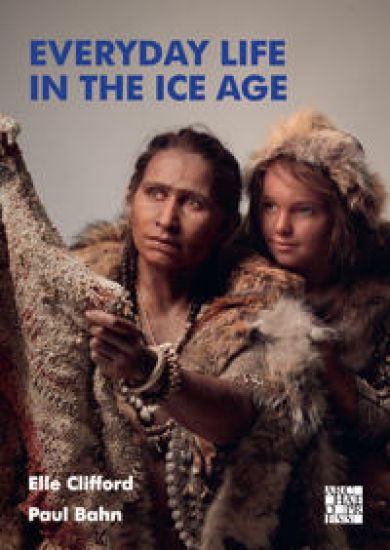
Everyday Life in the Ice Age is the first attempt to present a truly complete, balanced and realistic picture of life during the last Ice Age, with its many problems and challenges, while dispelling many of the myths and inaccuracies about our early ancestors. One of the most common questions asked by visitors to Europe’s decorated caves is ‘What was life like for these people?’ No previous book has ever managed to answer this question, and most studies of the period are aimed entirely at academics, tending to focus on tool-types rather than what the tools were used for. Women and children are almost invisible in these studies. The book examines all aspects of the lives of biologically modern humans in Europe from about 40,000 to 12,000 years ago, the period known as the Last Ice Age, a time of radical change in climate and environment. It explores how people were able to cope with and adapt to the often rapid alterations in their circumstances. Elle Clifford’s background in Social Psychology brings important insights into aspects of the past which are never normally discussed – domestic and family life, pregnancy and child-rearing, and care of the sick and elderly. The book is aimed not only at students and specialists, but also and especially the interested public, for whom the most interesting questions are: How were they like us? and what behaviours do we share?
Easter Island, isolated deep in the South Pacific and now a World Heritage Site, was home to a fascinating prehistoric culture—one that produced massive stone effigies (the moai) and the birdman cult—and yet much of the island’s past remains shrouded in mystery. Where did the islanders come from, and when? How did Rapa Nui culture evolve over the centuries? How, and why, did their natural environment change over time? Paul Bahn and John Flenley guide readers through the mysteries and enigmas of Rapa Nui, incorporating the records of early explorers, folk legends, and archaeological evidence along the way. They cover the island’s geological and environmental history and explore its flora and fauna, illustrating how human actions affected the natural environment of the island. This fourth edition draws in: recent DNA studies of ancient human and animal bones as well as plant remains; evolving understandings of how the moai were transported; and current efforts to reforest the island.
Easter Island, isolated deep in the South Pacific and now a World Heritage Site, was home to a fascinating prehistoric culture—one that produced massive stone effigies (the moai) and the birdman cult—and yet much of the island’s past remains shrouded in mystery. Where did the islanders come from, and when? How did Rapa Nui culture evolve over the centuries? How, and why, did their natural environment change over time? Paul Bahn and John Flenley guide readers through the mysteries and enigmas of Rapa Nui, incorporating the records of early explorers, folk legends, and archaeological evidence along the way. They cover the island’s geological and environmental history and explore its flora and fauna, illustrating how human actions affected the natural environment of the island. This fourth edition draws in: recent DNA studies of ancient human and animal bones as well as plant remains; evolving understandings of how the moai were transported; and current efforts to reforest the island.
Where do we find the world’s very first art? When, and why, did people begin experimenting with different materials, forms and colours? Were our once-cousins, the Neanderthals, also capable of creating art? Prehistorians have been asking these questions of our ancestors for decades, but only very recently, with the development of cutting-edge scientific and archaeological techniques, have we been able to piece together the first chapter in the story of art. Overturning the traditional Eurocentric vision of our artistic origins, which has focused almost exclusively on the Franco-Spanish cave art, Paul Bahn and Michel Lorblanchet take the reader on a search for the earliest art across the whole world. They show that our earliest ancestors were far from being the creatively impoverished primitives of past accounts, and Europe was by no means the only ‘cradle’ of art; the artistic impulse developed in the human mind wherever it travelled. The long universal history of art mirrors the development of humanity.
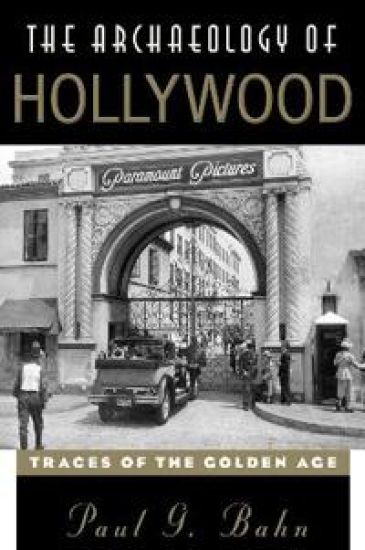
The Golden Age of Hollywood, dating to the hazy depths of the early 20th Century, was an era of movie stars worshipped by the masses and despotic studio moguls issuing decrees from poolside divans… but despite the world-wide reach of the movie industry, little more than memories of that era linger amidst the freeways and apartment complexes of today’s Los Angeles. Noted archaeologist Paul G. Bahn digs into the material traces of that Tinseltown in an effort to document and save the treasures that remain. Bahn leads readers on a tour of this singular culture, from the industrial zones of film studios to the landmarks where the glamorous lived, partied, and played, from where they died and were buried to how they’ve been memorialized for posterity. The result is part history, part archaeology—enlivened with pop culture, reminiscence, and whimsy—and throughout, it feeds and deepens our fascination with an iconic place and time, not to mention the personalities who brought it to life.
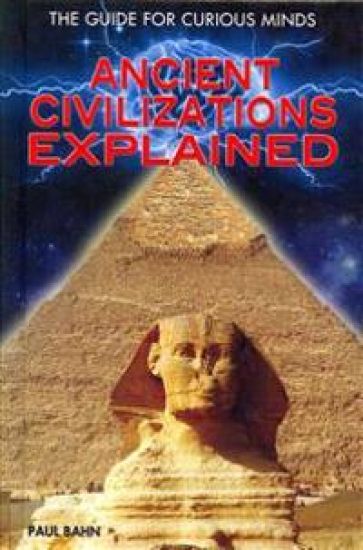
Ancient history covers a vast period from the first written records about five thousand years ago to the fall of the Roman Empire. During this period the world was richly varied in its social, political, economic, and cultural life. This handy reference book is organized around twelve great civilizations, including ancient Mesopotamia, Egypt, Greece, Rome, and China, as well as societies of Africa, South Asia, Australia, and the Americas. Each chapter focuses on a civilization's key social and technological developments and includes a timeline. Notable cultural achievements are highlighted with color photographs of ancient art and artifacts.
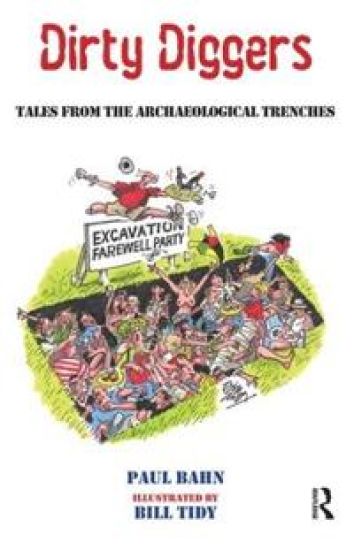
Tired of the airbrushed images of archaeologists in TV documentaries? Want the dirt on what REALLY happens on a dig? Paul Bahn has collected dozens of fun tales from the trenches to illuminate what actually occurs when archaeologists go into the field. He reveals startling episodes with dangerous situations, other dangerous archaeologists (sometimes unclothed), dangerous animals large and small, and cans of beer large and small. The stories that don’t appear in the official reports have made their way into this small, humorous volume. Includes cartoons by noted illustrator Bill Tidy.
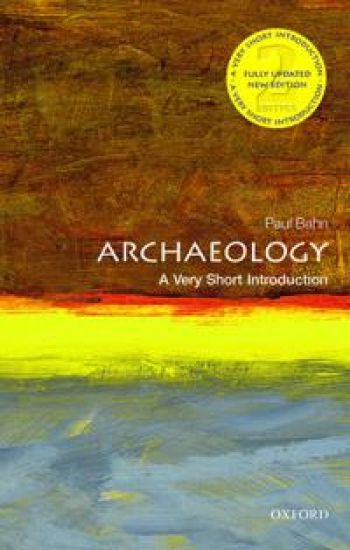
This entertaining Very Short Introduction reflects the enduring popularity of archaeology - a subject which appeals as a pastime, career, and academic discipline, encompasses the whole globe, and surveys 2.5 million years. From deserts to jungles, from deep caves to mountain tops, from pebble tools to satellite photographs, from excavation to abstract theory, archaeology interacts with nearly every other discipline in its attempts to reconstruct the past. In this new edition, Paul Bahn brings the text up to date, including information about new discoveries and interpretations in the field, and highlighting the impact of developments such as the potential use of DNA and stable isotopes in teeth, as well the effect technology and science are having on archaeological exploration. ABOUT THE SERIES: The Very Short Introductions series from Oxford University Press contains hundreds of titles in almost every subject area. These pocket-sized books are the perfect way to get ahead in a new subject quickly. Our expert authors combine facts, analysis, perspective, new ideas, and enthusiasm to make interesting and challenging topics highly readable.
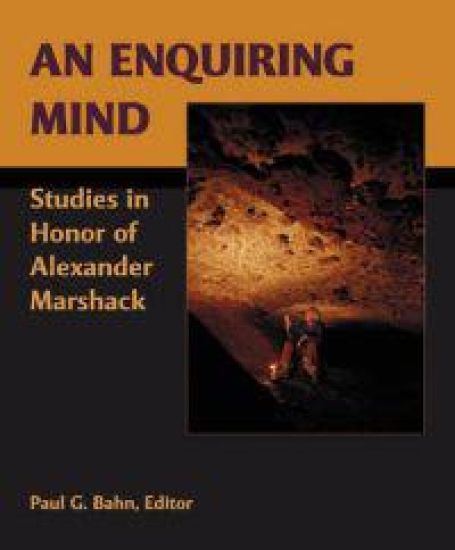
Alexander Marshack single-handedly revolutionized the field of Paleolithic art research. His astounding photographs of portable art objects caused us to see them with fresh eyes, to ask new questions, and to understand their technology and production far more precisely; and his pioneering use of infrared and ultraviolet light in the caves revealed startling new facts about the paintings. In addition, he carried out important, provocative and challenging work on archaeoastronomy, calendar sticks, female imagery, and other topics. Alexander Marshack was able to do what nobody else ever had before, or perhaps ever will again - i.e. travel all over Europe, visiting not only many decorated caves but also all the portable art objects scattered throughout the continent, including Russia. This unique experience and knowledge, together with his unrivalled and amazing documentation of all this material, made him by far the USA's foremost specialist in Paleolithic imagery. To honor his memory, in this book, scholars from many parts of the world contribute papers about some of the many problems that interested him and to which he made such a massive contribution.
Every year, archaeology uncovers dozens of fragments that change the way we look at ourselves. The history of humanity is being rewritten as we speak, and The New Penguin Dictionary of Archaeology is your guide to this ever-fluctuating science. This fully up-to-date volume covers over three million years of human development across the world – from the emergence of the first humans via the cave paintings of Lascaux to the ancient civilisation of Mesopotamia and prehistoric cultures of Siberia. This fascinating reference book will be invaluable for academics, enthusiasts and the curious in this rich and perennially stimulating subject.
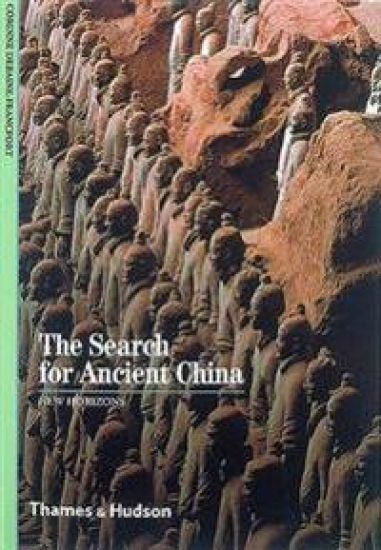
In the late 19th and early 20th centuries, as China opened its doors, archaeologists introduced new field methods that led to important discoveries and the establishment of scientific research bodies. Now, the splendours of ancient China can be revealed: from the famous terracotta army to the lavish tomb of the Marquis of Dai from the Han dynasty.
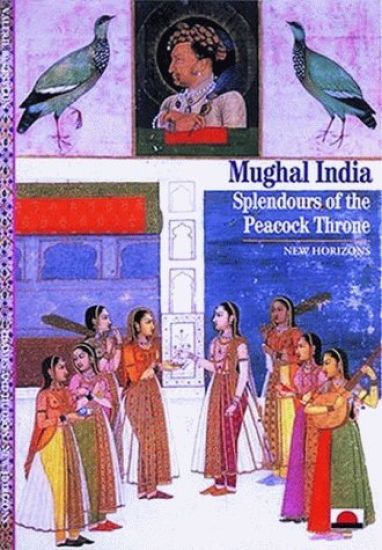
The Mughal empire dominated India for three centuries, rivalling the greatest rulers of Europe and the East in its power and splendour. Under such enlightened patrons as Akbar the Great in the 16th century and Jahangir and Shah Jahan in the 17th century, this vast muslim empire produced paintings of technical excellence and architecture of exceptional quality, such as the Taj Mahal. However, in the 19th century, internal divisions, weak emperors and the expanding British presence led to its decline. Using memoirs written by the rulers themselves, miniature paintings and architectural drawings, Mughal India reveals the achievements of this great empire.