Kirjojen hintavertailu – 12 859 818 kirjaa ja 27 kauppaa

Kirjailija

Paul Bishop

Kirjat ja teokset yhdessä paikassa: 57 kirjaa, julkaisuja vuosilta 1995–2026, suosituimpiin kuuluu Ludwig Klages and the Philosophy of Life. Vertaile teosten hintoja ja tarkista saatavuus suomalaisista kirjakaupoista.

57 kirjaa

Kirjojen julkaisuvuodet: 1995–2026.

Collection of Years Gone By

Collection of Years Gone By

Paul Bishop

Rosedog Books
2020
nidottu
Paul Bishop has lived most of his life in Sauk Prairie, Wisconsin. Over time, he resided in Dallas, Tucson, and some small towns in Wisconsin. He is very familiar with the mental health system and before he came to Christ, he underwent ECT (electro convulsive therapy). Eventually, he bottomed out and there was not anything else medically to be offered. Growing up, Bishop enjoyed sports. He earned good grades without much effort and after high school he went to LaCrosse for a year. After transferring to UW-Madison, all his hopes and dreams were tossed out the window. His strength is his spirituality and expertise in being a survivor.
Reading Goethe at Midlife

Reading Goethe at Midlife

Paul Bishop

Chiron Publications
2020
pokkari
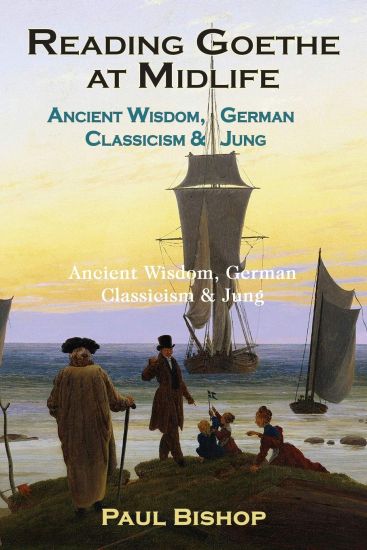
This book explores the history of the idea of the midlife crisis, using the writings of C. G. Jung and Goethe to investigate its relevance for today. Tracing how "the ages of humankind" became "the stages of life" in which the midlife crisis represents a pivotal moment, Paul Bishop offers a detailed analysis of a paper by Jung on this subject. He then shifts the focus to Goethe's interest in Orphic wisdom, and one of Goethe's major later poems, "Primal Words. Orphic" (Urworte Orphisch). Using Jungian ideas to explore the psychological implications of this poem, Bishop draws on Goethe's own commentary, and other background material, to uncover its vital message. Reading Goethe at Midlife reveals the remarkable symmetry between the ideas and Jung and Goethe. Jung's analysis of the stages of life, and his advice to heed the "call of the self," are brought into the conjunction with Goethe's emphasis on the importance of hope, showing an underlying continuity of thought and relevance from ancient wisdom, via German classicism to analytical psychology. Table of ContentsList of Abbreviations Acknowledgments Preface to the second edition PART ONEChapter 1: The Stages of Life and the Midlife Crisis: A BriefHistory of an Idea Two Visual Starting Points - From the Ages of Humankind......to the Stages of Life -- The Stages of Life: An Idea Comesof Age - The Midlife Crisis - Walter B. Pitkin and EdmundBergler - Erik H. Erikson and Elliott Jaques - Gail Sheehy andDaniel J. Levinson - Other Approaches, Including the Return ofthe Noonday Demon - Jungian Approaches to Midlife -Literature of the Nineties - Recent French Approaches: ricDeschavanne and Pierre-Henri Tavoillot, Marie de Hennezeland Bertrand VergelyChapter 2: The Turning Point in Life: What Conflict the SunMust Experience at Midday PART TWOChapter 3: Goethe's OrphismThe Cult of Orpheus - Orpheus in the Age of Romanticism -Goethe's Relation to the Orphic Mysteries - Creuzer andHermann, Zoega and Welcker - Faust as Orpheus - Orphism, and Primal WordsChapter 4: Primal Words. OrphicDaimon - Chance - Eros - The Necessity of Love; or, EroticNecessity - The Necessity of Necessity; or, Necessary Necessity -Hope - ConclusionIndex
Reading Goethe at Midlife

Reading Goethe at Midlife

Paul Bishop

Chiron Publications
2020
sidottu
This book explores the history of the idea of the midlife crisis, using the writings of C. G. Jung and Goethe to investigate its relevance for today. Tracing how "the ages of humankind" became "the stages of life" in which the midlife crisis represents a pivotal moment, Paul Bishop offers a detailed analysis of a paper by Jung on this subject. He then shifts the focus to Goethe's interest in Orphic wisdom, and one of Goethe's major later poems, "Primal Words. Orphic" (Urworte Orphisch). Using Jungian ideas to explore the psychological implications of this poem, Bishop draws on Goethe's own commentary, and other background material, to uncover its vital message. Reading Goethe at Midlife reveals the remarkable symmetry between the ideas and Jung and Goethe. Jung's analysis of the stages of life, and his advice to heed the "call of the self," are brought into the conjunction with Goethe's emphasis on the importance of hope, showing an underlying continuity of thought and relevance from ancient wisdom, via German classicism to analytical psychology. Table of ContentsList of Abbreviations Acknowledgments Preface to the second edition PART ONEChapter 1: The Stages of Life and the Midlife Crisis: A BriefHistory of an Idea Two Visual Starting Points - From the Ages of Humankind......to the Stages of Life -- The Stages of Life: An Idea Comesof Age - The Midlife Crisis - Walter B. Pitkin and EdmundBergler - Erik H. Erikson and Elliott Jaques - Gail Sheehy andDaniel J. Levinson - Other Approaches, Including the Return ofthe Noonday Demon - Jungian Approaches to Midlife -Literature of the Nineties - Recent French Approaches: ricDeschavanne and Pierre-Henri Tavoillot, Marie de Hennezeland Bertrand VergelyChapter 2: The Turning Point in Life: What Conflict the SunMust Experience at Midday PART TWOChapter 3: Goethe's OrphismThe Cult of Orpheus - Orpheus in the Age of Romanticism -Goethe's Relation to the Orphic Mysteries - Creuzer andHermann, Zoega and Welcker - Faust as Orpheus - Orphism, and Primal WordsChapter 4: Primal Words. OrphicDaimon - Chance - Eros - The Necessity of Love; or, EroticNecessity - The Necessity of Necessity; or, Necessary Necessity -Hope - ConclusionIndex
German Political Thought and the Discourse of Platonism

German Political Thought and the Discourse of Platonism

Paul Bishop

Springer Nature Switzerland AG
2019
sidottu
Taking Plato’s allegory of the cave as its starting-point, this book demonstrates how later European thinkers can be read as a reaction and a response to key aspects of this allegory and its discourse of enchainment and liberation. Focusing on key thinkers in the tradition of European (and specifically German) political thought including Kant, Marx, Hegel, Nietzsche, Heidegger, and the Frankfurt School, it relates them back to such foundational figures as Rousseau, Aristotle, and in particular Plato. All these thinkers are considered in relation to key passages from their major works, accompanied by an explanatory commentary which seeks to follow a conceptual and imagistic thread through the labyrinth of these complex, yet fascinating, texts. This book will appeal in particular to scholars of political theory, philosophy, and German language and culture.
Croaker

Croaker

Paul Bishop

Wolfpack Publishing
2019
pokkari
Top Los Angeles police detective and author Paul Bishop brings gripping authenticity and power to Chalk Whispers, his latest poignant and revealing novel featuring L. A. P. D. Detective Fey Croaker. Never one to avoid a challenge, Fey knows she'll face both jealousy and hostility on her promotion to lieutenant in the elite Robbery-Homicide Division, but she and her team encounter something far more dangerous and disturbing when their first case is the torture-murder of prominent lawyer Bianca Flynn, the daughter of a judge and sister of one of Los Angeles's police commissioners. Fey and her crew - the enigmatic married couple, Arch Hammersmith and Rhonda Lawless (a.k.a. Hammer and Nails), Brindle Jones and her partner, Alphabet Cohen, and Fey's second-in-command, Monk Lawson - must search Bianca Flynn's past to try to find clues to her murder. One promising avenue is Bianca's work for an illegal underground railroad seeking to protect children from sexually predatory parents. As the investigation twists into ever-tightening circles, Fey must also probe the strange death of Ellis Kavanaugh, one-time police force partner of Fey's abusive father. Is Kavanaugh's death connected to Flynn's? Why did the old man leave Fey a briefcase filled with hundred-dollar bills, and who chased him to his death beneath frightened horses on a racetrack? In a novel that reaches into the past to illuminate the tragedies of today, Paul Bishop reveals a vulnerable Fey Croaker readers have never seen before, and will not soon forget. Chalk Whispers delivers a knock-out punch in this riveting series from an author who combines the hard-earned authority of the professional police officer with the narrative gift of the born storyteller.
Croaker

Croaker

Paul Bishop

Wolfpack Publishing
2018
pokkari
The murder of Alex Waverly, a highly decorated detective assigned to the LAPD's clandestine Anti-Terrorist Division, appears to be an open-and-shut case of domestic violence turned deadly. Circumstances are not exactly what they seem, however, as Fey Croaker discovers when the chief of police removes responsibility for the investigation from the department's Robbery-Homicide Division and assigns it to her with instructions to wrap it up "quick and tidy. No muss, no fuss." Dropped into the middle of a power struggle between the chief of police and Vaughn Harrison, the department's deputy chief in charge of overseeing specialized investigation units -- including Robbery-Homicide Division and Alex Waverly's Anti-Terrorist Division -- Fey is torn between her loyalty to the Old Guard and following the razor's edge of integrity in a world filled with lies and deceptions. Struggling to overcome her personal demons, especially the death of her lover, Fey and her appealing crew, the dynamic Arch Hammersmith and Rhonda Lawless (a.k.a. Hammer and Nails), Brindle Jones, Abraham Cohen (a.k.a. Alphabet), and Fey's second-in-command Monk Lawson, courageously search for the truth, no matter what the cost. Racing to stay ahead of the rising body count, they quickly become moving targets in their struggle to stop a south-of-the-border terrorist from striking at the very heart of Los Angeles. Riveting in itsplausibility, "Tequila Mockingbird" confirms Paul Bishop's place among the best of the police thriller writers and shows Fey Croaker and her team at the top of their form.
Suspicious Minds

Suspicious Minds

Paul Bishop

Wolfpack Publishing
2018
pokkari
1977, the one and only king of rock-n-roll, Elvis Presley, is taken from the world far too soon, but the legend will never die.1996, Elvis impersonator Cole Ramsey, a young man with enough voice and a style to take him to the top, receives a very odd phone call from an Icon dead for almost twenty years... Cole has heard all the Elvis conspiracy rumors, but...it couldn't be... Before he knows it, however, Cole's life is turned upside down. He's on the run and up to his ears in Elvises...are they all impersonators or is one of them hiding from deadly suspicious minds...
Lie Catchers

Lie Catchers

Paul Bishop

Wolfpack Publishing
2018
pokkari
With her special abilities, top LAPD Robbery-Homicide detective Calamity Jane Randall thought she knew all about interrogation until she was partnered with detective Ray Pagan. Wielding a suspect's vocal intonations, emotions, and physical gestures like a scalpel, Pagan's empathetic lie catching abilities are legendary. Both detectives are scarred by past tragedies, but together they threaten to tear the city apart searching for a duo of missing children - a search where the right answer to the wrong question can mean sudden death. Ripped from the experiences of thirty-five year veteran LAPD detective and nationally recognized interrogator, Paul Bishop, Lie Catchers takes the reader inside the dark and dangerous mind games of the men and women for whom truth is an obsession.
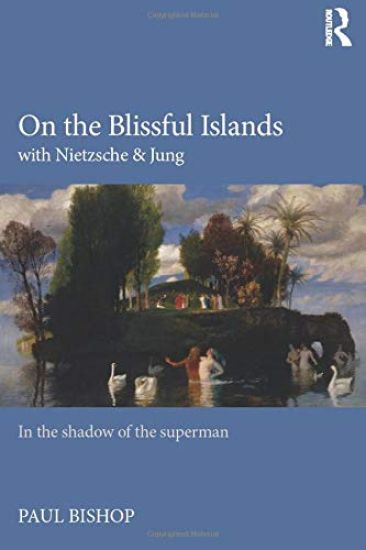
On the Blissful Islands with Nietzsche & Jung
What are the blissful islands? And where are they? This book takes as its starting-point the chapter called ‘On the Blissful Islands’ in Part Two of Nietzsche’s Thus Spoke Zarathustra, and its enigmatic conclusion: ‘The beauty of the Superman came to me as a shadow’. From this remarkable and powerful passage, it disengages the Nietzschean idea of the Superman and the Jungian notion of the shadow, moving these concepts into a new, interdisciplinary direction. In particular, On the Blissful Islands seeks to develop the kind of interpretative approach that Jung himself employed. Its chief topics are classical (the motif of the blissful islands), psychological (the shadow), and philosophical (the Übermensch or superman), blended together to produce a rich, intellectual-historical discussion. By bringing context and depth to a nexus of highly problematic concepts, it offers something new to the specialist and the general reader alike. So this book considers the significance of the statue in the culture of antiquity (and in alchemy), and investigates the associated notion of self-sculpting as a form of existential exercise. This Neoplatonic theme is pursued in relation to a poem by Schiller, at the centre of which lies the notion of self-sculpting, thus highlighting Nietzsche’s (and Jung’s) relationship to Idealism. Its conclusion directly addresses the vexed (and controversial) question of Nietzsche’s relation to Plato. This book’s main ambition is to provide a cross-cultural, interdisciplinary reading of key themes and motifs, using Jungian ideas in general (and Jung’s vast seminar on Zarathustra in particular) to uncover a dimension of deep meaning in key passages in Nietzsche. Engaging the reader directly on major existential questions, it aims to be an original, thought-provoking contribution to the history of ideas, and to show that Zarathustra was right: There still are blissful islands! This book will be stimulating reading for analytical psychologists, including those in training, and academics and scholars of Jungian studies, Nietzsche, and the history of ideas.

On the Blissful Islands with Nietzsche & Jung
What are the blissful islands? And where are they? This book takes as its starting-point the chapter called ‘On the Blissful Islands’ in Part Two of Nietzsche’s Thus Spoke Zarathustra, and its enigmatic conclusion: ‘The beauty of the Superman came to me as a shadow’. From this remarkable and powerful passage, it disengages the Nietzschean idea of the Superman and the Jungian notion of the shadow, moving these concepts into a new, interdisciplinary direction. In particular, On the Blissful Islands seeks to develop the kind of interpretative approach that Jung himself employed. Its chief topics are classical (the motif of the blissful islands), psychological (the shadow), and philosophical (the Übermensch or superman), blended together to produce a rich, intellectual-historical discussion. By bringing context and depth to a nexus of highly problematic concepts, it offers something new to the specialist and the general reader alike. So this book considers the significance of the statue in the culture of antiquity (and in alchemy), and investigates the associated notion of self-sculpting as a form of existential exercise. This Neoplatonic theme is pursued in relation to a poem by Schiller, at the centre of which lies the notion of self-sculpting, thus highlighting Nietzsche’s (and Jung’s) relationship to Idealism. Its conclusion directly addresses the vexed (and controversial) question of Nietzsche’s relation to Plato. This book’s main ambition is to provide a cross-cultural, interdisciplinary reading of key themes and motifs, using Jungian ideas in general (and Jung’s vast seminar on Zarathustra in particular) to uncover a dimension of deep meaning in key passages in Nietzsche. Engaging the reader directly on major existential questions, it aims to be an original, thought-provoking contribution to the history of ideas, and to show that Zarathustra was right: There still are blissful islands! This book will be stimulating reading for analytical psychologists, including those in training, and academics and scholars of Jungian studies, Nietzsche, and the history of ideas.

Carl Jung

Carl Jung

Paul Bishop

Reaktion Books
2014
nidottu
Carl Gustav Jung (1875–1961), as well as being one of the pioneers of psychology, is one of the most controversial of thinkers: in spite of being largely responsible for the introduction of now-familiar psychological terms such as ‘extrovert’ and ‘introvert’, Jung has often been sidelined, remaining on the fringes of academic discourse. In this new account Paul Bishop reclaims Jung as a major European thinker whose true significance, even now, is not fully appreciated. Taking into account the role of Jung’s recently published Red Book in the progression of his thought, Paul Bishop reassesses this divisive personality, reading Jung not only in terms of his biography, but also in light of his extensive reading and output. Jung once remarked that ‘the tragedies of Goethe’s Faust and Nietzsche’s Thus Spoke Zarathustra . . . mark the first glimmerings of a breakthrough of total experience in our Western hemisphere.’ In this critical biography Bishop takes up this suggestion and engages with Jung’s scholarship in order to offer one of the fullest appreciations yet of his distinctive approach to culture. He finds in Jung’s attempt to synthesize all the different parts of human life an enterprise that marks him out as one of the most important theorists of the twentieth century. Carl Jung provides a clear, compelling examination of the life and thought of a highly influential figure. Concise and accessible, the book is suitable for general readers as well as having much to say to scholars and students of Jung. Bishop provides a striking, fresh interpretation of this complex thinker – and offers reasons why we should appreciate him too.