Kirjojen hintavertailu – 12 903 735 kirjaa ja 27 kauppaa

Kirjailija

Paul Brown

Kirjat ja teokset yhdessä paikassa: 80 kirjaa, julkaisuja vuosilta 2001–2026, suosituimpiin kuuluu Birdy the Backyard Blue Jay. Vertaile teosten hintoja ja tarkista saatavuus suomalaisista kirjakaupoista.

80 kirjaa

Kirjojen julkaisuvuodet: 2001–2026.

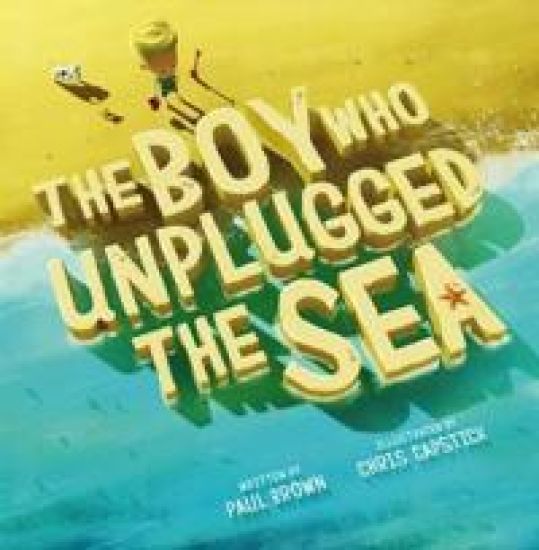
The Boy Who Unplugged The Sea

The Boy Who Unplugged The Sea

Paul Brown

Fourth Wall Publishing
2016
nidottu
Little Marcel loved building beautiful sandcastles, but the tide would always wash away his fantastic creations. Annoyed with the tide for destroying his handiwork, Marcel has an amazing idea! - he'd simply swim to the bottom of the sea and unplug it! Unfortunately, his actions have drastic consequences!
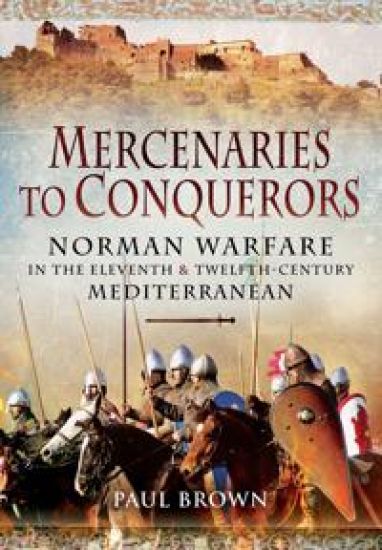
Mercenaries to Conquerors

Mercenaries to Conquerors

Paul Brown

Pen Sword Military
2016
sidottu
When a band of Norman adventurers arrived in southern Italy to fight in the Lombard insurrections against the Byzantine empire in the early 1000s, few would have predicted that within a few generations, by force of arms, some of these men and other later arrivals would seize control of Apulia, Campania, Calabria and Sicily. How did they make such extraordinary gains and then consolidate their power? Paul Brown, in this thoroughly researched and absorbing study, seeks to answer these questions and throw light onto the Norman conquests across the Mediterranean which were even more remarkable than those achieved in France and England. Throughout he focuses on the military side of their progress, as they advanced from mercenaries to conquerors, then crusaders. The story of the campaigns they undertook in Italy, Sicily, the Balkans and the Near East, of the battles and sieges that marked their expansion, reveals their remarkable talent for war and the increasing efficiency of their organization. Particular attention is paid to the polyglot character of Norman forces, and the growing sophistication of their tactics, from cavalry raids to combined-arms warfare and siege craft. The dominant role played by a succession of Norman leaders from the Hauteville family is a key theme of the narrative - a line of ambitious and ruthless rulers that ran from Robert Guiscard and Bohemond to Tancred and King Roger II of Sicily. Paul Brown's account of the Norman conquests in the Mediterranean is based on the most recent scholarship in the field. It challenges some of the common assumptions about the equipment, organization and fighting methods of the Norman armies and the men who fought in them.
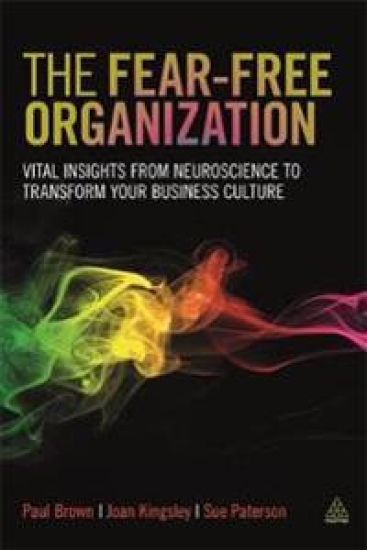
The Fear-free Organization

The Fear-free Organization

Paul Brown; Joan Kingsley; Sue Paterson

Kogan Page Ltd
2016
sidottu

Halvin toimitettuna 128,30 €

Evidence from neuroscience shows that individuals and organizations are more successful when people are encouraged to take risks, explore new ideas, and channel their energies in ways that work for them. And yet many organizations are filled with bullies, vicious gossip, undermining behaviours, hijacking tactics, political jockeying for position, favouritism and other factors that instil fear and impede productivity. It is no wonder that organizations are actively looking at how they can improve and maintain the psychological health and wellbeing of their employees to the benefit of all concerned. The Fear-free Organization reveals how our new understanding of the neurobiology of the self - how the brain constructs the person - can transform for the better the way our businesses and organizations work. Academic yet accessible, The Fear-free Organization addresses head on the issue that scared people spend a lot more time plotting their survival than working productively. The book helps leaders understand the neurobiology of fear, face the damage it is doing, and replace it with building relationships, managing energy flow and fostering trust. It guides you in making your workplace one that's full of energy, not adrenalin; focused on possibility, not profit; and generates independent thinking, not obedience so you can promote the psychological wellbeing that is strongly correlated with greater energy, motivation and better cognitive function.
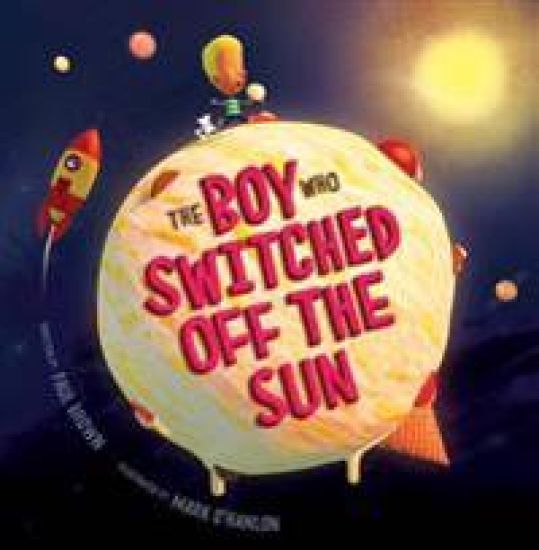
The Boy Who Switched off the Sun

The Boy Who Switched off the Sun

Paul Brown

Fourth Wall Publishing
2015
nidottu
Little Marcel didn't just like ice cream, he absolutely, completely, LOVED ICE CREAM! But the hot sunshine keeps spoiling his enjoyment by making it all drippy. To avoid a melting mess, Marcel tries to eat it quickly (but that just gives him brain freeze) and in the dark (but that makes him scared) until one day he has an idea!
The Fear-free Organization

The Fear-free Organization

Paul Brown; Joan Kingsley; Sue Paterson

Kogan Page Ltd
2015
nidottu
Evidence from neuroscience shows that individuals and organizations are more successful when people are encouraged to take risks, explore new ideas, and channel their energies in ways that work for them. And yet many organizations are filled with bullies, vicious gossip, undermining behaviours, hijacking tactics, political jockeying for position, favouritism and other factors that instil fear and impede productivity. It is no wonder that organizations are actively looking at how they can improve and maintain the psychological health and wellbeing of their employees to the benefit of all concerned. The Fear-free Organization reveals how our new understanding of the neurobiology of the self - how the brain constructs the person - can transform for the better the way our businesses and organizations work. Academic yet accessible, The Fear-free Organization addresses head on the issue that scared people spend a lot more time plotting their survival than working productively. The book helps leaders understand the neurobiology of fear, face the damage it is doing, and replace it with building relationships, managing energy flow and fostering trust. It guides you in making your workplace one that's full of energy, not adrenalin; focused on possibility, not profit; and generates independent thinking, not obedience so you can promote the psychological wellbeing that is strongly correlated with greater energy, motivation and better cognitive function.
The Secrets of Q Central

The Secrets of Q Central

Paul Brown; Edward Herbert

The History Press Ltd
2014
nidottu
A quiet market town with no military presence was chosen as the secret communications centre for Britain as the country prepared for war with Germany in 1937. When hostilities began, ‘Q Central’ attracted a dozen other clandestine operations set up to defend the country or designed to confuse and undermine enemy morale. The headquarters of radar, RAF Group 60, also came to Leighton Buzzard to be hidden from German attack and to be close to the telephone and radio communications needed to run its vast chain of radar stations. These directed the defending fighters that saved the country in the Battle of Britain and then took the bombing war to Germany. Close by, for the same reasons of secrecy and safety, were the satellite stations of Bletchley Park, the now famous code-breaking centre; the Met Office at Dunstable, which gave the all clear for the D-Day landings; Black Ops units that set up false radio stations and wrote propaganda to confuse the enemy; and airfields used for dropping agents behind enemy lines. At Q Central itself was the largest telephone exchange in the world, with more than 1,000 teleprinters communicating with all the armed services in every theatre of war and directing the operations of the secret services. Now the restrictions of the Official Secrets Act have been lifted, enabling eight members of the Leighton Buzzard and District Archaeology and History Society to piece together this compelling story for the first time.
A Brief History of Raymond, New Hampshire

A Brief History of Raymond, New Hampshire

Paul Brown

History Press Library Editions
2014
sidottu
Scenic sites and a proud community make Raymond the bucolic New Hampshire town it is today. The local cast of characters has its own unique story set in the heart of the Granite State. Local author Paul Brown has mined 250 years of town history, from the early settlement to the post-World War II boom. Search for the truth behind the conflicting stories of how the original Freetown became known as Raymond. Meet legendary locals like Dudley Tucker and dig into local legends like the mystery of Scud Lyman. The stories behind the Great White Rock and even Clint Eastwood connections color the history of Raymond. Join Paul Brown as he charts the remarkable course of Raymond history.
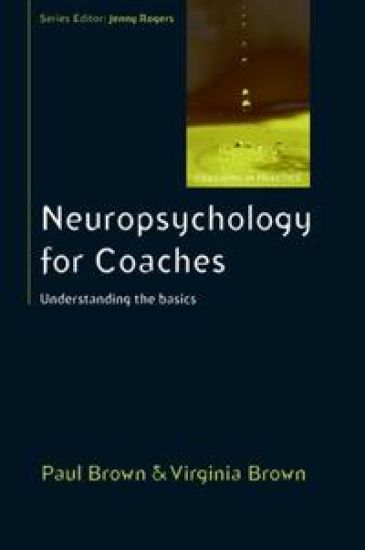
Neuropsychology for Coaches: Understanding the Basics

Neuropsychology for Coaches: Understanding the Basics

Paul Brown; Virginia Brown

Open University Press
2012
nidottu
Neuroscience is revolutionising coaching: it helps us understand the biological basis of our behaviour. This includes the behaviour of the coach and the client. This practical and much needed book explains basic brain functioning and offers a guide to using this knowledge to advance our coaching and make our practice more effective. It builds extensively on the fact that we do now know that feelings underly all decision-making and focuses coaching on helping clients establish intelligent emotions as the basis of their own decision systems. Using a systemic model of emotions, energy and change, Paul Brown and Virginia Brown show coaches how to integrate the client's life experience into coaching and create change. This is a must read for all practising coaches." This book is scattered with insightful, thought-provoking and occasionally beautiful analogies and metaphors, which any reader would be hard-pressed not to be challenged by. The (unrelated) Browns absolutely illustrate the importance for coaches of having an understanding of how the brain works." Coaching at Work, March 2013"The OU coaching series always provides a reliable read for the coach and this is no exception ... The authors have kept the neuroscience refreshingly simple, choosing to focus on key evidence based principles of relevance to coaching." The International Journal of Mentoring and Coaching, Volume X Issue 2, December 2012"This book is a delicious feast of neuroscience. Bravo!" Nancy Kline, President, Time To Think, UK“It’s rare to find an accessible, engaging book that combines current neuropsychological theory with working examples for executive coaching. At last here is one that brings the two together seamlessly." Linda Aspey, Managing Director, Coaching for Leaders“At last, a book that embeds the practice of coaching into what we know of how the brain works - rather than one that tells you about the brain, then leaves the coach to work it out; or one that tells you about techniques, then adds in the brain information as something of a 'P. S'." Ann James, Executive Coach / Director, Thinking Space"At long last, a rigorous book on neuropsychology that is both palatable and practically applicable for executive coaches." Dr Tara Swart, Neuroscientist, medical doctor and executive coach, Executive Performance Ltd.“Introducing the basic functioning of the brain, this book shows that humanity and high performance are indeed fraternal twins. A most useful guide!” Anette Prehn, MA in social science, brain-based executive coach (PCC), author of Play Your Brain"In a world of psuedo-theory and airport quick reads, Professor Paul Brown and Virginia Brown offer something most refreshing: hard science married with the intimate relationship between coach and executive." Dr. Christina L. Lafferty, National Defense University, Washington D. C, USA“Paul and Virginia Brown have done a great job in reviewing a lot of the burgeoning research and literature on Neuropsychology and making it accessible and useable by executive coaches in their work.” Peter Hawkins, Professor of Leadership at Henley Business School, founder and Chairman Emeritus of Bath Consultancy Group & co-founder of Centre for Supervision and Team Development, UK