Kirjojen hintavertailu – 12 859 819 kirjaa ja 27 kauppaa

Kirjailija

Paul Corthorn

Kirjat ja teokset yhdessä paikassa: 3 kirjaa, julkaisuja vuosilta 2007–2022, suosituimpiin kuuluu The British Labour Party and the Wider World. Vertaile teosten hintoja ja tarkista saatavuus suomalaisista kirjakaupoista.

3 kirjaa

Kirjojen julkaisuvuodet: 2007–2022.

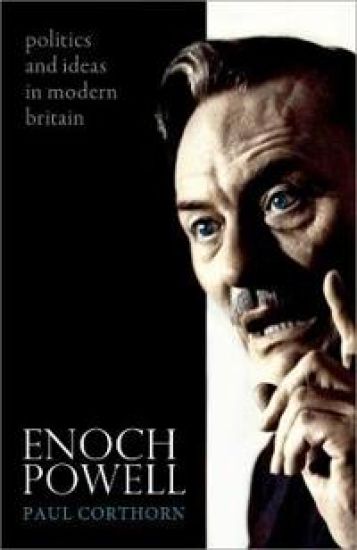
Enoch Powell

Enoch Powell

Paul Corthorn

Oxford University Press
2022
nidottu
Best known for his notorious 'Rivers of Blood' speech in 1968 and his outspoken opposition to immigration, Enoch Powell was one of the most controversial figures in British political life in the second half of the twentieth century and a formative influence on what came to be known as Thatcherism. Telling the story of Powell's political life from the 1950s onwards, Paul Corthorn's intellectual biography goes beyond a fixation on the 'Rivers of Blood' speech to bring us a man who thought deeply about - and often took highly unusual (and sometimes apparently contradictory) positions on - the central political debates of the post-1945 era: denying the existence of the Cold War (at one stage going so far as to advocate the idea of an alliance with the Soviet Union); advocating free-market economics long before it was fashionable, while remaining a staunch defender of the idea of a National Health Service; vehemently opposing British membership of the European Economic Community; arguing for the closer integration of Northern Ireland with the rest of the UK; and in the 1980s supporting the campaign for unilateral nuclear disarmament. In the process, Powell emerges as more than just a deeply divisive figure but as a seminal political intellectual of his time. Paying particular attention to the revealing inconsistencies in Powell's thought and the significant ways in which his thinking changed over time, Corthorn argues that Powell's diverse campaigns can nonetheless still be understood as a coherent whole, if viewed as part of a long-running, and wide-ranging, debate set against the backdrop of the long-term decline in Britain's international, military, and economic position in the decades after 1945.
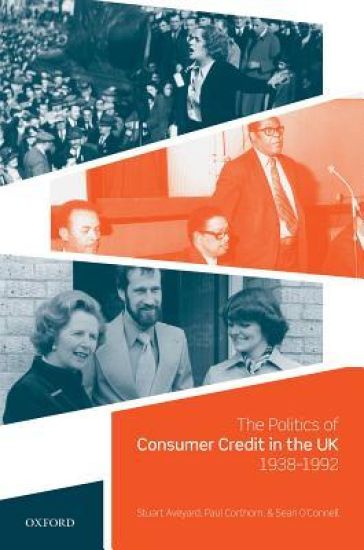
The Politics of Consumer Credit in the UK, 1938-1992

The Politics of Consumer Credit in the UK, 1938-1992

Stuart Aveyard; Paul Corthorn; Sean O'Connell

Oxford University Press
2018
sidottu
As early as the 1930s, Britain had a highly innovative and profitable mortgage sector that promoted a major extension in home ownership. These controversial and risky offerings had an equivalent in numerous hire purchase agreements, with which new homes were furnished. Such developments were forerunners of the 'easy credit' regime more commonly associated with the 1980s. Taking a long-term perspective on this issue indicates that Britain's departure from European models of consumer credit markets was not simply a by-product of neoliberalism's influence on the Thatcher administration, and this book offers a much fuller explanation to the phenomenon. It explores debates within and between the major political parties; reveals the infighting amongst civil service departments over management of consumer demand; charts the varying degrees of influence wielded by the Bank of England and finance capital, as opposed to that of consumer durable manufacturers; reviews the perspectives of consumers and their representatives; and explains the role of contingency and path dependency in these historical events. The central focus of this book is on consumer credit, but this subject provides a case study through which to explore numerous other important areas of British history. These include debates on the issues of post-war consensus, the impact of rising home ownership and its impact on consumer credit and personal finance markets, the management of consumer society, political responses to affluence, the development of consumer protection policy, and the influence of neoliberalism.
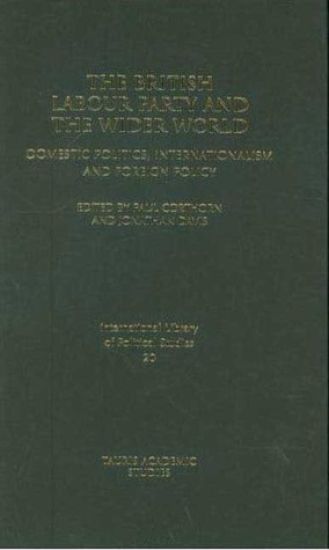
The British Labour Party and the Wider World

The British Labour Party and the Wider World

Paul Corthorn; Jonathan Davis

I.B. Tauris
2007
sidottu
Following Britain's - and specifically the Blair Government's - decision to support the United States in the war against Iraq, much has been written about the Labour party's international posture and perspectives. Yet very little serious academic analysis of Labour's stance towards the wider world has taken place among specialists. "The British Labour Party and the Wider World" examines how throughout the twentieth century Labour's international policies have been influenced by domestic politics, and how in turn world events and Labour's response to them have helped to change the party's ideology, political culture and domestic agenda from the 1920s up to the Iraq War. This is essential reading for anyone wanting to understand the motivations and influences behind the Labour Party's actions on the world stage, as well as students and researchers of British politics.