
Kirjojen hintavertailu – 12 903 725 kirjaa ja 27 kauppaa

Kirjailija

Paul D. Mueller

Kirjat ja teokset yhdessä paikassa: 2 kirjaa, julkaisuja vuosilta 2002–2020, suosituimpiin kuuluu The Politics of Cultural Differences. Vertaile teosten hintoja ja tarkista saatavuus suomalaisista kirjakaupoista.

2 kirjaa

Kirjojen julkaisuvuodet: 2002–2020.

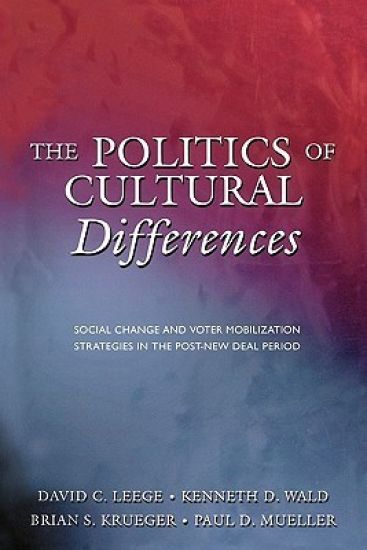
The Politics of Cultural Differences

The Politics of Cultural Differences

David C. Leege; Kenneth D. Wald; Brian S. Krueger; Paul D. Mueller

Princeton University Press
2002
pokkari
How did Republicans manage to hold the White House through much of the past half century even as the Democratic Party held the hearts of most American voters? The authors of this groundbreaking study argue that they did so by doing what Democrats have also excelled at: triggering psychological mechanisms that deepen cultural divisions in the other party's coalition, thereby leading many of its voters either to choose the opposing ticket or to stay home. The Politics of Cultural Differences is the first book to develop and carefully test a general theory of cultural politics in the United States, one that offers a compelling new perspective on America's changing political order and political conflict in the post-New Deal period (1960-1996). David Leege, Kenneth Wald, Brian Krueger, and Paul Mueller move beyond existing scholarship by formulating a theory of campaign strategies that emphasizes cultural conflict regarding patriotism, race, gender, and religion. Drawing on National Election Studies data, they find that Republican politicians deployed powerful symbols (e.g., "tax and spend liberals") to channel targeted voters toward the minority party. And as partisanship approached parity in the 1990s, Democratic leaders proved as adept at deploying their own symbols, such as "a woman's right to choose," to disassemble the Republican coalition. A blend of sophisticated theory and advanced empirical tools, this book lays bare the cultural dimensions of American political life.
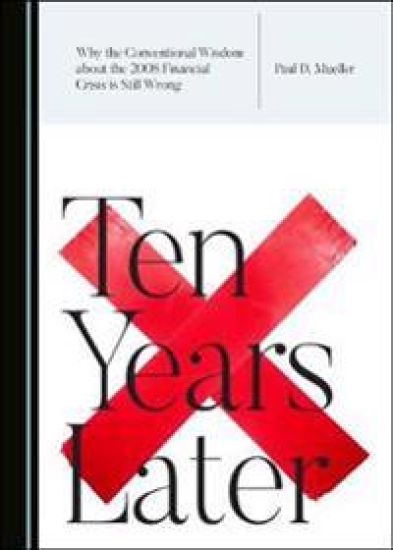
Why the Conventional Wisdom about the 2008 Financial Crisis is Still Wrong
Much of what has been heard, read, or taught about the 2008 financial crisis is incorrect. It was not caused by free market capitalism run amok. The crisis was not created by deregulatory zeal. It wasn’t primarily due to greed on Wall Street. The crisis was not simply created by people’s “irrational exuberance” or “animal spirits.” Perhaps most importantly, it did not require bailouts and thousands of pages of new regulations to fix. Instead, it came about because of significant market distortions created by government subsidies, misregulation, and perverse incentives. The conventional wisdom blames unbridled markets for mortgage fraud, imprudent risks, and extreme leverage in financial institutions. Policy makers told us that the failure of Lehman Brothers, and the near failure of American International Group and many large banks, would have resulted in catastrophic decline and perhaps another Great Depression. After the crisis, thousands of pages of new regulations were written to limit the types of risk banks can take and the kinds of investments they can make so that a financial crisis of this magnitude can’t happen again. But what if this conventional wisdom was wrong? If the problem wasn’t unregulated, unrestrained markets leading to fraud and excessive risk-taking, if instead it was perverted incentives and distorted market signals due to numerous regulations and mandates in the first place, then the thousands of new pages of regulations haven’t solved the fundamental problem. In fact, they have made it worse. This book shows that it is time to reassess the conventional wisdom. Perhaps there is still time to reverse the faulty solutions based upon it before another financial crisis breaks out.