Kirjojen hintavertailu – 12 903 735 kirjaa ja 27 kauppaa

Kirjailija

Paul Davis

Kirjat ja teokset yhdessä paikassa: 50 kirjaa, julkaisuja vuosilta 1988–2026, suosituimpiin kuuluu Dulwich: Mid-Century Oasis. Vertaile teosten hintoja ja tarkista saatavuus suomalaisista kirjakaupoista.

50 kirjaa

Kirjojen julkaisuvuodet: 1988–2026.

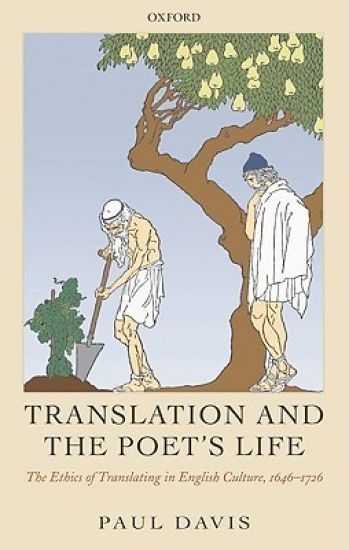
Translation and the Poet's Life

Translation and the Poet's Life

Paul Davis

Oxford University Press
2008
sidottu
Between the Civil War and the early decades of the eighteenth century, English poets of the first rank devoted more of their time and creative energies to translating than they had ever done before or have ever done since. Paul Davis's Translation and the Poet's Life is the first study to range across the entirety of this golden age of poetic translation in England, taking as its organizing principle and object of inquiry the significances of translating itself as a distinctive mode of imaginative conduct. Composed of case studies of the five leading poet-translators of the age - John Denham, Henry Vaughan, Abraham Cowley, John Dryden, and Alexander Pope - it explores the part translation played in their lives as poets and thence in modelling 'the poet's life' during what was a period of transition between early-modern and modern constructions of it. The argumentative method of the book is metaphorical. Each chapter explores the impact on the theory and practice of the poet at issue of a metaphor or group of metaphors broadly current in contemporary translation discourse: in particular, figurations of the translator as an exile, as a child, as a code-breaker, and as a slave; and comparisons of translation to friendship, sexual congress, metamorphosis and trade. The majority of these metaphors were wholly or potentially pejorative: translation remained a controversial practice throughout this period, widely depreciated and stigmatized. Turning translator accordingly forced the five major poets considered in Translation and the Poet's Life to undertake strenuous efforts of self-inquiry and self-presentation; to find new answers to questions integral to their understandings of themselves and their standing in their culture: questions about vocation and career, fame and happiness, responsibility and freedom. Translation and the Poet's Life tells the stories of these personal and public remakings.
Metaethics Explored

Metaethics Explored

Paul Davis

Humanities - Ebooks.co.uk
2008
pokkari
The book begins with an overview of metaethics and a rejection of the metaethics/normative ethics distinction. Chapter 1 also considers the strengths and limitations of the popular idea that morality is a set of rules for how we treat one another, pointing to the heart of the topic. Chapter 2 introduces the distinction between cognitivism and noncognitivism, and explains subjectivist, intersubjectivist, and objectivist accounts of the truth conditions of moral statements. Divine Command Theory and Kant's categorical imperatives, as in his Groundwork of the Metaphysic of Morals, are explained and considered. Chapters 3 and 4 consider the hostility, philosophical and popular, towards objectivist realism. This includes some discussion of David Hume's arguments in A Treatise of Human Nature and Enquiry Concerning the Principals of Morals, and of A. J. Ayer's emotivism. It is argued that the said hostility is unwarranted. Chapter 5 sketches a naturalist objectivism and suggests that the obstacles to its acceptance are typically grounded on spurious asymmetries between ethics and other disciplines.
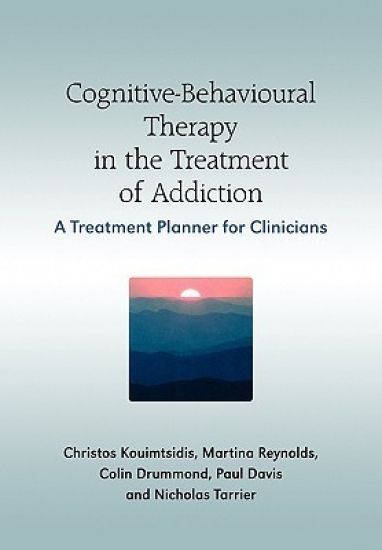
Cognitive-Behavioural Therapy in the Treatment of Addiction

Cognitive-Behavioural Therapy in the Treatment of Addiction

Christos Kouimtsidis; Paul Davis; Martine Reynolds; Colin Drummond; Nicholas Tarrier

John Wiley Sons Inc
2007
nidottu
Treating individuals with a substance misuse problem can be challenging, especially if clients present with multiple problems related to the main addiction. Clinicians can feel at a loss as to where to begin, or revert to an attempt to treat underlying problems - ignoring damaging aspects of the substance misuse itself. At times referral to specialists may seem the only responsible way forward. Written by a team of clinical academics in the field of addictions, Cognitive-Behavioural Therapy in the Treatment of Addictions is a ready reference for clinicians that offers a brief, evidence-based, collaborative approach that starts here and now. Client and therapist embark together on a journey to tackle the problem in a practical way. The book includes session tools, worksheets and daily thought records.
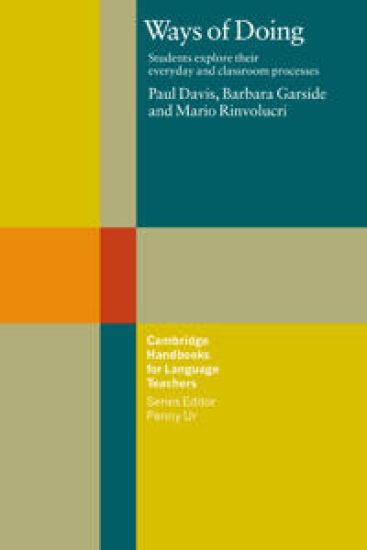
Ways of Doing

Ways of Doing

Paul Davis; Barbara Garside; Mario Rinvolucri

Cambridge University Press
1999
pokkari
Ways of Doing helps students discover how they do things, both inside and outside the classroom. Based largely on humanistic principles, this book provides over 100 activities designed to encourage students to think, speak and write in English about areas they may never have discussed in their mother tongue. Ways of Doing is a rich source of stimulating and easy-to-use lesson ideas requiring minimal preparation. The activities, which are suitable for a range of levels and ages, deal with the following areas: - examining the patterns and processes in students’ everyday life - exploring both the mother tongue and the foreign language - group dynamics - exploring and exploiting the coursebook - ways of learning - corection and feedback There is also a special teacher development section.
Dictation

Dictation

Paul Davis; Rinvolucri Mario

Cambridge University Press
1988
pokkari
This book contains a wealth of new techniques to extend the traditional language-learning activity of dictation. The authors present some thought-provoking answers to such apparently simple questions as: Who chooses the text? Who dictates? Who corrects? What and how do they correct? The activities range from traditional focuses on spelling and punctuation problems to exercise that emphasize personal attitudes and opinions of both teachers and students. Dictation provides: activities suitable for a wide range of levels and ages; example texts for many activities, with permission to copy; opportunities for students to create their own texts; a variety of suggested correction techniques; suggestions for using dictation in teacher training.