
Kirjojen hintavertailu – 12 868 752 kirjaa ja 27 kauppaa

Kirjailija

Paul Djupe

Kirjat ja teokset yhdessä paikassa: 2 kirjaa, julkaisuja vuodelta 2013, suosituimpiin kuuluu God Talk. Vertaile teosten hintoja ja tarkista saatavuus suomalaisista kirjakaupoista.

2 kirjaa

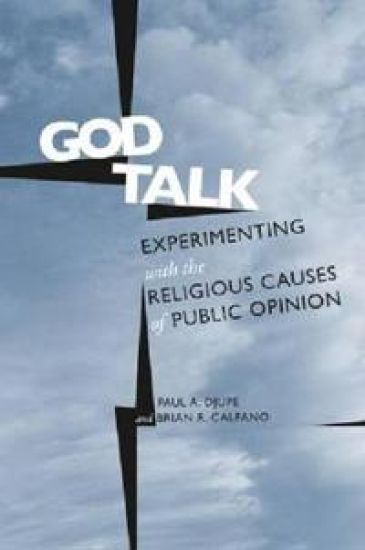
God Talk

God Talk

Paul Djupe; Brian Calfano

Temple University Press,U.S.
2013
pokkari
Religion’s influence on public opinion, politics, and candidates has been widely discussed in political science for a generation. God Talk isthe first volume that uses experimental methodology to establish whether and how that influence works. Paul Djupe and Brian Calfano provide an unprecedented look at how religious cues, values, and identity-driven appeals impact candidate selection, trust, interest group support, and U. S. public opinion about tolerance, the environment, foreign policy, and related issues. By situating their disparate, randomly assigned interventions within the broader framework of elite-based influence, the authors apply their new methodology to three questions: How do clergy affect congregation members? How are religious elites and groups and their public arguments evaluated? With what effect do political elites use religion? The results of their research provide a compelling framework for understanding the links between religion and politics. In the series The Social Logic of Politics, edited by Scott McClurg
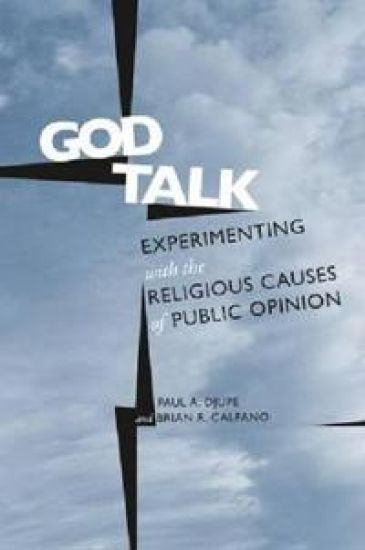
God Talk

God Talk

Paul Djupe; Brian Calfano

Temple University Press,U.S.
2013
sidottu
Religion’s influence on public opinion, politics, and candidates has been widely discussed in political science for a generation. God Talk isthe first volume that uses experimental methodology to establish whether and how that influence works. Paul Djupe and Brian Calfano provide an unprecedented look at how religious cues, values, and identity-driven appeals impact candidate selection, trust, interest group support, and U. S. public opinion about tolerance, the environment, foreign policy, and related issues. By situating their disparate, randomly assigned interventions within the broader framework of elite-based influence, the authors apply their new methodology to three questions: How do clergy affect congregation members? How are religious elites and groups and their public arguments evaluated? With what effect do political elites use religion? The results of their research provide a compelling framework for understanding the links between religion and politics. In the series The Social Logic of Politics, edited by Scott McClurg