Kirjojen hintavertailu – 12 903 725 kirjaa ja 27 kauppaa

Kirjailija

Paul Donovan

Kirjat ja teokset yhdessä paikassa: 16 kirjaa, julkaisuja vuosilta 2010–2027, suosituimpiin kuuluu The Complete Guide to Chicken Health. Vertaile teosten hintoja ja tarkista saatavuus suomalaisista kirjakaupoista.

16 kirjaa

Kirjojen julkaisuvuodet: 2010–2027.

The Complete Guide to Chicken Health
Chicken Biology and Behaviour is a comprehensive exploration of the biology and behaviour of chickens. The book provides an in-depth look at the fascinating world of chickens, covering topics such as their evolution, physiology, social behaviour, and communication. A valuable resource for researchers, students, anyone interested in poultry science, or keeps chickens, whether at a hobby or commercial level. The scope of the book encompasses various aspects of chicken biology, including: Physiological processes: digestion, reproduction, and growth. Behavioural patterns: social interactions, communication, and foraging behaviour. Evolutionary history: the origins and domestication of chickens.
Bosses Behaving Badly

Bosses Behaving Badly

Paul Donovan

Paul Donovan Consulting
2024
pokkari
WHY ARE SO MANY BOSSES JUST SO DIFFICULT TO WORK WITH, SCARY, INTIMIDATING OR JUST PLAIN IRRITATING? WHY DO YOU OR YOUR TEAMS OFTEN FEEL FLAT, DISENGAGED OR UNSAFE? And, if you are a boss or manager, how can you uplift others and create a truly high performing team that hums? A boss's power use is at the heart of all these issues, but it can also be the solution. Dr. Paul Donovan unpacks what makes bad bosses so upsetting, and how you can avoid the misuses of power that plague the workplace. He explains that most of our bosses are persistently anxious and while that anxiety remains unacknowledged, anxious bosses become bad bosses. In other words, they misuse their managerial power. The good news is that this is avoidable. Paul shows us how bosses can restore dignity, freedom and growth in the lives of those that report to them, and cultivate teams that exceed desired outcomes. Bosses Behaving Badly will help you avoid the disastrous "power paradox", and become a boss everyone wants to work with.
Profit and Prejudice

Profit and Prejudice

Paul Donovan

Routledge
2022
nidottu
Avoiding prejudice will be critical to economic success in the fourth industrial revolution. It is not the new and innovative technology that will matter in the next decade, but what we do with it. Using technology properly, with diverse decision making, is the difference between success and failure in a changing world. This will require putting the right person in the right job at the right time. Prejudice stops that happening. Profit and Prejudice takes us through the relationship between economic success and prejudice in labour markets. It starts with the major changes that occur in periods of economic upheaval. These changes tend to be unpopular and complex – and complexity encourages people to turn to the simplistic arguments of ‘scapegoat economics’ and prejudice. Some of the changes of the fourth industrial revolution will help fight prejudice, but some will make it far worse. The more prejudice there is, the harder it will be for companies and countries to profit from the changes ahead. Profit is not the main argument against prejudice, but can certainly help fight it. This book tells a story of the damage that prejudice can do. Using economics without jargon, students, investors and the public will be able to follow the narrative and see how prejudice can be opposed. Prejudice is bad for business and the economy. Profit and Prejudice explains why.
Profit and Prejudice

Profit and Prejudice

Paul Donovan

Routledge
2020
sidottu
Avoiding prejudice will be critical to economic success in the fourth industrial revolution. It is not the new and innovative technology that will matter in the next decade, but what we do with it. Using technology properly, with diverse decision making, is the difference between success and failure in a changing world. This will require putting the right person in the right job at the right time. Prejudice stops that happening. Profit and Prejudice takes us through the relationship between economic success and prejudice in labour markets. It starts with the major changes that occur in periods of economic upheaval. These changes tend to be unpopular and complex – and complexity encourages people to turn to the simplistic arguments of ‘scapegoat economics’ and prejudice. Some of the changes of the fourth industrial revolution will help fight prejudice, but some will make it far worse. The more prejudice there is, the harder it will be for companies and countries to profit from the changes ahead. Profit is not the main argument against prejudice, but can certainly help fight it. This book tells a story of the damage that prejudice can do. Using economics without jargon, students, investors and the public will be able to follow the narrative and see how prejudice can be opposed. Prejudice is bad for business and the economy. Profit and Prejudice explains why.
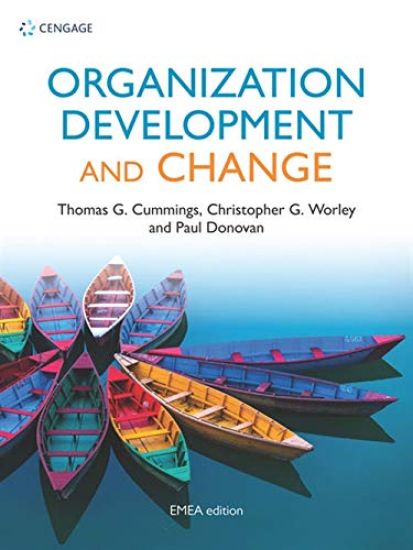
Organization Development and Change

Organization Development and Change

Thomas Cummings; Christopher Worley; Paul Donovan

Cengage Learning EMEA
2019
nidottu
Market-leading text Organization Development and Change provides students with an excellent grounding in the theoretical underpinnings of the subject as well as describing, in practical terms, how behavioural science can be used to develop organizational strategies, structures and processes. It will enrich students’ understanding and study of organization development, change management and human resources management. This is the first time the textbook has been adapted for Europe, South Africa and the Middle East. Therefore, all the core elements which have contributed to this popular textbook’s success are complemented by the inclusion of recent and relevant developments in the field pertinent to these regions, enabling students to fully relate to the topics discussed. This title is available with MindTap, a flexible online learning solution which features an interactive eReader, a wide range of assignments and quizzes as well as scenario-based questions and cases to further entrench key concepts, boost confidence, develop critical thinking skills and prepare students for the workplace, alongside analytics to help you track their progress.
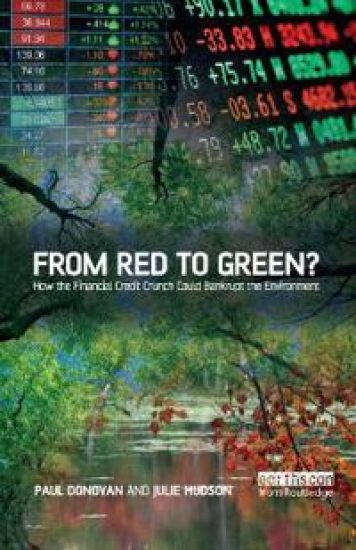
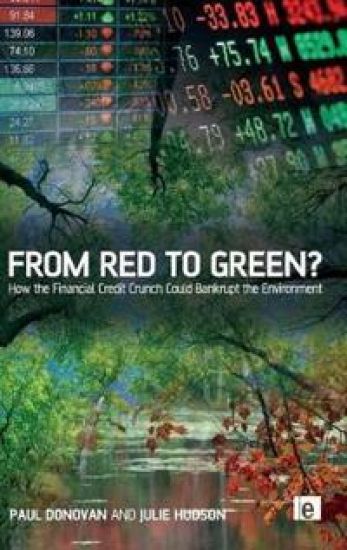
From Red to Green?

From Red to Green?

Paul Donovan; Julie Hudson

Routledge
2019
nidottu
Written by an economist and an investment professional, this book addresses the twin crises that the world is facing in the form of a simultaneous financial and environmental credit crunch. Financially, consumers are less able to consume now, and pay later. Environmentally, we may have already reached our credit limit and the bill for past financial and environmental consumption is falling due. Whether the financial credit crunch constrains consumers in a way that will be environmentally supportive, naturally slowing the consumption of finite resources, or hinders any effective resolution of the environmental credit crunch is of crucial importance. Policy responses to the financial crisis are likely to be constrained by the political need to support the economic status quo, and when combined with a global reduction in available investment capital there are serious challenges ahead if the economic and environmental damage of the environmental credit crunch is to be minimised. This book asks whether financial crunch-induced changes in consumer behaviour will be enough to avoid, or reduce, the environmental crunch many believe is just round the corner. Donovan and Hudson combine their respective economic and environmental perspectives to address this key question, reviewing this 'tale of two crunches' from the perspective of different economic sectors. The answer to the conundrum this book poses may lie in the only unlimited resource on the planet - human ingenuity.
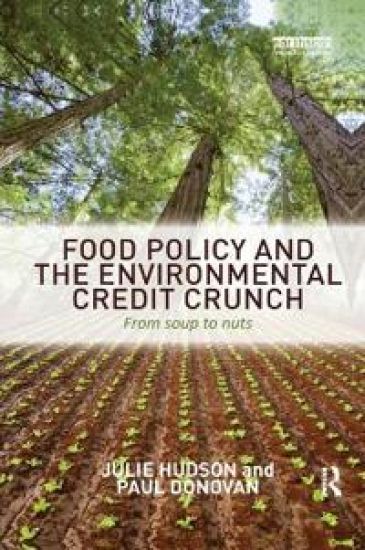
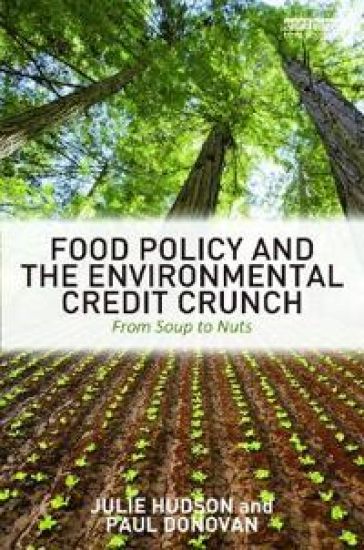
Food Policy and the Environmental Credit Crunch

Food Policy and the Environmental Credit Crunch

Julie Hudson; Paul Donovan

Routledge
2018
nidottu
The changing economic environment for the consumer that is emerging from the wreckage of the financial credit crunch plays directly into the importance of food spending. This is certainly true from the perspective of food prices in the short run, but also from the perspective of sustainability and reducing the impact of the environmental credit crunch. The economic changes we experience now have a bearing on our ability to manage the environmental credit crunch that looms. Food Policy and the Environmental Credit Crunch: From Soup to Nuts elaborates on the issues addressed in the authors’ first book, From Red to Green?,and asks whether the financial credit crunch could ameliorate or exacerbate the emergent environmental credit crunch. The conclusion drawn here is that a significant and positive difference could be made by changing some of the ways in which we procure, prepare, and consume our food. Written by an economist and an investment professional, this book addresses the economic and environmental implications of how we treat food. The book examines each aspect of the ‘food chain’, from agriculture, to production and processing, retail, preparation, consumption and waste.
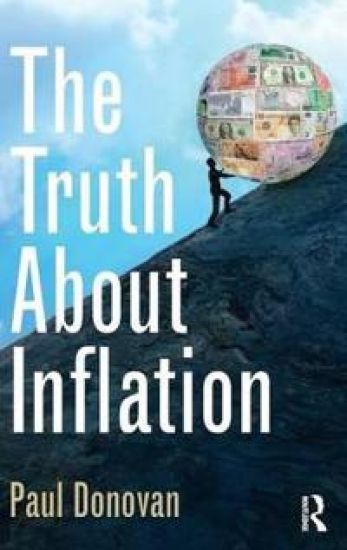
The Truth About Inflation

The Truth About Inflation

Paul Donovan

Routledge
2015
sidottu
Inflation is a simple topic, in that the basic concepts are something that everyone can understand. However, inflation is not a simplistic topic. The composition of inflation and what the different inflation measures try to represent cannot be summarised with a single line on a chart or a casual reference to a solitary data point. Investors very often fail to understand the detail behind inflation, and end up making bad investment decisions as a result. The Truth About Inflation does not set out to forecast inflation, but to help improve its understanding, so that investors can make better decisions to achieve the real returns that they need. Starting with a summary of long history of inflation, the drivers of price change are considered. Many of the "urban myths" that have built up about inflation are shown to be a consequence of irrational judgement or political scaremongering. Some behaviour, like the unhealthy veneration of gold as a means of inflation protection, is shown to be the result of historical accident. In the modern era of lower nominal investment returns, inflation inequality (whereby some groups experience persistently higher inflation than others) is a very important consideration. This book sets out the realities of price changes in the modern investing environment, without using economic equations or jargon. It gives investors the framework they need to think about inflation and how to protect themselves against it, whether the aggregate inflation of the future rises or falls from current levels.
Food Policy and the Environmental Credit Crunch

Food Policy and the Environmental Credit Crunch

Julie Hudson; Paul Donovan

Routledge
2013
sidottu
The changing economic environment for the consumer that is emerging from the wreckage of the financial credit crunch plays directly into the importance of food spending. This is certainly true from the perspective of food prices in the short run, but also from the perspective of sustainability and reducing the impact of the environmental credit crunch. The economic changes we experience now have a bearing on our ability to manage the environmental credit crunch that looms. Food Policy and the Environmental Credit Crunch: From Soup to Nuts elaborates on the issues addressed in the authors’ first book, From Red to Green?,and asks whether the financial credit crunch could ameliorate or exacerbate the emergent environmental credit crunch. The conclusion drawn here is that a significant and positive difference could be made by changing some of the ways in which we procure, prepare, and consume our food. Written by an economist and an investment professional, this book addresses the economic and environmental implications of how we treat food. The book examines each aspect of the ‘food chain’, from agriculture, to production and processing, retail, preparation, consumption and waste.
From Red to Green?

From Red to Green?

Paul Donovan; Julie Hudson

Earthscan Ltd
2011
sidottu
Written by an economist and an investment professional, this book addresses the twin crises that the world is facing in the form of a simultaneous financial and environmental credit crunch. Financially, consumers are less able to consume now, and pay later. Environmentally, we may have already reached our credit limit and the bill for past financial and environmental consumption is falling due. Whether the financial credit crunch constrains consumers in a way that will be environmentally supportive, naturally slowing the consumption of finite resources, or hinders any effective resolution of the environmental credit crunch is of crucial importance. Policy responses to the financial crisis are likely to be constrained by the political need to support the economic status quo, and when combined with a global reduction in available investment capital there are serious challenges ahead if the economic and environmental damage of the environmental credit crunch is to be minimised. This book asks whether financial crunch-induced changes in consumer behaviour will be enough to avoid, or reduce, the environmental crunch many believe is just round the corner. Donovan and Hudson combine their respective economic and environmental perspectives to address this key question, reviewing this 'tale of two crunches' from the perspective of different economic sectors. The answer to the conundrum this book poses may lie in the only unlimited resource on the planet - human ingenuity.
Man of God

Man of God

Paul Donovan

Lulu.com
2010
pokkari
An intriguing narrative set in Melbourne, Man of God follows the life and adventures of its protagonist, Vincent Orion, who is a councillor for the fictional city of Princeton. As the story unfolds the reader perceives a critical view of local government in Victoria. Councillors are presented as corrupt, inept, or dishonest - or all three. They are interested in free meals, the hospitality, the perks of office and the petty power that being a councillor provides them. Vincent tries to be upright in this immoral sphere but finds himself increasingly drawn into a spiral of deceit, lies and corruption.