Kirjojen hintavertailu – 12 859 828 kirjaa ja 27 kauppaa

Kirjailija

Paul E. Minnis

Kirjat ja teokset yhdessä paikassa: 14 kirjaa, julkaisuja vuosilta 1985–2026, suosituimpiin kuuluu The Prehispanic Ethnobotany of Paquimé and Its Neighbors. Vertaile teosten hintoja ja tarkista saatavuus suomalaisista kirjakaupoista.

14 kirjaa

Kirjojen julkaisuvuodet: 1985–2026.

The Prehispanic Ethnobotany of Paquimé and Its Neighbors

The Prehispanic Ethnobotany of Paquimé and Its Neighbors

Paul E. Minnis; Michael E. Whalen

University of Arizona Press
2026
nidottu
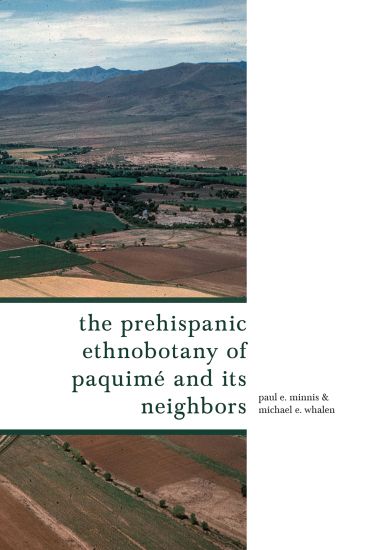
Paquimé (also known as Casas Grandes) and its antecedents are important and interesting parts of the prehispanic history in northwestern Mexico and the U. S. Southwest. Not only is there a long history of human occupation, but Paquimé is one of the better examples of centralized influence. Unfortunately, it is also an understudied region compared to the U. S. Southwest and other places in Mesoamerica. This volume is the first large-scale investigation of the prehispanic ethnobotany of this important ancient site and its neighbors. The authors examine ethnobotanical relationships during Medio Period, AD 1200–1450, when Paquimé was at its most influential. Based on two decades of archaeological research, this book examines uses of plants for food, farming strategies, wood use, and anthropogenic ecology. The authors show that the relationships between plants and people are complex, interdependent, and reciprocal. This volume documents ethnobotanical relationships and shows their importance to the development of the PaquimÉ polity. How ancient farmers made a living in an arid to semi-arid region and the effects their livelihood had on the local biota, their relations with plants, and their connection with other peoples is worthy of serious study. The story of the Casas Grandes tradition holds valuable lessons for humanity.
Reframing Paquimé

Reframing Paquimé

Michael E. Whalen; Paul E. Minnis

University of Arizona Press
2025
sidottu
Reframing Paquimé : Community Formation in Northwest Chihuahua is a groundbreaking reinterpretation of the Casas Grandes region by scholars Michael E. Whalen and Paul E. Minnis. This final installment in their comprehensive study challenges the dominant view of Paquimé as a hierarchical society founded by outsiders, presenting instead a compelling case for a largely locally organized society with Mesoamerican and Puebloan characteristics. Drawing on twenty-five years of extensive survey and excavation data, the authors offer a fresh perspective that reframes our understanding of this remarkable archaeological site. Whalen and Minnis bring forth significant new data that illuminates the cultural and ecological history of Paquimé and its neighboring communities. The book features more than fifty new radiocarbon dates, hundreds of analyzed archaeobotanical and faunal samples, plus tens of thousands of other artifacts. The data reveal a network of settlements characterized by corporate and ritual-based authority, challenging traditional models of the center's rise, collapse, and subsequent regional abandonment and arguing that aspects of the Paquimé culture continued to exist up to the Spanish Colonial period. Reframing Paquimé is poised to become an essential reference for archaeologists interested in Northwest Mexico and the U. S. Southwest. By addressing the complex dynamics of community formation and dissolution, Whalen and Minnis provide invaluable insights that will ignite scholarly debate and inspire future research. This meticulously researched volume, authored by leading experts with decades of fieldwork experience, is a vital addition to any collection on the archaeology and ethnobotany of ancient North American societies.
The Neighbors of Casas Grandes

The Neighbors of Casas Grandes

Michael E. Whalen; Paul E. Minnis

University of Arizona Press
2025
nidottu
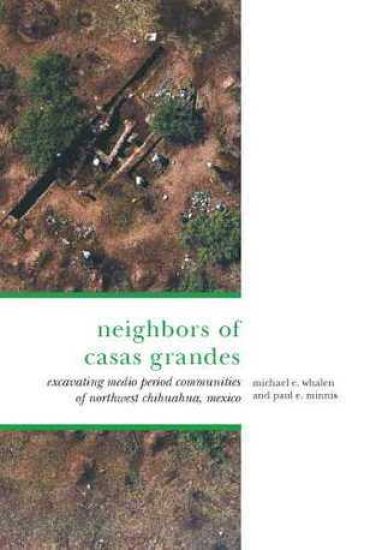
Casas Grandes, or Paquimé , in northwestern Mexico was of one of the few socially complex prehistoric civilizations in North America. Now, based on more than a decade of surveys, excavations, and field work, Michael Whalen and Paul Minnis provide a comprehensive new look at Casas Grandes and its surrounding communities in The Neighbors of Casas Grandes. This volume provides a fascinating and detailed look into the culture of the Casas Grandes area, involving not just the research of the architecture and artifacts left behind but also the ecology of the area. The authors' research reveals the complex relationship Casas Grandes had with its neighbors, varying from very direct contact with some communities to more indirect links with others. Important internal influences on the area's development come to light and population sizes throughout the period demonstrate the absorption of the surrounding populations into Casas Grandes as it reached the peak of its power in the region. New discoveries suggest the need to revise the previously held beliefs about the age of Casas Grandes and the dates of its rise to power. This ancient civilization may have developed as early as 8 AD. Such breakthroughs provide fresh insight about not only Casas Grandes but the nearby settlements as well. The Neighbors of Casas Grandes is an important and vital piece of primary field research for all those interested in the Southwest's archaelogy and history. Its contribution to the knowledge of the Casas Grandes region is monumental in helping us better understand the society that once flourished there.
Plants for Desperate Times

Plants for Desperate Times

Paul E. Minnis; Robert Freedman

University of Arizona Press
2024
sidottu

Halvin toimitettuna 102,40 €

Famines and other serious food shortages have been one of the scourges faced by humanity for millennia. Plants for Desperate Times is an introduction to the diversity of plant foods that have saved millions of lives during lethal food shortages. While not a field guide, it addresses questions about what famine foods are and why they are important. The work highlights one hundred plants. Each entry includes the common and scientific names, botanical family, distribution, use as a famine food and other uses, and nutritional information. The species come from across the botanical kingdom, demonstrating the diversity of life-saving plants and the human ingenuity of making what might seem to be inedible plants edible. Unexpectedly, important famine foods include alternative uses of important crops as well as native plants. Beyond a study of famine foods, the authors share why keeping an inventory of plant foods of last resort is so important. They help to build an understanding of little-known and underappreciated foods that may have a greater role in provisioning humanity in the future. As much as we may hope that severe food scarcity will never occur again, history suggests otherwise, and Plants for Desperate Times provides invaluable documentation of these vital foods.
Plants for Desperate Times

Plants for Desperate Times

Paul E. Minnis; Robert Freedman

University of Arizona Press
2024
nidottu
Famines and other serious food shortages have been one of the scourges faced by humanity for millennia. Plants for Desperate Times is an introduction to the diversity of plant foods that have saved millions of lives during lethal food shortages. While not a field guide, it addresses questions about what famine foods are and why they are important. The work highlights one hundred plants. Each entry includes the common and scientific names, botanical family, distribution, use as a famine food and other uses, and nutritional information. The species come from across the botanical kingdom, demonstrating the diversity of life-saving plants and the human ingenuity of making what might seem to be inedible plants edible. Unexpectedly, important famine foods include alternative uses of important crops as well as native plants. Beyond a study of famine foods, the authors share why keeping an inventory of plant foods of last resort is so important. They help to build an understanding of little-known and underappreciated foods that may have a greater role in provisioning humanity in the future. As much as we may hope that severe food scarcity will never occur again, history suggests otherwise, and Plants for Desperate Times provides invaluable documentation of these vital foods.
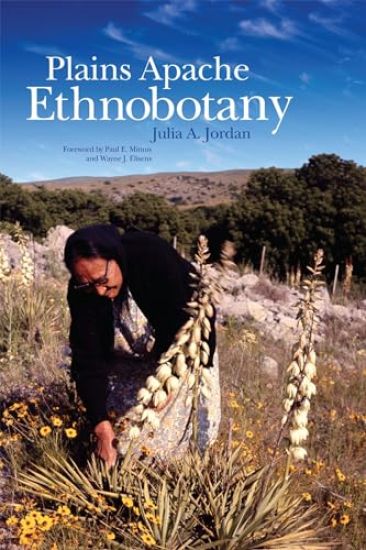
Plains Apache Ethnobotany

Plains Apache Ethnobotany

Julia A. Jordan; Paul E. Minnis; Wayne J. Elisens

UNIVERSITY OF OKLAHOMA PRESS
2024
nidottu
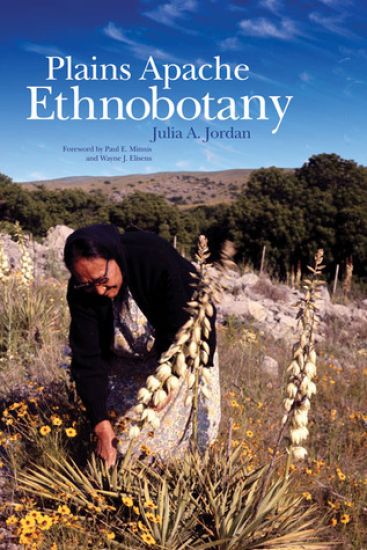
One tribe’s traditional knowledge of plants, presented for the first time Residents of the Great Plains since the early 1500s, the Apache people were well acquainted with the native flora of the region. In Plains Apache Ethnobotany, Julia A. Jordan documents more than 110 plant species valued by the Plains Apache and preserves a wealth of detail concerning traditional Apache collection, preparation, and use of these plant species for food, medicine, ritual, and material culture. The traditional Apache economy centered on hunting, gathering, and trading with other tribes. Throughout their long history the Apache lived in or traveled to many different parts of the plains, gaining an intimate knowledge of a wide variety of plant resources. Part of this traditional knowledge, especially that pertaining to plants of Oklahoma, has been captured here by Jordan’s fieldwork, conducted with elders of the Apache Tribe of Oklahoma in the mid-1960s, a time when much traditional knowledge was being lost. Plains Apache Ethnobotany is the most comprehensive ethnobotanical study of a southern plains tribe. Handsomely illustrated, this book is a valuable resource for ethnobotanists, anthropologists, historians, and anyone interested in American Indian use of native plants.
Famine Foods

Famine Foods

Paul E. Minnis

University of Arizona Press
2021
nidottu
How people eat today is a record of food use through the ages - and not just the decadent, delicious foods but the less glamorous and often life-saving foods from periods of famine as well. In Famine Foods, Paul E. Minnis focuses on the myriad plants that have sustained human populations throughout the course of history, unveiling the those that people have consumed, and often still consume, to avoid starvation. For the first time, this book offers a fascinating overview of famine foods - how they are used, who uses them, and, perhaps most importantly, why they may be critical to sustain human life in the future. In addition to a broader discussion of famine foods, Minnis includes fourteen short case studies that examine the use of alternative foods in human societies throughout the world, from hunter-gatherers to major nations. When environmental catastrophes, war, corrupt governments, annual hunger seasons, and radical agricultural policies have threatened to starve populations, cultural knowledge and memories of food shortages have been crucial to the survival of millions of people. Famine Foods dives deeply into the cultural contexts of famine food use, showing the curious, strange, and often unpleasant foods people have turned to in order to get by. There is not a single society or area of the world that is immune to severe food shortages, and gaining a deeper knowledge of famine foods will be relevant for the foreseeable future of humanity.
The Prehispanic Ethnobotany of Paquimé and Its Neighbors

The Prehispanic Ethnobotany of Paquimé and Its Neighbors

Paul E. Minnis; Michael E. Whalen

University of Arizona Press
2020
sidottu
PaquimÉ (also known as Casas Grandes) and its antecedents are important and interesting parts of the prehispanic history in northwestern Mexico and the U. S. Southwest. Not only is there a long history of human occupation, but PaquimÉ is one of the better examples of centralized influence. Unfortunately, it is also an understudied region compared to the U. S. Southwest and other places in Mesoamerica. This volume is the first large-scale investigation of the prehispanic ethnobotany of this important ancient site and its neighbors. The authors examine ethnobotanical relationships during Medio Period, AD 1200 - 1450, when PaquimÉ was at its most influential. Based on two decades of archaeological research, this book examines uses of plants for food, farming strategies, wood use, and anthropogenic ecology. The authors show that the relationships between plants and people are complex, interdependent, and reciprocal. This volume documents ethnobotanical relationships and shows their importance to the development of the PaquimÉ polity. How ancient farmers made a living in an arid to semi-arid region and the effects their livelihood had on the local biota, their relations with plants, and their connection with other peoples is worthy of serious study. The story of the Casas Grandes tradition holds valuable lessons for humanity.
Ethnobiology for the Future

Ethnobiology for the Future

Paul E. Minnis

University of Arizona Press
2016
nidottu
Ethnobiology holds a special place in the hearts and minds of many because of its dedication to celebrating the knowledge and values of some of the most distinctive cultural practices in some of the most distinctive places on Earth. Yet we live in a world of diminishing natural and linguistic diversity. Whether due to climate change or capitalism, homogeneity is trumping the once-resplendent heterogeneity all around us. In this important new collection, Gary Paul Nabhan puts forth a call for the future not only of ethnobiology but for the entire planet. He articulates and broadens the portfolio of ethnobiological principles and amplifies the tool kit for anyone engaged in the ethnobiosphere, those vital spaces of intense interaction among cultures, habitats, and creatures. The essays are grouped into a trio of themes. The first group presents the big questions facing humanity, the second profiles tools and methodologies that may help to answer those questions, and the third ponders how to best communicate these issues not merely to other scholars, but to society at large. The essays attest to the ways humans establish and circumscribe their identities not only through their thoughts and actions, but also with their physical, emotional, and spiritual attachments to place, flora, fauna, fungi, and feasts. Nabhan and his colleagues from across disciplines and cultures encourage us to be courageous enough to include ethical, moral, and even spiritual dimensions in work regarding the fate of biocultural diversity. The essays serve as cairns on the critical path toward an ethnobiology that is provocative, problem-driven, and, above all, inspiring.
The Neighbors of Casas Grandes

The Neighbors of Casas Grandes

Michael E. Whalen; Paul E. Minnis

University of Arizona Press
2009
sidottu
Casas Grandes, or Paquime, in northwestern Mexico was of one of the few socially complex prehistoric civilizations in North America. Now, based on more than a decade of surveys, excavations, and field work, Michael Whalen and Paul Minnis provide a comprehensive new look at Casas Grandes and its surrounding communities in The Neighbors of Casas Grandes. This volume provides a fascinating and detailed look into the culture of the Casas Grandes area, involving not just the research of the architecture and artifacts left behind but also the ecology of the area. The authors? research reveals the complex relationship Casas Grandes had with its neighbors, varying from very direct contact with some communities to more indirect links with others. Important internal influences on the area's development come to light and population sizes throughout the period demonstrate the absorption of the surrounding populations into Casas Grandes as it reached the peak of its power in the region. New discoveries suggest the need to revise the previously held beliefs about the age of Casas Grandes and the dates of its rise to power. This ancient civilization may have developed as early as 1180 AD. Such breakthroughs provide fresh insight about not only Casas Grandes but the nearby settlements as well. The Neighbors of Casas Grandes is an important and vital piece of primary field research for all those interested in the Southwest's archaelogy and history. Its contribution to the knowledge of the Casas Grandes region is monumental in helping us better understand the society that once flourished there.
Plains Apache Ethnobotany

Plains Apache Ethnobotany

Julia A. Jordan; Paul E. Minnis; Wayne J. Elisens

University of Oklahoma Press
2008
sidottu
One tribe's traditional knowledge of plants, presented for the first timeResidents of the Great Plains since the early 1500s, the Apache people were well acquainted with the native flora of the region. In Plains Apache Ethnobotany, Julia A. Jordan documents more than 110 plant species valued by the Plains Apache and preserves a wealth of detail concerning traditional Apache collection, preparation, and use of these plant species for food, medicine, ritual, and material culture. The traditional Apache economy centered on hunting, gathering, and trading with other tribes. Throughout their long history the Apache lived in or traveled to many different parts of the plains, gaining an intimate knowledge of a wide variety of plant resources. Part of this traditional knowledge, especially that pertaining to plants of Oklahoma, has been captured here by Jordan's fieldwork, conducted with elders of the Apache Tribe of Oklahoma in the mid-1960s, a time when much traditional knowledge was being lost. Plains Apache Ethnobotany is the most comprehensive ethnobotanical study of a southern plains tribe. Handsomely illustrated, this book is a valuable resource for ethnobotanists, anthropologists, historians, and anyone interested in American Indian use of native plants.
The Origins of Agriculture

The Origins of Agriculture

Gary William Crawford; R.W. Dennell; Jack R. Harlan; Emily McClung de Tapia; Naomi Miller; Paul E. Minnis; Deborah M. Pearsall; Bruce D. Smith

The University of Alabama Press
2006
nidottu
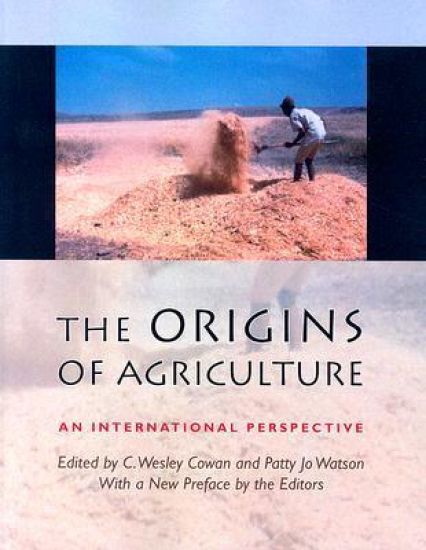
The eight case studies in this book -- each a synthesis of available knowledge about the origins of agriculture in a specific region of the globe -- enable scholars in diverse disciplines to examine humanity's transition to agricultural societies. Contributors include: Gary W. Crawford, Robin W. Dennell, and JackR. Harlan.
Ethnobotany

Ethnobotany

Paul E. Minnis

University of Oklahoma Press
2000
nidottu
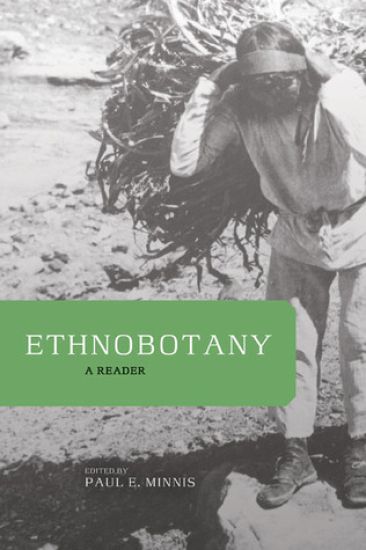
This reader in ethnobotany includes fourteen chapters organized in four parts. Paul Minnis provides a general introduction; the authors of the section introductions are Catherine S. Foeler (ethnoecology), Cecil H. Brown (folk classification), Timothy Jones (foods and medicines), and Richard I. Ford (agriculture). Ethnobotany: A Reader is intended for use as a textbook in upper division undergraduate and graduate courses in economic botany, ethnobotany, and human ecology. The book brings together for the first time previously published journal articles that provide diverse perspectives on a wide variety of topics in ethnobotany. Contributors include: Janis B. Alcorn, M. Kat Anderson, Stephen B. Brush, Robert A. Bye, George F. Estabrook, David H. French, Eugene S. Hunn, Charles F. Hutchinson, Eric Mellink, Paul E. Minnis, Brian Morris, Gary P. Nabhan, Amadeo M. Rea, Karen L. Reichhardt, Jan Timbrook, Nancy J. Turner, and Robert A. Voeks.
Social Adaptation to Food Stress

Social Adaptation to Food Stress

Paul E. Minnis

University of Chicago Press
1985
nidottu
Combining anthropology, archeology, and evolutionary theory, Paul E. Minnis develops a model of how tribal societies deal with severe food shortages. While focusing on the prehistory of the Rio Mimbres region of New Mexico, he provides comparative data from the Fringe Enga of New Guinea, the Tikopia of Tikopia Island, and the Gwembe Tonga of South Africa. Minnis proposes that, faced with the threat of food shortages, nonstratified societies survive by employing a series of responses that are increasingly effective but also are increasingly costly and demand increasingly larger cooperative efforts. The model Minnis develops allows him to infer, from evidence of such factors as population size, resource productivity, and climate change, the occurrence of food crises in the past. Using the Classic Mimbres society as a test case, he summarizes the regional archeological sequence and analyzes the effects of environmental fluctuations on economic and social organization. He concludes that the responses of the Mimbres people to their burgeoning population were inadequate to prevent the collapse of the society in the late twelfth century. In its illumination of the general issue of responses to food shortages, Social Adaptation to Food Stress will interest not only archeologists but also those concerned with current food shortages in the Third World. Cultural ecologists and human geographers will be able to derive a wealth of ideas, methods, and data from Minnis's work.