Kirjailija
Paul Elmer More
Kirjat ja teokset yhdessä paikassa: 56 kirjaa, julkaisuja vuosilta 2004–2026, suosituimpiin kuuluu Shelburne Essays. Vertaile teosten hintoja ja tarkista saatavuus suomalaisista kirjakaupoista.
56 kirjaa
Kirjojen julkaisuvuodet: 2004–2026.
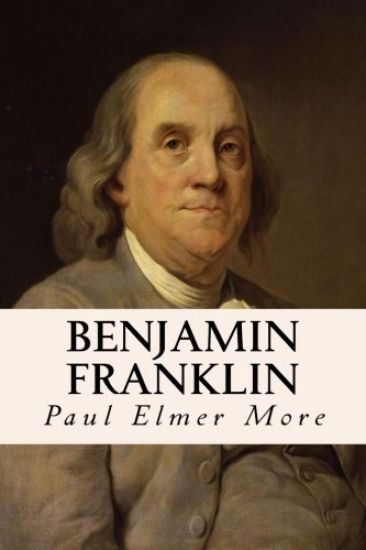
Benjamin Franklin, by Paul Elmer More, is a classic biography of the great American statesman and inventor, Ben Franklin. Benjamin Franklin FRS FRSE (January 17, 1706 O. S. January 6, 1705] 1] - April 17, 1790) was an American polymath and one of the Founding Fathers of the United States. Franklin was a leading author, printer, political theorist, politician, freemason, postmaster, scientist, inventor, humorist, civic activist, statesman, and diplomat. As a scientist, he was a major figure in the American Enlightenment and the history of physics for his discoveries and theories regarding electricity. As an inventor, he is known for the lightning rod, bifocals, and the Franklin stove, among other inventions. 2] He founded many civic organizations, including Philadelphia's fire department and the University of Pennsylvania. Franklin earned the title of "The First American" for his early and indefatigable campaigning for colonial unity, initially as an author and spokesman in London for several colonies. As the first United States Ambassador to France, he exemplified the emerging American nation. 4] Franklin was foundational in defining the American ethos as a marriage of the practical values of thrift, hard work, education, community spirit, self-governing institutions, and opposition to authoritarianism both political and religious, with the scientific and tolerant values of the Enlightenment. In the words of historian Henry Steele Commager, "In a BenFranklin could be merged the virtues of Puritanism without its defects, the illumination of the Enlightenment without its heat." 5] To Walter Isaacson, this makes Franklin "the most accomplished American of his age and the most influential in inventing the type of society America would become." Ben Franklin became a successful newspaper editor and printer in Philadelphia, the leading city in the colonies, publishing the Pennsylvania Gazette at the age of 23. He became wealthy publishing this and Poor Richard's Almanack, which he authored under the pseudonym "Richard Saunders". After 1767, he was associated with the Pennsylvania Chronicle, a newspaper that was known for its revolutionary sentiments and criticisms of British policies. He pioneered and was first president of Academy and College of Philadelphia which opened in 1751 and later became the University of Pennsylvania. He organized and was the first secretary of the American Philosophical Society and was elected president in 1769. Ben Franklin became a national hero in America as an agent for several colonies when he spearheaded an effort in London to have the Parliament of Great Britain repeal the unpopular Stamp Act. An accomplished diplomat, he was widely admired among the French as American minister to Paris and was a major figure in the development of positive Franco-American relations. His efforts proved vital for the American Revolution in securing shipments of crucial munitions from France. He was promoted to deputy postmaster-general for the British colonies in 1753, having been Philadelphia postmaster for many years, and this enabled him to set up the first national communications network. During the Revolution, he became the first United States Postmaster General. He was active in community affairs and colonial and state politics, as well as national and international affairs. From 1785 to 1788, he served as governor of Pennsylvania. He initially owned and dealt in slaves but, by the 1750s, he argued against slavery from an economic perspective and became one of the most prominent abolitionists.
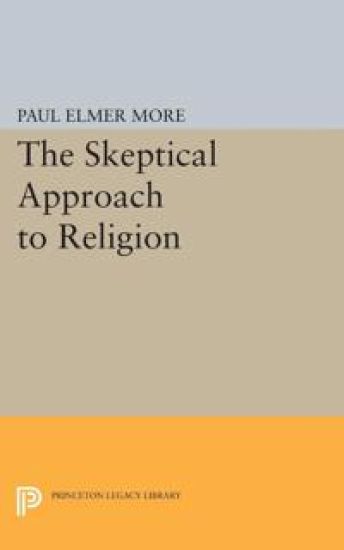
This beautifully expressed and carefully developed approach to religious belief, has been called, "an invaluable contribution to the treasury of Christian thought" (Living Church), and "the finest rational approach to religious belief I have ever read." (William Lyon Phelps). Originally published in 1934. The Princeton Legacy Library uses the latest print-on-demand technology to again make available previously out-of-print books from the distinguished backlist of Princeton University Press. These editions preserve the original texts of these important books while presenting them in durable paperback and hardcover editions. The goal of the Princeton Legacy Library is to vastly increase access to the rich scholarly heritage found in the thousands of books published by Princeton University Press since its founding in 1905.

Academy Papers: Addresses on Language Problems by Members of the American Academy of Arts and Letters
Robert Underwood Johnson; Paul Elmer More; William Crary Brownell
Literary Licensing, LLC
2011
nidottu