Kirjailija
Paul F. Bradshaw
Kirjat ja teokset yhdessä paikassa: 24 kirjaa, julkaisuja vuosilta 2001–2023, suosituimpiin kuuluu Rites of Ordination. Vertaile teosten hintoja ja tarkista saatavuus suomalaisista kirjakaupoista.
Nimi esiintyy myös muodoissa: Paul F Bradshaw
24 kirjaa
Kirjojen julkaisuvuodet: 2001–2023.
Eucharistic Origins was published a number of years ago. This revised edition continues to incorporate the work of the latest liturgical scholars in establishing that the earliest Christian celebrations arose out of varied forms of their ritual meals, and not out of the Last Supper. The custom of centering Christian practice in ritual meals seems to have lasted for about one hundred and fifty years before it began to be replaced by morning meetings at which the sacrament was distributed, and subsequently by a complete celebration of the Eucharist. It is here, in the third and fourth centuries, and not in the distant Jewish past, that the forms of the classical eucharistic prayers emerged and developed. The most important of these are presented in full, and their theology discussed.
Eucharistic Origins, Revised Edition
Paul F Bradshaw
Cascade Books
2023
pokkari
Halvin toimitettuna 27,60 €
Eucharistic Origins was published a number of years ago. This revised edition continues to incorporate the work of the latest liturgical scholars in establishing that the earliest Christian celebrations arose out of varied forms of their ritual meals, and not out of the Last Supper. The custom of centering Christian practice in ritual meals seems to have lasted for about one hundred and fifty years before it began to be replaced by morning meetings at which the sacrament was distributed, and subsequently by a complete celebration of the Eucharist. It is here, in the third and fourth centuries, and not in the distant Jewish past, that the forms of the classical eucharistic prayers emerged and developed. The most important of these are presented in full, and their theology discussed.
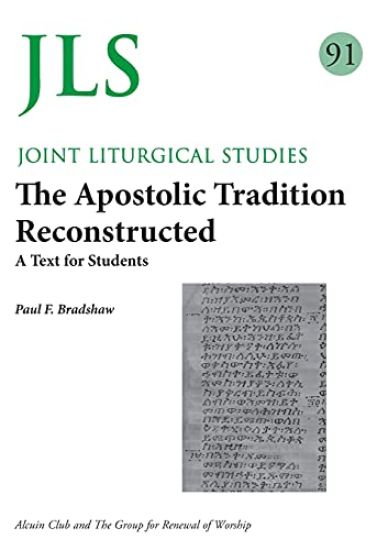
The publication in 2011 of a new Ethiopic text of the Apostolic Tradition changed much of what scholars had previously concluded about the text and character of this ancient church order. In addition to providing more reliable readings where the Latin version was missing, this publication confirmed what had only been conjecture and disproved other theories. As a result, earlier commentaries are now out of date, and this volume aims to furnish a replacement that will meet the needs of the beginner and scholar alike, especially in attempting to distinguish the successive chronological layers of which the document is composed.
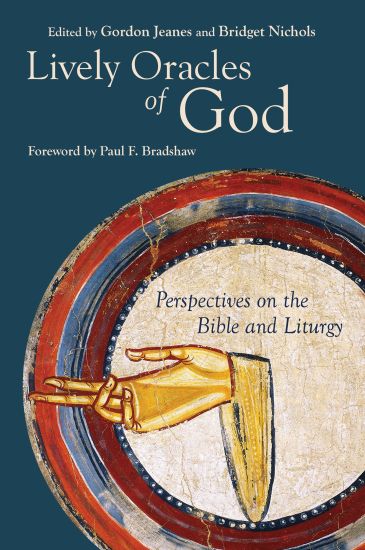
This book reexamines what we often take for granted: how Scripture is presented to worshipers; how it is heard, especially by those with little experience of the life of the church; Scripture’s role in mediating the great narratives of incarnation and redemption at the high points of the year; where Scripture meets people in ritual transition; how the Bible itself provides the language of much public prayer. Contributors also consider how the relationship between Scripture and liturgy is tested by new priorities—the climate crisis, the inclusion and protection of children, the recognition and honoring of those who find themselves on the margins of the church, and the significance of gender and identity in all areas of the church’s life. This book does not offer definitive statements. It is an invitation to a wide audience to engage in new conversations with their practice of worship. Contributors include: John Baldovin, SJ — Normand Bonneau, OMI — Stephen Burns — Cally Hammond Christopher Irvine — David Kennedy — Lizette Larson-Miller — Ann Loades, CBE Anne McGowan — Thomas O'Loughlin — Catherine Reid — Armand Léon van Ommen
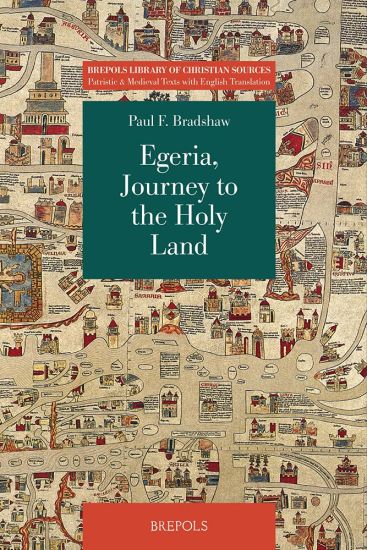
The Itinerarium Egeriae is the travel diary of a late-fourth-century visit to Egypt and Palestine by a Christian woman from Western Europe. As well as stopping at many sites of biblical significance, she spent three years in Jerusalem and recorded in detail its liturgical practices throughout the yearly cycle. This is the first ever edition of the Latin text to be accompanied by an English translation in parallel. The volume includes an introduction, notes, and a substantial bibliography. There are also appendices containing recent fragmentary textual discoveries and the text and translation of the seventh-century letter of the Spanish monk Valerius which first identified the author.
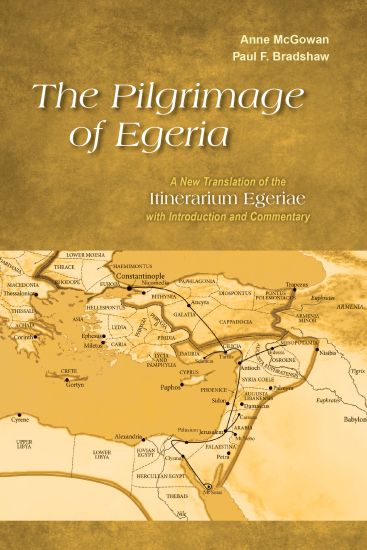
This new version of the late fourth-century diary of journeys in and around the Holy Land known as the Itinerarium Egeriae provides a more literal translation of the Latin text than earlier English renderings, with the aim of revealing more of the female traveler’s personality. The substantial introduction to the book covers both early pilgrimage as a whole, especially travel by women, and the many liturgical rites of Jerusalem that Egeria describes. Both this and the verse-by-verse commentary alongside the translated text draw on the most recent scholarship, making this essential reading for pilgrims, students, and scholars seeking insight into life and piety during one of Christianity’s most formative periods.
Paul Bradshaw, one of the world's foremost scholars on the history of Christian liturgy, has shared this expertise in several works that have become standard texts for students of liturgy. In Rites of Ordination, Bradshaw turns his attention to the ways that Christians through the ages have understood what it means to ordain someone as a minister and how that has been expressed in liturgical practice. Bradshaw considers the typological background to ordained ministry some have drawn from the Old Testament and what ministry meant to the earliest Christian communities. He explores the ordination rites and theology of the early church, the Christian East, the medieval West, the churches of the Reformation, and the post-Tridentine Roman Catholic Church.
Paul Bradshaw, one of the world's foremost scholars on the history of Christian liturgy, has shared this expertise in several works that have become standard texts for students of liturgy. In Rites of Ordination, Bradshaw turns his attention to the ways that Christians through the ages have understood what it means to ordain someone as a minister and how that has been expressed in liturgical practice. Bradshaw considers the typological background to ordained ministry some have drawn from the Old Testament and what ministry meant to the earliest Christian communities. He explores the ordination rites and theology of the early church, the Christian East, the medieval West, the churches of the Reformation, and the post-Tridentine Roman Catholic Church. Rites of Ordination promises to serve as an enriching resource for seminary students, students of liturgy and church history, and anyone fascinated by the history and theology of Christian liturgy and ministry.
This reference work incorporates the insights and expertise of leading liturgists and scholars of liturgy at work today, comprising 200 entries on important topics in the field, from vestments and offertories to ordination and divine unction. It is systematically organized and alphabetically arranged for ease of use. It also includes comprehensive bibliographies and reading lists, to bring the work fully up to date and to encourage further reading and research.
This study proceeds historically, from the origins of the Eucharist up to our own day. Unlike most studies of this kind, it includes an introduction to and developmental summary of the diverse Eucharistic liturgies of the Christian East. It also explores the various Western rites (Ambrosian, Gallican, and Mozarabic) in addition to the Roman. With regard to theological themes, the authors give special attention to the topics of real presence (including the "consecration" of the bread and wine) and eucharistic sacrifice, the most central and most ecumenically challenging issues since the sixteenth-century Reformations. Making the book especially teacher- and student-friendly are the summary points at the end of each chapter. Each chapter also contains an abundance of liturgical texts for ease of reference.
In graduate theology programs across the United States and elsewhere, Maxwell Johnson's The Rites of Christian Initiation: Their Evolution and Interpretation has become a standard text. Now Johnson and Paul Bradshaw together offer a companion volume on the historical development of the liturgy and theology of the Eucharist. Like the earlier volume, this study proceeds historically, from the origins of the Eucharist up to our own day. Unlike most studies of this kind, it includes an introduction to and developmental summary of the diverse eucharistic liturgies of the Christian East. It also explores the various Western rites (Ambrosian, Gallican, and Mozarabic) in addition to the Roman. With regard to theological themes, the authors give special attention to the topics of real presence (including the "consecration" of the bread and wine) and eucharistic sacrifice, the most central and most ecumenically challenging issues since the sixteenth-century Reformations. Making the book especially teacher- and student-friendly are the summary points at the end of each chapter. Each chapter also contains an abundance of liturgical texts for ease of reference.
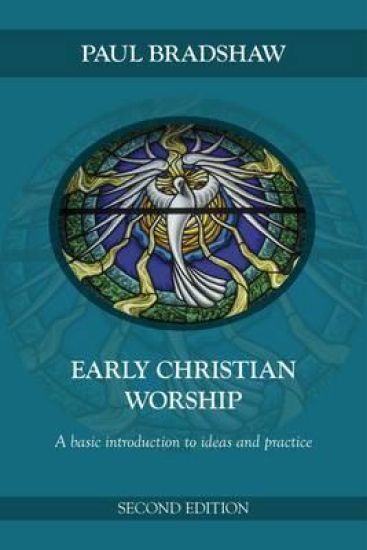
Early Christian Worship is a straightforward, readable introduction to worship in the first four centuries of the church's existence. How did early Christians see and understand their own worship? How did this interact with early Christian beliefs? The book has been brought up-to-date and revised, with some chapters rewritten and an updated bibliography. Paul F. Bradshaw is professor of liturgy at the University of Notre Dame, and priest-vicar of Westminster Abbey and a member of the Church of England Liturgical Commission. He is the author or editor of several major books (The Search for the Origins of Christian Worship, Eucharistic Origins, Reconstructing Early Christian Worship, The Study of Liturgy, A Companion to Common Worship, volumes 1 and 2).
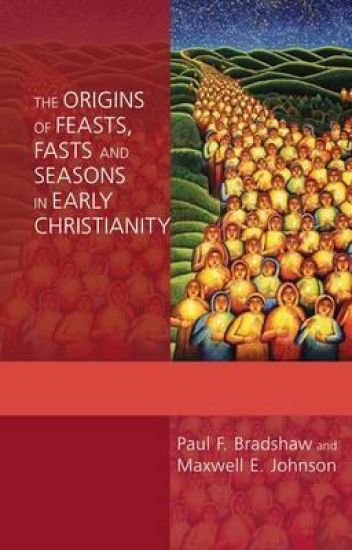
The Origins of Feasts, Fasts and Seasons in Early Christianity
Paul F. Bradshaw; Maxwell E. Johnson
Pueblo Books
2011
pokkari
The liturgical year is a relatively modern invention. The term itself only came into use in the late sixteenth century. In antiquity, Christians did not view the various festivals and fasts that they experienced as a unified whole. Instead, the different seasons formed a number of completely unrelated cycles and tended to overlap and conflict with one another. In early Christianity, the fundamental cycle was that of the seven-day week. Taken over from Judaism by the first Christians, this was centered on Sunday rather than the sabbath. As the early Church established its identity, the days of the week set aside for fasting came to be different from those customary among the Jews. There also existed an annual cycle related to Easter. Drawing upon the latest research, the authors track the development of the Church's feasts, fasts, and seasons, including the sabbath and Sunday, Holy Week and Easter, Christmas and Epiphany, and the feasts of the Virgin Mary, the martyrs, and other saints.
The Origins of Feasts, Fasts and Seasons in Early Christianity
Paul F. Bradshaw
SPCK Publishing
2011
nidottu
Halvin toimitettuna 29,90 €
The book deals with the origins of the liturgical year - the feasts, fasts and seasons. It is accessible to the general reader and to students, while being a serious academic text.
A straight-forward, readable introduction to worship in the first four centuries of the church's existence. How did early Christians see and understand their own worship? How did this interact with early Christian beliefs? The book has been brought up to date and revised, with some chapters rewritten and an updated bibliography.
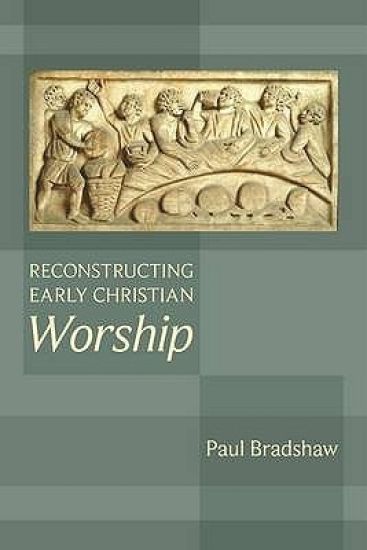
The book should be seen in the context of Paul Bradshaw's earlier works: The Search for the Origins of Christian Worship and Eucharistic Origins. In this book he updates his thinking in this area.
The new materials for Common Worship are now completed and come into use in the coming year. This second and final volume of commentary covers Daily Prayer, the Weekday Lectionary, Times and seasons, new Patterns for Worship, the Additional Collects, Rites on the Way, Wholeness and Healing, Reconciliation and Restoration, Marriage, Funerals, the Ordinal, Public Worship with Communion by Extension.
Origins of the Eucharist explored in a new way which questions traditional opinion A different picture of the origins of the eucharist from the traditionally received one. The author argues that the Last Supper did not play as important a part in the formulation of the Eucharist as is popularly thought. The book will cover topics including: the last supper and New Testament narratives; the Didache and early Christian ritual meals; Justin Martyr; Irenaeus; Cyprian; the emergence of the eucharistic prayers and the transformation of the eucharist in the fourth century.