Kirjailija
Paul F. Diehl
Kirjat ja teokset yhdessä paikassa: 14 kirjaa, julkaisuja vuosilta 1994–2025, suosituimpiin kuuluu When Peacekeeping Missions Collide. Vertaile teosten hintoja ja tarkista saatavuus suomalaisista kirjakaupoista.
14 kirjaa
Kirjojen julkaisuvuodet: 1994–2025.
Outlining a wide range of instructional strategies for different student audiences, Teaching International Law presents guidelines and recommendations on best practices for teaching public international law at undergraduate and postgraduate levels, as well as within law schools and legal training programs. The book provides an incisive exploration of assessment mechanisms including examinations and coursework, classroom strategies such as case studies and the Socratic method, course content, and theory, all in the context of Bloom’s Taxonomy. Paul F. Diehl and Charlotte Ku note the differences between the US and European or Asian models of teaching international law at the undergraduate level, graduate degree programs, and specialty LLM degrees. They also cover the teaching of specialized courses in international law such as human rights, trade, the environment, and criminal law. Based on over 40 years of experience in teaching international law, this is an essential resource for instructors of courses in public international law, as well as criminal law and justice, international commercial law, international economic law and trade law, and global and transnational law. It is also beneficial for instructors of law school courses and professional law courses in international law.

When Peacekeeping Missions Collide
Paul F. Diehl; Daniel Druckman; Grace B. Mueller
OXFORD UNIVERSITY PRESS INC
2023
sidottu
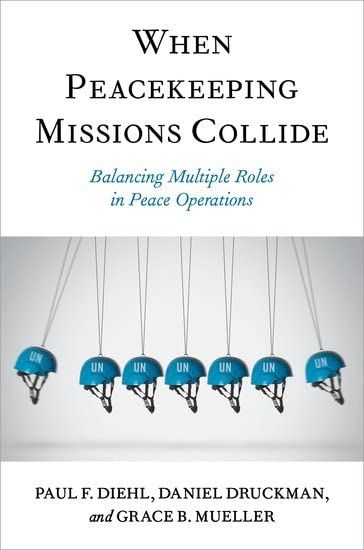
The contemporary world is beset with a wide variety of conflicts, all of which have features without historical precedent. While most accounts of peacekeeping focus on attempts to limit violent conflict, this traditional view hardly captures the variety of challenges that today's peacekeepers face. Peacekeepers are now thrust into the unconventional roles of monitoring elections, facilitating transitions to the rule of law, distributing humanitarian aid, and resolving conflicts in civil societies that are undergoing transformation. This is the context for understanding the activities of modern-day peacekeepers. In When Peacekeeping Missions Collide, Paul F. Diehl, Daniel Druckman, and Grace B. Mueller provide an original and comprehensive assessment on how different peacekeeping missions intersect with one another in contemporary conflicts. They begin by documenting the patterns of peacekeeping missions in 70 UN operations, noting the dramatic increase in number and diversity of operations since the end of the Cold War as well as the shift to conflicts with a substantial internal conflict component. They then turn to the overarching question of the book: how do individual peacekeeping missions impact the outcomes of other missions within the same operations? To answer this, the authors have developed a novel dataset of UN peace operations from 1946-2016 to assess mission compatibility. Moreover, the authors utilize five detailed case studies of UN peacekeeping operations featuring mission interdependence and then measure the results against their theoretical expectations. Ultimately, the model they have developed for analyzing the effectiveness of the far more complex peace operations of today--relative to the simpler operations of the past--is essential reading for scholars of peacekeeping and conflict management.
When Peacekeeping Missions Collide
Paul F. Diehl; Daniel Druckman; Grace B. Mueller
OXFORD UNIVERSITY PRESS INC
2023
nidottu
The contemporary world is beset with a wide variety of conflicts, all of which have features without historical precedent. While most accounts of peacekeeping focus on attempts to limit violent conflict, this traditional view hardly captures the variety of challenges that today's peacekeepers face. Peacekeepers are now thrust into the unconventional roles of monitoring elections, facilitating transitions to the rule of law, distributing humanitarian aid, and resolving conflicts in civil societies that are undergoing transformation. This is the context for understanding the activities of modern-day peacekeepers. In When Peacekeeping Missions Collide, Paul F. Diehl, Daniel Druckman, and Grace B. Mueller provide an original and comprehensive assessment on how different peacekeeping missions intersect with one another in contemporary conflicts. They begin by documenting the patterns of peacekeeping missions in 70 UN operations, noting the dramatic increase in number and diversity of operations since the end of the Cold War as well as the shift to conflicts with a substantial internal conflict component. They then turn to the overarching question of the book: how do individual peacekeeping missions impact the outcomes of other missions within the same operations? To answer this, the authors have developed a novel dataset of UN peace operations from 1946-2016 to assess mission compatibility. Moreover, the authors utilize five detailed case studies of UN peacekeeping operations featuring mission interdependence and then measure the results against their theoretical expectations. Ultimately, the model they have developed for analyzing the effectiveness of the far more complex peace operations of today--relative to the simpler operations of the past--is essential reading for scholars of peacekeeping and conflict management.
International Conflict Management
J. Michael Greig; Andrew P. Owsiak; Paul F. Diehl
Polity Press
2019
sidottu
International conflict has long plagued the world, and it continues to do so. With many interstate and civil disputes experiencing no third-party attempts at conflict management, how can the international community mitigate the effects of and ultimately end such violence? Why, in so many cases, are early, “golden opportunities” for conflict management missed? In this book, J. Michael Greig, Andrew P. Owsiak, and Paul F. Diehl introduce the varied approaches and factors that promote the de-escalation and the peaceful management of conflict across the globe—from negotiation, mediation, arbitration, and adjudication to peace operations, sanctions, and military or humanitarian intervention. The history, characteristics and agents of each approach are examined in depth, using a wide range of case studies to illustrate successes and failures on the ground. Finally, the book investigates how the various tools interact—both logically and sequentially—to produce beneficial or deleterious effects.
International Conflict Management
J. Michael Greig; Andrew P. Owsiak; Paul F. Diehl
Polity Press
2019
nidottu
Halvin toimitettuna 31,50 €
International conflict has long plagued the world, and it continues to do so. With many interstate and civil disputes experiencing no third-party attempts at conflict management, how can the international community mitigate the effects of and ultimately end such violence? Why, in so many cases, are early, “golden opportunities” for conflict management missed? In this book, J. Michael Greig, Andrew P. Owsiak, and Paul F. Diehl introduce the varied approaches and factors that promote the de-escalation and the peaceful management of conflict across the globe—from negotiation, mediation, arbitration, and adjudication to peace operations, sanctions, and military or humanitarian intervention. The history, characteristics and agents of each approach are examined in depth, using a wide range of case studies to illustrate successes and failures on the ground. Finally, the book investigates how the various tools interact—both logically and sequentially—to produce beneficial or deleterious effects.
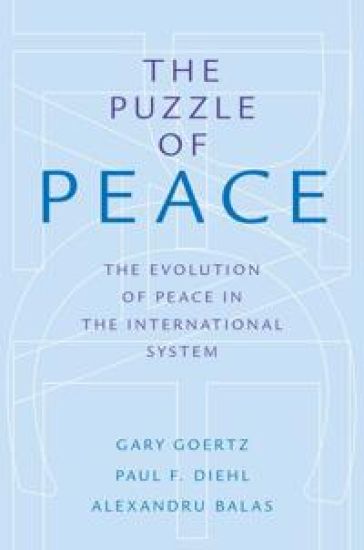
The Puzzle of Peace
Gary Goertz; Paul F. Diehl; Alexandru Balas
Oxford University Press Inc
2016
nidottu
The Puzzle of Peace moves beyond defining peace as the absence of war and develops a broader conceptualization and explanation for the increasing peacefulness of the international system. The authors track the rise of peace as a new phenomenon in international history starting after 1945. International peace has increased because international society has developed a set of norms dealing with territorial conflict, by far the greatest source of international war over previous centuries. These norms prohibit the use of military force in resolving territorial disputes and acquiring territory, thereby promoting border stability. This includes the prohibition of the acquisition of territory by military means as well as attempts by secessionist groups to form states through military force. International norms for managing international conflict have been accompanied by increased mediation and adjudication as means of managing existing territorial conflicts.
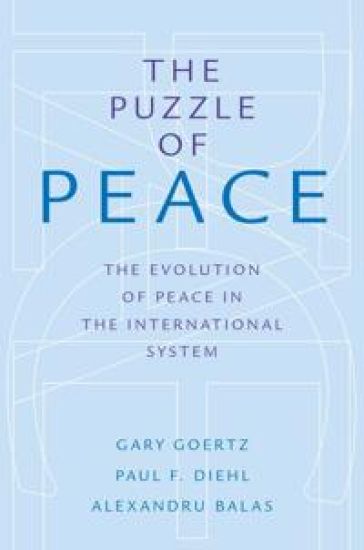
The Puzzle of Peace
Gary Goertz; Paul F. Diehl; Alexandru Balas
Oxford University Press Inc
2016
sidottu
The Puzzle of Peace moves beyond defining peace as the absence of war and develops a broader conceptualization and explanation for the increasing peacefulness of the international system. The authors track the rise of peace as a new phenomenon in international history starting after 1945. International peace has increased because international society has developed a set of norms dealing with territorial conflict, by far the greatest source of international war over previous centuries. These norms prohibit the use of military force in resolving territorial disputes and acquiring territory, thereby promoting border stability. This includes the prohibition of the acquisition of territory by military means as well as attempts by secessionist groups to form states through military force. International norms for managing international conflict have been accompanied by increased mediation and adjudication as means of managing existing territorial conflicts.
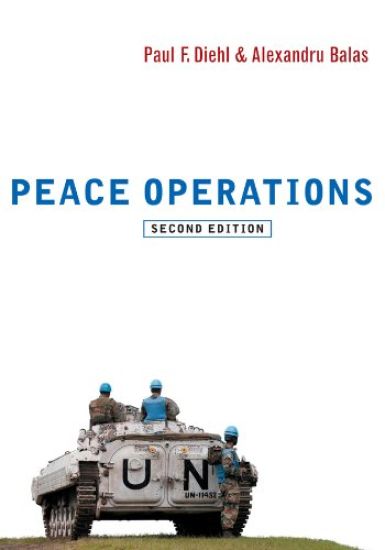
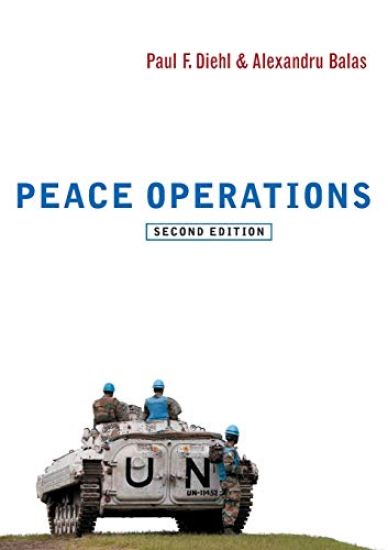
As peace operations become the primary mechanism of conflict management used by the UN and regional organizations, understanding their problems and potential is essential for a more secure world. In this revised and updated second edition, Paul Diehl and Alexandru Balas provide a cutting-edge analysis of the central issues surrounding the development, operation, and effectiveness of peace operations. Among many features, the book: Traces the historical development of peace operations from their origins in the early 20th century through the development of modern peacebuilding missions and multiple simultaneous peace operations. Tracks changes over time in the size, mission and organization of peace operations. Analyses different organizational, financial, and troop provisions for peace operations, as well as assessing alternatives. Lays out criteria for evaluating peace operations and details the conditions under which such operations are successful. Drawing on a wide range of examples from those between Israel and her neighbours to more recent operations in Bosnia, Somalia, Darfur, East Timor, and the Congo, this new edition brings together the body of scholarly research on peace operations to address those concerns. It will be an indispensable guide for students, practitioners and general readers wanting to broaden their knowledge of the possibilities and limits of peace operations today.
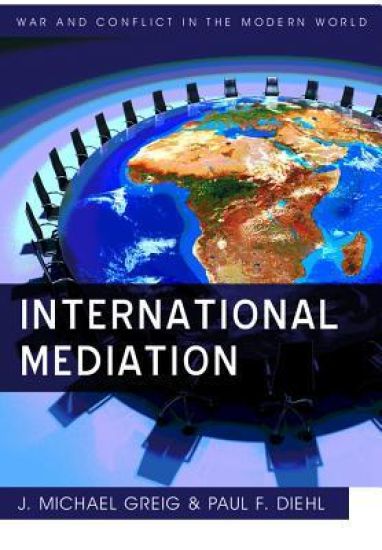
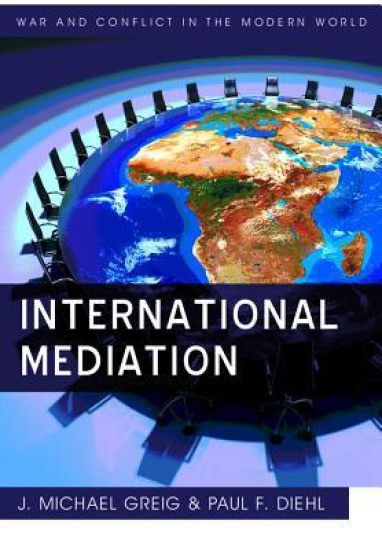
Conflicts in the international system, both among and within states, bring death, destruction, and human misery. Understanding how third parties use mediation to encourage settlements and establish a durable peace among belligerents is vital for managing these conflicts. Among many features, this book empirically examines the history of post-World War II mediation efforts to: Chart the historical changes in the types of conflicts that mediation addresses and the links between different mediation efforts across time. Explore the roles played by providers of mediation in the international system - namely, individuals, states, and organizations - in managing violent conflicts. Gauge the influence of self-interest and altruism as motivating forces that determine which conflicts are mediated and which are ignored. Evaluate what we know about the willingness of parties in conflict to accept mediation, when and why it is most effective, and discuss the future challenges facing mediators in the contemporary world. Drawing on a wide range of examples from the Oslo Accords and Good Friday Agreement to efforts to manage the civil wars in Burundi, Tajikistan, and Bosnia, this book is an indispensable guide to international mediation for students, practitioners, and general readers seeking to understand better how third parties can use mediation to deal with the globe’s trouble spots.
The Dynamics of International Law
Paul F. Diehl; Charlotte Ku
Cambridge University Press
2010
pokkari
Paul F. Diehl and Charlotte Ku's new framework for international law divides it into operating and normative systems. The authors provide a theory of how these two systems interact, which explains how changes in one system precipitate changes and create capacity in the other. A punctuated equilibrium theory of system evolution, drawn from studies of biology and public policy studies, provides the basis for delineating the conditions for change and helps explain a pattern of international legal change that is often infrequent and sub-optimal, but still influential.
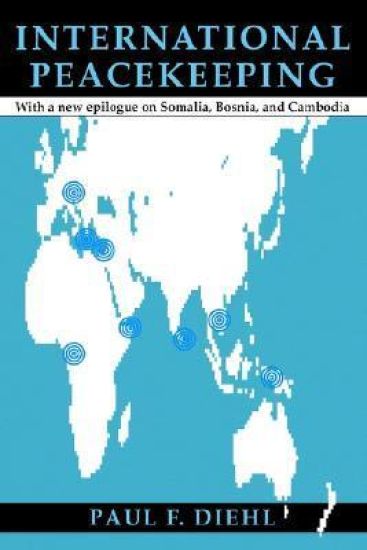
Since the end of the Cold War, US officials have been more willing to remind allies that the US will not play the role of international policeman. Given US reluctance, the job of peacekeeping will fall increasingly to international organizations and regional alliances. In this book, Diehl examines the recent record of United Nations peacekeeping forces and develops criteria for assessing their operations. His analysis aims to provide useful guidance for the management of new hostilities in areas such as Central and Eastern Europe, where the dissolution of the Soviet Union has spawned bitter civil wars and dangerous border disputes. Diehl identifies three sets of factors that affect traditional international peacekeeping operations. He begins by discussing the practical concerns of peacekeeping efforts, such as force composition, organization and deployment. He then examines issues related to the political and military context in which the forces are deployed, including the nature of the conflict and the involvement of third parties. Finally, he considers the authorization by the relevant international body - usually the UN - as it relates to the mission's mandate, policies and financing. He concludes by analyzing the viability of new roles for UN peacekeeping troops, such as humanitarian assistance, and by exploring structural alternatives to UN peacekeeping operations. This paperback edition includes a new epilogue which examines peacekeeping operations in Bosnia, Somalia and Cambodia.