Kirjojen hintavertailu – 12 859 818 kirjaa ja 27 kauppaa
Kirjailija
Paul F Levy
Kirjat ja teokset yhdessä paikassa: 8 kirjaa, julkaisuja vuosilta 1999–2024, suosituimpiin kuuluu How Can I Help?. Vertaile teosten hintoja ja tarkista saatavuus suomalaisista kirjakaupoista.
With the advent of "New Federalism" and reduced federal attention on regional energy concerns, the states are now in the forefront of energy policy in the United States, extensively involved in implementing federal conservation programs, pursuing independent initiatives, and adopting entirely new directions in the regulation of electric and gas uti
This book is the product of the good will and hardwork of many people. The contributors, all recognized experts in their fields, are thanked for providing thoughtful, informative chapters and for accommodating editorial suggestions and revisions. Westview Press is thanked for providing the opportunity to address a serious omission in the energy literature. The Geography Department at the University of Maryland made a similarly generous commitment of secretarial staff and faciltiies. Allen Eney aided in the construction of computerized maps. Many skilled, conscientious individuals at state energy offices, public utility commissions, the U. S. Department of Energy, and other organizations supplied essential data and produced many of the analytic studies that underlie the contents of the book. Patti Leedham provided patient and expert typing through numerous revisions of the chapters and many tables. Patricia Sawyer provided essential guidance, support, and proofreading throughout the entire effort.
We've written this book to help you negotiate the best possible severance deal. Maybe this just happened to you. Maybe you are worried that it might happen to you. You are called into your supervisor's office, a human resources person is sitting there, and your boss starts by saying, "This is not going to be a pleasant conversation." Within ten minutes, you discover that you have been laid off. You might also find out that that your email account has already been locked, that you must immediately remove all personal items from your office, and that you will hand in your company ID badge today as you walk out of the building for the last time (perhaps escorted by a security officer.)But before you leave, your boss adds, "I'm so sorry we have to do this, as I really care about you personally. Luckily, I've been able to get you a decent severance deal. All you need to do is sign this release letter." Not wanting to jeopardize the "gift" they are offering you, you lean over the desk to sign the letter. STOP Don't sign anything Never agree to anything in that meeting. The dance has just begun.
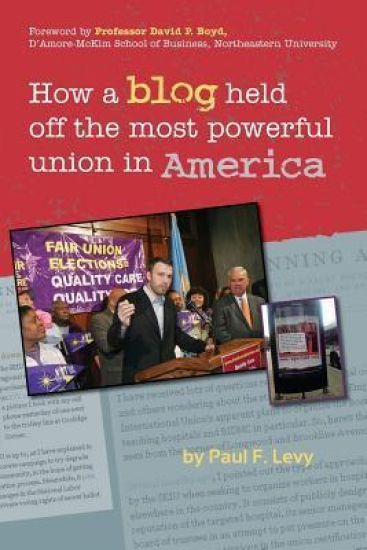
The decline in private sector unions in America is well documented, but some unions have bucked this trend, most notably the 2.1 million member Service Employees International Union. Its former president liked to say: "We use the power of persuasion first. If it doesn't work, we try the persuasion of power." The targets of SEIU's corporate campaigns find themselves on the defensive and, tied to traditional public responses, are often flummoxed by the intensity and thoroughness of the SEIU's efforts. There is, however, a new arrow in the quiver that can be used by firms that are being attacked in a corporate campaign. Social media offers an effective remedy, if used early, thoughtfully, and decisively. This book tells the story of one such counter-campaign, a story of how a blog held off the most powerful union in America. With a foreword by Professor David P. Boyd, D'Amore-McKim School of Business, Northeastern University"What a fascinating story This is a powerful lesson in winning a battle of perception with the modern tools of transparency and internet speed." Roni Zeiger MD, CEO Smart Patients"Corporate campaigns by unions seek to bypass secret ballot elections that are provided for workers under current law. It was the genius of Paul Levy to capitalize on that anti-democratic deficiency in the union's approach by shining the full light of exposure on this tactic. Supreme Court Justice Louis Brandeis said that "Sunlight is said to be the best of disinfectants" and Paul's use of social media and his blog was just the disinfectant needed to show a curious public that SEIU's campaign against Beth Israel Deaconess was no public service, but a frequently outrageous effort at self-promotion and union organizing without having to do the actual hard work of persuading employees to vote that a union was truly in the workers' interest." Kenneth C. Robbins, JD, President, Illinois Hospital Association (1983-2009)"Paul Levy, an innovative, caring, thoughtful, and strategic hospital CEO, writes convincingly how he used a blog, a low cost vehicle, to help counter a well-financed union corporate campaign that sought a neutrality agreement and card check. This fascinating story deserves to be read, it offers lots of insights and useful lessons." Fred K. Foulkes, Professor of Organizational Behavior, Boston University"Just as we have seen Arab Spring erupt from chaos because of the use of new forms of social media, and Ai Weiwei thwart the Chinese government with his use of the internet to spread his freedom message, Paul Levy's effective use of the blogosphere to frame and advance his side of a union-management conflict illustrates how leaders can use social media effectively in a modern era of health care and business. "Levy artfully tells the story of getting his hospital's message out without having a war chest to spend on public relations. His persistent and effective use of social media evened the playing field and allowed him to keep diverse audiences informed and engaged." Harris A. Berman, M. D., Boston
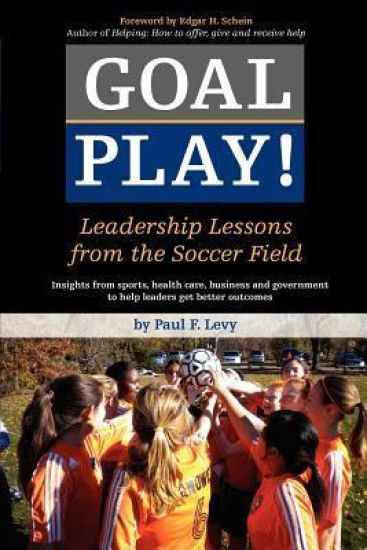
This book offers insights from sports, health care, business and government to help leaders get better outcomes. Here are some comments from experts in the field: Paul Levy, who managed the cleanup of Boston Harbor and became the nation's most acclaimed hospital CEO, is a leader of uncommon skill and breadth. In Goal Play , he offers powerful lessons in leadership by drawing on experiences ranging from coaching girls' soccer to managing the aftermath of catastrophic medical mistakes. How should a top executive communicate with front line staff, and with the outside world? How can a manager nurture great teams while celebrating superstars? How should a leader react when things go wrong... and right? After reading this insightful, unblinkingly honest, and extremely readable book, you'll have the answers you need to be a more effective mentor, coach, and leader. (Robert Wachter, Professor of Medicine, USCF)Paul Levy's book is a must read for any CEO who recognizes that the traditional hierarchical approach to leading an organization in the complexity of our times will not deliver sustained success and would like to consider another approach. Paul's book is also a great read for young leaders who want guidance as they attempt to master the challenges of leadership in times like these that are charged with volatility, complexity, uncertainty and ambiguity. Paul's advice and wisdom are served up intertwined with the metaphor of the complexities of soccer and the lessons learned by an experienced coach who has also had a remarkable career as a creative leader of large complex organizations with problems that threatened them with failure. (Eugene Lindsey, CEO of Atrius Health)Paul Levy offers insightful lessons in leadership, cleverly weaving in delightfully up-lifting experiences from his years on the touchline to frame his powerful message. These light hearted stories, plucked from the diary of a soccer coach, offer the executive interested in any expanding their leadership skills a chalkboard full of sound "drills". (Bill Taylor, General Manager, Four Season Hotel, Boston)Time is extremely precious - only more so when you're out trying to change the world. This book is a good use of that precious time - offering hard won insight into how we can nurture the leader in ourselves - and as importantly in those around us. Learning from what hasn't worked is as critical to that end as what has, and Paul offers inspiring - even entertaining - perspectives culled from the soccer field. It takes a certain amount of bravery to admit that we could stand to improve our own leadership styles, but as Paul's words (and actions) have shown, when it comes to leadership, bravery is the greatest gift we can give ourselves and those around us. (Alexandra Drane, Eliza Corporation)In a day and age where 'leader' is a title appropriated by tin pot despots and self-serving egotists, Paul Levy's story of servant leadership needs to be digested and considered. No industry more than health care stands in the messy intersection of public policy, academic debate, and business interest. In short, clear prose, Levy shows us how a real leader can stand in the midst of those tempestuous seas, and lead. A must read. (Jeff Swartz, former CEO, Timberland)Levy's metaphorical soccer book on business management provides those of us in leadership positions an opportunity to hit the reset button, while we assess our own effectiveness in today's ever changing world. (Roger Berkowitz, CEO, Legal Seafoods)Paul's book gives very powerful, very human, and very practical insights on how leaders can unlock amazing potential that all employees have. Anyone who reads this book will feel inspired to lead and learn. (Boris Levin, President, NP Medical)
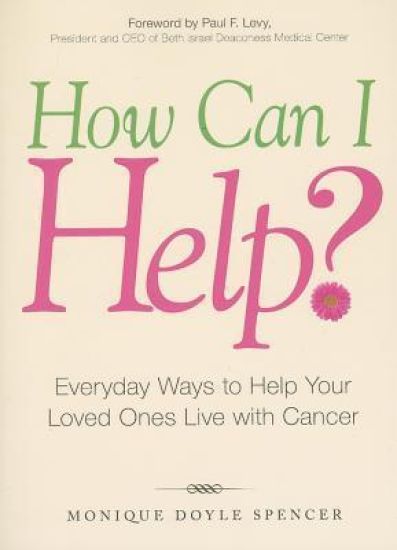
When a loved one is diagnosed with cancer, it is often difficult to know what to do. Those who want to help can sometimes make matters worse. Written in a frank conversational manner, this book offers readers specific advice on what to do for a friend or loved one in need, such as offer to do the weekly grocery shopping, pick up the kids from school or bring them to practice, choose to be a chemobuddy, and keep up with bills and other important deadlines. This stressful and uncertain time is difficult for the patient's family and friends. How Can I Help? provides the support and guidance everyone needs to make this time easier.
When business leaders, government officials, and other stakeholders come to the table in an environmental, health, or safety dispute, acrimony often results, leading to expensive and time-consuming litigation. Not only does this waste precious resources, but rarely does the process produce the best outcome for any of the parties involved. For the past five years, the authors of this volume have conducted semi-annual seminars at the Massachussetts Institute of Technology and at Harvard to provide business leaders and regulators with the knowledge and skills they need to more effectively handle environmental, health, and safety negotiations. Their strategy, known as the "mutual gains approach," is a proven method of producing fairer, more efficient, more stable, and wiser results. Negotiating Environmental Agreements provides the first comprehensive introduction to this widely practiced and highly effective approach to environmental regulation. The book begins with an overview of the mutual gains approach, introducing important concepts and ideas from negotiation theory as well as the theory and practice of mediation. The authors then offer five model negotiations from their MIT-Harvard Public Disputes seminar, followed by a series of real-world negotiated environmental agreements that illustrate the kinds of outcomes possible when the mutual gains approach is employed. A collection of writings by leading experts provide valuable insights into the process, and appendixes offer both instructions for conducting model negotiation sessions and analysis of actual game results from earlier seminars. This is the only prescriptive text available for the many regulatees and regulators involved in environmental regulatory negotiations each year. Anyone involved with environmental negotiation -- including corporate and public sector managers, students of environmental policy, environmental management, and business management -- will find the book an essential resource.