Kirjailija
Paul Finkelman
Kirjat ja teokset yhdessä paikassa: 16 kirjaa, julkaisuja vuosilta 1981–2020, suosituimpiin kuuluu A March of Liberty: A Constitutional History of the United States, Volume 2: From 1898 to the Present. Vertaile teosten hintoja ja tarkista saatavuus suomalaisista kirjakaupoista.
16 kirjaa
Kirjojen julkaisuvuodet: 1981–2020.
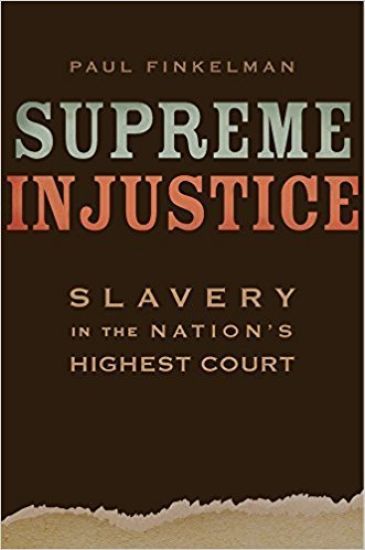
The three most important Supreme Court Justices before the Civil War—Chief Justices John Marshall and Roger B. Taney and Associate Justice Joseph Story—upheld the institution of slavery in ruling after ruling. These opinions cast a shadow over the Court and the legacies of these men, but historians have rarely delved deeply into the personal and political ideas and motivations they held. In Supreme Injustice, the distinguished legal historian Paul Finkelman establishes an authoritative account of each justice’s proslavery position, the reasoning behind his opposition to black freedom, and the incentives created by circumstances in his private life. Finkelman uses census data and other sources to reveal that Justice Marshall aggressively bought and sold slaves throughout his lifetime—a fact that biographers have ignored. Justice Story never owned slaves and condemned slavery while riding circuit, and yet on the high court he remained silent on slave trade cases and ruled against blacks who sued for freedom. Although Justice Taney freed many of his own slaves, he zealously and consistently opposed black freedom, arguing in Dred Scott that free blacks had no Constitutional rights and that slave owners could move slaves into the Western territories. Finkelman situates this infamous holding within a solid record of support for slavery and hostility to free blacks. Supreme Injustice boldly documents the entanglements that alienated three major justices from America’s founding ideals and embedded racism ever deeper in American civic life.
American Legal History: Cases and Materials
Kermit L. Hall; Paul Finkelman; James W. Ely
Oxford University Press
2017
nidottu
This highly acclaimed text provides a comprehensive selection of the most important documents in American legal history, integrating the history of public and private law from America's colonial origins to the present. Devoting special attention to the interaction of social and legal change, American Legal History: Cases and Materials, Fifth Edition, shows how legal ideas developed in tandem with specific historical events and reveals a rich legal culture unique to America. The book also deals with state and federal courts and looks at the relationship between the development of American society, politics, and economy and how it relates to the evolution of American law. Introductions and instructive headnotes accompany each document, tying legal developments to broader historical themes and providing a social and political context essential to an understanding of the history of law in America. Setting the legal challenges of the twenty-first century in a broad context, American Legal History, Fifth Edition, is an indispensable text for students and teachers of constitutional and legal history, the judicial process, and the effects of society on law.
In Slavery and the Founders, Paul Finkelman addresses a central issue of the American founding: how the first generation of leaders of the United States dealt with the profoundly important question of human bondage. The book explores the tension between the professed idea of America as stated in the Declaration of Independence, and the reality of the early American republic, reminding us of the profound and disturbing ways that slavery affected the U. S. Constitution and early American politics. It also offers the most important and detailed short critique of Thomas Jefferson's relationship to slavery available, while at the same time contrasting his relationship to slavery with that of other founders. This third edition of Slavery and the Founders incorporates a new chapter on the regulation and eventual (1808) banning of the African slave trade.
In Slavery and the Founders, Paul Finkelman addresses a central issue of the American founding: how the first generation of leaders of the United States dealt with the profoundly important question of human bondage. The book explores the tension between the professed idea of America as stated in the Declaration of Independence, and the reality of the early American republic, reminding us of the profound and disturbing ways that slavery affected the U. S. Constitution and early American politics. It also offers the most important and detailed short critique of Thomas Jefferson's relationship to slavery available, while at the same time contrasting his relationship to slavery with that of other founders. This third edition of Slavery and the Founders incorporates a new chapter on the regulation and eventual (1808) banning of the African slave trade.
John Brown (The Oxford W. E. B. Du Bois)
W. E. B. Du Bois; Paul Finkelman
Oxford University Press Inc
2014
nidottu
W. E. B. Du Bois was a public intellectual, sociologist, and activist on behalf of the African American community. He profoundly shaped black political culture in the United States through his founding role in the NAACP, as well as internationally through the Pan-African movement. Du Bois's sociological and historical research on African-American communities and culture broke ground in many areas, including the history of the post-Civil War Reconstruction period. Du Bois was also a prolific author of novels, autobiographical accounts, innumerable editorials and journalistic pieces, and several works of history. John Brown is W. E. B. Du Bois's groundbreaking political biography that paved the way for his transition from academia to a lifelong career in social activism. This biography is unlike Du Bois's earlier work; it is intended as a work of consciousness-raising on the politics of race. Less important are the historical events of John Brown's life than the political revelations found within the pages of this biography. At the time that he wrote it in 1909, Du Bois had begun his transformation into the most influential civil rights leader of his time. With a series introduction by editor Henry Louis Gates, Jr., and an introduction by Paul Finkelman, this edition is essential for anyone interested in African American history.

The oddly named president whose shortsightedness and stubbornness fractured the nation and sowed the seeds of civil warIn the summer of 1850, America was at a terrible crossroads. Congress was in an uproar over slavery, and it was not clear if a compromise could be found. In the midst of the debate, President Zachary Taylor suddenly took ill and died. The presidency, and the crisis, now fell to the little-known vice president from upstate New York. In this eye-opening biography, the legal scholar and historian Paul Finkelman reveals how Millard Fillmore's response to the crisis he inherited set the country on a dangerous path that led to the Civil War. He shows how Fillmore stubbornly catered to the South, alienating his fellow Northerners and creating a fatal rift in the Whig Party, which would soon disappear from American politics--as would Fillmore himself, after failing to regain the White House under the banner of the anti-immigrant and anti-Catholic "Know Nothing" Party. Though Fillmore did have an eye toward the future, dispatching Commodore Matthew Perry on the famous voyage that opened Japan to the West and on the central issues of the age--immigration, religious toleration, and most of all slavery--his myopic vision led to the destruction of his presidency, his party, and ultimately, the Union itself.
A March of Liberty: A Constitutional History of the United States, Volume 2: From 1898 to the Present
Melvin Urofsky; Paul Finkelman
Oxford University Press
2011
nidottu
A March of Liberty: A Constitutional History of the United States, Third Edition, is a clearly written, comprehensive overview of American constitutional development. Covering the country's history from the founding of the English colonies up through the latest decisions of the Supreme Court, this two-volume work presents the most complete discussion of American constitutional history currently available. Authors Melvin I. Urofsky and Paul Finkelman successfully blend cases and court doctrines into the larger fabric of American political, economic, and social history. They discuss in detail the great cases handed down by the Supreme Court, showing how these cases played out in society and how constitutional growth parallels changes in American culture. In addition, they examine lesser-known decisions that played important roles in affecting change, and also provide in-depth analyses of the intellects and personalities of the Supreme Court justices who made these influential decisions. Updated with the most recent scholarship, the third edition of A March of Liberty offers more cases on a broader range of issues including the environment, labor, civil rights, and Native American concerns. It now presents new selections on decisions, statutes, and constitutional developments from the first decade of the 21st century--like the USA PATRIOT Act, presidential signing statements, same-sex marriage, reproductive rights, campaign financing, and firearms regulation. The text reflects the current trends in American constitutional history by employing a holistic approach that integrates the decisions of the state and lower federal courts with the decisions of the Supreme Court. A March of Liberty, Third Edition, features useful supplemental materials including the text of the Constitution, a chronological list of Supreme Court justices, an appendix of the names and years for each Supreme Court justice, and suggested further readings. Gracefully written and clearly explained, this popular two-volume set is indispensable for courses in American constitutional history and law.
A March of Liberty: A Constitutional History of the United States, Volume 2: From 1898 to the Present
Melvin Urofsky; Paul Finkelman
Oxford University Press
2011
nidottu
A March of Liberty: A Constitutional History of the United States, Third Edition, is a clearly written, comprehensive overview of American constitutional development. Covering the country's history from the founding of the English colonies up through the latest decisions of the Supreme Court, this two-volume work presents the most complete discussion of American constitutional history currently available. Authors Melvin I. Urofsky and Paul Finkelman successfully blend cases and court doctrines into the larger fabric of American political, economic, and social history. They discuss in detail the great cases handed down by the Supreme Court, showing how these cases played out in society and how constitutional growth parallels changes in American culture. In addition, they examine lesser-known decisions that played important roles in affecting change, and also provide in-depth analyses of the intellects and personalities of the Supreme Court justices who made these influential decisions. Updated with the most recent scholarship, the third edition of A March of Liberty offers more cases on a broader range of issues including the environment, labor, civil rights, and Native American concerns. It now presents new selections on decisions, statutes, and constitutional developments from the first decade of the 21st century--like the USA PATRIOT Act, presidential signing statements, same-sex marriage, reproductive rights, campaign financing, and firearms regulation. The text reflects the current trends in American constitutional history by employing a holistic approach that integrates the decisions of the state and lower federal courts with the decisions of the Supreme Court. A March of Liberty, Third Edition, features useful supplemental materials including the text of the Constitution, a chronological list of Supreme Court justices, an appendix of the names and years for each Supreme Court justice, and suggested further readings. Gracefully written and clearly explained, this popular two-volume set is indispensable for courses in American constitutional history and law.
A March of Liberty: Volume 1
Urofsky Melvin I.; Paul Finkelman
Oxford University Press Inc
2001
nidottu
A March of Liberty is a clearly written, comprehensive overview of American constitutional development from the founding of the English colonies down through the decisions of the latest term of the Supreme Court. It presents the most comprehensive overview of American constitutional development now available, reflecting the latest in contemporary scholarship. The authors examine in detail the great cases handed down by the Supreme Court, showing how these cases played out in the society at large and how constitutional growth parallels change in American culture. The authors also look at lesser known decisions that played important roles in effecting change, and at the justices who made these decisions. The book offers students of American constitutional history a complete reference work which is intelligible to the layperson as well as to the specialist.
This text studies the attitudes of the founding "fathers" toward slavery. Specifically, it examines the views of Thomas Jefferson reflected in his life and writings and those of other founders as expressed in the Northwest Ordinance, the Constitutional Convention and the Constitution itself, and the fugitive slave legislation of the 1790s. The author contends: slavery fatally permeated the founding of the American republic; the original constitution was, as the abilitionists later maintained, "a covnenant with death"; and Jefferson's anti-slavery reputation is undeserved and most historians and biographers have prettified Jefferson's record on slavery.
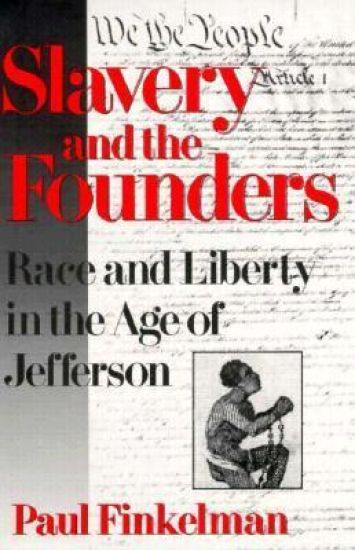
This text studies the attitudes of the founding "fathers" toward slavery. Specifically, it examines the views of Thomas Jefferson reflected in his life and writings and those of other founders as expressed in the Northwest Ordinance, the Constitutional Convention and the Constitution itself, and the fugitive slave legislation of the 1790s. The author contends: slavery fatally permeated the founding of the American republic; the original constitution was, as the abilitionists later maintained, "a covnenant with death"; and Jefferson's anti-slavery reputation is undeserved and most historians and biographers have prettified Jefferson's record on slavery.

First Published in 1990. American slavery began in Africa. An understanding of slavery begins with the African slave trade and the domestic slave trade. Both were indispensable to the creation of the New World slave societies, including the colonies that became the United States. This book is part of a eighteen volume series collecting nearly four hundred of the most important articles on slavery in the United States. Volume 2 looks at the domestic and foreign slave trade and migration and includes pioneering articles in the history of slavery, important break-throughs in research and methodology, and articles that offer major historiographical interpretations.