

Kirjailija
Paul Fitzgerald
Kirjat ja teokset yhdessä paikassa: 7 kirjaa, julkaisuja vuosilta 2007–2026, suosituimpiin kuuluu The Riverside Strangler. Vertaile teosten hintoja ja tarkista saatavuus suomalaisista kirjakaupoista.
7 kirjaa
Kirjojen julkaisuvuodet: 2007–2026.
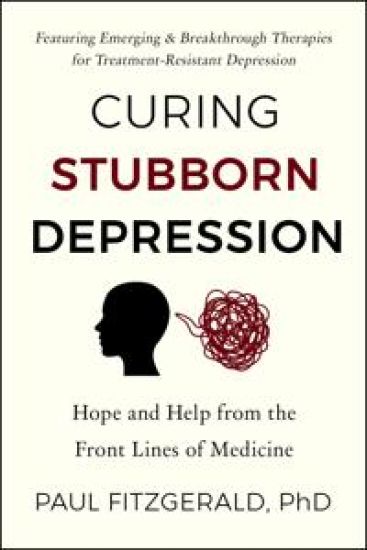
Hope and help arrives in this psychiatrist's preview of emerging and breakthrough therapies for treating more severe, treatment-resistant depression. We all get down from time to time. But sometimes we get stuck. Perhaps you know someone who seems trapped in low moods too much of time. Chances are they suffer from stubborn depression. Depression is a ubiquitous, disabling disorder that has rocketed to the forefront of popular discourse within a surprisingly brief period of time. However, despite affecting almost one in five people at some stage in their lives, it is a condition about which most people are opinionated, but lacking sufficient knowledge. Curing Stubborn Depression aims to tackle this head on, especially as it concerns the treatment of depression at a time when the field is rapidly changing. Written by a psychiatrist with over 20 years of experience, Curing Stubborn Depression addresses the myths about what depression is and its causes as well as delves into the emerging range of new treatments which are transforming how this condition is managed, especially in its most serious form. Exploring these new therapies is designed to provide hope: that the outlook for patients is changing for the better.

Afghanistan was an American crusade to win the war against the “Evil Soviet Empire” and remake the world in its own image. This goes right to the heart of understanding the destiny of the Western Dream. Instead of a dream the US is caught in a nightmare. Now Americans long for a spiritual regeneration away from the vision of war as an honorable sacrifice to a vision of peace that serves all. No one seems able to make the process move in the right direction. We assimilated a profound understanding over four decades of how to envision moving from war to peace that is now in our novelized memoir, The Valediction: Three Nights of Desmond at the Kabul Hotel.
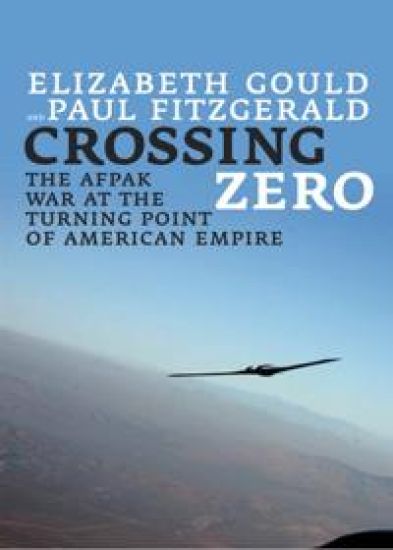
The war in Afghanistan has become the most complex foreign policy problem the United States has ever faced, spreading into Pakistan and involving the conflicting interests of Russia, India, China and Iran. Written as a companion to Elizabeth Gould and Paul Fitzgerald's widely acclaimed book Invisible History: Afghanistan's Untold Story, Crossing Zero focuses on the nuances of the Obama administration's evolving military and political strategy, the people implementing it, and the long-term consequences for the United States and the region. "Fitzgerald and Gould have consistently raised the difficult questions and inconvenient truths about western engagement in Afghanistan. While many analysts and observers have attempted to wish a reality on a grim and tragic situation in Afghanistan, Fitzgerald and Gould have systematically dug through the archives and historical record with integrity and foresight to reveal a series of misguided strategies and approaches that have contributed to what has become a tragic quagmire in Afghanistan. I suspect that many of their assessments while presently viewed as controversial and contentious, will eventually be considered conventional wisdom." --Thomas Johnson "Americans are now beginning to grasp the scope of the mess their leaders made while pursuing misguided military adventures into regions of Central Asia we once called 'remote.' How this happened--and what the US can do to extricate itself from its entanglements in Pakistan and Afghanistan--is the story of Crossing Zero. Based on decades of study and research, this book draws lines and connects dots in ways few others do. It is clear, sober and methodical--an ideal handbook for anyone seeking to understand how the US became the latest imperial power to blunder into this turbulent and fascinating region."--Stephen Kinzer, author of All the Shah's Men and Reset: Iran, Turkey and America's Future "I loved it. An extraordinary contribution to understanding war and geo-politics in Afghanistan that will shock most Americans by its revelations of official American government complicity in using, shielding, sponsoring and supporting terrorism. A devastating indictment on the behind-the-scenes shenanigans by some of America's most respected statesmen." --Daniel Estulin "Gould and Fitzgerald have identified the triumphalist strain that has marked American foreign policy over the past 100 years and documented President Obama's failure to introduce change to American national security policy. The war in Afghanistan is consistent with previous failures in U. S. policymaking over the past 50 years as well as with the misuse of military force. This book should be required reading at the National Security Council and the Pentagon."--Melvin A. Goodman; CIA Senior Soviet Analyst, 1966-1990; Professor of International Security at the National War College,1986-2004; Senior Fellow, Center for International Policy, Washington, DC. Paul Fitzgerald and Elizabeth Gould, a husband and wife team, began working together in 1979 co-producing a documentary for Paul's television show, Watchworks. Called, The Arms Race and the Economy, A Delicate Balance, they found themselves in the midst of a swirling controversy that was to boil over a few months later with the Soviet invasion of Afghanistan. Their acquisition of the first visas to enter Afghanistan granted to an American TV crew in the spring of 1981, brought them into the middle of the most heated Cold War controversy since Vietnam. But the pictures and the people inside Soviet occupied Afghanistan told a very different story from the one being broadcast on the evening news.
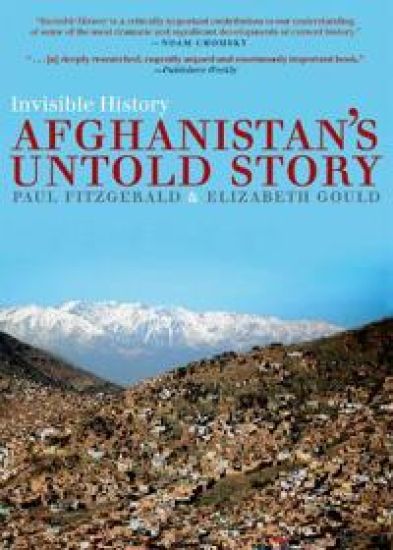
Despite official declarations, the war in Afghanistan is far from over; in fact, it's escalating. Seven years after 9/11, the Taliban continue to regroup, attack, and claim influence over most of the region. This book presents a fresh, comprehensive analysis of Afghanistan's political history that begins at the roots of tribal leadership and ultimately emphasizes our present political moment and the impact of ongoing US military intervention. Paul Fitzgerald and Elizabeth Gould, a husband and wife team, first went to Afghanistan in 1981 and have reported for CBS News, Nightline, and The MacNeil/Lehrer NewsHour. Their documentary Between Three Worlds was broadcast by PBS.
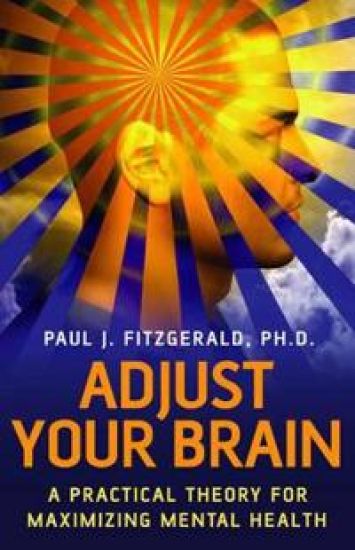
Adjust Your Brain – A Practical Theory for Maximising Mental Health
Paul Fitzgerald
John Hunt Publishing
2007
nidottu
"Adjust Your Brain" represents a landmark breakthrough for the field of psychiatry. It distils a synthesis of information from the scientific literature, popular literature, and personal experience into a simple model of brain chemistry that is easy to understand. The model is based on the interactions of three brain chemicals - aeserotonin, norepinephrine, and dopamine - aethat are acted upon by nearly every psychiatric medication. It suggests that the different "strengths" of these three chemicals produce different personality characteristics, and that the strength of at least one of the three is awry in most cases of mental illness, including depression, bipolar disorder, schizophrenia, eating disorders, and others. Tweaking the strengths of serotonin and norepinephrine with the existing drugs to mid-range and therefore optimal degrees not only treats nearly every type of mental illness, but also will produce a significant improvement in quality of life for most people who are considered normal. By adjusting your brain in this manner, you may not only become more passionately alive and truly content, but also live up to your full potential. If we as a society were to implement "The Adjustment" on an international scale, it may not only improve nearly everyone's lives, but also have very positive effects on human relationships and the very functioning of society.