Kirjojen hintavertailu – 12 903 724 kirjaa ja 27 kauppaa

Kirjailija

Paul G. Lewis

Kirjat ja teokset yhdessä paikassa: 8 kirjaa, julkaisuja vuosilta 1989–2023, suosituimpiin kuuluu Policing Immigrants. Vertaile teosten hintoja ja tarkista saatavuus suomalaisista kirjakaupoista.

8 kirjaa

Kirjojen julkaisuvuodet: 1989–2023.

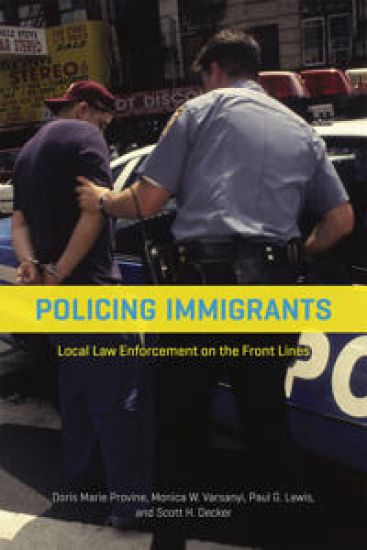
Policing Immigrants

Policing Immigrants

Doris Marie Provine; Monica W. Varsanyi; Paul G. Lewis; Scott H. Decker

University of Chicago Press
2016
nidottu
The United States deported nearly two million illegal immigrants during the first five years of the Obama presidency—more than during any previous administration. President Obama stands accused by activists of being “deporter in chief.” Yet despite efforts to rebuild what many see as a broken system, the president has not yet been able to convince Congress to pass new immigration legislation, and his record remains rooted in a political landscape that was created long before his election. Deportation numbers have actually been on the rise since 1996, when two federal statutes sought to delegate a portion of the responsibilities for immigration enforcement to local authorities. Policing Immigrants traces the transition of immigration enforcement from a traditionally federal power exercised primarily near the US borders to a patchwork system of local policing that extends throughout the country’s interior. Since federal authorities set local law enforcement to the task of bringing suspected illegal immigrants to the federal government’s attention, local responses have varied. While some localities have resisted the work, others have aggressively sought out unauthorized immigrants, often seeking to further their own objectives by putting their own stamp on immigration policing. Tellingly, how a community responds can best be predicted not by conditions like crime rates or the state of the local economy but rather by the level of conservatism among local voters. What has resulted, the authors argue, is a system that is neither just nor effective—one that threatens the core crime-fighting mission of policing by promoting racial profiling, creating fear in immigrant communities, and undermining the critical community-based function of local policing.
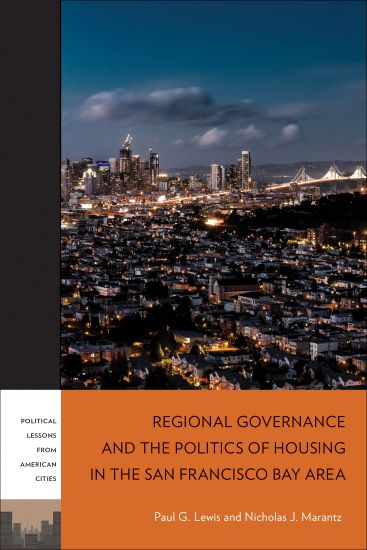
Regional Governance and the Politics of Housing in the San Francisco Bay Area

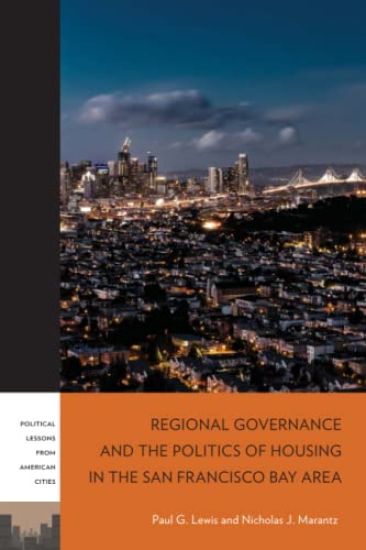
Regional Governance and the Politics of Housing in the San Francisco Bay Area

Paul G. Lewis; Nicholas J. Marantz

TEMPLE UNIVERSITY PRESS,U.S.
2023
nidottu
The San Francisco Bay Area is generally considered the most expensive regional housing market in the country. Because the region added jobs and residents at a faster rate than housing, rents and home prices escalated. Moreover, small municipalities, common in the most job-rich parts of the Bay Area, have strong political incentives to resist development of new multifamily housing. Regional Governance and the Politics of Housing in the San Francisco Bay Area explains how a decentralized, localistic structure of government shapes land-use politics in ways that exacerbate housing shortages and inequalities. The authors evaluate six potential reforms, arguing that targeted changes to local and regional institutions could generate durable improvements to the region’s housing opportunities. The main lesson from the case of the San Francisco Bay Area is the need to focus on governance when addressing the housing challenge. As the authors effectively illustrate, leaving a solution up to individual cities is unlikely to lead to increased housing supply.
Regional Governance and the Politics of Housing in the San Francisco Bay Area

Regional Governance and the Politics of Housing in the San Francisco Bay Area

Paul G. Lewis; Nicholas J. Marantz

TEMPLE UNIVERSITY PRESS,U.S.
2023
sidottu
The San Francisco Bay Area is generally considered the most expensive regional housing market in the country. Because the region added jobs and residents at a faster rate than housing, rents and home prices escalated. Moreover, small municipalities, common in the most job-rich parts of the Bay Area, have strong political incentives to resist development of new multifamily housing. Regional Governance and the Politics of Housing in the San Francisco Bay Area explains how a decentralized, localistic structure of government shapes land-use politics in ways that exacerbate housing shortages and inequalities. The authors evaluate six potential reforms, arguing that targeted changes to local and regional institutions could generate durable improvements to the region’s housing opportunities. The main lesson from the case of the San Francisco Bay Area is the need to focus on governance when addressing the housing challenge. As the authors effectively illustrate, leaving a solution up to individual cities is unlikely to lead to increased housing supply.
Central Europe Since 1945

Central Europe Since 1945

Paul G. Lewis

Routledge
2015
sidottu
Central Europe - here, Poland, the German Democratic Republic, Czechoslovakia and Hungary - is at the centre of international attention since the Soviet collapse. An understanding of its postwar history is critical to an appreciation of the challenges facing its present rulers. This is an engrossing account of the installation, development, operation and eventual downfall of its (very different) communist regimes, and the transition to the freedoms and uncertainties of the post-Soviet world. The book covers political, economic, social and cultural change, emphasising the crucial relationships with the USSR throughout.
Political Authority and Party Secretaries in Poland, 1975–1986
This 1989 book deals with the changing position and role of the Polish United Workers' Party and its apparatus between 1975 and 1986. Particular attention is paid to the provincial party organisation and to the party secretaries who direct its activities. Their role and the way they perform it is seen as a major determinant of the nature of party leadership and, more generally, of the strength of political authority in communist states: Dr Lewis argues that the protracted crisis of the Polish system reflects less the weakness of communist party power than critical problems encountered in accumulating and exercising authority. The crisis of 1980 was as much due to inadequate political strategies as to the economic failings of the Gierek regime, and during the solidarity period the party apparatus (and particularly the provincial organisation) acted as a major source of resistance: military rule provided little opportunity for a reassertion of party leadership or the consolidation of political authority. The individual biographies of over 700 party officials have been scrutinised to produce this major survey of Polish policy.
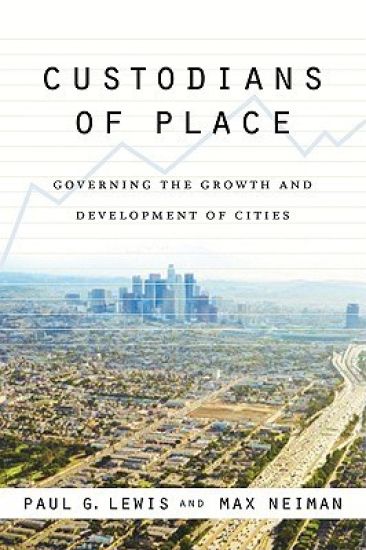
Custodians of Place

Custodians of Place

Paul G. Lewis; Max Neiman

Georgetown University Press
2009
pokkari
Custodians of Place provides a new theoretical framework that accounts for how different types of cities arrive at decisions about residential growth and economic development. Lewis and Neiman surveyed officials in hundreds of California cities of all sizes and socioeconomic characteristics to account for differences in local development policies. This book shows city governments at the center of the action in shaping their destinies, frequently acting as far-sighted trustees of their communities. They explain how city governments often can insulate themselves for the better from short-term political pressures and craft policy that builds on past growth experiences and future vision. Findings also include how conditions on the ground-local commute times, housing affordability, composition of the local labor force-play an important role in determining the approach a city takes toward growth and land use. What types of cities tend to aggressively pursue industrial or retail firms? What types of cities tend to favor housing over business development? What motivates cities to try to slow residential growth? Custodians of Place answers these and many other questions.
Central Europe Since 1945

Central Europe Since 1945

Paul G. Lewis

Longman
1994
nidottu
Central Europe - here, Poland, the German Democratic Republic, Czechoslovakia and Hungary - is at the centre of international attention since the Soviet collapse. An understanding of its postwar history is critical to an appreciation of the challenges facing its present rulers. This is an engrossing account of the installation, development, operation and eventual downfall of its (very different) communist regimes, and the transition to the freedoms and uncertainties of the post-Soviet world. The book covers political, economic, social and cultural change, emphasising the crucial relationships with the USSR throughout.
Political Authority and Party Secretaries in Poland, 1975–1986
This 1989 book deals with the changing position and role of the Polish United Workers' Party and its apparatus between 1975 and 1986. Particular attention is paid to the provincial party organisation and to the party secretaries who direct its activities. Their role and the way they perform it is seen as a major determinant of the nature of party leadership and, more generally, of the strength of political authority in communist states: Dr Lewis argues that the protracted crisis of the Polish system reflects less the weakness of communist party power than critical problems encountered in accumulating and exercising authority. The crisis of 1980 was as much due to inadequate political strategies as to the economic failings of the Gierek regime, and during the solidarity period the party apparatus (and particularly the provincial organisation) acted as a major source of resistance: military rule provided little opportunity for a reassertion of party leadership or the consolidation of political authority. The individual biographies of over 700 party officials have been scrutinised to produce this major survey of Polish policy.