Kirjojen hintavertailu – 12 867 529 kirjaa ja 27 kauppaa

Kirjailija

Paul G. Pickowicz

Kirjat ja teokset yhdessä paikassa: 7 kirjaa, julkaisuja vuosilta 1993–2020, suosituimpiin kuuluu A Sensational Encounter with High Socialist China. Vertaile teosten hintoja ja tarkista saatavuus suomalaisista kirjakaupoista.

Nimi esiintyy myös muodoissa: Paul G Pickowicz

7 kirjaa

Kirjojen julkaisuvuodet: 1993–2020.

Locating Taiwan Cinema in the Twenty-First Century

Locating Taiwan Cinema in the Twenty-First Century

Paul G Pickowicz; Yingjin Zhang

Cambria Press
2020
sidottu
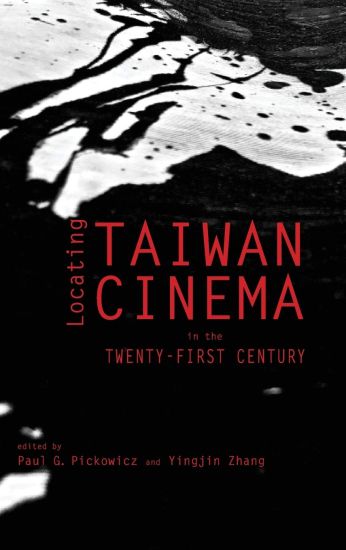
This book is in the Cambria Sinophone World Series headed by Victor H. Mair (University of Pennsylvania).*Includes images. Twenty-first-century Taiwan has been evolving in fascinating and complicated ways, in terms of culture, economy, politics, and society. This has led to renewed tensions in relations between the government of mainland China and various camps in Taiwan. In Taiwan, these tensions often focus on issues of identity. Who are the Taiwanese? How are the Taiwanese different from regional and global communities? How are the Taiwanese connected to these communities? Business leaders, factory workers, farmers, and migrants have their opinions. Cultural producers, including filmmakers and pop musicians, offer unique perspectives. Political parties, functioning in a democratic environment, fiercely debate these issues. Remarkably diverse ethnic groups contribute to this ongoing dialogue. This complex twenty-first-century debate in Taiwan is a politically healthy one that takes place both on and off screen. There has been much discussion of New Wave Taiwan cinema of the 1980s and 1990s, including research that studies the pathbreaking contributions of acclaimed directors like Hou Hsiao-hsien. This book updates the scholarship on Taiwan cinema by taking it into the twenty-first century. It is the first book to take a multidisciplinary approach to evaluating recent Taiwan films. The authors are specialists in cultural studies, history, and the social sciences, and they use different film materials and methodologies to analyze the ways in which filmmakers deal with the evolution of Taiwan's society, economy, and culture in the new century. The emphasis is placed on the diversity of approaches that characterize recent Taiwan cinema. Taiwanese filmmakers use many forms and genres to tackle pressing issues. In sharp contrast to the late-twentieth-century New Wave filmmakers who were widely regarded as producing "art films" that had little impact on the domestic market, many recent Taiwan films have enjoyed huge commercial success in Taiwan. This book probes many crucial controversies: What are Taiwan's meaningful cultural and historical connections to Japan? How do Taiwanese filmmakers and audiences feel about mainland China? How does Taiwan cinema deal with environmental issues, animal rights, human trafficking, sexuality, and the challenges facing ethnic minorities? Locating Twenty-First-Century Taiwan Cinema is an important book for collections in Asian studies, film studies, and the social sciences.
A Sensational Encounter with High Socialist China

A Sensational Encounter with High Socialist China

Paul G. Pickowicz

City University of Hong Kong Press
2019
nidottu
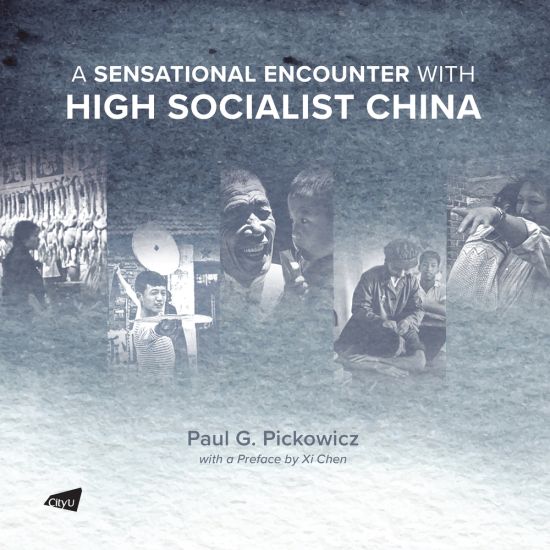
A Sensational Encounter with High Socialist China is a recollection of the historic visit of fourteen American students (and one Canadian) to China in 1971. The visit was one of the first approved for American scholars after the Chinese Communist Party came to power in 1949 and occurred prior to President Nixon’s famous trip (as well as that of a second group of scholars) in 1972. One of these students, Paul Pickowicz, kept a journal and photographically documented the trip. This book is a personal account of the events leading up to their visa approvals as well as those that occurred during the journey itself. The five senses are used to connect the reader to his experience and are placed in the context of a theatrical production. The images included have been selected from an archive at the University of California, San Diego, which digitized the author’s images as well as those of others in the Committee of Concerned Asian Scholars (CCAS) taken during both the 1971 and 1972 delegations.
China on Film

China on Film

Paul G. Pickowicz

Rowman Littlefield
2013
nidottu
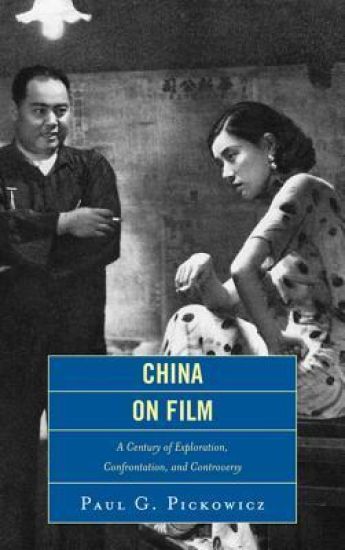
Leading scholar Paul G. Pickowicz traces the dynamic history of Chinese filmmaking and discusses its course of development from the early days to the present. Moving decade by decade, he explores such key themes as the ever-shifting definitions of modern marriage in 1920s silent features, East-West cultural conflict in the movies of the 1930s, the strong appeal of the powerful melodramatic mode of the 1930s and 1940s, the polarizing political controversies surrounding Chinese filmmaking under the Japanese occupation of Shanghai in the 1940s, and the critical role of cinema during the bloody civil war of the late 1940s. Pickowicz then considers the challenging Mao years, including chapters on legendary screen personalities who tried but failed to adjust to the new socialist order in the 1950s, celebrities who made the sort of artistic and political accommodations that would keep them in the spotlight in the post-revolutionary era, and insider film professionals of the early 1960s who actively resisted the most extreme forms of Maoist cultural production. The book concludes with explorations of the highly cathartic films of the early post-Mao era, edgy postsocialist movies that appeared on the eve of the Tiananmen demonstrations of 1989, the relevance of the Eastern European “velvet prison” cultural production model, and the rise of underground and independent filmmaking beginning in the 1990s. Throughout its long history of film production, China has been embroiled in a seemingly unending series of wars, revolutions, and jarring social transformations. Despite daunting censorship obstacles, Chinese filmmakers have found ingenious ways of taking political stands and weighing in—for better or worse—on the most explosive social, cultural, and economic issues of the day. Exploring the often gut-wrenching controversies generated by their work, Pickowicz offers a unique and perceptive window on Chinese culture and society.
China on Film

China on Film

Paul G. Pickowicz

Rowman Littlefield
2011
sidottu
Leading scholar Paul G. Pickowicz traces the dynamic history of Chinese filmmaking and discusses its course of development from the early days to the present. Moving decade by decade, he explores such key themes as the ever-shifting definitions of modern marriage in 1920s silent features, East-West cultural conflict in the movies of the 1930s, the strong appeal of the powerful melodramatic mode of the 1930s and 1940s, the polarizing political controversies surrounding Chinese filmmaking under the Japanese occupation of Shanghai in the 1940s, and the critical role of cinema during the bloody civil war of the late 1940s. Pickowicz then considers the challenging Mao years, including chapters on legendary screen personalities who tried but failed to adjust to the new socialist order in the 1950s, celebrities who made the sort of artistic and political accommodations that would keep them in the spotlight in the post-revolutionary era, and insider film professionals of the early 1960s who actively resisted the most extreme forms of Maoist cultural production. The book concludes with explorations of the highly cathartic films of the early post-Mao era, edgy postsocialist movies that appeared on the eve of the Tiananmen demonstrations of 1989, the relevance of the Eastern European “velvet prison” cultural production model, and the rise of underground and independent filmmaking beginning in the 1990s. Throughout its long history of film production, China has been embroiled in a seemingly unending series of wars, revolutions, and jarring social transformations. Despite daunting censorship obstacles, Chinese filmmakers have found ingenious ways of taking political stands and weighing in—for better or worse—on the most explosive social, cultural, and economic issues of the day. Exploring the often gut-wrenching controversies generated by their work, Pickowicz offers a unique and perceptive window on Chinese culture and society.
Radicalism, Revolution, and Reform in Modern China

Radicalism, Revolution, and Reform in Modern China

Catherine Lynch; Robert B. Marks; Paul G. Pickowicz

Lexington Books
2011
sidottu
This volume illuminates the relationship of China's radical past to its reformist present as China makes a way forward through very differently conceived and contested visions of the future. In the context of early twenty-first century problems and the failures of global capitalism, is China's history of revolutionary socialism an aberration that is soon to be forgotten, or can it serve as a resource for creating a more fully human and radically democratic China with implications for all of us? Ranging from the early years of China's revolutionary twentieth-century to the present, the essays collected here look at the past and present of China with a view toward better understanding the ideas, ideals, and people who have dared to imagine radical transformation of their worlds and to assess the conceptual, political, and social limitations of these visions and their implementations. The volume's chapters focus on these issues from a range of vantage points, representing a spectrum of current scholarship. The first half of the book brings new insights to understanding how early-twentieth century intellectuals interpreted ideas that allowed them to break with China's past and to envision new paths to a modern future. It treats of Chen Duxiu, a founder of the Communist party, Mao Zedong, and Mao in relation to the non-Communist Liang Shuming and with the Dalai Lama. With continuing threads of nation and nationalities, of peasants, utopias and dystopias linking the chapters, the book's second half looks broadly at the consequences of the implementations of radical ideas, at the same time critiquing our accepted frameworks of analysis. Moving up to the present, the book investigates the effects of the reforms since the 1980s on long-term environmental degradation and on the emergence of a capitalist rural economy. It gives an unsparing view into contemporary rural China through independent films. The book concludes with an analysis of the unshakable persistence of the shibboleth, "the rise of China," in popul
Revolution, Resistance, and Reform in Village China

Revolution, Resistance, and Reform in Village China

Edward Friedman; Paul G. Pickowicz; Mark Selden

Yale University Press
2007
pokkari
Drawing on more than a quarter century of field and documentary research in rural North China, this book explores the contested relationship between village and state from the 1960s to the start of the twenty-first century. The authors provide a vivid portrait of how resilient villagers struggle to survive and prosper in the face of state power in two epochs of revolution and reform. Highlighting the importance of intra-rural resistance and rural-urban conflicts to Chinese politics and society in the Great Leap and Cultural Revolution, the authors go on to depict the dynamic changes that have transformed village China in the post-Mao era. This book continues the dramatic story in the authors’ prizewinning Chinese Village, Socialist State. Plumbing previously untapped sources, including interviews, archival materials, village records and unpublished memoirs, diaries and letters, the authors capture the struggles, pains and achievements of villagers across three generations of social upheaval.
Chinese Village, Socialist State

Chinese Village, Socialist State

Edward Friedman; Paul G. Pickowicz; Mark Selden; Kay Ann Johnson

Yale University Press
1993
pokkari
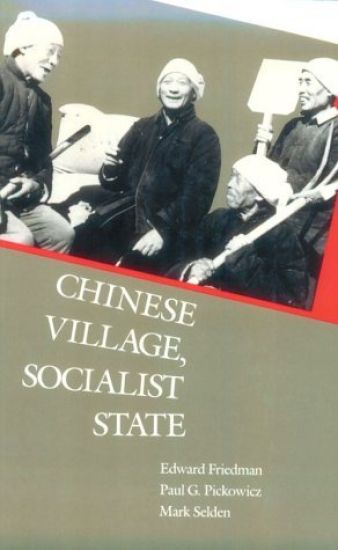
The detailed portrait of social change in the North China plain depicts how the world of the Chinese peasant evolved during an era of war and revolution and how it in turn shaped the revolutionary process. The authors spent a decade interviewing villagers and rural officials, exploring archives, and investigating villagers with diverse resources and cultural, traditions, and they vividly describe both the promise and the human tragedy of China’s rural revolution. Exploring the decades before and after the establishment of the People’s Republic in 1949, they trace the growing economic desperation and cultural disintegration that led to the revolution, the reforms undertaken by the Communist leadership that initially brought economic gains and cultural healing, and the tensions that soon developed between party and peasantry. They show that the Communist antimarket and collectivist strategies which culminated in the imposed collectivization of 1955-56 and the disastrous Great Leap Forward of 1958-60, clashed with cherished peasant cultural norms and economic aspirations. Eventually the party’s attack on peasant values and interests, the authors find, produced a rupture that threatened both developmental and socialist goals and destroyed the democratic potential of the revolution at its best.