Kirjojen hintavertailu – 12 876 058 kirjaa ja 26 kauppaa
Kirjailija
Paul Gibbs
Kirjat ja teokset yhdessä paikassa: 9 kirjaa, julkaisuja vuosilta 2001–2020, suosituimpiin kuuluu Marketing Higher and Further Education. Vertaile teosten hintoja ja tarkista saatavuus suomalaisista kirjakaupoista.
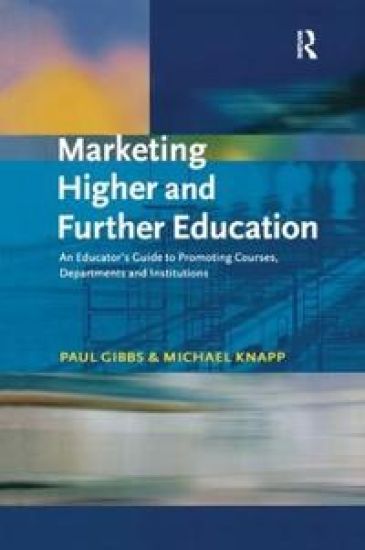
A manual for anyone wishing to market higher or further education. It offers business-oriented guidance for readers whose main preoccupation may not be marketing itself, but who nonetheless need access to promotion skills, and it covers theory, practice and case studies.
A manual for anyone wishing to market higher or further education. It offers business-oriented guidance for readers whose main preoccupation may not be marketing itself, but who nonetheless need access to promotion skills, and it covers theory, practice and case studies.
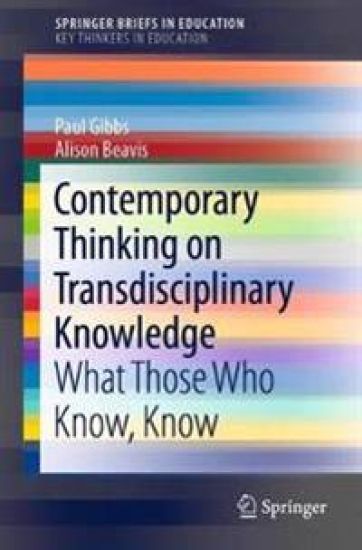
How can we understand what a transdisciplinary (TD) approach might actually comprise of, given its complex and various uses? This book asks the question of leading practitioners in the field of higher education and transdisciplinarity. The emergence of transdisciplinarity has been a response to the often-failed closed-system, discipline-based approaches to solving complex social problems (various reports and definitions may be found in projects reported by the OECD, UNESCO and EU). These failures are often contingent upon disaggregated notions of epistemology and the compounding failures of ontological incongruities that are evident in these discipline-based approaches. Such approaches are not necessarily confined to large, seemingly insurmountable social problems, but apply equally well to issues in educational institutions as workplaces. Transdisciplinary knowledge is in the liberation of new and imaginative understanding of the structured reality of open social systems. It gives rise to generative mechanisms, which are central to relationships of agency and structure.
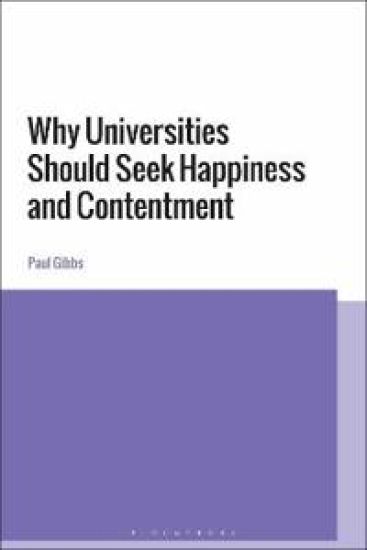
The totalising effect of consumerism, well-being and satisfaction is a discourse which may negate the value of struggle and mastery of complex subjects and a realization of personal potentiality. Published open access, Why Universities Should Seek Happiness and Contentment considers the consequences of a hedonistic and well-being centred model of student education as one of the goals of higher education and proposes an alternative goal for higher education. In a globalised consumer society where the anxiety for an identity leads to the fear of not reaching the standard, Paul Gibbs shows how anxiety can be harnessed to secure contentment with one’s own future without the fear of consumer-induced emptiness. He conceptualises higher education in a counter-valued way to the current dominant discourse of higher education institutions and educational policy while placing students at the centre of their own educational activity. In doing so, Gibbs proposes contentment as a guiding principle of higher education. The ebook editions of this book are available open access under a CC BY-NC-ND 4.0 licence on bloomsburycollections.com. Open access was funded by Knowledge Unlatched.
The totalising effect of consumerism, well-being and satisfaction is a discourse which may negate the value of struggle and mastery of complex subjects and a realization of personal potentiality. Published open access, Why Universities Should Seek Happiness and Contentment considers the consequences of a hedonistic and well-being centred model of student education as one of the goals of higher education and proposes an alternative goal for higher education. In a globalised consumer society where the anxiety for an identity leads to the fear of not reaching the standard, Paul Gibbs shows how anxiety can be harnessed to secure contentment with one’s own future without the fear of consumer-induced emptiness. He conceptualises higher education in a counter-valued way to the current dominant discourse of higher education institutions and educational policy while placing students at the centre of their own educational activity. In doing so, Gibbs proposes contentment as a guiding principle of higher education. The ebook editions of this book are available open access under a CC BY-NC-ND 4.0 licence on bloomsburycollections.com. Open access was funded by Knowledge Unlatched.
This book seeks to develop the philosophy of Heidegger notion and reflects the growing importance of work based studies which is becoming of special interest to higher education institutions and commercial organisations. The author acknowledges the dominance of the economic discourse of higher education, but in this book he tries to argue that Heidegger offers a phenomenological approach to understanding the diversity to higher education that work based learning can bring. The book offers a structured argument for a phenomenological understanding of both the educational institution and the commercial environment to be considered as workplaces.
This book seeks to develop the philosophy of Heidegger notion and reflects the growing importance of work based studies which is becoming of special interest to higher education institutions and commercial organisations. The author acknowledges the dominance of the economic discourse of higher education, but in this book he tries to argue that Heidegger offers a phenomenological approach to understanding the diversity to higher education that work based learning can bring. The book offers a structured argument for a phenomenological understanding of both the educational institution and the commercial environment to be considered as workplaces.
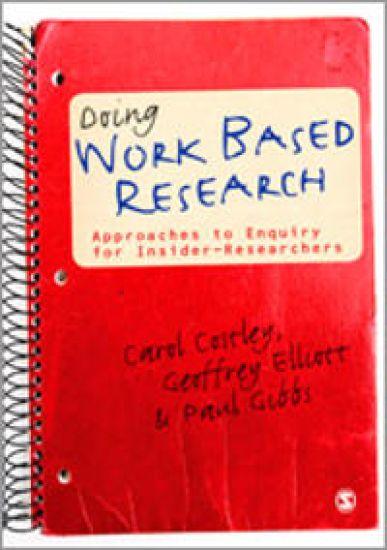
With the growth of work based learning and practitioner research this book leads the way by addressing key issues faced by 'insider-researchers' - learners, practitioners and managers doing research projects in the organizations and communities in which they themselves work, or where they are already familiar with the setting. The authors explore the implications of these research contexts, and discuss approaches and methodologies that work based researchers might adopt, with a particular focus on ethics - one of the key concerns for those undertaking a research project of this type. This book is an authoritative and readable guide to the theory and practice of work based research. It is for anyone undertaking a research project based on work practice, including learners on postgraduate, undergraduate and doctoral programmes. Practitioners, managers and participants in work based courses or modules in education, healthcare and business management, will find it particularly useful.
With the growth of work based learning and practitioner research this book leads the way by addressing key issues faced by 'insider-researchers' - learners, practitioners and managers doing research projects in the organizations and communities in which they themselves work, or where they are already familiar with the setting. The authors explore the implications of these research contexts, and discuss approaches and methodologies that work based researchers might adopt, with a particular focus on ethics - one of the key concerns for those undertaking a research project of this type. This book is an authoritative and readable guide to the theory and practice of work based research. It is for anyone undertaking a research project based on work practice, including learners on postgraduate, undergraduate and doctoral programmes. Practitioners, managers and participants in work based courses or modules in education, healthcare and business management, will find it particularly useful.