Kirjojen hintavertailu – 12 859 818 kirjaa ja 27 kauppaa

Kirjailija

Paul Gilbert

Kirjat ja teokset yhdessä paikassa: 54 kirjaa, julkaisuja vuosilta 1992–2026, suosituimpiin kuuluu Yogahjärnan. Vertaile teosten hintoja ja tarkista saatavuus suomalaisista kirjakaupoista.

54 kirjaa

Kirjojen julkaisuvuodet: 1992–2026.

Overcoming Depression 3rd Edition
Overcoming app now available via iTunes and the Google Play Store. A Books on Prescription Title Break free from the hell of depression If you suffer from depression you are far from alone. Depression is very common, affecting over 300 million people around the world. Written by Professor Paul Gilbert, internationally recognised for his work on depression, this highly acclaimed self-help book has been of benefit to thousands of people including sufferers, their friends and families, and those working in the medical profession. This fully revised third edition has been extensively updated and rewritten to reflect over ten years of new research on understanding and treating depression, particularly the importance of developing compassionate ways of thinking, behaving and feeling. It contains helpful case studies and new, easy-to-follow, step-by-step suggestions and exercises to help you understand your depression and lift your mood.

Å bekjempe depresjon

Å bekjempe depresjon

Paul Gilbert

Tapir Akademisk Forlag
2007
nidottu
Å BEKJEMPE-bøkene er en serie selvhjelpsguider skrevet av spesialister innenfor hvert sitt felt. Bøkene bygger på kognitiv atferdsterapi. De inneholder konkrete teknikker og metoder som kan brukes i en lang rekke situasjoner, og samtidig virker forebyggende i forbindelse med muligheten for tilbakefall. En selvhjelpsguide basert på kognitiv terapi . Denne boka er en uunnværlig selvhjelpsguide for den som er rammet av depresjon. Her finnes verktøy som leseren selv kan bruke for å bekjempe depresjonen. Skritt for skritt leder den leseren gjennom prosessen med å komme de negative automatiske tankene til livs.
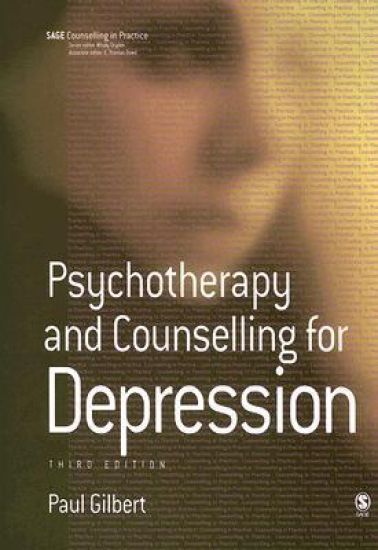
Psychotherapy and Counselling for Depression

Psychotherapy and Counselling for Depression

Paul Gilbert

SAGE Publications Inc
2007
sidottu
`Excellent! Excellent! Excellent! I would thoroughly recommend this book to any other counsellor of psychotherapist. It is described on the back cover as 'outstanding', 'valuable' and an 'essential resource' and I would fully endorse all of these descriptions. I have been qualified for 10 years and have had extensive client experience, but feel I have gained so much from Gilbert's wisdom on this topic. It is excellent value for money and again I would recommend it to any practitioner' - The Independent Practitioner 'This book takes the reader gently but thoroughly through the biopsychosocial processes that underpin depression. Excellent worksheets and information sheets are provided as appendices. [It] is a valuable resource for those who already work with depression and essential reading for those considering working in this field' - Therapy Today `Paul Gilbert provides the reader with a refreshingly wide-ranging, integrative and up-to-date understanding of the nature, assessment and treatment of depression. All psychological therapists will benefit from reading his important book' - Healthcare Counselling and Psychotherapy Journal `Paul Gilbert writes in a scholarly, yet accessible, style on the bio-psychosocial perspectives of depression. I agree with him that knowledge of such areas is crucial to being able to work effectively with people experiencing depression' - Nursing Standard, 5 star review `Psychotherapy and Counselling for Depression, Third Edition by the distinguished psychologist, Paul Gilbert, is an outstanding contribution to the field. I read this book with great enthusiasm and interest - and, I must acknowledge - admiration. All clinicians will benefit from reading this valuable book' - Robert L. Leahy, President, International Association for Cognitive Psychotherapy Paul Gilbert's Psychotherapy and Counselling for Depression, Third Edition is a popular and practical guide to working with people suffering from depression. The book is based on a wealth of research into evolutionary, cognitive, behavioural and emotion-focused approaches to depression. It outlines how to work with general negativity, sense of failure and abandonment, and feelings of powerlessness, anger, shame and guilt The book examines the essential stages of the therapeutic process from conceptualization and formulation through to a wide variety of interventions for different types of difficulty. It has been greatly revised, expanded and updated for the Third Edition and: o explores in depth the biopsychosocial processes underpinning depression o shows how a compassionate mind approach can be incorporated into different types of therapy o includes a new chapter focusing on the role of the therapeutic relationship, including therapeutic dialogues o features detailed guidance with case examples on how to work with a wide variety of depressions. Psychotherapy and Counselling for Depression, Third Edition is an essential resource and comprehensive guide for practitioners and anyone involved with treating depression. Paul Gilbert is Professor of Psychology in the Mental Health Research Unit at Kingsway Hospital, Derby.
Psychotherapy and Counselling for Depression

Psychotherapy and Counselling for Depression

Paul Gilbert

SAGE Publications Inc
2007
nidottu
`Excellent! Excellent! Excellent! I would thoroughly recommend this book to any other counsellor of psychotherapist. It is described on the back cover as 'outstanding', 'valuable' and an 'essential resource' and I would fully endorse all of these descriptions. I have been qualified for 10 years and have had extensive client experience, but feel I have gained so much from Gilbert's wisdom on this topic. It is excellent value for money and again I would recommend it to any practitioner' - The Independent Practitioner 'This book takes the reader gently but thoroughly through the biopsychosocial processes that underpin depression. Excellent worksheets and information sheets are provided as appendices. [It] is a valuable resource for those who already work with depression and essential reading for those considering working in this field' - Therapy Today `Paul Gilbert provides the reader with a refreshingly wide-ranging, integrative and up-to-date understanding of the nature, assessment and treatment of depression. All psychological therapists will benefit from reading his important book' - Healthcare Counselling and Psychotherapy Journal `Paul Gilbert writes in a scholarly, yet accessible, style on the bio-psychosocial perspectives of depression. I agree with him that knowledge of such areas is crucial to being able to work effectively with people experiencing depression' - Nursing Standard, 5 star review `Psychotherapy and Counselling for Depression, Third Edition by the distinguished psychologist, Paul Gilbert, is an outstanding contribution to the field. I read this book with great enthusiasm and interest - and, I must acknowledge - admiration. All clinicians will benefit from reading this valuable book' - Robert L. Leahy, President, International Association for Cognitive Psychotherapy Paul Gilbert's Psychotherapy and Counselling for Depression, Third Edition is a popular and practical guide to working with people suffering from depression. The book is based on a wealth of research into evolutionary, cognitive, behavioural and emotion-focused approaches to depression. It outlines how to work with general negativity, sense of failure and abandonment, and feelings of powerlessness, anger, shame and guilt The book examines the essential stages of the therapeutic process from conceptualization and formulation through to a wide variety of interventions for different types of difficulty. It has been greatly revised, expanded and updated for the Third Edition and: o explores in depth the biopsychosocial processes underpinning depression o shows how a compassionate mind approach can be incorporated into different types of therapy o includes a new chapter focusing on the role of the therapeutic relationship, including therapeutic dialogues o features detailed guidance with case examples on how to work with a wide variety of depressions. Psychotherapy and Counselling for Depression, Third Edition is an essential resource and comprehensive guide for practitioners and anyone involved with treating depression. Paul Gilbert is Professor of Psychology in the Mental Health Research Unit at Kingsway Hospital, Derby.
The World, the Flesh and the Subject

The World, the Flesh and the Subject

Paul Gilbert; Kathleen Lennon

Edinburgh University Press
2005
nidottu
Here, for the first time, contemporary Continental thought comes into conversation with analytic philosophy on all the principal topics of philosophy of mind. Rejecting the dominant Anglo-American paradigm, which reduces mental phenomena to their roles in a scientific psychology, the authors present a non-mysterious, naturalistic alternative. Characterising mental life is, they seek to show, capturing the world from the point of view of the subject. But the subject is essentially embodied, so that mental phenomena are modes of our fleshly existence in the world. The book aims to bring together these three themes - the world,the flesh and the subject - to resolve many of the puzzles that beset contemporary philosophy of mind. It thereby provides a coherent new approach which draws upon phenomenology, hermeneutics, psycho-analysis and poststructuralism, and relates recent feminist work on the body to traditional concerns with the mind. The topics discussed include the problem of consciousness, perception and sensation, imagination, desire, emotion, reason and agency, and the self and others. Features * Brings continental thought to bear on contemporary philosophy of mind * Offers a new approach to problems of mind * Brings recent work on the body together with traditional concerns with the mind * Treats philosophy of mind in a topic oriented way
The World, the Flesh and the Subject

The World, the Flesh and the Subject

Paul Gilbert; Kathleen Lennon

Edinburgh University Press
2005
sidottu
Here, for the first time, contemporary Continental thought comes into conversation with analytic philosophy on all the principal topics of philosophy of mind. Rejecting the dominant Anglo-American paradigm, which reduces mental phenomena to their roles in a scientific psychology, the authors present a non-mysterious, naturalistic alternative. Characterising mental life is, they seek to show, capturing the world from the point of view of the subject. But the subject is essentially embodied, so that mental phenomena are modes of our fleshly existence in the world. The book aims to bring together these three themes - the world,the flesh and the subject - to resolve many of the puzzles that beset contemporary philosophy of mind. It thereby provides a coherent new approach which draws upon phenomenology, hermeneutics, psycho-analysis and poststructuralism, and relates recent feminist work on the body to traditional concerns with the mind. The topics discussed include the problem of consciousness, perception and sensation, imagination, desire, emotion, reason and agency, and the self and others. Features * Brings continental thought to bear on contemporary philosophy of mind * Offers a new approach to problems of mind * Brings recent work on the body together with traditional concerns with the mind * Treats philosophy of mind in a topic oriented way
New Terror, New Wars

New Terror, New Wars

Paul Gilbert

Edinburgh University Press
2003
nidottu
This is a timely philosophical treatment of the current wave of international terrorism and armed conflicts around the world and the dangers they represent. The book discusses: * The ethical significance of September 11th and its aftermath * The causes of new wars in the politics of identity * When armed force in pursuit of political goals is justified * Whether Just War Theory is adequate for assessing and regulating contemporary conflicts * How terrorism should be combatted * How external intervention and war crimes trials help or hinder the cause of peace * What an international order that both respects cultural differences and achieves peace should be like. Interdisciplinary and wide ranging in scope the book draws on examples from the Middle East, the former Soviet bloc and elsewhere. It will be required reading for all those concerned with the ethical issues raised by contemporary armed conflicts.
Peoples, Cultures and Nations in Political Philosophy

Peoples, Cultures and Nations in Political Philosophy

Paul Gilbert

Edinburgh University Press
2000
nidottu
Wars of national secession and ethnic cleansing have disfigured recent years. These conflicts stem from claims that the same territory is occupied by separate 'peoples' for whom separate political arrangements should be made. Such claims are based on their supposedly distinct racial, ethnic, cultural or national identities. What, though, do such identities really amount to and what ought to be their role in determining the configuration and character of states? This has become a key concern of contemporary political philosophy and this book introduces readers to the materials required to address it: * The concepts of race and ethnicity, cultural identity and nationality * The relevant political theories, including liberalism, communitarianism and postmodernism * The topics of citizenship and migration, multiculturalism, and the ethics of secession This is the first comprehensive survey of a highly topical issue and its multidisciplinary approach will make it of relevance to courses in philosophy, politics, sociology and cultural studies, as well as of interest to the general reader.
Philosophy Of Mind

Philosophy Of Mind

Paul Gilbert; Kathleen Lennon

Routledge
1998
nidottu
A welcome introduction to one of the most intellectually demanding areas of the undergraduate philosophy curriculum. The authors provide a clear framework within which students can fit contemporary developments in the Anglo-American tradition which provide the core themes of philosophy of mind and which connect to their other work in epistemology and philosophy of language.
The Philosophy Of Nationalism

The Philosophy Of Nationalism

Paul Gilbert

Westview Press Inc
1998
pokkari
In this, the first truly philosophical study of nationalism, Paul Gilbert attempts to make sense of the fact that there are different sorts of nationalism,for example, political and cultural,and that each concept functions with a different understanding of what a nation is. He sets out to explore whether there are any common ideas about what constitutes nationhood and whether these nations" have particular rights due to them. By treating nationalism as a coherent body of ideas, the text permits a rational reconstruction of the origins of nationalist movements. The book also examines the work of many key theorists, including Mill, Hume, Gramsci, and Gellner, in its coverage of secession, immigration, cultural rights and multiculturalism, and the aesthetics of nationalism.
Terrorism, Security and Nationality
Terrorism, Security and Nationality shows how the ideas and techniques of political philosophy can be applied to the practical problems of terrorism, State violence and national identity. In doing so it clarifies a wide range of issues in applied political philosophy including ethics of war; theories of state and nation; the relationship between communities and nationalisms; human rightss and national security. Paul Gilbert identifies conflicting conceptiona of civil strife by different political communities and investigates notions of terrorism both as unjust war and as political crime. He concludes by considering the proper response of the State to political violence.
Human Nature And Suffering

Human Nature And Suffering

Paul Gilbert

Psychology Press Ltd
1992
nidottu
This volume explores the implications of humans as evolved social animals. Gilbert suggests that evolution has given rise to a varied set of social competencies which form the basis of our personal knowledge and understanding. These competencies are classified as: a) Care eliciting b) Care giving c) Co?operating and d) Competing. Each of these are seen as core schemata, or archetypal potentials around which knowledge is built, and from which, our propensity for suffering flow. For example our predisposition to think of ourselves as superior or inferior to others comes from innate competencies which evolve from dominance and social ranking. Gilbert shows how primitive competencies become modified by experience and what happens when this modification is unsatisfactory, for example leading to preoccupations with fantasy and behaviour which is dominance and power focused. Throughout the text Gilbert shows how two psychological systems (derived from ethological and experimental work), labelled the defense and safety system dominate the unfolding and integration of human mental life. In the last chapter these varied themes are brought together to indicate how the social construction of self arises from the organization of knowledge encoded within the four competencies. Gilbert highlights how cultural factors may modify and activate many of our more primitive competencies leading not only to pathology proneness but also to behaviours that are collectively survival threatening.
Depression

Depression

Paul Gilbert

Psychology Press Ltd
1992
nidottu
First published in 1992. This book aims to bring the reader up to date on current research, theory and conceptualisations of the depressive disorders. It offers a new perspective derived from evolution theory and argues for the adoption of the biopsycho­ social model. Part I explores the major distinctions between all types of depression, including discussion of seasonal affective disorder, postnatal depression and depression in children. The chapter on epidemiology covers issues of prevalence, relapse, long term outcome and chronic depression. The relationship between depression and various approaches to personality and personality disorder are also covered in detail. Part II offers an overview of evolution theory and its application to depression. Special attention is given to social comparison, submissive behaviour, sense of inferiority, helplessness and weakness, shame, guilt, anger and resentment, and envy in depression. These are seen to relate to two basic, central human concerns, social power and belonging. This approach offers a coherent account of why these various aspects of functioning are often part of depressive experience. Part III covers the major theories of depression, including psychoanalytic, object relations, archetype, mentality, attachment, self psychology, incentive, cognitive, behavioural and social. Theories are compared and contrasted, highlighting controversies, weaknesses and strengths, and where cross fertilisation of ideas may be beneficial. The final chapter outlines why simple theories of aetiology are inadequate and explores the role of culture and social relationships as elicitors of many forms of depression.