
Kirjailija
Paul Gilk
Kirjat ja teokset yhdessä paikassa: 10 kirjaa, julkaisuja vuosilta 2008–2016, suosituimpiin kuuluu Picking Fights with the Gods. Vertaile teosten hintoja ja tarkista saatavuus suomalaisista kirjakaupoista.
10 kirjaa
Kirjojen julkaisuvuodet: 2008–2016.
Growing up in the mostly wooded rural countryside of northern Wisconsin, in the decades immediately after the Second World War, meant immersion in cultural transformation. An economy of subsistence and self-provisioning was rapidly becoming industrialized and commercial. The culture of the local and small-scale was being overpowered by the metropolitan and large-scale. This experience provided the practical groundedness for exploring the decline and even the demise of small-scale farming, not just in northern Wisconsin, but as an example and illustration of how industrialization and globalization undermine local rural culture everywhere. Linked with an ecological critique that asserts the unsustainability of globalized industrialism, the exploration into the meaning of rural culture took on larger significance, especially when seen in relation to the collapse of all prior civilizations. In addition, the investigation into the origins of civilization revealed the predatory relationship civilization developed in regard to agriculture and rural life. The rampant globalization of civilization results in the destitution and impoverishment of agrarian culture. The question then becomes whether civilization has finally achieved the technical mastery by which to protect and extend itself permanently or whether its complexity only assures a more catastrophic collapse or whether civilization may learn to be flexible enough to merge with an essentially noncivilized folk culture to create a new cultural sensibility that enhances the best of both worlds. This is the question the entire world is now facing. Weapons of mass destruction, climate change, and peak oil all combine the force a resolution to this dilemma.
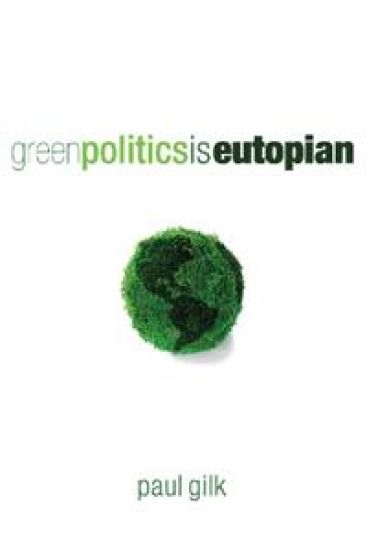
Various thinkers have attempted to explain the Earth-altering (even ecocidal) features in modern life. Jacques Ellul, for instance, a French intellectual, became famous for his exposition of ""technique."" But ""technique"" does not adequately address the institutional incubation out of which ""technique"" itself arises. In these essays, Paul Gilk stands on the shoulders of two American scholars in particular. One is world historian Lewis Mumford, whose career spanned fifty years. The other is classics professor Norman O. Brown, who brought his erudition into a systematic study of Freud. From these intellectuals especially, Gilk concludes that the accelerating ecocidal characteristics of ""globalization"" are inherent manifestations of perfectionist, utopian, predatory institutions endemic to civilization. Our great difficulty in arriving at or accepting this conclusion is that ""civilization"" contains no negatives. It is strictly a positive construct. We are therefore incapable of thinking critically about it. A corrective is slowly emerging from Green intellectuals. Green politics, says Gilk, is not utopian but ""eutopian."" It is not aimed at perfectionist immortality but rather at earthly wholeness. Yet the ethical message of Green politics confronts a society saturated with utopian mythology. The question is to what extent and at what speed ecological and cultural breakdown will dissolve civilized, utopian certitudes and provide the requisite openings for the growth of Green, eutopian culture.
Various thinkers have attempted to explain the Earth-altering (even ecocidal) features in modern life. Jacques Ellul, for instance, a French intellectual, became famous for his exposition of ""technique."" But ""technique"" does not adequately address the institutional incubation out of which ""technique"" itself arises. In these essays, Paul Gilk stands on the shoulders of two American scholars in particular. One is world historian Lewis Mumford, whose career spanned fifty years. The other is classics professor Norman O. Brown, who brought his erudition into a systematic study of Freud. From these intellectuals especially, Gilk concludes that the accelerating ecocidal characteristics of ""globalization"" are inherent manifestations of perfectionist, utopian, predatory institutions endemic to civilization. Our great difficulty in arriving at or accepting this conclusion is that ""civilization"" contains no negatives. It is strictly a positive construct. We are therefore incapable of thinking critically about it. A corrective is slowly emerging from Green intellectuals. Green politics, says Gilk, is not utopian but ""eutopian."" It is not aimed at perfectionist immortality but rather at earthly wholeness. Yet the ethical message of Green politics confronts a society saturated with utopian mythology. The question is to what extent and at what speed ecological and cultural breakdown will dissolve civilized, utopian certitudes and provide the requisite openings for the growth of Green, eutopian culture. The fact that few of the books on Green Politics articulate the relevance of a neo-agrarian future makes Paul Gilk's book especially important as we face the end of cheap oil and/or climate change. Gilk's eutopian vision will help our bankrupt industrial civilization come to a soft landing rather than a crash. --Maynard Kaufman, Retired professor of religion and environmental studies at Western Michigan University and organic farmer. Paul Gilk is one of those who long ago foresaw the full extent of the environmental and social disasters facing the industrial world. In these essays, as in his earlier work, he dares to challenge not only the abuses and excesses of a global economy, but the very dream of urban civilization itself. With an eloquent voice and a ferociously independent mind, he examines our human condition in the 21st century. --Rhoda R. Gilman, Editor: Selections from Minnesota History (1968); Ringing in the Wilderness: Selections from the North Country Anvil (1996); Author: The Story of Minnesota's Past (1989); Henry Hastings Sibley, Divided Heart (2004); The Universality of Unknowing: Luther Askeland and the Wordless Way (2007). Paul Gilk serves as a powerful and prophetic voice for a profound and transformative Green Vision. His is not the green politics of trendy and upscale consumer alternatives. Gilk draws deeply from our history to chart a way to a genuinely sustainable future. Along the way he exposes many ""an inconvenient truth"" about our assumptions about society and the economy. Green Politics is Eutopian challenges the political practice of both mainstream environmentalists and militant Greens and calls them to an entirely different relationship with Nature. - Dennis Boyer, author and folklorist, co-founder of the Wisconsin Greens, co-editor of the land use anthology A Place to Which We Belong Paul Gilk is an independent intellectual who lives in the woods of northern Wisconsin. A long practitioner of ""voluntary poverty,"" he chose a life of deliberate retreat by building and living in a small cabin for nearly twenty years before reconstructing a nineteenth-century log house, both homes without electricity or running water. He is married to a Swiss citizen, Susanna Juon. Between them, they have seven grown children.