Kirjojen hintavertailu – 12 903 725 kirjaa ja 27 kauppaa

Kirjailija

Paul Goodman

Kirjat ja teokset yhdessä paikassa: 30 kirjaa, julkaisuja vuosilta 1964–2026, suosituimpiin kuuluu Moses Montefiore. Vertaile teosten hintoja ja tarkista saatavuus suomalaisista kirjakaupoista.

30 kirjaa

Kirjojen julkaisuvuodet: 1964–2026.

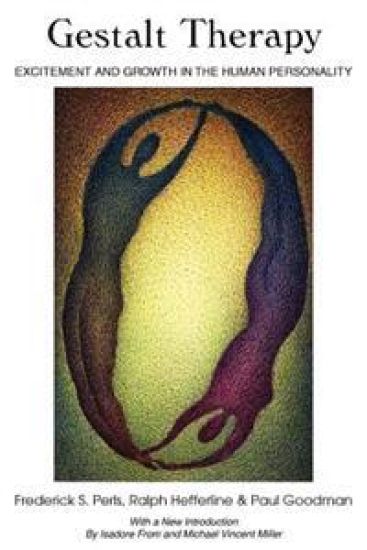
Gestalttherapie

Gestalttherapie

Frederick S. Perls; Ralph F. Hefferline; Paul Goodman

Klett-Cotta Verlag
2007
nidottu
"Reifung ist ein fortwährender Prozess des Sichlösens von den Stützen der Umwelt, wobei Selbständigkeit entwickelt wird, was bedeutet, dass Abhängigkeiten immer geringer werden." Um diesen fortwährenden Prozess des Gestaltgewinnens des Ganzheitlichen geht es in diesem Band. Der Leser wird aufgefordert zum Mitmachen von Experimenten, was ihm das "Gewahrwerden" ermöglicht. Hierbei wird er nach und nach in die Grundbegriffe der Gestalttheorie wie offene und geschlossene Gestalt, Figur- Hintergrund, Organismus-Umwelt-Feld, Widerstände, Verstrickung und Kontakt eingeführt. Das Buch enthält 18 praktische Experimente in zwei Teilen: die erste Hälfte fordert auf zur "Expedition in die eigene Intimsphäre", die zweite wendet sich dem Experimentieren zu. Der Doppelband: Das englischsprachige Originalwerk ist in einem Band erschienen. Die deutsche Ausgabe besteht aus dem vorliegenden Praxisband und dem 2006 bei Klett-Cotta in neuer Übersetzung erschienenen Band "Gestalttherapie. Grundlagen der Lebensfreude und Persönlichkeitsentwicklung", (siehe unten), der die theoretische Fundierung der Gestalttherapie darstellt. Beide Bände können unabhängig voneinander gelesen werden.
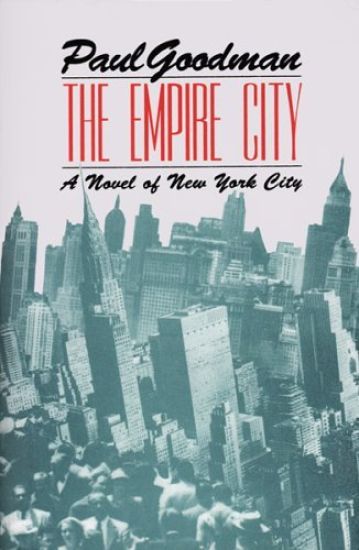
The Empire City

The Empire City

Paul Goodman

Black Sparrow Press,U.S.
2002
sidottu
The thirty year epic story of Horatio, an idealist who struggles to take his place in a conformist society and still retain his personal identity. “If we conformed to the mad society, we became mad,” Paul Goodman writes in Empire City, “but if we did not conform to the only society that there is, we became mad.” That theme prevades much of this novel that the Review of Contemporary Fiction, among others, praised as “a remarkable achievement.” This comic-picaresque epic is about the coming-of-age of Horatio, a sane man in an absurd world. Our endearingly optimistic hero resists his compulsory mis-education, does battle with the System, and scours post–World War II Manhattan for an elective family of fellow-thinkers and, more important, fellow-feelers. It’s a big book, but Horatio’s is a big world, and his question the biggest a man can ask: “How does one live the right life?” As Goodman once said, “I might seem to have a number of divergent interests—community planning, psychotherapy, education, politics—but they are all one concern: how to make it possible to grow up as a human being into a culture without losing nature. I simply refuse to acknowledge that a sensible and honorable community does not exist.”
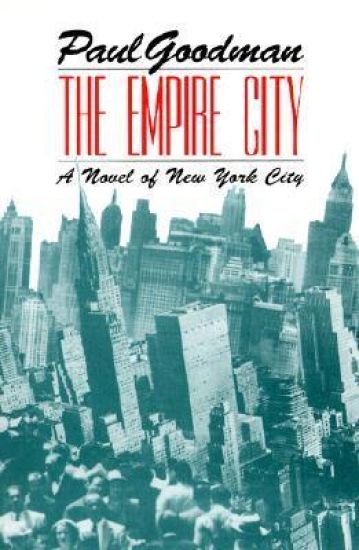
The Empire City

The Empire City

Paul Goodman

Black Sparrow Press,U.S.
2001
pokkari
The thirty year epic story of Horatio, an idealist who struggles to take his place in a conformist society and still retain his personal identity.“If we conformed to the mad society, we became mad,” Paul Goodman writes in Empire City, “but if we did not conform to the only society that there is, we became mad.” That theme prevades much of this novel that the Review of Contemporary Fiction, among others, praised as “a remarkable achievement.” This comic-picaresque epic is about the coming-of-age of Horatio, a sane man in an absurd world. Our endearingly optimistic hero resists his compulsory mis-education, does battle with the System, and scours post–World War II Manhattan for an elective family of fellow-thinkers and, more important, fellow-feelers. It’s a big book, but Horatio’s is a big world, and his question the biggest a man can ask: “How does one live the right life?” As Goodman once said, “I might seem to have a number of divergent interests—community planning, psychotherapy, education, politics—but they are all one concern: how to make it possible to grow up as a human being into a culture without losing nature. I simply refuse to acknowledge that a sensible and honorable community does not exist.”
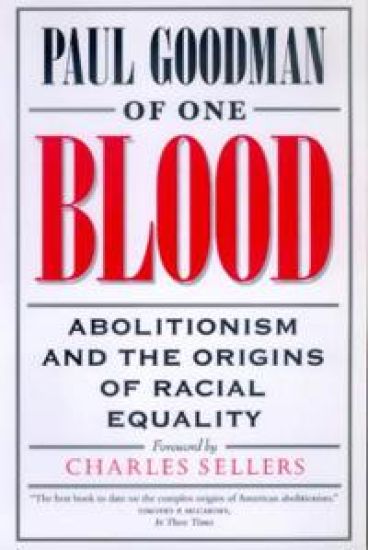
Of One Blood

Of One Blood

Paul Goodman; Charles Sellers

University of California Press
2000
pokkari
The abolition movement is perhaps the most salient example of the struggle the United States has faced in its long and complex confrontation with the issue of race. In his final book, historian Paul Goodman, who died in 1995, presents a new and important interpretation of abolitionism. Goodman pays particular attention to the role that blacks played in the movement. In the half-century following the American Revolution, a sizable free black population emerged, the result of state-sponsored emancipation in the North and individual manumission in the slave states. At the same time, a white movement took shape, in the form of the American Colonization Society, that proposed to solve the slavery question by sending the emancipated blacks to Africa and making Liberia an American 'colony'. The resistance of northern free blacks was instrumental in exposing the racist ideology underlying colonization and inspiring early white abolitionists to attack slavery straight on. In a society suffused with racism, says Goodman, abolitionism stood apart by its embrace of racial equality as a Christian imperative. Goodman demonstrates that the abolitionist movement had a far broader social basis than was previously thought. Drawing on census and town records, his portraits of abolitionists reveal the many contributions of ordinary citizens, especially laborers and women long overshadowed by famous movement leaders. Paul Goodman's humane spirit informs these pages. His book is a scholarly legacy that will enrich the history of antebellum race and reform movements for years to come. '[God] hath made of one blood all nations of men for to dwell on all the face of the earth' - "Acts" 17:26.
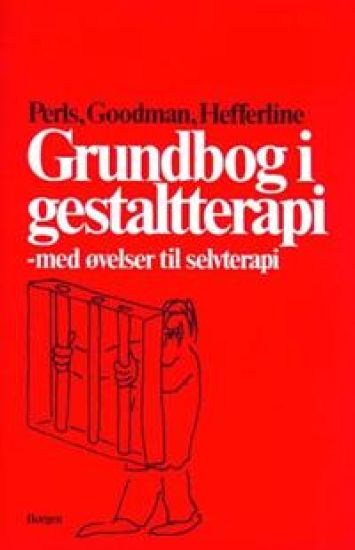
Grundbog i gestaltterapi

Grundbog i gestaltterapi

Frederick S. Perls; Paul Goodman; Ralph F. Hefferline

Gyldendal Trade 150
1997
nidottu

Halvin toimitettuna 39,30 €

GRUNDBOG I GESTALTTERAPI fremlægger på systematisk måde gestaltterapiens teoretiske grundlag, skridt for skridt. Og gennem 18 gradvist opbyggede selv-eksperimenter sætter den læseren i stand til at anvende gestaltterapien på sig selv, uden en terapeuts hjælp. Udfører man disse selv-eksperimenter systematisk vil resultatet være en Øget evne til at opleve ens egne følelser og omverdenen mere intenst, og en forbedret evne til at handle i miljøet for at få tilfredsstillet ens grundlæggende psykologiske behov. Bogen henvender sig ikke først og fremmest til det menneske, der har alvorlige psykiske problemer, men til alle mennesker, der gerne vil være mere levende. Selvterapi-eksperimenterne har direkte paralleller til frigørelsesteknikker såsom bioenergetisk terapi, primalterapi og meditation, og kan bruges i sammenhæng med disse.