Kirjojen hintavertailu – 12 903 725 kirjaa ja 27 kauppaa

Kirjailija

Paul H. Carlson

Kirjat ja teokset yhdessä paikassa: 16 kirjaa, julkaisuja vuosilta 1998–2026, suosituimpiin kuuluu Amarillo. Vertaile teosten hintoja ja tarkista saatavuus suomalaisista kirjakaupoista.

Nimi esiintyy myös muodoissa: Paul H Carlson

16 kirjaa

Kirjojen julkaisuvuodet: 1998–2026.

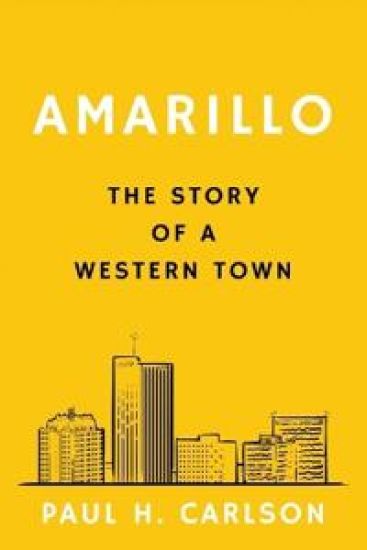
Amarillo

Amarillo

Paul H. Carlson

TEXAS A M UNIVERSITY PRESS
2026
nidottu
Amarillo, the Queen City of the Texas Panhandle, is known far beyond its immediate vicinity—the high tableland called the Llano Estacado. The famous highway Route 66 ran through the very heart of Amarillo. Alan Jackson, Emmylou Harris, Neil Sedaka, and James Durst each recorded a different song titled "Amarillo." Named by True West magazine as one of the fifty most Western towns in America, this city remains rooted in its Western past—yet at the same time Amarillo's background and outlook have a distinctly Midwestern flavor. In this book, the first comprehensive history of Amarillo, Paul H. Carlson explores the city and its environs, from the first peoples who settled in the area to Amarillo's current position as the marketing and commercial hub of a broad region. Through its economic and political strength and its deep cultural influences, Amarillo will likely continue to dominate much of the Texas Panhandle well into the twenty-first century.
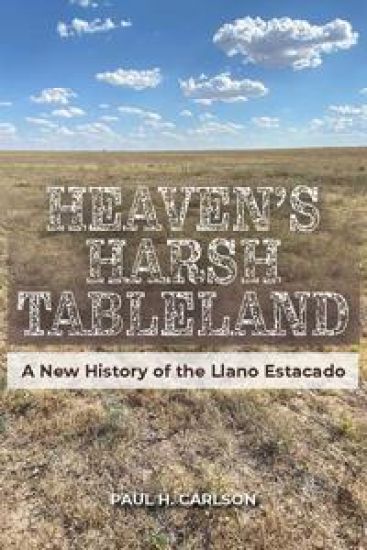
Heaven's Harsh Tableland

Heaven's Harsh Tableland

Paul H. Carlson

TEXAS A M UNIVERSITY PRESS
2023
sidottu
The Llano Estacado—dubbed by author Paul H. Carlson as “heaven’s harsh tableland”—covers some 48,000 square miles of western Texas and eastern New Mexico. In this new survey of the region, the story begins during prehistoric times and with descendants of the Comanche, Apache, and other Native American tribal groups. Other groups have also left their marks on the area: Spanish explorers, Comancheros and other traders, European settlers, farmers and ranchers, artists, and even athletes. Carlson, a veteran historian, aims to review “the Llano’s historic contours from its earliest foundations to its energetic present,” and in doing so, he skillfully narrates the story of the region up to the present time of modern agribusiness and urbanization. Throughout the ten chronologically arranged chapters, concise sidebars support the narrative, highlighting important and interesting topics such as the enigmatic origins of the region’s name, fascinating geological and paleontological facts, the arrival of humans, the natural history of bison, colorful “characters” in the history of the region, and many others. The resulting broad synthesis captures the entirety of the Llano Estacado, summarizing and interpreting its natural and human history in a single, carefully researched and clearly written volume. Heaven’s Harsh Tableland: A New History of the Llano Estacado will provide a helpful, enjoyable, and authoritative guide to the history and development of this important region.
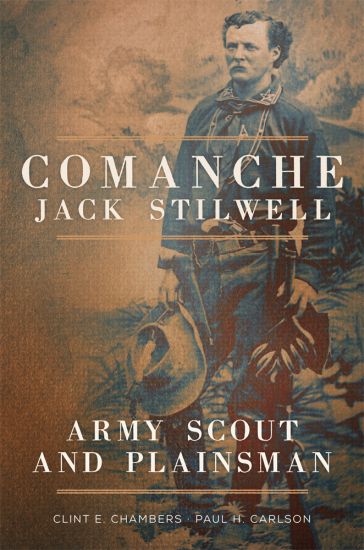
Comanche Jack Stilwell

Comanche Jack Stilwell

Clint E. Chambers; Paul H. Carlson

University of Oklahoma Press
2019
nidottu
In 1863, the thirteen-year-old boy who would come to be called Comanche Jack was sent to the well to fetch water. Instead, he joined a wagon train bound for Santa Fe. Thus began the exploits of Simpson E. ""Jack"" Stilwell (1850-1903), a man generally known for slipping through Indian lines to get help for some fifty frontiersmen besieged by the Cheyenne at Beecher Island in 1868. Daring as his part in the rescue might have been, it was only one noteworthy episode of many in Comanche Jack Stilwell's life - a life whose rollicking story is finally told here in full. In his later years, Stilwell crafted his own legend as a celebrated raconteur. Authors Clint E. Chambers (whose grandfather was Stilwell's nephew) and Paul H. Carlson scour the available primary and secondary sources to find the unvarnished truth and remarkable facts behind the legend. In a crisp, fast-paced style, the narrative follows Stilwell from his precocious start as a teenage runaway turned teamster on the Santa Fe Trail to his later turns as lawyer, judge, U. S. marshal, hangman, and associate of Buffalo Bill Cody. Along the way, he learned Spanish, Comanche, and sign language, scouted for the U. S. Army, and became a friend of George A. Custer and an avowed, if failed, avenger of his kid brother Frank, an outlaw killed by Wyatt Earp. Unfolding against the backdrop of the Civil War, cattle drives, the Indian Wars, the Oklahoma land rush, and the rough justice of the Wild West, Comanche Jack Stilwell takes a true American character out of the shadows of history and returns to the story of the West one of its defining figures.
The Buffalo Soldier Tragedy of 1877

The Buffalo Soldier Tragedy of 1877

Paul H. Carlson

Texas A M University Press
2018
nidottu
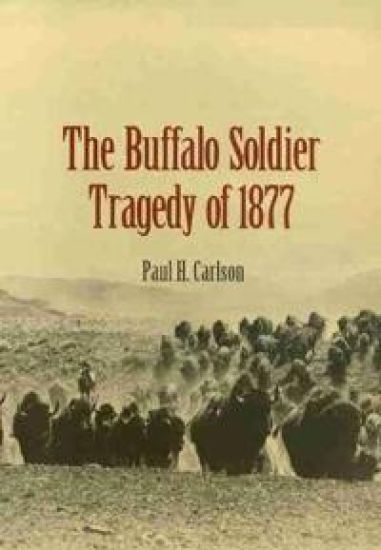
In the middle of the arid summer of 1877, a drought year in West Texas, a troop of some forty buffalo soldiers (African American cavalry led by white officers) struck out into the Llano Estacado from Double Lakes, south of modern Lubbock, pursuing a band of Kwahada Comanches who had been raiding homesteads and hunting parties. A group of twenty-two buffalo hunters accompanied the soldiers as guides and allies. Several days later three black soldiers rode into Fort Concho at modern San Angelo and reported that the men and officers of Troop A were missing and presumed dead from thirst. The ? Staked Plains Horror,” as the Galveston Daily News called it, quickly captured national attention. Although most of the soldiers eventually straggled back into camp, four had died, and others eventually faced court-martial for desertion. The buffalo hunters had ridden off on their own to find water, and the surviving soldiers had lived by drinking the blood of their dead horses and their own urine. A routine army scout had turned into disaster of the worst kind. Although the failed expedition was widely reported at the time, its sparse treatments since then have relied exclusively on the white officers’ accounts. Paul Carlson has mined the courts-martial records for testimony of the enlisted men, memories of a white boy who rode with the Indians, and other buried sources to provide the first multifaceted narrative ever published. His gripping account provides not only a fuller version of what happened over those grim eighty-six hours but also a nuanced view of the interaction of soldiers, hunters, settlers, and Indians on the Staked Plains at this poignant moment before the final settling of the Comanches on their reservation in Indian Territory.
Texas Woollybacks

Texas Woollybacks

Paul H. Carlson

Texas A M University Press
2016
nidottu
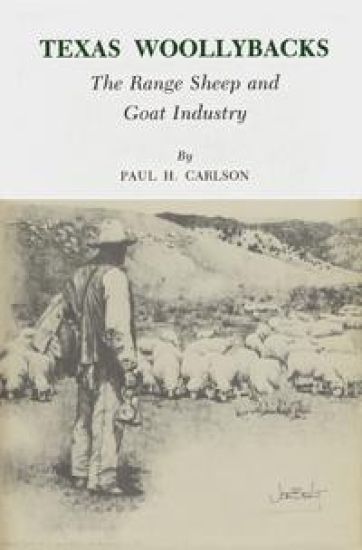
Paul Carlson engagingly chronicles the developmentof the range sheep and goat industry from Spanishtimes to about 1930, when widespread use ofmesh-wire fences brought an end to the open-rangemanagement of sheep and goat ranches in Texas.
Dancin' in Anson

Dancin' in Anson

Paul H. Carlson; Michael Martin Murphey

Texas Tech Press,U.S.
2014
sidottu
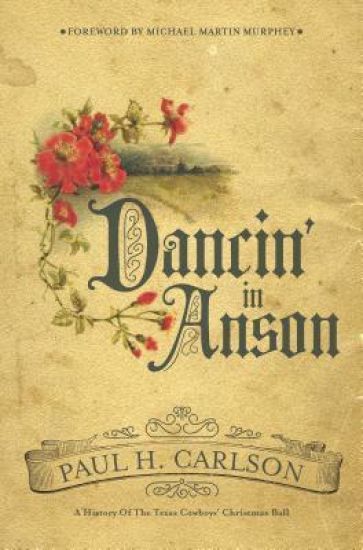
In the 1880s, there wasn't much in Anson, Texas, in the way of entertainment for the area’s cowhands. But Star Hotel operator M. G. Rhodes changed that when he hosted a Grand Ball the weekend before Christmas. A restless traveling salesman, rancher, and poet from New York named William Lawrence Chittenden, a guest at the Star Hotel, was so impressed with the soiree that he penned his observances in the poem “The Cowboys’ Christmas Ball.” Re-enacted annually since 1934 based on Chittenden’s poem, the contemporary dances attract people from coast to coast, from Canada, and from across Europe and elsewhere. Since 1993 Grammy Award-winning musical artist Michael Martin Murphey has played at the popular event. Far more than a history of the Jones County dance, Paul Carlson analyses the long poem, defining the many people and events mentioned and explaining the Jones County landscape Chittenden lays out in his celebrated work. The book covers the evolution of cowboy poetry and places Chittenden and his poem chronologically within the ever-changing western genre. Dancin’ in Anson: A History of the Texas Cowboys' Christmas Ball is a novel but refreshing look at a cowboy poet, his poem, and a joyous Christmas-time family event that traces its roots back nearly 130 years.
Georgia O'Keeffe in Texas: a Guide

Georgia O'Keeffe in Texas: a Guide

Paul H. Carlson

State House Press
2013
nidottu
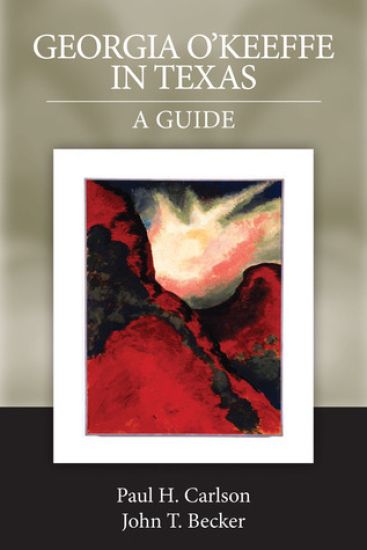
Georgia O'Keeffe, a superbly gifted American artist usually associated with New Mexico, spent nearly four years in Texas, most of them in the Panhandle. She taught art in the public schools of Amarillo for two years, 1912-1914, and headed the art department at West Texas Normal College (now West Texas A & M University) in Canyon from the fall of 1916 to early 1918. She then went for a few months to Waring, Texas, northwest of San Antonio. There are scores of books on Georgia O'Keeffe. The books are of various lengths, covering her life, art, and influence on other artists; her time spent in New Mexico; and her relationship with and marriage to Alfred Stieglitz. By comparison, however, there is little on O'Keeffe's years in Texas. Georgia O'Keeffe in Texas: A Guide is different from previous O'Keeffe studies, as it provides a short biography of O'Keeffe on the people and events that influenced her Texas years. The authors are neither artists nor professional art critics, but are historians of the American West who have an interest in Georgia O'Keeffe. They believe her years in Texas, especially the Texas Panhandle, were significant for her subsequent development as a thoroughly modern American artist. This book is designed to work as a guide to O'Keeffe's life and work in Texas, and reveals an even more fascinating figure in the process. Front Cover Art Credit: Panhandle-Plains Historical Museum, Canyon, Texas
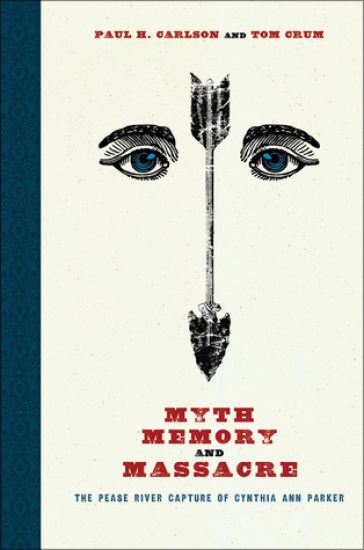
Myth, Memory, and Massacre

Myth, Memory, and Massacre

Paul H. Carlson; Tom Crum

Texas Tech Press,U.S.
2012
nidottu
In December 1860, along a creek in northwest Texas, a group of U. S. Cavalry under Sgt. John Spangler and Texas Rangers led by Sul Ross raided a Comanche hunting camp, killed several Indians, and took three prisoners. One was the woman they would identify as Cynthia Ann Parker, taken captive from her white family as a child a quarter century before. The reports of these events had implications far and near. For Ross, they helped make a political career. For Parker, they separated her permanently and fatally from her Comanche husband and two of her children. For Texas, they became the stuff of history and legend. In reexamining the historical accounts of the “Battle of Pease River,” especially those claimed to be eyewitness reports, Paul H. Carlson and Tom Crum expose errors, falsifications, and mysteries that have contributed to a skewed understanding of the facts. For political and racist reasons, they argue, the massacre was labeled a battle. Firsthand testimony was fabricated; diaries were altered; the official Ranger report went missing from the state adjutant general’s office. Historians, as a result, have unwittingly used fiction as the basis for 150 years of analysis. Carlson and Crum’s careful historiographical reconsideration seeks not only to set the record straight but to deal with concepts of myth, folklore, and memory, both individual and collective. Myth, Memory, and Massacre peels away assumptions surrounding one of the most infamous episodes in Texas history, even while it adds new dimensions to the question of what constitutes reliable knowledge.
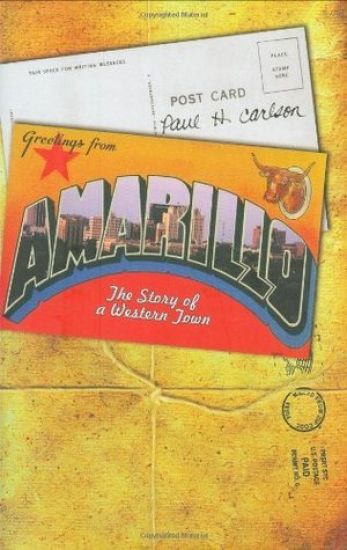
Amarillo

Amarillo

Paul H. Carlson

Texas Tech Press,U.S.
2006
sidottu
"History of the founding of Amarillo and its progress from a small cowtown to the second largest city on the Texas High Plains. Includes social, cultural, economic, and political aspects of the city's development through its 118 years"--Provided by publisher.
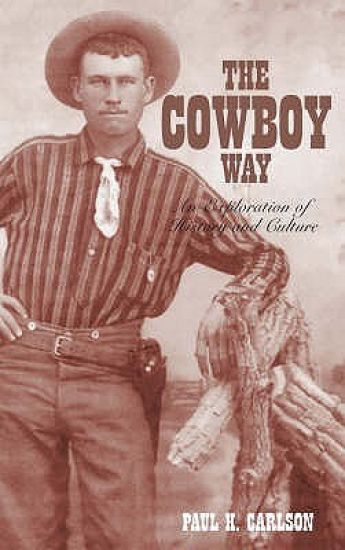
The Cowboy Way

The Cowboy Way

Paul H Carlson

The History Press Ltd
2006
nidottu
The lives of American cowboys have been both real and mythic. This work explores cowboy music dress, humour, films and literature in sixteen essays and a bibliography. These essays demonstrate that the American cowboy is a knight of the road who, with a large hat, tall boots and a big gun, rode into legend and into the history books.
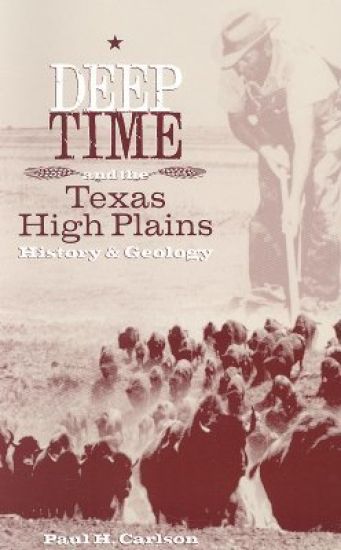
Deep Time and the Texas High Plains

Deep Time and the Texas High Plains

Paul H. Carlson

Texas Tech Press,U.S.
2005
nidottu
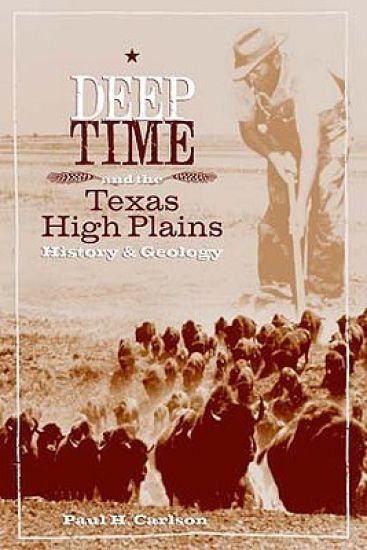
'Carlson writes well in a style that lends itself to an understanding of how man got to the high plains, and what he did once he arrived. Highly recommended reading' - ""New Mexico Historical Notebook"". Humans have visited the Texas High Plains, and in particular the upper Brazos River region, for nearly twelve thousand years. At the site of the Lubbock Lake Landmark in the long Yellow House Draw, they camped, hunted game, and sought shelter from harsh winter weather. In this brief, readable history, Paul H. Carlson surveys the Lubbock Lake Landmarks long geologic past, placing emphasis on human activity in the region and showing how early people adapted to shifting environmental conditions and changing animal resources. Yet this book is more than a history of the Landmark. Carlson places this significant national archaeological site in broad perspective, connecting it to geology and history in the larger upper Brazos River drainage system and, by extension, the central Llano Estacado. Using an interdisciplinary approach, Carlson consulted geological records; paleontological, anthropological, and archaeological reports; astrometrical and climatological studies; and histories of the region to reach back through deep time to explore the significance of the region to life on the Texas High Plains. 'From the edge of eternity ...astronomy, geology, anthropology, and history converge, forming the High Plains. An exciting library addition, classroom guide, or reference book, Paul Carlsons easy-reading study is an adventure for everyone who explores the unique character of the Texas High Plains' - Eddie Guffee, former curator of the Llano Estacado Museum. Paul H. Carlson is professor of history at Texas Tech University. He has published many articles and several books, including ""The Cowboy Way: An Exploration of History and Culture"" (Texas Tech 2000) and ""The Plains Indians"".
Deep Time and the Texas High Plains

Deep Time and the Texas High Plains

Paul H. Carlson

Texas Tech Press,U.S.
2005
sidottu
Carlson writes well in a style that lends itself to an understanding of how man got to the high plains, and what he did once he arrived. Highly recommended reading' - New Mexico Historical Notebook"". Humans have visited the Texas High Plains, and in particular the upper Brazos River region, for nearly twelve thousand years. At the site of the Lubbock Lake Landmark in the long Yellow House Draw, they camped, hunted game, and sought shelter from harsh winter weather. In this brief, readable history, Paul H. Carlson surveys the Lubbock Lake Landmarks long geologic past, placing emphasis on human activity in the region and showing how early people adapted to shifting environmental conditions and changing animal resources. Yet this book is more than a history of the Landmark. Carlson places this significant national archaeological site in broad perspective, connecting it to geology and history in the larger upper Brazos River drainage system and, by extension, the central Llano Estacado. Using an interdisciplinary approach, Carlson consulted geological records; paleontological, anthropological, and archaeological reports; astrometrical and climatological studies; and, histories of the region to reach back through deep time to explore the significance of the region to life on the Texas High Plains. 'From the edge of eternity ...astronomy, geology, anthropology, and history converge, forming the High Plains. An exciting library addition, classroom guide, or reference book, Paul Carlsons easy-reading study is an adventure for everyone who explores the unique character of the Texas High Plains' - Eddie Guffee, former curator of the Llano Estacado Museum. Paul H. Carlson is professor of history at Texas Tech University. He has published many articles and several books, including ""The Cowboy Way: An Exploration of History and Culture"" (Texas Tech 2000) and ""The Plains Indians"".
Pecos Bill

Pecos Bill

Paul H. Carlson

Texas A M University Press
2000
nidottu
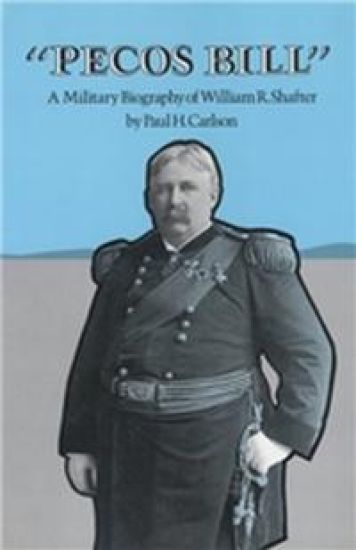
General William R. Shafter was no gallant hero. He drank, gambled, swore, got into fights with his men. They nicknamed him for the river that was one of his targets: "Pecos Bill." He was accused of trying to start a war with Mexico and became involved in an embezzlement case. Associated with military blunders during the Spanish-American War, he has often been pictured as a fat, incompetent buffoon. But Shafter, if coarse and abrasive, was a man who got results. A winner of the Congressional Medal of Honor, he served in the Army for forty years, from the Civil War to the Spanish-American War, in which he commanded all Army operations. In Texas, he commanded one of the army's first all-black regiments. He helped restore peace at Pine Ridge after the Wounded Knee massacre, and he carried out in Cuba one of the swiftest and most successful campaigns in the history of American warfare. In this carefully researched and very readable study, Paul Carlson gives insight into the career and life of one of history's enduring enigmas.
The Plains Indians

The Plains Indians

Paul H. Carlson

Texas A M University Press
1998
nidottu
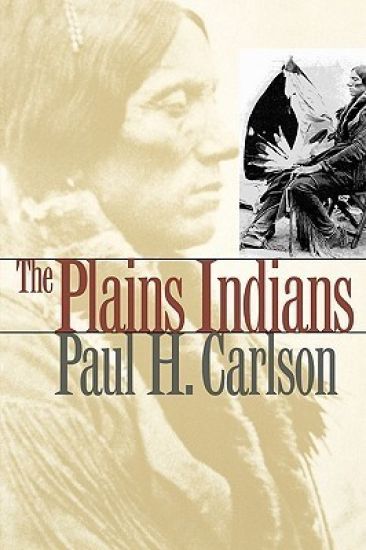
For the Plains Indians, the period from 1750 to 1890, often referred to as the traditional period, was an evolutionary time. Horses and firearms, trade goods, shifting migration patterns, disease pandemics, and other events associated with extensive European contact led to a peak of Plains Indian influence and success in the early nineteenth century. Ironically, that same European contact ultimately led to the devolution of traditional Plains Indian society, and by 1870 most Plains Indian peoples were living on reservations. In The Plains Indians Paul H. Carlson charts the evolution and growth of the Plains Indians through this period of constant change. Carlson examines, among other aspects of these tribal groups, the horse and bison culture, the economy and material culture, trade and diplomacy, and reservation life. In its examination of cultural change, The Plains Indians relies heavily on Indian voices and stresses an Indian viewpoint. Carlson argues that the Plains Indians were neither passive recipients of these cultural changes nor helpless victims. They took what was new and adapted it to and integrated it into their own culture. Even when faced with a significantly altered life on the reservations, the Plains Indians, "without abandoning their cultural base[, ] . . . adopted sedentary lifeways and shifted toward new life patterns, new sodalities, and different characteristics of community." Carlson also investigates the role of the environment in the lives of the plains tribal groups. The ecological exploitation of bison was an integral part of their society; both their material and spiritual worlds depended on bison. The Plains Indians, while not living in perfect harmony with the environment, to some extent adjusted their hunting practices, religious ceremonies, and social organization to the seasons, the bison, and other environmental factors, such as the herding requirements of their horses. The Plains Indians is a clear, well written narrative history of the Plains Indians during a vital and well known era in Indian and American history. Those interested in Indian anthropology and history will value this cohesive overview of Plains Indian society and culture.