
Kirjojen hintavertailu – 12 903 725 kirjaa ja 27 kauppaa

Kirjailija

Paul Hanna

Kirjat ja teokset yhdessä paikassa: 2 kirjaa, julkaisuja vuosilta 2017–2020, suosituimpiin kuuluu Building a New Community Psychology of Mental Health. Vertaile teosten hintoja ja tarkista saatavuus suomalaisista kirjakaupoista.

2 kirjaa

Kirjojen julkaisuvuodet: 2017–2020.

Building a New Community Psychology of Mental Health

Building a New Community Psychology of Mental Health

Carl Walker; Angie Hart; Paul Hanna

Palgrave Macmillan
2020
nidottu
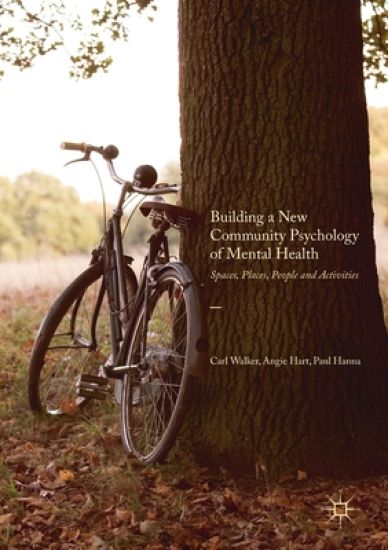
This book provides a much-needed account of informal community-based approaches to working with mental distress. It starts from the premise that contemporary mainstream psychiatry and psychology struggle to capture how distress results from complex embodied arrays of social experiences that are embedded within specific historical, cultural, political and economic settings. The authors challenge mainstream understandings of mental health that position a naive public in need of mental health literacy. Instead it is clear that a considerable amount of invaluable mental distress work is undertaken in spaces in our communities that are not understood as mental health treatments. This book represents one of the first attempts to position these kinds of spaces at the center of how we understand and address problems of mental distress and suffering. The chapters draw on case studies from the UK and abroad to point toward an exciting new paradigm based on informal community and socially oriented approaches to mental health. Written in an unusually accessible and engaging style, this book will appeal to social science students, academics, practitioners and policy makers interested in community and social approaches to mental health.

Building a New Community Psychology of Mental Health

Building a New Community Psychology of Mental Health

Carl Walker; Angie Hart; Paul Hanna

Palgrave Macmillan
2017
sidottu
This book provides a much-needed account of informal community-based approaches to working with mental distress. It starts from the premise that contemporary mainstream psychiatry and psychology struggle to capture how distress results from complex embodied arrays of social experiences that are embedded within specific historical, cultural, political and economic settings. The authors challenge mainstream understandings of mental health that position a naive public in need of mental health literacy. Instead it is clear that a considerable amount of invaluable mental distress work is undertaken in spaces in our communities that are not understood as mental health treatments. This book represents one of the first attempts to position these kinds of spaces at the center of how we understand and address problems of mental distress and suffering. The chapters draw on case studies from the UK and abroad to point toward an exciting new paradigm based on informal community and socially oriented approaches to mental health. Written in an unusually accessible and engaging style, this book will appeal to social science students, academics, practitioners and policy makers interested in community and social approaches to mental health.