Kirjojen hintavertailu – 12 859 819 kirjaa ja 27 kauppaa

Kirjailija

Paul Hoffman

Kirjat ja teokset yhdessä paikassa: 23 kirjaa, julkaisuja vuosilta 1988–2022, suosituimpiin kuuluu New South African Review 2. Vertaile teosten hintoja ja tarkista saatavuus suomalaisista kirjakaupoista.

23 kirjaa

Kirjojen julkaisuvuodet: 1988–2022.

New South African Review 2

New South African Review 2

William Attwell; Leslie Bank; Naidoo Prishani; Patrick Bond; Imraan Buccus; John Daniel; Jane Duncan; Fig David; Hamill James; Janine Hicks; John Hoffman; Paul Hoffman; Malose Langa; Lindsay Don; Clifford Mabhena; Rajohane Matshedisho; Pillay Devan; Saloojee Haroon; Satgar Vishwas; Christopher Saunders; Sharife Khadija; Skinner Kate; Southall Roger; Neil Southern; Karl von Holdt; Edward Webster; Williams Michelle

Wits University Press
2011
nidottu
The second volume of the New South African Review (NSAR) continues a tradition of debate and critical, analytical scholarship about contemporary South Africa. Drawing on authors from academia and beyond, it aims to be informative, discursive and provocative. In this volume, the New Growth Path (NGP) adopted by the South African government in 2010 provides the basis for a debate about whether 'decent work' is the best possible solution to South Africa's problems of low economic growth and high unemployment. Rising inequality is explored against the backdrop of the failings of Black Economic Empowerment (BEE) and Broad-Based Black Economic Empowerment (BBBEE). The NGP's proposals for 'greening the economy' are discussed, with emphasis on the creation of 'green jobs' and biofuels. The volume also includes investigations into the crisis of acid mine drainage on the Witwatersrand, and other persistent environmental challenges. Possibilities for participatory forms of government are surveyed, and civil society activism is explored in relation to the South African Broadcasting Corporation (SABC) and environmental campaigns. The crisis in child care in public hospitals, the difficulties that characterise attempts at building relationships between the police and a township community, and the problems related to the absence of legislation to govern the powers of traditional authorities over land allocation (through the experience of the Eastern Cape) are also featured. Asking whether the NGP reflects a set of new policies or an attempt to re-dress old (com)promises in new clothes, this volume brings together different voices in debate about possibilities for alternatives to neo-liberal and capitalist development in South Africa.

The White Devil

The White Devil

Paul Hoffman

PENGUIN BOOKS LTD
2022
pokkari

Halvin toimitettuna 18,70 €

THE GRIPPING NEW ADVENTURE FROM THE AUTHOR OF THE LEFT HAND OF GOD SERIESAmerica is on the brink of civil war. Only Thomas Cale can stop it . . .________Thomas Cale - the world's most dangerous yet reluctant hero - has been running from his enemies. Tracked down moments before his execution, Cale is presented with a chance to escape. But it comes at a price: He must murder the American president. The father of modern democracy. The man fighting the south's attempts to reinstate slavery. Accept, and he risks the fates of millions. Refuse, and he endangers his own life . . .________Praise for Paul Hoffman:'Fiction on a grand and ambitious scale' Daily Telegraph'Brooding and magnificent' Eoin Colfer'Exhilaratingly engaging writing' Spectator'Gripped me from the first chapter' Conn Iggulden'A riveting, powerful tale' Publishers Weekly
The White Devil: The Gripping Adventure for Fans of the Man in the High Castle
The gripping new adventure from the author of the Left Hand of God series, perfect for fans of THE MAN IN THE HIGH CASTLE Welcome those of you from the Old World. Welcome to the New. Mankind's most reluctant hero - Thomas Cale - is back. ------ Thomas Cale has been running from his enemies. Raised and trained in a top-secret programme - the Sanctuary - he was sent to destroy God's greatest mistake, mankind itself. Cale is a paradox: arrogant and innocent, generous and pitiless. Feared and revered by those that created him, he has already used his terrifying talent for violence and destruction to bring down the most powerful civilisation in the world. But Thomas Cale has been caught. He's been given a choice. Bring down the world's best hope for order, for honesty and for progress, or condemn his soul to hell. The fate of mankind rests on Cale's decision .
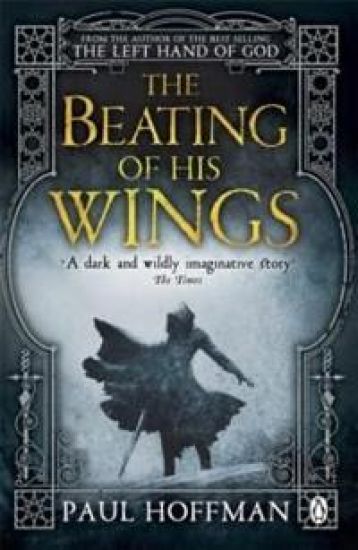
Beating of his Wings

Beating of his Wings

Paul Hoffman

Penguin Books Ltd.
2014
pokkari

Halvin toimitettuna 17,00 €

Offers the third and final instalment in the epic Paul Hoffman trilogy following Cale and the Sanctuary of the Redeemers. Following The Left Hand of God and The Last Four Things, this title reveals the fate of the angel of death.
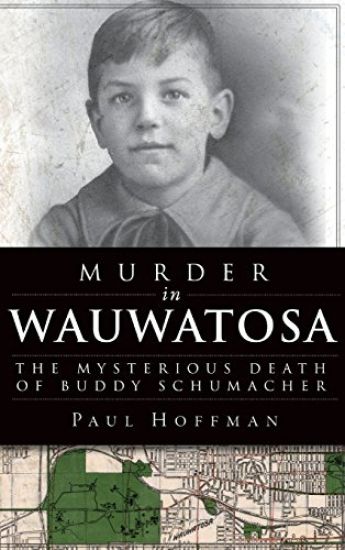
Murder in Wauwatosa: The Mysterious Death of Buddy Schumacher

Murder in Wauwatosa: The Mysterious Death of Buddy Schumacher

Paul Hoffman

History Press Library Editions
2012
sidottu
IN 1925, the peaceful Milwaukee suburb of Wauwatosa found itself involved in mystery and horror. Eight-year-old Arthur Buddy Schumacher Jr. was last seen by three of his friends after they hopped off a freight train they d jumped to get a ride to a nearby swimming hole. For seven weeks, the community and state searched desperately to find the boy until his body was found just a mile from his house with his clothing torn and a handkerchief shoved down his throat. The police pursued several promising leads, but to no avail."
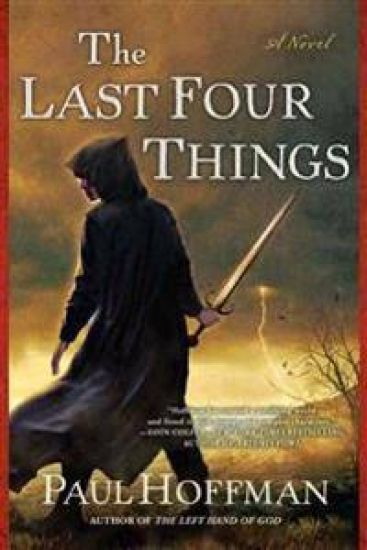
The Last Four Things

The Last Four Things

Paul Hoffman

BERKLEY BOOKS
2012
nidottu
The epic story of Thomas Cale--introduced so memorably in The Left Hand of God--continues as the Redeemers use his prodigious gifts to further their sacred goal: the extinction of humankind and the end of the world... To the warrior-monks known as the Redeemers, "the last four things" represent the culmination of a faithful life. Death. Judgment. Heaven. Hell. The last four things represent eternal bliss--or endless destruction, permanent chaos, and infinite pain. Perhaps nowhere are the competing ideas of heaven and hell exhibited more clearly than in the dark and tormented soul of Thomas Cale. Betrayed by the girl he loves but still marked by a child's innocence, possessed of a remarkable aptitude for violence but capable of extreme tenderness, Cale will lead the Redeemers into a battle for nothing less than the fate of the human race. And though his broken heart foretells the bloody trail he will leave in pursuit of a personal peace he can never achieve, a glimmer of hope remains--the question even Cale can't answer: When it comes time to decide the fate of the world, to ensure the extermination of humankind or spare it, what will he choose? To express God's will on the edge of his sword, or to forgive his fellow man--and himself?
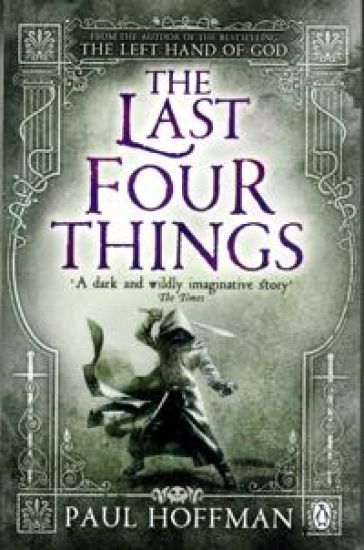
Last Four Things

Last Four Things

Paul Hoffman

Penguin Books Ltd.
2012
pokkari

Halvin toimitettuna 17,00 €

Returning to the Sanctuary of the Redeemers, Thomas Cale is told by the Lord Militant that the destruction of mankind is necessary; the only way to undo God's greatest mistake. Cale seemingly accepts his role in the ending of the world: fate has painted him as the Left Hand of God, the Angel of Death.
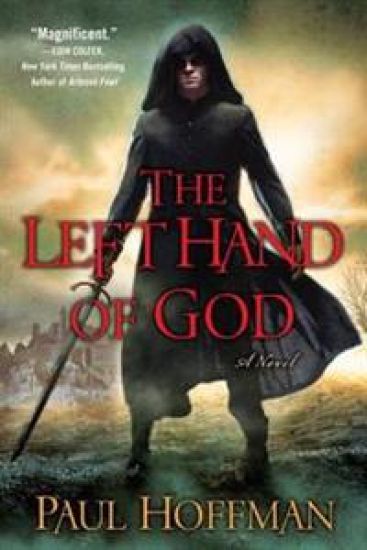
The Left Hand of God

The Left Hand of God

Paul Hoffman

BERKLEY BOOKS
2011
nidottu
"Writers like Hoffman are too rare. This wonderful book gripped me from the first chapter and dropped me days later, dazed and grinning to myself." -Conn Iggulden, New York Times bestselling author of The Dangerous Book for Boys Raised from early childhood in the Redeemer Sanctuary, the stronghold of a secretive sect of warrior monks, Thomas Cale has known only deprivation, punishment, and grueling training. When he escsapes to the outside world, Cale learns that his embittered heart is still capable of loving- and breaking. But the Redeemers won't accept the defection of their prized pupil without a fight...
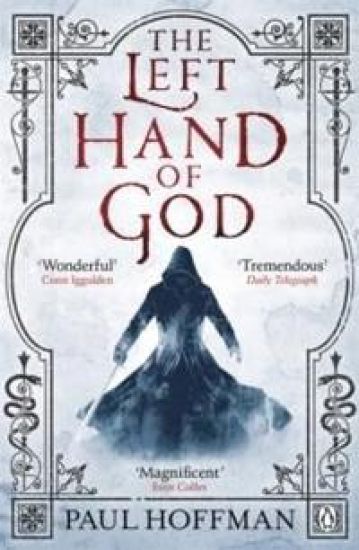
Left Hand of God

Left Hand of God

Paul Hoffman

Penguin Books Ltd.
2010
pokkari

Halvin toimitettuna 17,00 €

The Sanctuary of the Redeemers is a vast and desolate place - a place without joy or hope. Most of its occupants were taken there as boys and for years have endured the brutal regime of the Lord Redeemers whose cruelty and violence have one singular purpose - to serve in the name of the One True Faith.
Essays on Descartes

Essays on Descartes

Paul Hoffman

Oxford University Press Inc
2009
sidottu
This is a collection of Paul Hoffman's wide-ranging essays on Descartes composed over the past twenty-five years. The essays in Part I include his celebrated "The Unity of Descartes' Man," in which he argues that Descartes accepts the Aristotelian view that soul and body are related as form to matter and that the human being is a substance; a series of subsequent essays elaborating on this interpretation and defending it against objections; and an essay on Descartes' theory of distinction. In the essays in Part II he argues that Descartes retains the Aristotelian theory of causation according to which an agent's action is the same as the passion it brings about, and explains the significance of this doctrine for understanding Descartes' dualism and physics. In the essays in Part III he argues that Descartes accepts the Aristotelian theory of cognition according to which perception is possible because things that exist in the world are also capable of a different way of existing in the soul, and he shows how this theory figures in Descartes' account of misrepresentation and in the controversy over whether Descartes is a direct realist or a representationalist. The essays in Part IV examine Descartes' theory of the passions of the soul: their definition; their effect on our happiness, virtue, and freedom; and methods of controlling them.
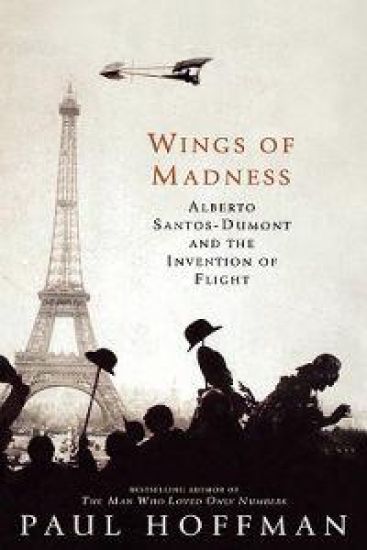
Wings of Madness

Wings of Madness

Paul Hoffman

Theia
2003
sidottu
An intriguing study of the early days of aviation offers a close-up profile of Brazilian aviator Alberto Santos-Dumont who entertained Europe with his airborne acrobatics and antics beginning in 1906 with a small dirigible, in a glimpse into the tormented mind of a talented man, set against the backdrop of turn-of-the-century Paris. 60,000 first printing.
Wisdom Of Crocodiles

Wisdom Of Crocodiles

Paul Hoffman

TRANSWORLD PUBLISHERS LTD
2002
pokkari
When Steven Grlscz saves a young woman from throwing herself in front of a train he finds himself consumed by a love affair which transforms her into a happy and beautiful young woman. Then she vanishes without trace. George Winnicott, wakes from a nightmare screaming that he knows the meaning of life. How are these events linked?
The Man Who Loved Only Numbers: The Story of Paul Erdos and the Search for Mathematical Truth

The Man Who Loved Only Numbers: The Story of Paul Erdos and the Search for Mathematical Truth

Paul Hoffman

Grand Central Publishing
1999
nidottu

Halvin toimitettuna 22,40 €

"A funny, marvelously readable portrait of one of the most brilliant and eccentric men in history." --The Seattle Times Paul Erdos was an amazing and prolific mathematician whose life as a world-wandering numerical nomad was legendary. He published almost 1500 scholarly papers before his death in 1996, and he probably thought more about math problems than anyone in history. Like a traveling salesman offering his thoughts as wares, Erdos would show up on the doorstep of one mathematician or another and announce, "My brain is open." After working through a problem, he'd move on to the next place, the next solution. Hoffman's book, like Sylvia Nasar's biography of John Nash, A Beautiful Mind, reveals a genius's life that transcended the merely quirky. But Erdos's brand of madness was joyful, unlike Nash's despairing schizophrenia. Erdos never tried to dilute his obsessive passion for numbers with ordinary emotional interactions, thus avoiding hurting the people around him, as Nash did. Oliver Sacks writes of Erdos: "A mathematical genius of the first order, Paul Erdos was totally obsessed with his subject--he thought and wrote mathematics for nineteen hours a day until the day he died. He traveled constantly, living out of a plastic bag, and had no interest in food, sex, companionship, art--all that is usually indispensable to a human life." The Man Who Loved Only Numbers is easy to love, despite his strangeness. It's hard not to have affection for someone who referred to children as "epsilons," from the Greek letter used to represent small quantities in mathematics; a man whose epitaph for himself read, "Finally I am becoming stupider no more"; and whose only really necessary tool to do his work was a quiet and open mind. Hoffman, who followed and spoke with Erdos over the last 10 years of his life, introduces us to an undeniably odd, yet pure and joyful, man who loved numbers more than he loved God--whom he referred to as SF, for Supreme Fascist. He was often misunderstood, and he certainly annoyed people sometimes, but Paul Erdos is no doubt missed. --Therese Littleton
The Man Who Loved Only Numbers

The Man Who Loved Only Numbers

Paul Hoffman

American Mathematical Society
1998
sidottu

Halvin toimitettuna 50,90 €

Paul Erdos was an amazing and prolific mathematician whose life as a world-wandering numerical nomad was legendary. He published almost 1500 scholarly papers before his death in 1996, and he probably thought more about math problems than anyone in history. Like a traveling salesman offering his thoughts as wares, Erdos would show up on the doorstep of one mathematician or another and announce, "My brain is open." After working through a problem, he'd move on to the next place, the next solution. Hoffman's book, like Sylvia Nasar's biography of John Nash, A Beautiful Mind, reveals a genius's life that transcended the merely quirky. But Erdos's brand of madness was joyful, unlike Nash's despairing schizophrenia. Erdos never tried to dilute his obsessive passion for numbers with ordinary emotional interactions, thus avoiding hurting the people around him, as Nash did. Oliver Sacks writes of Erdos: "A mathematical genius of the first order, Paul Erdos was totally obsessed with his subject--he thought and wrote mathematics for nineteen hours a day until the day he died. He traveled constantly, living out of a plastic bag, and had no interest in food, sex, companionship, art--all that is usually indispensable to a human life." The Man Who Loved Only Numbers is easy to love, despite his strangeness. It's hard not to have affection for someone who referred to children as "epsilons," from the Greek letter used to represent small quantities in mathematics; a man whose epitaph for himself read, "Finally I am becoming stupider no more"; and whose only really necessary tool to do his work was a quiet and open mind. Hoffman, who followed and spoke with Erdos over the last 10 years of his life, introduces us to an undeniably odd, yet pure and joyful, man who loved numbers more than he loved God--whom he referred to as SF, for Supreme Fascist. He was often misunderstood, and he certainly annoyed people sometimes, but Paul Erdos is no doubt missed. --Therese Littleton