Kirjojen hintavertailu – 12 903 725 kirjaa ja 27 kauppaa

Kirjailija

Paul Kaplan

Kirjat ja teokset yhdessä paikassa: 8 kirjaa, julkaisuja vuosilta 2012–2025, suosituimpiin kuuluu Jewish New York. Vertaile teosten hintoja ja tarkista saatavuus suomalaisista kirjakaupoista.

8 kirjaa

Kirjojen julkaisuvuodet: 2012–2025.

African Venice

African Venice

Paul Kaplan; Shaul Bassi; Igiaba Scego; Maaza Mengiste

Pennsylvania State University Press
2025
pokkari
African Venice is the first guidebook to the extensive historical and contemporary African presence in the city of the lagoons. A set of ten walking tours highlights images of Black people in Venetian art from the Middle Ages to the present, the afterlife of Shakespeare’s Othello, the painful local legacies of slavery and Italian colonialism, and the remarkable visibility of African and Afro-descendant artists at the Venice Biennale. These tours are enriched by more than twenty essays, poems, and reflections that celebrate, question, and reimagine Venice’s Black past and present. From premodern paintings and sculpture to contemporary artworks, African Venice will show you the city as you have never seen it. The book includes contributions from Marilena Umuhoza Delli, Rita Dove, Emiliano Guaraldo, Eddy L. Harris, Lorenzo Lazzarini, Ibrahima Lö, Vittorio Longhi, Olga Manente, Tony Mochama, Yvonne Adhiambo Owuor, Caryl Phillips, Sandra Stocchetto, Sami Tchak, Ngugi wa Thiong’o, and Alessandra Viola.
Crimesploitation

Crimesploitation

Daniel LaChance; Paul Kaplan

STANFORD UNIVERSITY PRESS
2022
sidottu
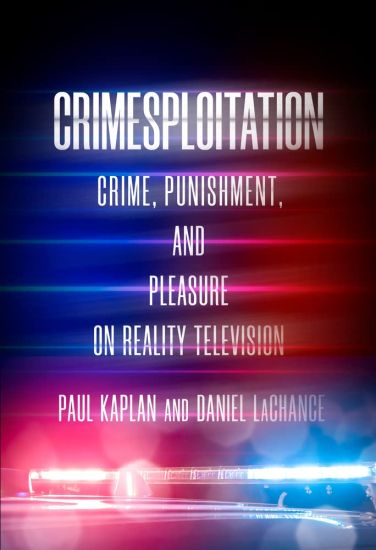
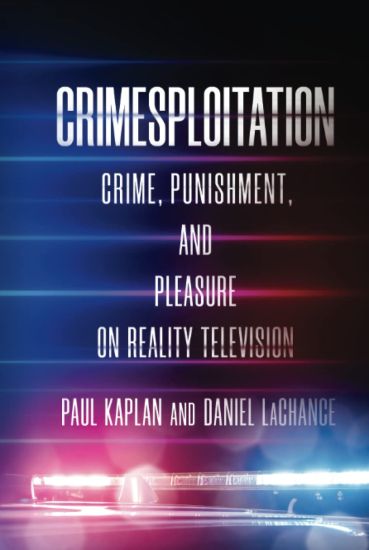
"Due to the graphic nature of this program, viewer discretion is advised." Most of us have encountered this warning while watching television at some point. It is typically attached to a brand of reality crime TV that Paul Kaplan and Daniel LaChance call "crimesploitation": spectacles designed to entertain mass audiences by exhibiting "real" criminal behavior and its consequences. This book examines their enduring popularity in American culture. Analyzing the structure and content of several popular crimesploitation shows, including Cops, Dog: The Bounty Hunter, and To Catch a Predator, as well as newer examples like Making a Murderer and Don't F**K with Cats, Kaplan and LaChance highlight the troubling nature of the genre: though it presents itself as ethical and righteous, its entertainment value hinges upon suffering. Viewers can imagine themselves as deviant and ungovernable like the criminals in the show, thereby escaping a law-abiding lifestyle. Alternatively, they can identify with law enforcement officials, exercising violence, control, and "justice" on criminal others. Crimesploitation offers a sobering look at the depictions of criminals, policing, and punishment in modern America.
Crimesploitation

Crimesploitation

Daniel LaChance; Paul Kaplan

STANFORD UNIVERSITY PRESS
2022
pokkari
"Due to the graphic nature of this program, viewer discretion is advised." Most of us have encountered this warning while watching television at some point. It is typically attached to a brand of reality crime TV that Paul Kaplan and Daniel LaChance call "crimesploitation": spectacles designed to entertain mass audiences by exhibiting "real" criminal behavior and its consequences. This book examines their enduring popularity in American culture. Analyzing the structure and content of several popular crimesploitation shows, including Cops, Dog: The Bounty Hunter, and To Catch a Predator, as well as newer examples like Making a Murderer and Don't F**K with Cats, Kaplan and LaChance highlight the troubling nature of the genre: though it presents itself as ethical and righteous, its entertainment value hinges upon suffering. Viewers can imagine themselves as deviant and ungovernable like the criminals in the show, thereby escaping a law-abiding lifestyle. Alternatively, they can identify with law enforcement officials, exercising violence, control, and "justice" on criminal others. Crimesploitation offers a sobering look at the depictions of criminals, policing, and punishment in modern America.
Essentials of Thought Leadership & Content Marketing

Essentials of Thought Leadership & Content Marketing

Paul Kaplan

Linden Publishing Co Inc
2020
nidottu
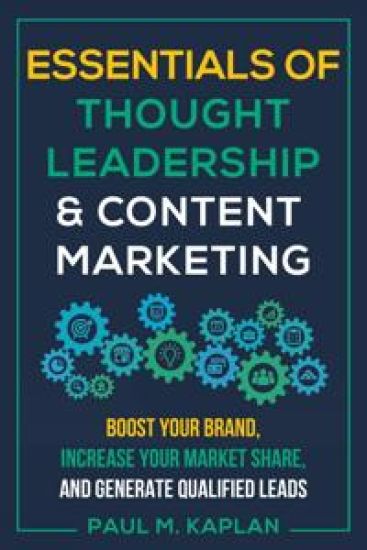
Essentials of Thought Leadership and Content Marketing is a comprehensive, practical, step-by-step guide to achieving content marketing success. What's the connection between thought leadership and increased sales? Consistent strategy. Thought leadership and content marketing can be powerful tools for your business, but to use them to their fullest potential, you need to have a plan. Essentials of Thought Leadership and Content Marketing helps you create a comprehensive and rigorous content marketing strategy in which every piece works together to meet your business goals. Comprehensive, results-oriented, and practical, Essentials of Thought Leadership and Content Marketing covers every aspect of content marketing: researching customer needs; identifying your company's areas of expertise; generating thought leadership articles and other content; communicating content through email, social media, web marketing, and traditional media; evaluating response; generating sales leads; and measuring results. More important, Essentials of Thought Leadership and Content Marketing shows how to coordinate these strategic elements to an overall plan. Interviews with business leaders and case studies show how content marketing concepts work in the real world. The ideal book for marketers, advertising professionals, entrepreneurs, and anyone who works with content marketing--whether in B2B or B2C business, for-profit or nonprofit--Essentials of Thought Leadership and Content Marketing is a practical, step-by-step guide to achieving your content marketing goals.
Lillian Wald: America's Great Social and Healthcare Reformer
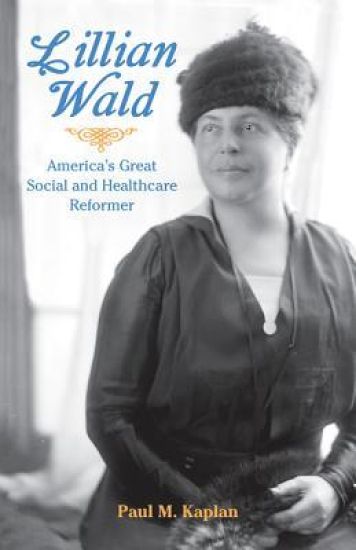
She was the forgotten greatest social reformer of her time. In this immensely significant biography, Paul Kaplan follows powerful activist Lillian Wald, a social and education reformer dedicated to helping less fortunate citizens in New York. While living there, Wald began campaigning for healthcare, which lead her to inserting herself into the social climate of her patients. Groundbreaking for her time, Lillian Wald was not only a revolutionary reformer but also an advocate for women's suffrage, racial integration, and worker's rights. She acted as a leader in a world that has now forgotten her countless contributions. This biography is brilliant for children looking for a strong female role model from the past, for today.
Jewish New York

Jewish New York

Paul Kaplan

Pelican Publishing Co
2014
nidottu
Use this as your roadmap to Jewish immigration in New York! Featured sites are divided by their location, traveling from the south to the farthest northern tip of Manhattan. Each section provides a map of the area and a broad introduction to the district's place in the historic timeline of Jewish immigration. The author provides suggested itineraries, tips for the visitor, and reference notes for further exploration, while a historical introduction provides the framework for locals and visitors of every religion and nationality. Vintage photos provide historic illustrations.
Murder Stories

Murder Stories

Paul Kaplan

Lexington Books
2013
nidottu
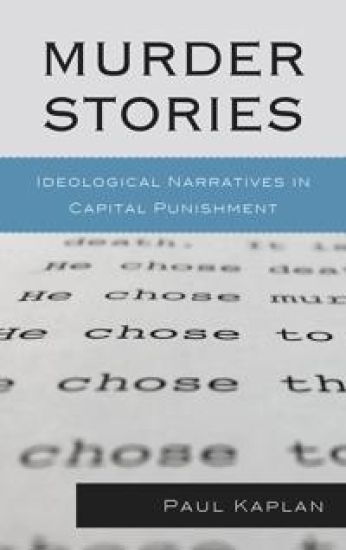
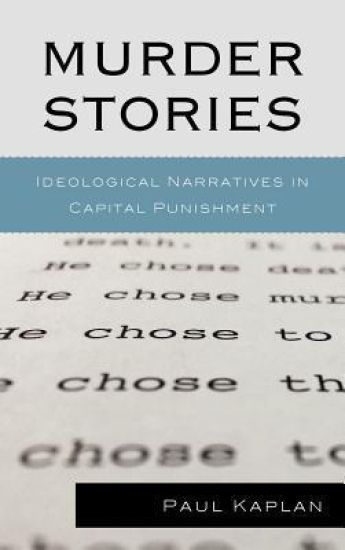
Murder Stories engages with the current theoretical debate in death penalty research on the role of cultural commitments to ‘American’ ideologies in the retention of capital punishment. The central aim of the study is to illuminate the elusive yet powerful role of ideology in legal discourses. Through analyzing the content and processes of death penalty narratives, this research illuminates the covert life of ‘the American Creed,’ (a nexus of ideologies—liberty, egalitarianism, individualism, populism, and laissez faire—said to be unique to the United States) in the law. Murder Stories draws on the entire record of California death sentence resulting trials from three large and diverse California counties for the years 1996 – 2004, as well as interviews with 26 capital caseworkers (attorneys, judges, and investigators) from the same counties. Employing the theoretical framework proposed by Ewick and Silbey (1995) to study hegemonic and subversive narratives, and also the ethnographic approach advocated by Amsterdam and Hertz (1992) to study the producers and processes of constructing legal narratives, this book traces the ideological content carried within the stories told by everyday practitioners of capital punishment by investigating the content, process, and ideological implications of these narratives. The central theoretical finding is that the narratives constructed by both prosecutors and defenders tend to instantiate rather than subvert the ideological tenets of the American Creed.
Murder Stories

Murder Stories

Paul Kaplan

Lexington Books
2012
sidottu
Murder Stories engages with the current theoretical debate in death penalty research on the role of cultural commitments to ‘American’ ideologies in the retention of capital punishment. The central aim of the study is to illuminate the elusive yet powerful role of ideology in legal discourses. Through analyzing the content and processes of death penalty narratives, this research illuminates the covert life of ‘the American Creed,’ (a nexus of ideologies—liberty, egalitarianism, individualism, populism, and laissez faire—said to be unique to the United States) in the law. Murder Stories draws on the entire record of California death sentence resulting trials from three large and diverse California counties for the years 1996 – 2004, as well as interviews with 26 capital caseworkers (attorneys, judges, and investigators) from the same counties. Employing the theoretical framework proposed by Ewick and Silbey (1995) to study hegemonic and subversive narratives, and also the ethnographic approach advocated by Amsterdam and Hertz (1992) to study the producers and processes of constructing legal narratives, this book traces the ideological content carried within the stories told by everyday practitioners of capital punishment by investigating the content, process, and ideological implications of these narratives. The central theoretical finding is that the narratives constructed by both prosecutors and defenders tend to instantiate rather than subvert the ideological tenets of the American Creed.