Kirjojen hintavertailu – 12 859 828 kirjaa ja 27 kauppaa

Kirjailija

Paul Kay

Kirjat ja teokset yhdessä paikassa: 11 kirjaa, julkaisuja vuosilta 1997–2025, suosituimpiin kuuluu Idiomatic Expressions and Grammatical Constructions. Vertaile teosten hintoja ja tarkista saatavuus suomalaisista kirjakaupoista.

11 kirjaa

Kirjojen julkaisuvuodet: 1997–2025.

Idiomatic Expressions and Grammatical Constructions

Idiomatic Expressions and Grammatical Constructions

Paul Kay; Laura A. Michaelis; Ivan A. Sag; Dan Flickinger

CENTRE FOR THE STUDY OF LANGUAGE INFORMATION
2025
nidottu
A thorough investigation into idioms and their grand meaning, including how best to analyze them. Any theory of idioms should be part and parcel of a general theory of grammar, adding as little machinery to one's overall grammatical approach as possible in describing both the syntactic and semantic idiosyncrasies and regularities of this large class of linguistic expressions. This volume presents several lexicalist analyses of idioms within the framework of Sign-Based Construction Grammar, reflecting three guiding principles: many but not all idioms are syntactically and semantically compositional, dividing into distinct classes; idioms are analyzable in terms of a suitably rich lexicon and a set of constructions (lexical and syntactic rules) with corresponding meaning representations; and idiomaticity is a gradient phenomenon, exhibiting wide variation in degree of syntactic flexibility and meaning.

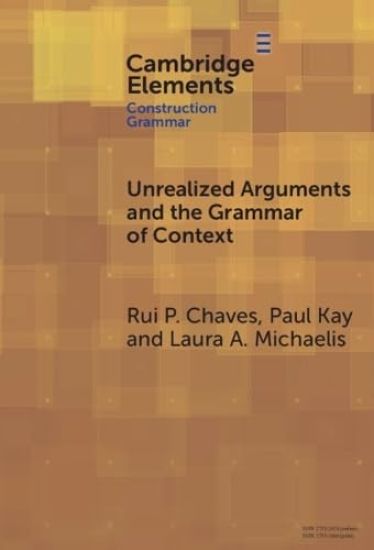
Unrealized Arguments and the Grammar of Context

Unrealized Arguments and the Grammar of Context

Rui P. Chaves; Paul Kay; Laura A. Michaelis

Cambridge University Press
2025
sidottu
In null instantiation (NI) an optionally unexpressed argument receives either anaphoric or existential interpretation. One cannot accurately predict a predicator's NI potential based either on semantic factors (e.g., Aktionsart class of the verb) or pragmatic factors (e.g., relative discourse prominence of arguments), but NI potential, while highly constrained, is not simply lexical idiosyncrasy. It is instead the product of both lexical and constructional licensing. In the latter case, a construction can endow a verb with NI potential that it would not otherwise have. Using representational tools of sign based construction grammar, this Element offers a lexical treatment of English null instantiation that covers both distinct patterns of construal of null-instantiated arguments and the difference between listeme-based and contextually licensed, thus construction-based, null complementation.
Unrealized Arguments and the Grammar of Context

Unrealized Arguments and the Grammar of Context

Rui P. Chaves; Paul Kay; Laura A. Michaelis

Cambridge University Press
2025
pokkari
In null instantiation (NI) an optionally unexpressed argument receives either anaphoric or existential interpretation. One cannot accurately predict a predicator's NI potential based either on semantic factors (e.g., Aktionsart class of the verb) or pragmatic factors (e.g., relative discourse prominence of arguments), but NI potential, while highly constrained, is not simply lexical idiosyncrasy. It is instead the product of both lexical and constructional licensing. In the latter case, a construction can endow a verb with NI potential that it would not otherwise have. Using representational tools of sign based construction grammar, this Element offers a lexical treatment of English null instantiation that covers both distinct patterns of construal of null-instantiated arguments and the difference between listeme-based and contextually licensed, thus construction-based, null complementation.
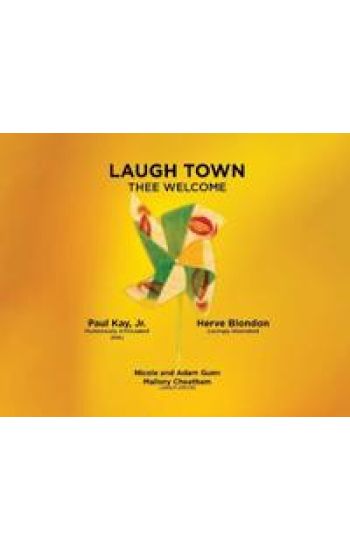
Laugh Town

Laugh Town

Paul Kay

IngramSpark
2022
sidottu
Born in Tennessee in 1958, Paul lives with his family in Washington state. Laugh Town is his fourth book. Paul dreams of an enchanting place called Grnyt, where everybody, even the animals, is always giggling, even laughing Wouldn't it be wonderful if the whole world was needlessly (get it? needle-less-ly) treated with an already approved best medicine---laughter? Laugh Town, Thee Welcome, is the first of several stories that playfully explores this vision.
Laugh Town

Laugh Town

Paul Kay

IngramSpark
2022
pokkari
Born in Tennessee in 1958, Paul lives with his family in Washington state. Laugh Town is his fourth book. Paul dreams of an enchanting place called Grnyt, where everybody, even the animals, is always giggling, even laughing Wouldn't it be wonderful if the whole world was needlessly (get it? needle-less-ly) treated with an already approved best medicine---laughter? Laugh Town, Thee Welcome, is the first of several stories that playfully explores this vision.
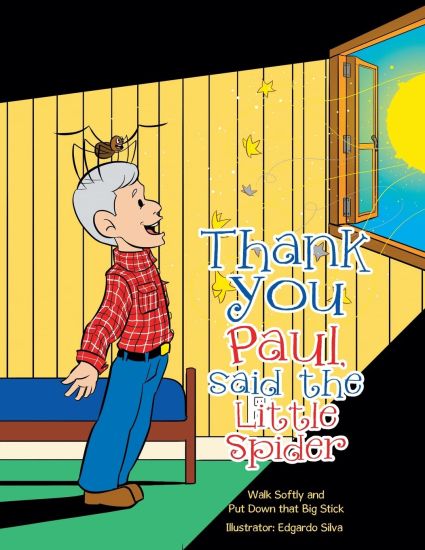
Thank You Paul, Said the Little Spider
"Thank you, Paul " said the Little Spider, is a heartfelt, thought-provoking story intended for a maturing audience. The miracle we call life is found in an almost infinite variety of bodies. Arachnida, mammals, insects, fish, crustaceans, birds, reptiles, amphibians, plants, flowers, trees, and the microscopic literally are life's hosts. Humans are quick to tout their dominating position in a grand pyramid scheme they alone designed and continue to manipulate. This book implores everyone to take this self-appointed stewardship of earth with more understanding, empathy, and humility. Go outside. The lives you encounter will assume a defensive posture. The last thing any creature needs is another threat to its survival. People need to stop kowtowing to screens and start paying attention to real-life scenes.
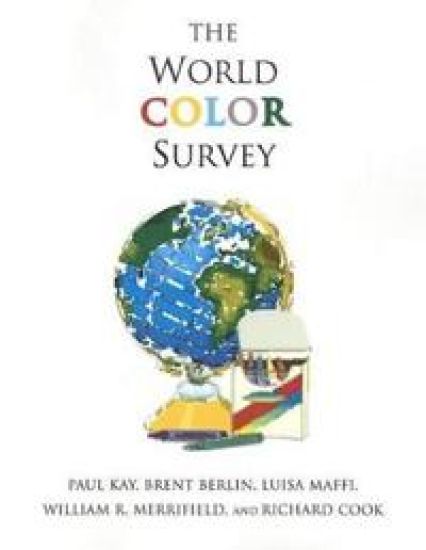
The World Color Survey

The World Color Survey

Paul Kay; Brent Berlin; Luisa Maffi; William R. Merrifield; Richard Cook

Centre for the Study of Language Information
2011
nidottu
The 1969 publication of Brent Berlin and Paul Kay's "Basic Color Terms" proved explosive. Contrary to the then-popular doctrine of random language variation, Berlin and Kay's multilingual study of color nomenclature indicated a cross-cultural and almost universal pattern in the selection of colors that received abstract names in each language. After four decades in print, "Basic Color Terms" now has a sequel: in this book, the authors authoritatively extend the original survey, studying 110 additional unwritten languages in detail and in situ. The results are presented with charts showing the overall palette of color terms within each language, as well as the levels of agreement among speakers.
Basic Color Terms: Their Universality and Evolution

Basic Color Terms: Their Universality and Evolution

Brent Berlin; Paul Kay

Center for the Study of Language and Informat
1999
nidottu
The work reported in this monograph was begun in the winter of 1967 in a graduate seminar at Berkeley. Many of the basic data were gathered by members of the seminar and the theoretical framework presented here was initially developed in the context of the seminar discussions. Much has been discovered since 1969, the date of original publication, regarding the psychophysical and neurophysical determinants of universal, cross-linguistic constraints on the shape of basic color lexicons, and something, albeit less, can now also be said with some confidence regarding the constraining effects of these language-independent processes of color perception and conceptualization on the direction of evolution of basic color term lexicons.
Words and the Grammar of Context

Words and the Grammar of Context

Paul Kay

Centre for the Study of Language Information
1997
pokkari
Research in linguistic semantics may be roughly divided into two broad traditions. Students concerned with lexical fields and lexical domains ('lexical semanticists') have interested themselves in the paradigmatic relations of contrast that obtain among related lexical items and the substantive detail of how particular lexical items map to the nonlinguistic objects they stand for. 'Formal semanticists' (those who study the combinatorial properties of word meanings) have been mostly unconcerned with these issues, concentrating rather on how the meanings of individual words, whatever their internal structure may be and however they may be paradigmatically related to one another, combine into the meanings of phrases and sentences (and recently, to some extent, texts).
Words and the Grammar of Context

Words and the Grammar of Context

Paul Kay

Centre for the Study of Language Information
1997
sidottu
Research in linguistic semantics may be roughly divided into two broad traditions. Students concerned with lexical fields and lexical domains ('lexical semanticists') have interested themselves in the paradigmatic relations of contrast that obtain among related lexical items and the substantive detail of how particular lexical items map to the nonlinguistic objects they stand for. 'Formal semanticists' (those who study the combinatorial properties of word meanings) have been mostly unconcerned with these issues, concentrating rather on how the meanings of individual words, whatever their internal structure may be and however they may be paradigmatically related to one another, combine into the meanings of phrases and sentences (and recently, to some extent, texts).