Kirjojen hintavertailu – 12 903 725 kirjaa ja 27 kauppaa

Kirjailija

Paul Kengor

Kirjat ja teokset yhdessä paikassa: 14 kirjaa, julkaisuja vuosilta 2000–2026, suosituimpiin kuuluu The Judge: William P. Clark, Ronald Reagan's Top Hand. Vertaile teosten hintoja ja tarkista saatavuus suomalaisista kirjakaupoista.

14 kirjaa

Kirjojen julkaisuvuodet: 2000–2026.

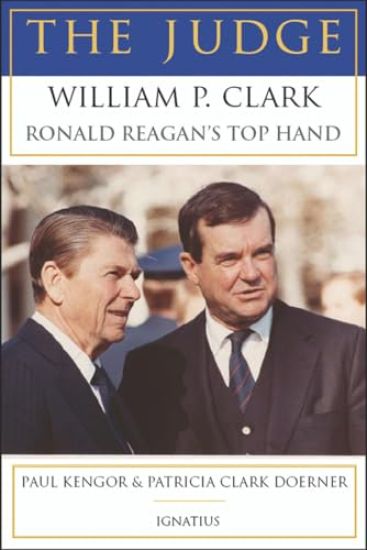
The Judge: William P. Clark, Ronald Reagan's Top Hand

The Judge: William P. Clark, Ronald Reagan's Top Hand

Paul Kengor; Patricia Clark-Doerner

IGNATIUS PRESS
2024
nidottu
The most important biographical record of the Reagan years--from the Reagan governorship to the 40th president's period in the White House--has not been written, until now: it is the story of Ronald Reagan's indispensable man, confidant, and single most important adviser: William P. Clark, known to many as simply "The Judge." With his record, resume, and the respect he earned from so many quarters, why did Bill Clark never pen an autobiography? Why did he never write memoirs, even while less influential advisers advanced their stories in the 1980s, proclaiming theirs to be the authoritative insider's account of the Reagan presidency? And why did Clark not write that story as everyone--from top Reagan officials such as Cap Weinberger to authoritative Reagan biographers such as Lou Cannon--urged him to do so? Bill Clark's reluctance to promote himself stopped him from picking up pen and paper. Instead, at long last, he acquiesced to the writing of this biography. Paul Kengor did the convincing, and Pat Clark Doerner worked with Clark to painstakingly review the manuscript--after Kengor and Doerner together wrote this fascinating account of one man's life, from a ranch house to the White House and then, again, back to the ranch--to what Ronald Reagan called the sunset of life. Reagan biographers such as Edmund Morris and major publications like the New York Times Magazine and Time all agree: Bill Clark was Ronald Reagan's single most trusted aide, perhaps the most powerful national security advisor in American history. His close relationship with Reagan allows special insight into the President as well as other close friends from the earliest Reagan years: Lyn Nofziger, Cap Weinberger and Bill Casey. Also featured are the exquisite Clare Boothe Luce; the elegant Nancy Reagan; the mercurial Alexander Haig; Britain's "Iron Lady," Margaret Thatcher; France's wily Frantois Mitterrand, the saintly Pope John Paul II, and an anxious Saddam Hussein, among others. With Reagan, Clark accomplished many things, but none more profound than the track they laid to undermine Soviet communism, to win the Cold War. As this book shows, Ronald Reagan and Bill Clark, two ranchers, a president and his top hand, truly changed history. At long last, over two decades after that significant accomplishment, Bill Clark shares the details of that extraordinary effort, many of which--as readers of this book will learn--have never been reported.
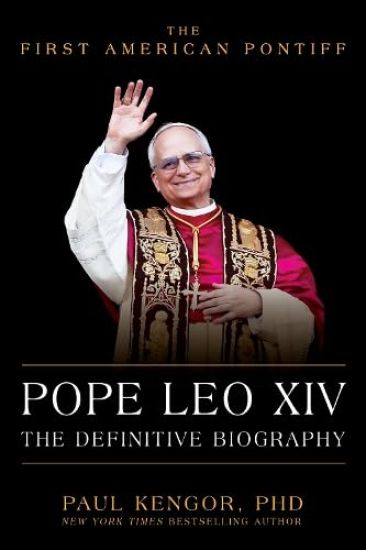
Pope Leo XIV

Pope Leo XIV

Paul Kengor

Humanix Books
2026
sidottu
THE DEFINITIVE BIOGRAPHY OF THE FIRST AMERICAN POPEThe Life, Teachings and Leadership Qualities of Pope Leo XIV. From New York Times bestselling author and noted Catholic historian Dr Paul Kengor: A portrait of Robert Francis Prevost, his background and life, theological beliefs and teachings, relationship with his predecessors and fellow cardinals and clergy, and rise to become the 267th elected Pontiff and first American Pope, and the challenges he will face and how he is likely to lead the Catholic Church, including interviews with Catholic and papal experts. Dr Kengor has focused much of his work on Ronald Reagan, faith and the presidency, conservative politics, the Cold War, Communism, and Catholicism, and he will bring his own vast knowledge and expertise, and exclusive interviews with Catholic and Papal experts to his biography of Pope Leo XIV. As the Editor of The American Spectator, executive director and chief academic fellow at the Institute for Faith & Freedom, professor of political science at Grove City College, and author of over twenty books, including: A Pope and a President, God and Ronald Reagan, and The Divine Plan, Dr Kengor’s POPE LEO XIV: THE FIRST AMERICAN PONTIFF will be the definitive biography of Robert Francis Prevost and his likely impact on the Catholic Church and place in the history of Christianity and the world.
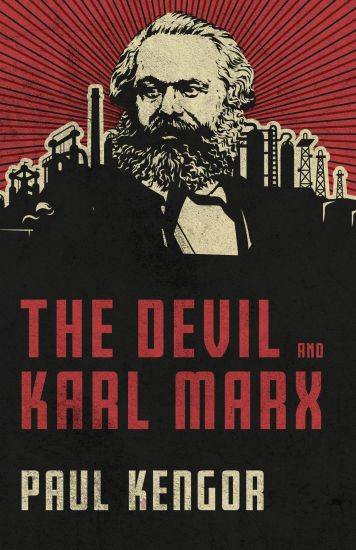
The Devil and Karl Marx: Communism's Long March of Death, Deception, and Infiltration
Two decades after the publication of The Black Book of Communism, nearly everyone is or at least should be, aware of the immense evil produced by that devilish ideology first hatched when Karl Marx penned his Communist Manifesto two centuries ago. Far too many people, however, separate Marx the man from the evils wrought by the oppressive ideology and theory that bears his name. That is a grave mistake. Not only did the horrific results of Marxism follow directly from Marx's twisted ideas, but the man himself penned some downright devilish things. Well before Karl Marx was writing about the hell of communism, he was writing about hell. "Thus Heaven I've forfeited, I know it full well," he wrote in a poem in 1837, a decade before his Manifesto. "My soul, once true to God, is chosen for Hell." That certainly seemed to be the perverse destiny for Marx's ideology, which consigned to death over 100 million souls in the twentieth century alone. No other theory in all of history has led to the deaths of so many innocents. How could the Father of Lies not be involved? At long last, here, in this book by Professor Paul Kengor, is a close, careful look at the diabolical side of Karl Marx, a side of a man whose fascination with the devil and his domain would echo into the twentieth century and continue to wreak havoc today. It is a tragic portrait of a man and an ideology, a chilling retrospective on an evil that should have never been let out of its pit. Parental Warning: This book contains graphic language and material that may not be suitable for kids or teens because evil is ugly, vile, and reprehensible. Our goal is to accurately portray these characters in reality which may, at times, include some of their more despicable characteristics.
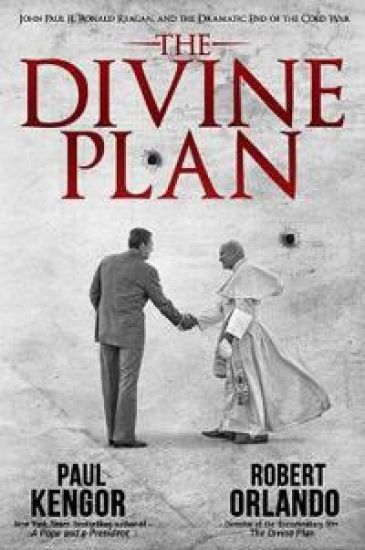
The Divine Plan

The Divine Plan

Paul Kengor; Robert Orlando

ISI Books
2019
sidottu
“Pope John Paul II and Ronald Reagan were preserved through this suffering for a high purpose. I don’t think you’ll understand either one of them without understanding that.” —Bishop Robert Barron in The Divine Plan Just six weeks apart in the spring of 1981, Pope John Paul II and President Ronald Reagan took bullets from would-be assassins. Few knew it at the time, but both men came close to dying. Surviving these near-death experiences created a singular bond between the Pope and the President that historians have failed to appreciate. When John Paul II and Reagan met in the Vatican only a year later, they confided to each other a shared conviction: that God had spared their lives for a reason. In this follow-up to Paul Kengor’s acclaimed bestseller A Pope and a President, Kengor teams up with writer-director Robert Orlando to shed new light on the extraordinary bond between John Paul II and Ronald Reagan, and how that bond drove the pope and the president to confront communism. Shorter and more focused than A Pope and a President, The Divine Plan also boasts an even greater range of authorities to fill in the picture. Kengor and Orlando interview more than a dozen experts, including well-known historians Douglas Brinkley, H. W. Brands, Anne Applebaum, John O’Sullivan, and Craig Shirley; the leading biographer of John Paul II, George Weigel; close Reagan adviser Richard V. Allen; and Cardinal Timothy Dolan and Bishop Robert Barron.
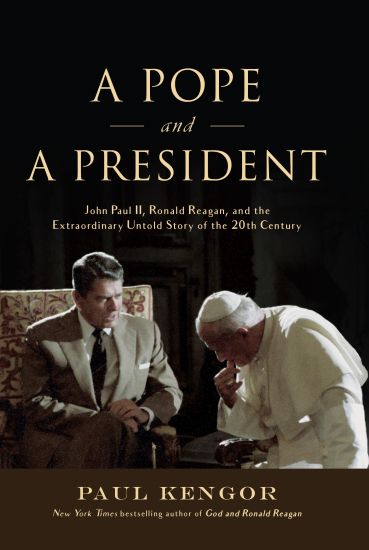
A Pope and a President

A Pope and a President

Paul Kengor

ISI Books
2018
nidottu
Even as historians credit Ronald Reagan and Pope John Paul II with hastening the end of the Cold War, they have failed to recognize the depth or significance of the bond that developed between the two leaders. Acclaimed scholar and bestselling author Paul Kengor changes that. In this fascinating book, he reveals a singular bond—which included a spiritual connection between the Catholic pope and the Protestant president—that drove the two men to confront what they knew to be the great evil of the twentieth century: Soviet communism. Reagan and John Paul II almost didn’t have the opportunity to forge this relationship: just six weeks apart in the spring of 1981, they took bullets from would-be assassins. But their strikingly similar near-death experiences brought them close together—to Moscow’s dismay. Based on Kengor’s tireless archival digging and his unique access to Reagan insiders, A Pope and a President is full of revelations. It takes you inside private meetings between Reagan and John Paul II and into the Oval Office, the Vatican, the CIA, the Kremlin, and many points beyond. Nancy Reagan called John Paul II her husband’s “closest friend”; Reagan himself told Polish visitors that the pope was his “best friend.” When you read this book, you will understand why. As kindred spirits, Ronald Reagan and John Paul II united in pursuit of a supreme objective—and in doing so they changed history.
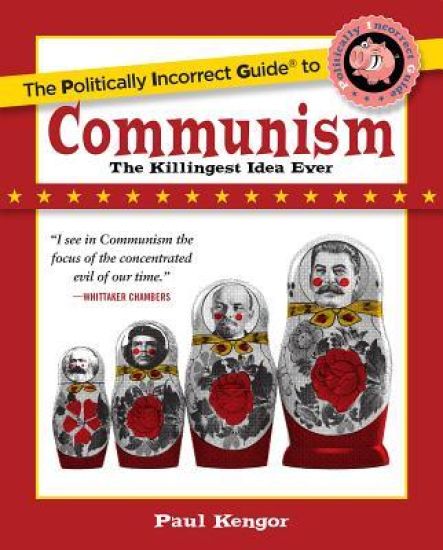
The Politically Incorrect Guide to Communism

The Politically Incorrect Guide to Communism

Paul Kengor

Regnery Publishing Inc
2017
pokkari
The worst idea in history is back. Communism has wrecked national economies, enslaved whole peoples, and killed more than a hundred million men and women. What's not to like? Too many young Americans are supporting communism. Millennials prefer socialism to capitalism, and 25 percent have a positive view of Lenin. One in four Americans believe that George W. Bush killed more people than Josef Stalin. And 69 percent of Millennials would vote for a socialist for president. They ought to know better. Communism is the most dangerous idea in world history, producing dire poverty, repression, and carnage wherever it has been tried. And no wonder—because communism flatly denies morality, human nature, and basic facts. But it's always going to be different this time. In The Politically Incorrect Guide to Communism, renowned scholar and bestselling author Paul Kengor unmasks communism, exposing the blood-drenched history—and dangerously pervasive influence—of the world's worst ideology.
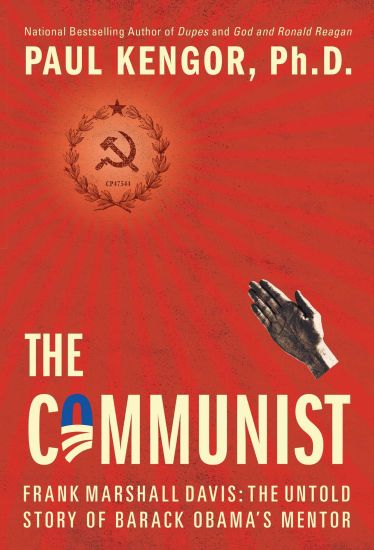
The Communist

The Communist

Paul Kengor

Mercury Ink
2015
pokkari
""I admire Russia for wiping out an economic system which permitted a handful of rich to exploit and beat gold from the millions of plain people. . . . As one who believes in freedom and democracy for all, I honor the Red nation." --FRANK MARSHALL DAVIS,
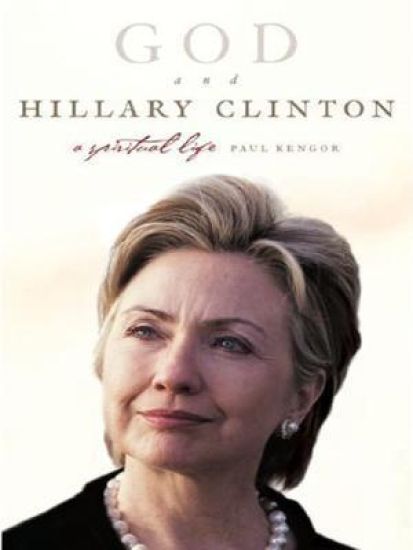
God and Hillary Clinton LP

God and Hillary Clinton LP

Paul Kengor

HarperLuxe
2007
pokkari
For nearly three decades, political observers have sought to understand the complex relationship between Hillary Clinton's faith and her politics. Now, in this first spiritual biography of the former first lady, acclaimed historian Paul Kengor sets out to answer the elusive question: What does Hillary Clinton believe? Based on exhaustive research, God and Hillary Clinton tells the surprising story of Hillary's spiritual evolution, detailing how her lifelong religious beliefs have intertwined with her personal history to make her the politician that she is today. Born into a strict Methodist family and raised on a spiritual diet of private prayer and self-reliance, Hillary, at a young age, used the Methodist Church's emphasis on community service to catalyze her involvement in the changing world. From this unique foundation, Kengor looks at how the chaos of 1960s and 1970s America challenged Hillary's religious underpinnings, as she found herself drifting from her roots. Following her faith through her relationship with an aspiring politician named William Jefferson Clinton, Kengor examines the motivations that eventually led Hillary back to church as first lady of Arkansas and how her revitalized beliefs shaped her time there--from her Bible-study group to her husband's infidelities as governor. Although Hillary endured many hardships in Little Rock, her days in the White House tested her faith like no other time. Sifting through the spiritual impact of Hillary's ill-fated experimentation with New Age mysticism and the disastrous Monica Lewinsky scandal, Kengor investigates how she relied on God for the power to save her marriage and survive the most difficult chapter of her political career. While this spiritual chronology of Clinton's life is important, it does not tell the full story of her belief. Here Kengor fills in the gaps between the facts, analyzing the fraught relationship between her faith and her secular policies--most notably how she reconciles her pro-choice stance on abortion to her Christian beliefs--and scrutinizing how these policies have changed over the course of her political career. What emerges is an unexpected portrait of a political figure whose ideals have been shaped by both the power of her politics and the depth of her faith.
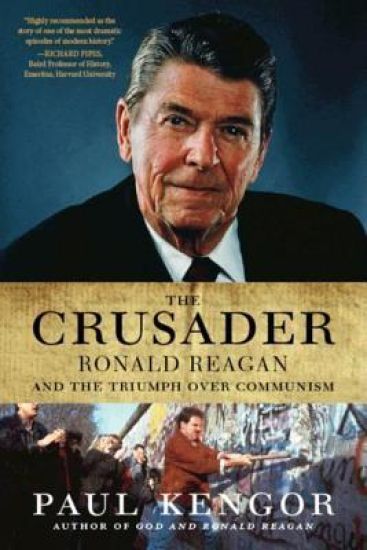
The Crusader

The Crusader

Paul Kengor

HarperCollins
2007
pokkari
Based on extraordinary research: a major reassessment of Ronald Reagan's lifelong crusade to dismantle the Soviet Empire-including shocking revelations about the liberal American politician who tried to collude with USSR to counter Reagan's efforts Paul Kengor's God and Ronald Reagan made presidential historian Paul Kengor's name as one of the premier chroniclers of the life and career of the 40th president. Now, with The Crusader, Kengor returns with the one book about Reagan that has not been written: The story of his lifelong crusade against communism, and of his dogged-and ultimately triumphant-effort to overthrow the Soviet Union. Drawing upon reams of newly declassified presidential papers, as well as untapped Soviet media archives and new interviews with key players, Kengor traces Reagan's efforts to target the Soviet Union from his days as governor of California to the fall of the Berlin Wall and the collapse of what he famously dubbed the "Evil Empire." The result is a major revision and enhancement of what historians are only beginning to realize: That Reagan not only wished for the collapse of communism, but had a deep and specific understanding of what it would take--and effected dozens of policy shifts that brought the USSR to its heels within a decade of his presidency. The Crusader makes use of key sources from behind the Iron Curtain, including one key memo that implicates a major American liberal politician-still in office today-in a scheme to enlist Soviet premier Yuri Andropov to help defeat Reagan's 1984 reelection bid. Such new finds make The Crusader not just a work of extraordinary history, but a work of explosive revelation that will be debated as hotly in 2006 as Reagan's policies were in the 1980s.
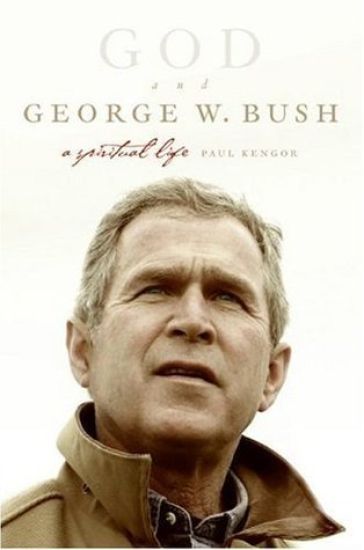
God And George W. Bush

God And George W. Bush

Paul Kengor

HARPERCOLLINS PUBLISHERS INC
2005
nidottu
George W. Bush has brought the question of religion back into American political life in a way that it has not been for decades. From the 2000 election through the challenges America has faced in the wake of September 11, Bush's personal faith -- and his conviction about the importance of religion in our national life -- have won him lasting admiration from the right, while attracting fury and scorn from the left. Now presidential scholar Paul Kengor, the author of the acclaimed God and Ronald Reagan, reconstructs the spiritual journey that carried George W. Bush to the White House -- from the death of his sister, which helped to shape his character, to the conversion experience that changed his life. Matching detailed new research with thoughtful analysis, God and George W. Bush is the definitive look at the spiritual life of this American president.
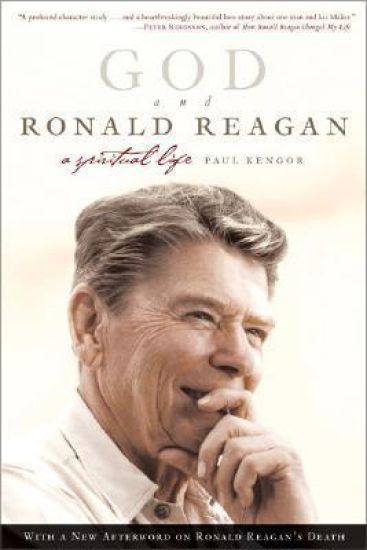
God And Ronald Reagan

God And Ronald Reagan

Paul Kengor

ReganBooks
2005
nidottu
Ronald Reagan is hailed today for a presidency that restored optimism to America, engendered years of economic prosperity, and helped bring about the fall of the Soviet Union. Yet until now little attention has been paid to the role Reagan's personal spirituality played in his political career, shaping his ideas, bolstering his resolve, and ultimately compelling him to confront the brutal -- and, not coincidentally, atheistic -- Soviet empire. In this groundbreaking book, political historian Paul Kengor draws upon Reagan's legacy of speeches and correspondence, and the memories of those who knew him well, to reveal a man whose Christian faith remained deep and consistent throughout his more than six decades in public life. Raised in the Disciples of Christ Church by a devout mother with a passionate missionary streak, Reagan embraced the church after reading a Christian novel at the age of eleven. A devoted Sunday-school teacher, he absorbed the church's model of "practical Christianity" and strived to achieve it in every stage of his life. But it was in his lifelong battle against communism -- first in Hollywood, then on the political stage -- that Reagan's Christian beliefs had their most profound effect. Appalled by the religious repression and state-mandated atheism of Bolshevik Marxism, Reagan felt called by a sense of personal mission to confront the USSR. Inspired by influences as diverse as C. S. Lewis, Whittaker Chambers, and Aleksandr Solzhenitsyn, he waged an openly spiritual campaign against communism, insisting that religious freedom was the bedrock of personal liberty. "The source of our strength in the quest for human freedom is not material, but spiritual," he said in his Evil Empire address. "And because it knows no limitation, it must terrify and ultimately triumph over those who would enslave their fellow man." From a church classroom in 1920s Dixon, Illinois, to his triumphant mission to Moscow in 1988, Ronald Reagan was both political leader and spiritual crusader. God and Ronald Reagan deepens immeasurably our understanding of how these twin missions shaped his presidency -- and changed the world.
Wreath Layer or Policy Player?

Wreath Layer or Policy Player?

Paul Kengor

Lexington Books
2000
nidottu
Since World War II, American vice presidents have played an ever-increasing role in the nation's foreign policy. This study of the foreign-policy activities of five key vice presidents—Richard Nixon, Walter Mondale, George Bush, Dan Quayle, and Al Gore—provides the first comprehensive analysis of the role of the vice president in foreign-policy affairs. In order to bring readers to a better understanding of this role, Paul Kengor asks incisive questions: Did the vice presidents' involvement in foreign policy actually benefit the administration? If so, what useful lessons can be drawn from their experiences? Is there good reason to approve or reject an enhanced role in foreign policy for future vice presidents? How, specifically, might the vice president be used in conducting the nation's international affairs? The answers to these questions are crucial reading for scholars of the presidency and foreign policy, for policy makers, and for all of us assessing vice presidents past and future.