Kirjojen hintavertailu – 12 859 829 kirjaa ja 27 kauppaa
Kirjailija
Paul Kirk
Kirjat ja teokset yhdessä paikassa: 4 kirjaa, julkaisuja vuosilta 2001–2025, suosituimpiin kuuluu Marion Thede and the Fiddlers of Oklahoma. Vertaile teosten hintoja ja tarkista saatavuus suomalaisista kirjakaupoista.
In 1967, Marion Thede released The Fiddle Book, among the first instruction books ever printed for old-time fiddle. Containing over 150 traditional tunes, Thede's legendary publication aimed to represent old-time music in a comprehensive fashion. Oklahoma has a rich history of folk music, yet their fiddlers and fiddle tunes are not as well documented as those from other areas of the United States. This book adds to and expounds upon Marion Thede's The Fiddle Book and includes transcriptions of over 125 traditional Oklahoma fiddle tunes, as well as contextual stories, tune histories, and player biographies. This work is a practical, useful book of old-time music transcriptions presented alongside a rich and relevant history, equally valuable to players, listeners and newcomers to old-time fiddle.
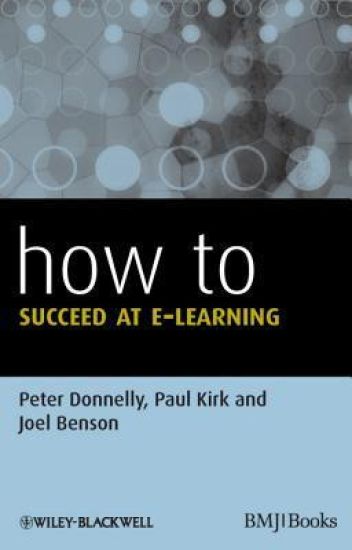
A basic guide to getting the best from e-learning for medical students, teachers and all healthcare professionals How to Succeed at e-Learning answers the needs of all healthcare professionals either starting or continuing their studies but not knowing where to begin with e-learning. It is a valuable guide for learners in undergraduate and postgraduate medicine as well as related health professionals and essential for teachers of medicine who are beginning to transfer from print to electronic teaching and need to understand effective methods of presentation.
The nation's premier barbecue chef reveals the differences between barbecuing and grilling while explaining the importance of good grills and tools of the trade, all the while presenting more than five hundred recipes for great barbecue that anyone can prepare. Simultaneous.
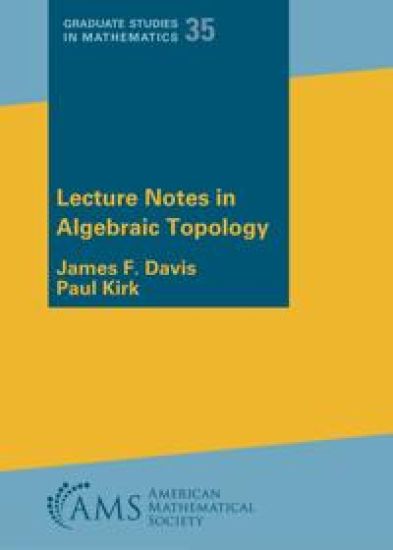
The amount of algebraic topology a graduate student specializing in topology must learn can be intimidating. Moreover, by their second year of graduate studies, students must make the transition from understanding simple proofs line-by-line to understanding the overall structure of proofs of difficult theorems. To help students make this transition, the material in this book is presented in an increasingly sophisticated manner. It is intended to bridge the gap between algebraic and geometric topology, both by providing the algebraic tools that a geometric topologist needs and by concentrating on those areas of algebraic topology that are geometrically motivated. Prerequisites for using this book include basic set-theoretic topology, the definition of CW-complexes, some knowledge of the fundamental group/covering space theory, and the construction of singular homology. Most of this material is briefly reviewed at the beginning of the book. The topics discussed by the authors include typical material for first- and second-year graduate courses. The core of the exposition consists of chapters on homotopy groups and on spectral sequences. There is also material that would interest students of geometric topology (homology with local coefficients and obstruction theory) and algebraic topology (spectra and generalized homology), as well as preparation for more advanced topics such as algebraic $K$-theory and the s-cobordism theorem. A unique feature of the book is the inclusion, at the end of each chapter, of several projects that require students to present proofs of substantial theorems and to write notes accompanying their explanations. Working on these projects allows students to grapple with the ``big picture'', teaches them how to give mathematical lectures, and prepares them for participating in research seminars. The book is designed as a textbook for graduate students studying algebraic and geometric topology and homotopy theory. It will also be useful for students from other fields such as differential geometry, algebraic geometry, and homological algebra. The exposition in the text is clear; special cases are presented over complex general statements.