Kirjojen hintavertailu – 12 859 819 kirjaa ja 27 kauppaa
Kirjailija
Paul Klee
Kirjat ja teokset yhdessä paikassa: 16 kirjaa, julkaisuja vuosilta 1968–2026, suosituimpiin kuuluu Veren kello. Vertaile teosten hintoja ja tarkista saatavuus suomalaisista kirjakaupoista.
"Die Germanen und ihre gro e Geschichte" bietet eine faszinierende Reise in die Welt der Germanen, einem antiken Volk von gro er Bedeutung. Dieses Buch enth llt ihre Kultur, Gesellschaft, Kriege und ihre Beitr ge zur europ ischen Geschichte. Von den ber hmten St mmen wie den Sueben bis zu ihrem Einfluss auf das R mische Reich - eine spannende Entdeckungsreise in die Vergangenheit.
"Die Germanen und ihre gro e Geschichte" bietet eine faszinierende Reise in die Welt der Germanen, einem antiken Volk von gro er Bedeutung. Dieses Buch enth llt ihre Kultur, Gesellschaft, Kriege und ihre Beitr ge zur europ ischen Geschichte. Von den ber hmten St mmen wie den Sueben bis zu ihrem Einfluss auf das R mische Reich - eine spannende Entdeckungsreise in die Vergangenheit.
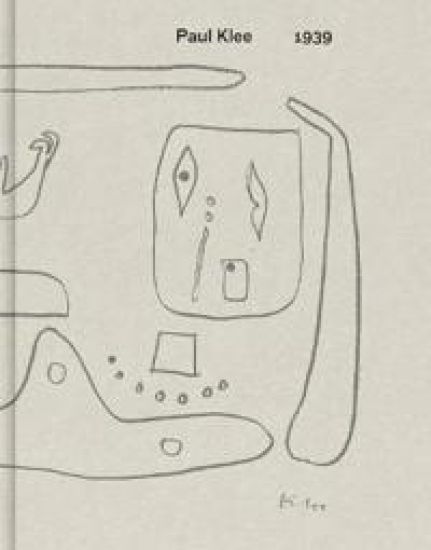
The year before he died, in what was one of the most difficult yet prolific periods of his life, Paul Klee created his most surprising and innovative works. In 1939, the year before his death from a long illness and against a backdrop of sociopolitical turmoil and the outbreak of World War II, Klee worked with a vigor and inventiveness that rivaled even the most productive periods of his youth. This book illuminates the artist’s response to his personal difficulties and the era’s broader realities through imagery that is tirelessly inventive—by turns political, solemn, playful, humorous, and poetic. The works featured testify to Klee’s restless drive to experiment with form and material. His use of adhesive, grease, oil, chalk, and watercolor, among other media, resulted in surfaces that are not only visually striking, but also highly tactile and original. Not unlike a diary, the drawings are often meditative reflections on the pains and pleasures of life—their titles, among them Monsters in readiness and Struggles with himself, signal Klee’s frame of mind. Renowned art historian Dawn Ades looks at this group of drawings in the context of their time and as indicative of a pivotal moment in art history. Moved by this late period of Klee’s oeuvre, American artist Richard Tuttle responds to specific works in the form of a dialogical poem. This stunning publication highlights the novelty and ingenuity of Klee’s late works, which deeply affected the generation of artists—including Anni Albers, Jean Dubuffet, Mark Tobey, and Zao Wou-Ki—that emerged after World War II and continues to captivate artists and viewers alike today.
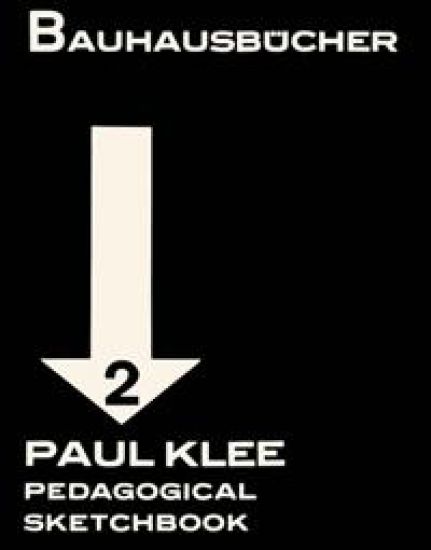
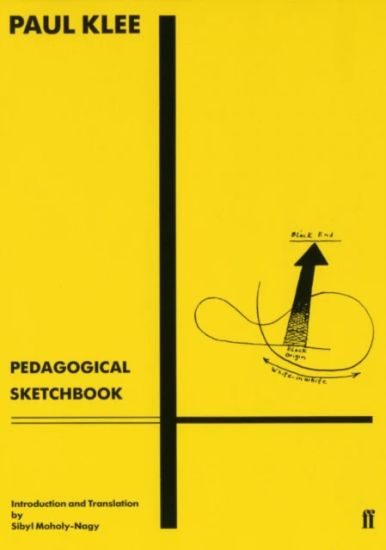
Active at the Bauhaus between 1920 and 1931, teaching in the bookbinding, stained glass and mural-painting workshops, Paul Klee (1879–1940) brought his expressive blend of color and line to the school—and, with the second volume in the Bauhausbücher series, beyond its walls. In his legendary Pedagogical Sketchbook, Paul Klee takes a theoretical approach to drawing using geometric shapes and lines. Evincing a desire to reunite artistic design and craft, and written in a tone that oscillates between the seeming objectivity of the diagram, the rhetoric of science and mathematics, and an abstract, quasi-mystical intuition, Klee’s text expresses key aspects of the Bauhaus’ pedagogy and guiding philosophies. And while Klee’s method is deeply personal, in the context of the fundamentally multivocal Bauhaus, his individual approach to abstract form is typical in its idiosyncrasy. In this book, he presents his own theory about the relationships between line, shape, surface, and color in the visual space. This English edition of Klee's book appears in original design and with separate commentary.
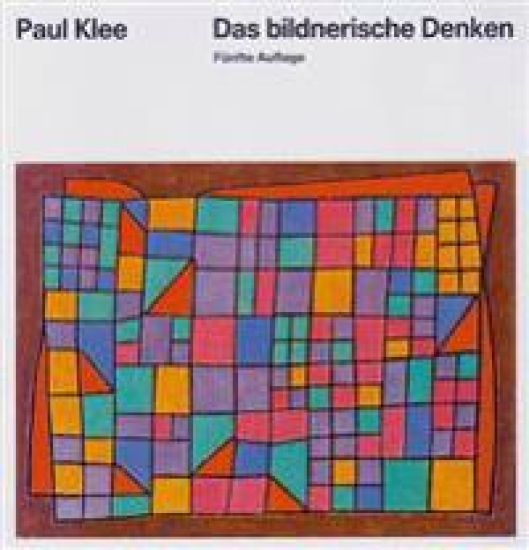
Das Skizzenbuch, die ursprungliche Grundlage zu einem Teil des theoretischen Unterrichts am Staatlichen Bauhaus zu Weimar, bildete einen wesentlichen Bestandteil der kunstlerisch-didaktischen Konzeption Klees und des Instituts. Spater erschien sein 'Padagogisches Skizzenbuch' in mehreren englischen Ubertragungen. Es besteht aus gezeichneten Tafeln oder Diagrammen mit erlauternden Beischriften. Die deutsche Originalfassung wurde nicht wieder aufgelegt. Hier ist sie unverandert reproduziert und um einleitende Seiten und einen deutenden Kommentar von Helene Schmidt-Nonne erganzt, die Klees Schulerin am Bauhaus war. Schmidt-Nonne folgte Klees Unterricht mehrere Jahre lang und ist mit seinen bildnerischen und padagogischen Intentionen in einem tiefen Sinn vertraut.
Paul Klees Form- und Gestaltungslehre wird hier erstmals in ihrer ganzen Spannweite durch das elementare, inhaltliche und stilistische Gebiet veroffentlicht. Aus der Fulle seiner Aufzeichnungen, den Ordnungsweisen seines Denkens offnet sich, uber jede Interpretation hinaus, ein neuer Zugang zu seinem bildnerischen Werk. Zu den schriftlich-theoretischen Erlauterungen und seinen Bildanalysen tritt ein weiteres Element der Klarung: Den Text begleiten zeichnerische Darstellungen zur Verdeutlichung der Zusammenhange. Von einfachen Formen bis zur vielschichtigen Verknupfung von Bildelementen steht die Bewegung im Mittelpunkt seines Form-Denkens. Die hier vorliegenden optischen Grundlagen seiner Formlehre ordnen sich in eindrucklicher Weise zu einer Wegleitung in die Welt seiner Bilder.
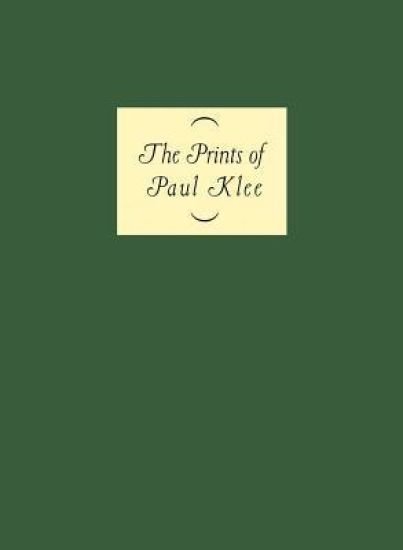
Paul Klee (1879-1940) was an extraordinary draftsman, printmaker, teacher and theoretician with a singular style whose work greatly impacted the development of twentieth-century art. Klee's prints demonstrate, more fully than his works in any other medium, his remarkable evolution from a traditionalist to one of the most daring innovators of modern art. This limited-edition facsimile of The Prints of Paul Klee, originally published by The Museum of Modern Art, New York in 1947, presents 40 of Klee's etchings and lithographs from MoMA's collection, ranging in date from 1903 to 1931 and each printed on a separate sheet of stiff card, eight of which are in color. Accompanied by a 40-page booklet featuring an essay by James Thrall Soby (then Chairman of the museum's Department of Painting and Sculpture), and a new text by Christophe Cherix, MoMA's Chief Curator of Prints and Illustrated Books, the prints are encased in a cloth-covered and ribbon-bound box. This unique and luxurious portfolio is being reissued for the first time since its original publication, and is available in a limited edition of 2,000 numbered copies.
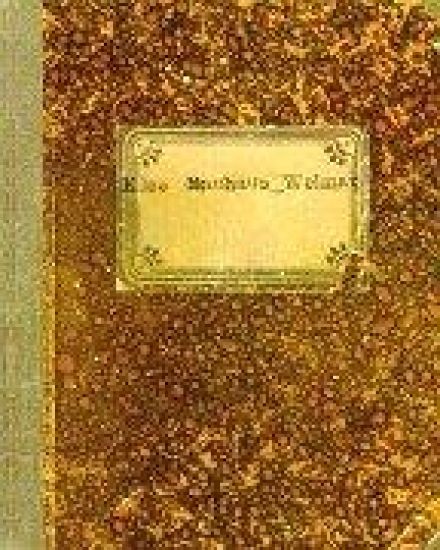
Mit dem Erscheinen der ? Beiträge zur bildnerischen Formlehre? im Faksimile wird Klees Textvorlage seiner Bauhaus-Vorlesungen von 1921/22 in der originalen Form vorgestellt. Dabei handelt es sich um das einzige, mehrseitig gebundene Manuskript in Klees Pädagogischem Nachlass, das durchlaufend datiert, in zusammenhängender Form von ihm niedergeschrieben wurde. Im Umgang mit dem Originalmanuskript erhält der Leser einen über die inhaltlichen Mitteilungen hinausgehenden Einblick in die ? Genesis? von Klees Lehrgebäude. Es ist dabei unmittelbar nachzuerleben, wie Klee in der für das Manuskript spezifischen Form, zugleich zeichnend und schreibend, seine Vorstellungen über die grundlegenden Formelemente bildnerischen Gestaltens entwickelte und zu definieren suchte. Sein Bauhaus-Unterricht wird gleichsam als Dialog nachvollziehbar. Jeder Versuch, die Symbiose der Handschrift Klees mit den in den Text eingeführten Illustrationen in eine andere graphische Form zu übertragen, verändert den Charakter und die Wirkung des Manuskriptes massgeblich. Eine faksimilierte Ausgabe drängte sich in diesem Falle als die adäquateste Form der Veröffentlichung geradezu auf. ? Seine 'Kunstpädagogik' ist gegenwärtig die einzige, die den Lehrplänen der Kunstschulen zugrunde gelegt werden könnte. So sind die Beiträge zur bildnerischen Formlehre nicht nur ein Künstlerbuch, das die Kreativität stimuliert, sondern der Entwurf zu einer Weltdeutung mit Hilfe einer eigenen Zeichensprache. Durch die neue Faksimile-Ausgabe des Originalmanuskripts wird erlebbar, dass zumal die Kunst Paul Klees ein Erkenntnisvorgang ist.? Frankfurter Allgemeine Zeitung
'One of the most famous of modern art documents - a poetic primer, prepared by the artist for his Bauhaus pupils, which has deeply affected modern thinking about art . . . This little handbook leads us into the mysterious world where science and imagination fuse.' Observer
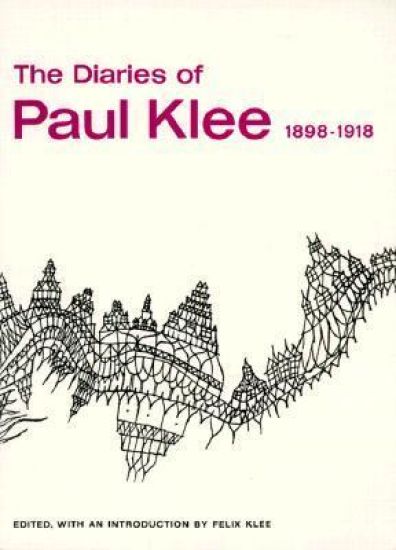
Paul Klee was endowed with a rich and many-sided personality that was continually spilling over into forms of expression other than his painting and that made him one of the most extraordinary phenomena of modern European art. These abilities have left their record in the four intimate "Diaries" in which he faithfully recorded the events of his inner and outer life from his nineteenth to his fortieth year. Here, together with recollections of his childhood in Bern, his relations with his family and such friends as Kandinsky, Marc, Macke, and many others, his observations on nature and people, his trips to Italy and Tunisia, and his military service, the reader will find Klee's crucial experience with literature and music, as well as many of his essential ideas about his own artistic technique and the creative process.