
Kirjailija
Paul Knight
Kirjat ja teokset yhdessä paikassa: 18 kirjaa, julkaisuja vuosilta 1998–2026, suosituimpiin kuuluu High Security High Risk. Vertaile teosten hintoja ja tarkista saatavuus suomalaisista kirjakaupoista.
18 kirjaa
Kirjojen julkaisuvuodet: 1998–2026.

In a universe teaming with civilizations, Earth is the only planet where music exists. For alien species, music can be mind-expanding, acting like a narcotic, prompting interplanetary crime guilds to kidnap earth musicians for sale to the highest bidder.? Ryan Reilly, a shy, reclusive Irish teenager, demonstrates an immeasurable talent for musical composition. When revealed, he triggers a war between the Protectors who want to preserve Earth's music, and the Abductors who want to kidnap Ryan and harness his power. To save Ryan and his family from the predation of the Abductors, the Protectors send a young, inexperienced agent, Lindsay, who must gather all her wiles and resources to thwart the Abductors. As they attempt to evade their pursuers, Ryan discovers he is capable of more than composing music in his bedroom.

The 47th Regiment of Foot served throughout the whole of the American War of Independence. The regiment experienced the transition from peacetime soldiering in Ireland and New Jersey, through the deteriorating political situation, to open rebellion. The officers and men had to alter their tactics and doctrine from peacetime garrison duties, through conventional warfare around Boston to woodland operations in Canada and upper New York. Who were the 47th Foot? How well did they overcome the challenges they faced? What became of them? Where they unthinking automatons lead by an officer class incapable of adapting to the reality of warfare in North America? Paul Knight examines the regiment within the context of a British Army which was neither stuck in the past nor incapable of reform. New uniforms, weapons, and drill manuals reflected the lessons of the previous war within an environment of doctrinally innovative generals. Against this, the regiment had to train in an era of the financial parsimony and where the friction of peacetime soldiering mitigated against training objectives. Nevertheless, the 47th was judged 'A Very Fine Regiment and Fit for Service' before it sailed for New Jersey in 1773. In North America, the 47th served in peaceful New Jersey and New York before joining the Boston Garrison in response to the deteriorating political situation there. After Boston, they were sent to Quebec where they drove American Rebels out of Canada before participating in the ill-fated Saratoga Campaign. Most of the regiment then endured years of captivity as part of the Convention Army. A fortunate part of the regiment avoided this fate and defended Canada's borders for the remained of the war. This period saw the 47th, and the British Army in North America, quickly adapting to the rapidly evolving political and military situations they encountered. They successfully evolved their tactics and doctrine from peaceful garrison duties to conventional warfare in response to open rebellion and then to irregular tactics for woodland fighting. Paul Knight shows how the 47th Foot was able to adapt to the changing threats and operational environment quickly and effectively. These were thinking soldiers led by flexible officers capable of adopting to the prevailing operational environment.
First World War generals have a reputation for both failing to understand the conditions their men were fighting in and also to adopt to the reality of the Western Front. All too often in discussions, the Lions led by Donkeys attitude prevails which has been reinforced by Blackadder’s ‘General Melchett’. General Jeudwine was neither a Donkey nor a Melchett. His command of 55th (West Lancashire) Division from January 1916 was highly regarded and the division was in the top third of the British Expeditionary Force. The division attacked twice during the Third Battle of Ypres. After each attack, Jeudwine collected ‘Narratives’ from his men. These range from formal reports from Commanding Officers to Private soldier’s handwritten memoires on a sheet of paper torn from a notepad. Transcribed in their entirety for the first time, these Narratives offer a fascinating, first-hand account of two major written within days of the battle. Within the Narratives are details of the fates of men whose names are recorded on the Menin Gate, the practical application of tactics, small scale actions around German strong points. In analysis, the evolution of tactics is seen between the two attacks which shows the Army as a learning organisation.


Concrete Roots: inspired by true events
Paul Knight
Createspace Independent Publishing Platform
2015
nidottu
An Observer`s Guide to Clouds and Weather – A Northeastern Primer on Prediction
Toby Carlson; Paul Knight; Celia Wyckoff
American Meteorological Society
2015
nidottu
Today, most people look down when they want to check the weather, peeking at cell phones or popping open a browser, instead of looking up at one of the most accessible weather predictors of all-the sky. Knowing what the atmosphere has in store without relying on technology can be a gratifying experience, and now, with An Observer's Guide to Clouds and Weather, it is also one that is easy to learn. This informative and accessible guide walks readers through the basics of making weather predictions through understanding cloud types and sky formations. It explains, in nontechnical terms, the science behind the weather, connecting fundamental meteorological concepts with the processes that shape weather patterns. Readers will learn how to develop their powers of observation and hone their ability to make quick forecasts without complicated tools. Whether you're an amateur weather enthusiast or a beginning meteorology student, An Observer's Guide to Clouds and Weather will help anyone who prefers looking up to looking it up.

(Music Sales America). Sing is a complete program of effective and efficient vocal warm-ups suitable for all styles of singing. Also featuring a download card that gives you access to online audio and spoken instructions so that your voice will be in the best shape possible for any performance.
Travel from Scottish streams to shark infested seas and from the frozen tundra to tropical reefs. There’s every style of fishing, from the magic touch of the fly to blood-and-thunder battles with monsters of the deep. Shiver at ghostly tales from the river bank and marvel at incredible exploits with rod and line. There are stories of ones that got away as well as catches that set records. Discover a treasure trove of stories, invested with a drama and poetry that makes this essential reading for all fishermen, everywhere.
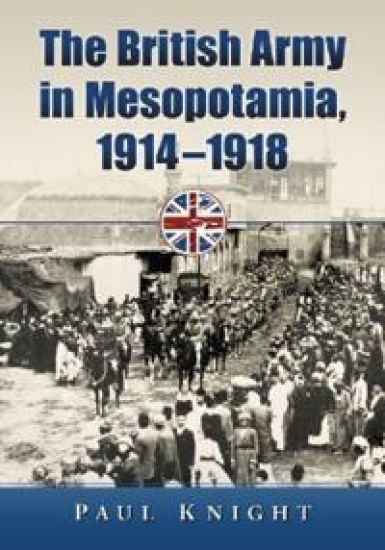
When war broke out between the British and Turkish empires in 1914, the 6th (Poona) Division sailed from India to Basra to bolster Britain's allies, deny the port to enemy shipping, and secure Britain's Persian oil supplies. Further expansion followed: the capture of Al-Amara was the British Army's greatest victory of 1915. When an advance on Baghdad was repulsed, the Siege of Kut became the British Army's longest siege and greatest surrender. Attempts to relieve Kut led to unsuccessful battles that were bloody and muddy even by Western Front standards. Under new leadership, revitalized and reinforced, the British avenged their defeat when Baghdad was captured in March 1917. Thereafter, the British Empire committed, in campaigns of limited value to the overall war effort, huge levels of manpower and materiel desperately needed elsewhere. What was created was modern Iraq and the first Arab government in Baghdad in over 400 years. This detailed history places the campaign in context of Allied operations in the Middle East and sheds light on several unsung heroes of the war, including General Charles Townshend whose spectacular 1915 victories led to humiliating defeat and captivity in 1916; General Frederick Stanley Maude whose March 1917 entry into Baghdad preceded General Allenby's entry into Jerusalem by eight months; and Miss Gertrude Bell, a "female Lawrence of Arabia" who played a central role in the creation of the new Iraqi state.
Fort Necessity National Battlefield and Friendship Hill National Historic Site Weather of 2009
Paul Knight
Createspace Independent Publishing Platform
2013
nidottu
Fort Necessity National Battlefield and Friendship Hill National Historic Site Weather of 2007
Paul Knight
Createspace Independent Publishing Platform
2013
nidottu
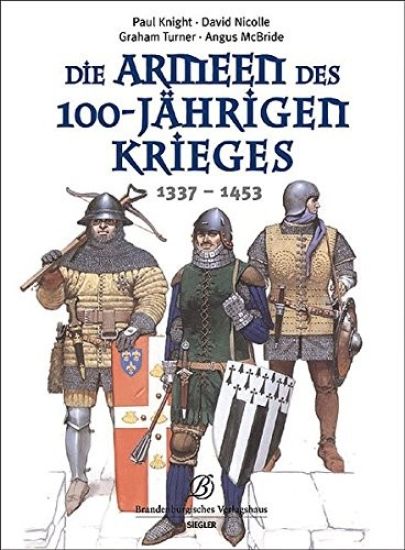
Die Armeen des 100-jährigen Krieges (1337 - 1453)
Paul Knight; David Nicolle
Brandenburgisches/Siegler
2013
sidottu
Im Jahr 1328 fand die Dynastie der Kapetinger ihr Ende. Dies war der Auslöser für den Hundertjährigen Krieg, in welchem die englischen Könige mit Waffengewalt ihren Anspruch auf den französischen Thron geltend machen wollten. Herbe Niederlagen auf den Schlachtfeldern von Cr?cy und Poitiers erschütterten das französische Königsreich. Zwar trat unter Betrand du Guesclin eine Phase der Ruhe ein, bald darauf aber rüsteten sich die Engländer unter Heinrich V zu einem noch vernichtenderen Angriff. Als der König 1422 starb, wurde er von dem damals neun Monate alten Heinrich VI abgelöst. Zwanzig weitere Jahre sollten ins Land ziehen, bevor die englische Armee aus Frankreich vertrieben wurde. Der Zerfall des Reiches dauerte bis 1429 an. Dieses Werk beschäftigt sich sowohl mit der Rolle der englischen als auch der französischen Armee, beleuchtet detailliert und anhand zahlreicher, teilweise farbiger Illustrationen Aufbau und Organisation, Ausstattung und Waffen. Auch die langsame Regenerierung Frankreichs bis hin zur Erhebung des Reiches zur wichtigsten Kriegsmacht Europas wird beschrieben, ausgelöst unter anderem durch die junge Visionärin Jeanne d'Arc.
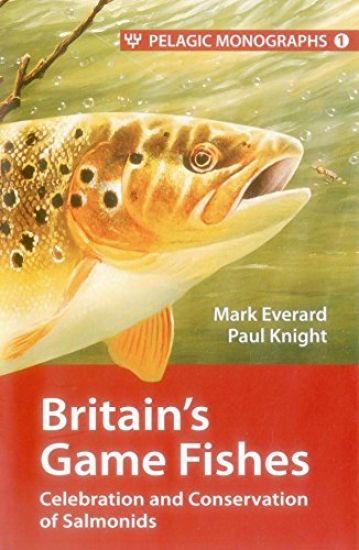
Game fishes, particularly those of the salmon family, are critical indicators of the health of those ecosystems upon which we now know we are dependent. As the authors of this important environmental book argue, “Our game fishes [then] serve as more than merely an indicator of healthy waters. Instead, they can be regarded as iconic of the ecosystems in which they occur.” Moreover, “the quality requirements of different types of fish population have formed the backbone of a great deal of water management in the UK, Europe and the USA over several decades.” With sections on how and why Britain’s game fishes are under pressure from changes in land use, agriculture, housing needs, etc. – and their concomitant pollution effects – this book assesses how our knowledge of these game fishes reflect the changing values we place on our surrounding wildlife.
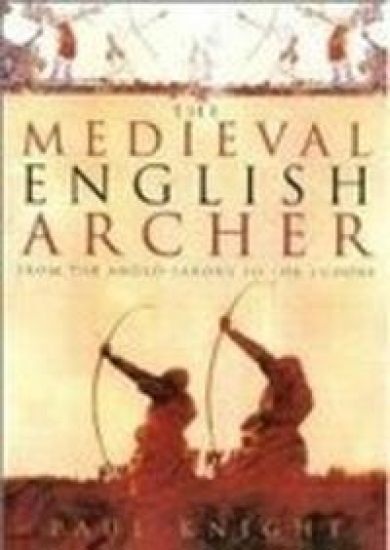
The longbow and the archer occupy a special place in English history. For over 200 years English armies across Europe dominated battlefields with a weapon that was as effective as it was simple: the longbow. Paul Knight assesses the rise of the longbow from a minor weapon in the Anglo-Saxon, Viking and Norman armies.

The battle of Againcourt in 1415 was not the decisive encounter that both Shakespeare and Kenneth Branagh suggest it was. This book details the English Army that Henry V led back into France in 1417 to conquer Normandy and again take the war to the French. With his Burgundian allies it took another 3 years campaigning to force Charles VI to recognise him as his heir by the Treaty of Troyes in 1420. Powerful enemies remained even after this, notably the Daupin, and the war continued. In 1422 Henry died succeeded by the 9-month-old-Henry VI and by 1429 English fortunes were in decline. More than 20 years of warfare would pass before the English were driven from France, with the exception of Calais. This period of the war is often ginored in preference to the battles of Crecy, Poitiers and Agincourt but in fact is the decisive phase of the conflict. This title fills that gap, bringing the research up to date and examines the army that fought these campaigns in great detail looking at its composition, organisation, equipment and weaponry.